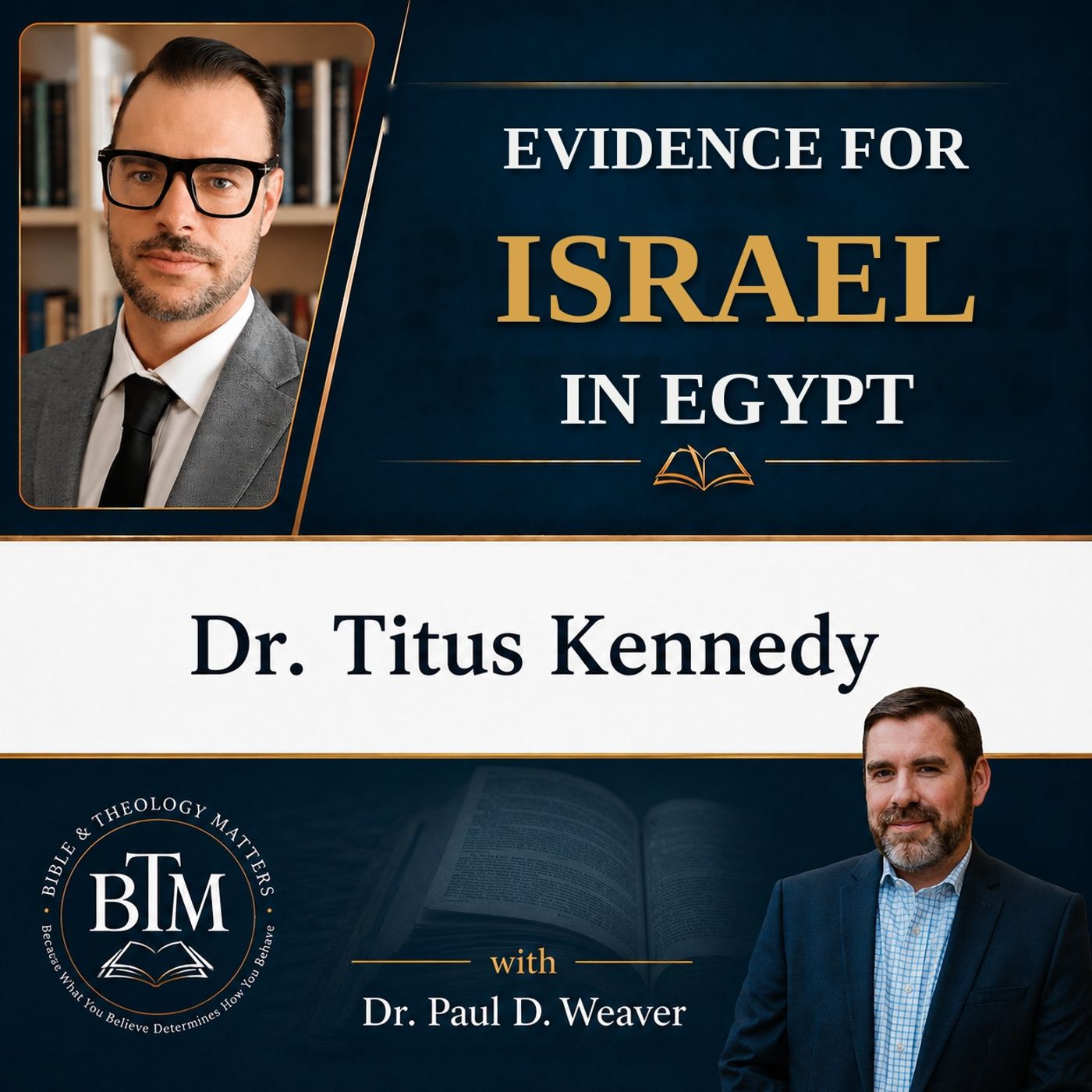
BTM 202 - Evidence for Israel in Egypt
About this episode
Dr. Paul Weaver and Dr. Titus Kennedy discuss archaeological evidence supporting the biblical account of the Exodus and Israel's history in Egypt.
Is there archaeological evidence that the Israelites (Hebrews) really lived in Egypt? Many skeptics claim the Exodus never happened and that the biblical account is merely legend. But what does the archaeological evidence actually reveal? In this episode of the Bible and Theology Matters Podcast, Dr. Paul Weaver welcomes biblical archaeologist Dr. Titus Kennedy to examine some of the strongest archaeological evidence supporting the biblical account of the Exodus, Israel's slavery in Egypt, the wilderness wanderings, and the conquest of Canaan. Together they discuss: Evidence for Semitic (Hebrew) peoples living in ancient Egypt Avaris (biblical Goshen) and the store cities of Pithom and Rameses The Brooklyn Papyrus and Hebrew names in Egypt Egyptian tomb paintings depicting Semitic brickmakers The Louvre Leather Roll and parallels to Exodus' brick-making account The Soleb inscriptions—the earliest known reference to the divine name Yahweh The Ipuwer Papyrus and its possible connection to the plagues The Amarna Letters and possible evidence for Joshua's conquest Why many modern scholars reject the Exodus—and how archaeology challenges those assumptions If you've ever wondered…
People in this episode
Host: Dr. Paul D. Weaver
Guest: Dr. Titus Kennedy
Topics covered
- archaeological evidence
- Exodus
- Israel in Egypt
- biblical history
- Semitic peoples
- historical reliability of Scripture
Keywords
- archaeology
- Exodus
- Israel
- Egypt
- biblical account
- historical evidence
- Semitic
- plagues
- Canaan
Mentioned in this episode
Organizations: Bible and Theology Matters Podcast
Books & works: Archaeology and the People of the Bible
Places: Egypt, Canaan, Avaris, Goshen, Pithom, Rameses, Louvre, Brooklyn, Amarna, Ipuwer
More episodes of Bible and Theology Matters: Insightful Conversations with Bible Scholars
- BTM 201 - Who was the Pharaoh of the Exodus?
- BTM 200- Biblical Archaeology That Silences The Critics- Evidence They Can't Ignore
- BTM 199- Baptists and the Bible: Dr. Tom Nettles on Biblical Inerrancy and Baptist History
- BTM 198- Why Biblical Inerrancy Still Matters | Dr. David Dockery on the Conservative Resurgence & Authority of Scripture
Explore listener stats, chart rankings, contacts and more on the Bible and Theology Matters: Insightful Conversations with Bible Scholars podcast page.