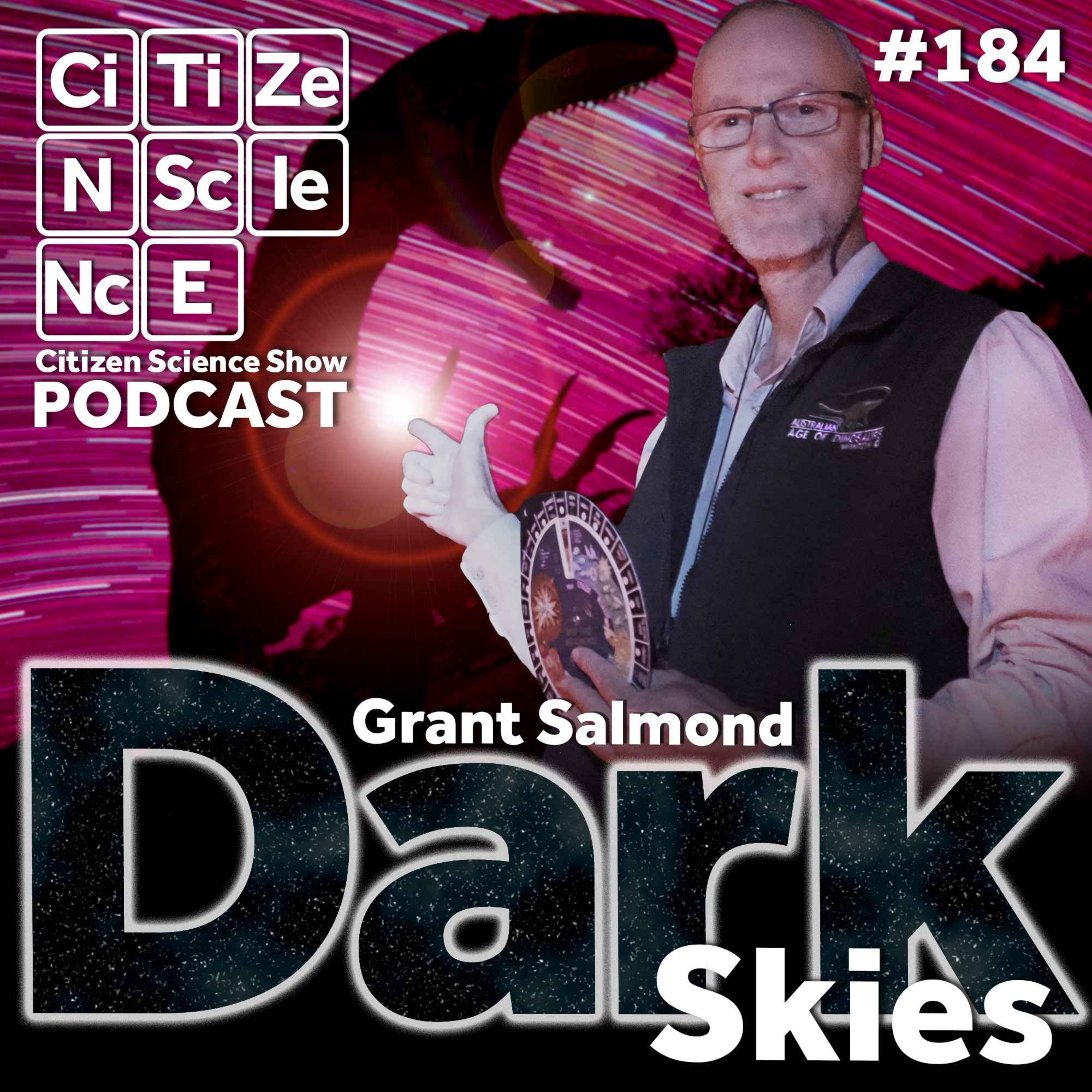
#184 How a Small Outback Town Became One of the Darkest, and Brightest, Places in Australia with Grant Salmond
About this episode
This episode discusses how Winton, a small town in Queensland, became an internationally accredited Dark Sky place and the importance of conserving darkness.
What if the thing we most need to conserve isn't a place, but darkness itself? In this episode, Sarah speaks with Grant Salmond, Education and Astronomy Manager at the Australian Age of Dinosaurs Museum, about how the small Queensland town of Winton became one of only eight internationally accredited Dark Sky places in Australia. Grant explains how a plague of insects led to a town-wide lighting overhaul, how the Gondwana Stars Observatory links the fossil record to the night sky, and how the First Nations "Dark Emu" constellation has guided seasonal knowledge for tens of thousands of years. Along the way: citizen science through Globe at Night, an opera performed beneath the stars, and a simple lightbulb swap that could help bring the stars back to your own backyard. More Information Dark sky international - https://darksky.org/ https://www.australianageofdinosaurs.com/ https://www.winton.qld.gov.au/Community/Dark-Sky-Community https://globeatnight.org/ https://australasiandarkskyalliance.org/ https://www.scienceweek.net.au/ https://darksky.org/what-we-do/events/dark-sky-week/ If you enjoy this podcast, please like and subscribe to our show wherever you get your podcasts. Leave…
More episodes of Citizen Science Show
- #181 From Mars to Bushfires: Dr Eriita Jones Brings Planetary Science Back Down to Earth
- #187 Science in Your Swimmers: How Anita Kolni and Caz Grant Built Australia's Ocean Culture Movement
- #186 Cardboard Teepees for Wildlife: How Dr Alex Carthey Is Rebuilding Shelter After the Fires
- #177 From Dive Guide to Nikon Ambassador: Jake Wilton's Camera-Eye View of Nature
- #191 Fifty Years of Mud, Sweat and Cheers: How One Volunteer Is Fighting to Save the Hunter's Shorebirds with Tom Clarke
- #188 Ocean Relics. The Indiana Jones of Australia's shipwrecks: Dr James Hunter
Explore listener stats, chart rankings, contacts and more on the Citizen Science Show podcast page.