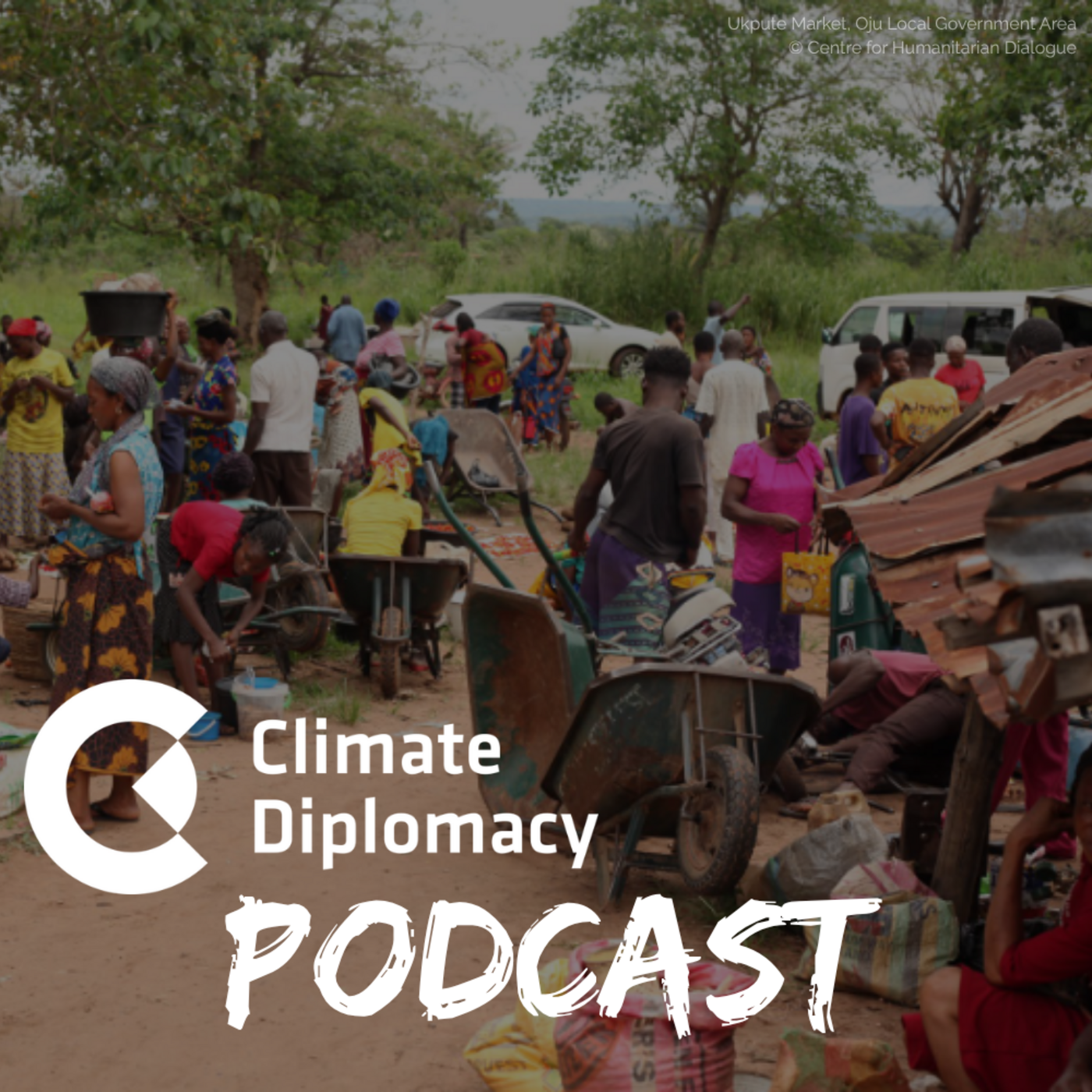
Episode 57: Sustainable peace from the ground up: Natural resource peace agreements in Nigeria
About this episode
The episode discusses how climate-sensitive dialogue has led to peace agreements in Nigeria's Middle Belt, addressing farmer-herder conflicts over natural resources.
In Nigeria's Middle Belt, farmer-herder conflicts over land and natural resources have claimed thousands of lives in recent years. Climate change – through prolonged droughts, irregular rainfall and shrinking grazing lands – is intensifying these pressures, driving displacement and deepening tensions across communities in Benue, Nasarawa and Plateau states. In this episode, we speak with Chrisantus Lapang Defuna'an from the Centre for Humanitarian Dialogue. Through an inclusive, climate-sensitive dialogue process facilitated by the Centre for Humanitarian Dialogue, communities across the region have signed three natural resource peace agreements that embed provisions for collaborative resource management and climate adaptation. The results are striking: reduced violence, the return of displaced persons, reopened markets, improved food security – and communities now farming and managing shared resources together. Chrisantus reflects on what these agreements have achieved, what the evaluation evidence tells us about what made the difference, and what this model might mean for other regions facing similar climate-driven resource conflicts. Further resources: Multi-Level Approaches…
People in this episode
Guest: Chrisantus Lapang Defuna'an
Topics covered
- sustainable peace
- natural resource management
- climate change
- conflict resolution
- community dialogue
- food security
Keywords
- peace agreements
- climate adaptation
- resource conflicts
- displacement
- violence reduction
- collaborative management
Mentioned in this episode
Organizations: Centre for Humanitarian Dialogue
Places: Nigeria, Middle Belt, Benue, Nasarawa, Plateau
Explore listener stats, chart rankings, contacts and more on the Climate Diplomacy Podcast podcast page.