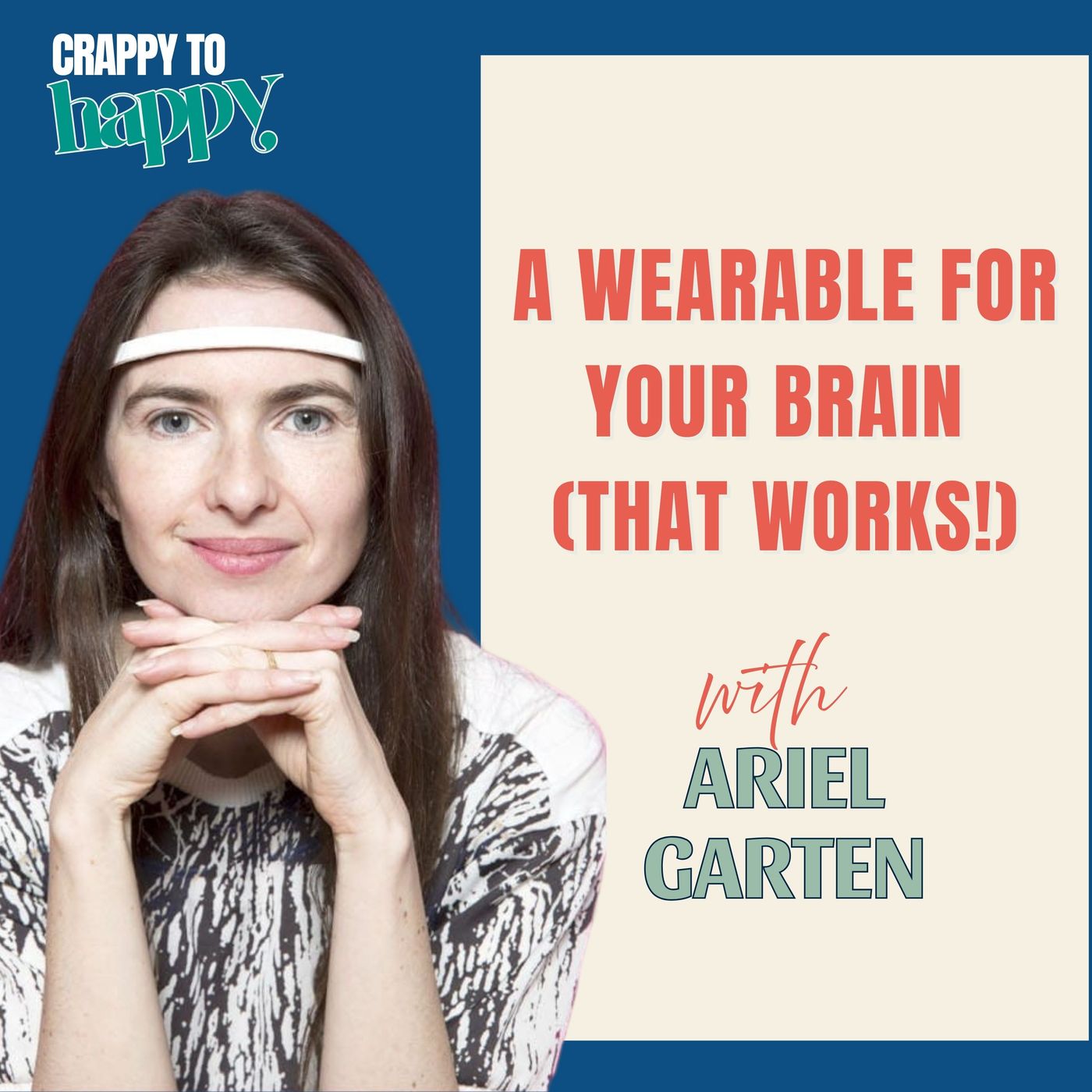
A Wearable for Deep Sleep, Mental Strength & Cognitive Health with Ariel Garten
About this episode
Ariel Garten discusses the advancements in sleep tracking technology and its implications for mental health and cognitive function.
If you've ever wondered whether your sleep tracker is actually accurate, or whether meditation is doing anything measurable in your brain, this episode is for you. Ariel Garten is the co-founder of Muse, the brain-sensing headband, and she's back on the show with a significant update on how the technology has evolved. The Muse Athena contains an entirely new technology called fNIRS that tracks real-time blood flow and oxygen delivery to your prefrontal cortex. We get into why wrist-based devices like Oura and Apple Watch can only ever estimate your sleep stages - because they're guessing from heart rate and movement, not brainwave data, whereas the Muse measures deep sleep at 94% accuracy compared to a clinical sleep lab. It's Deep Sleep Boost feature uses barely-audible pink noise pulses to increase the amount of time you spend in deep, restorative slow-wave sleep. We also go into ADHD territory. Both Ariel and I are diagnosed, and we talk about what neurofeedback and meditation training can do for focus, executive function, and the near-constant urge to abandon tasks halfway through. What you'll learn Why wrist-based sleep trackers can't accurately measure deep sleep, and how…
People in this episode
Host: Cass Dunn
Guest: Ariel Garten
Topics covered
- sleep tracking
- mental health
- cognitive function
- neurofeedback
- meditation
- ADHD
Mentioned in this episode
Organizations: Muse
Products: Muse Athena, Oura, Apple Watch
Explore listener stats, chart rankings, contacts and more on the Crappy to Happy podcast page.