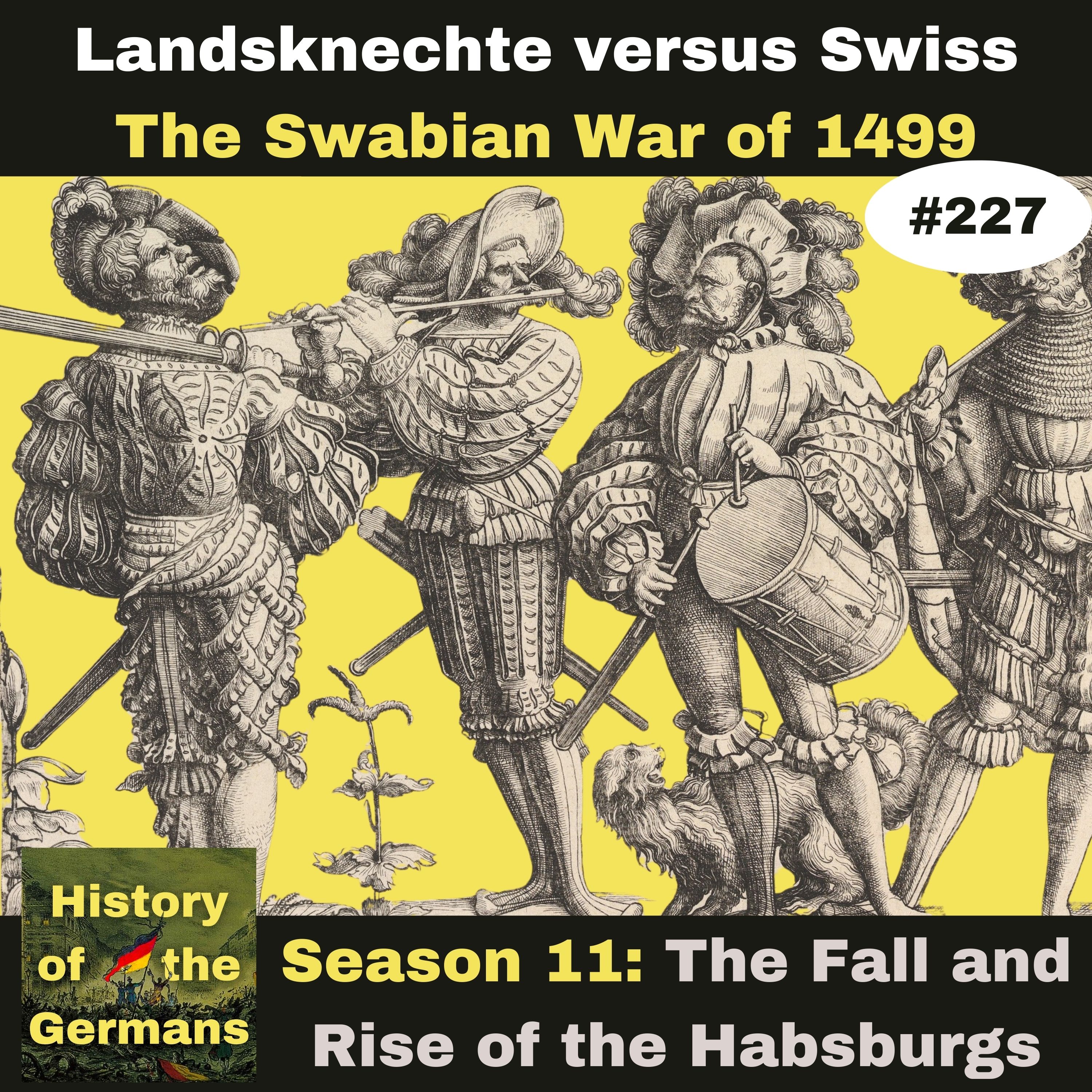
Ep. 227: Landsknechte vs. Swiss Mercenaries – The Swabian (Swiss) War of 1499
About this episode
This episode explores the Swabian War of 1499 and its significance in Swiss and German history, particularly focusing on the identities of Swiss mercenaries and Landsknechte.
Why are the Swiss called the Swiss? After all, Schwyz in only of 26 cantons, and not one of the largest ones. How did the proud and prosperous citizens of Zurich or Berne, mighty city states in their own right, decide they wanted to be named after a mountainous region largely inhabited by peasants tending to their gorgeous brown cattle, the Braunvieh. They even called their national airline Swissair, until my former colleagues at McKinsey let the air out of that one. So, why Swiss? The answer goes back to today’s topic, a war that the Swiss call the Schwabenkreig or Swabian War. This war played a massive role in Swiss historiography, and its main battles at the Caven and at Dornach was mentioned in the same breath as Morgarten and Sempach. It was seen as the moment when Switzerland de facto exited the Holy Roman Empire and began ploughing its own furrow in European history. Meanwhile in Germany, this war that we called the Schweizerkreig or Swiss War is largely forgotten amongst the hundreds of other military conflicts. It was also the first of many contests between the two formidable fighting forces of the Renaissance, the Swiss Reisläufer and the German Landsknechte. These…
More episodes of History of the Germans
- Ep. 234: The Charisma of Emperor Maximilian (1493-1519)
- Ep. 233: Maximilian I (1493-1519) - Last Days and Legacy
- Ep. 232: The Ottomans – From Mehmet the Conqueror to Selim the Grim (1444-1520)
- Ep. 231: Maximilian I (1493-1519) - Marrying Bohemia and Hungary
- Ep.230: Margaret of Austria (1480-1530) - The League of Cambrai
- Ep. 229: Joanna the (not?) Mad (1504-1555) - How the Habsburgs gained Spain
Explore listener stats, chart rankings, contacts and more on the History of the Germans podcast page.