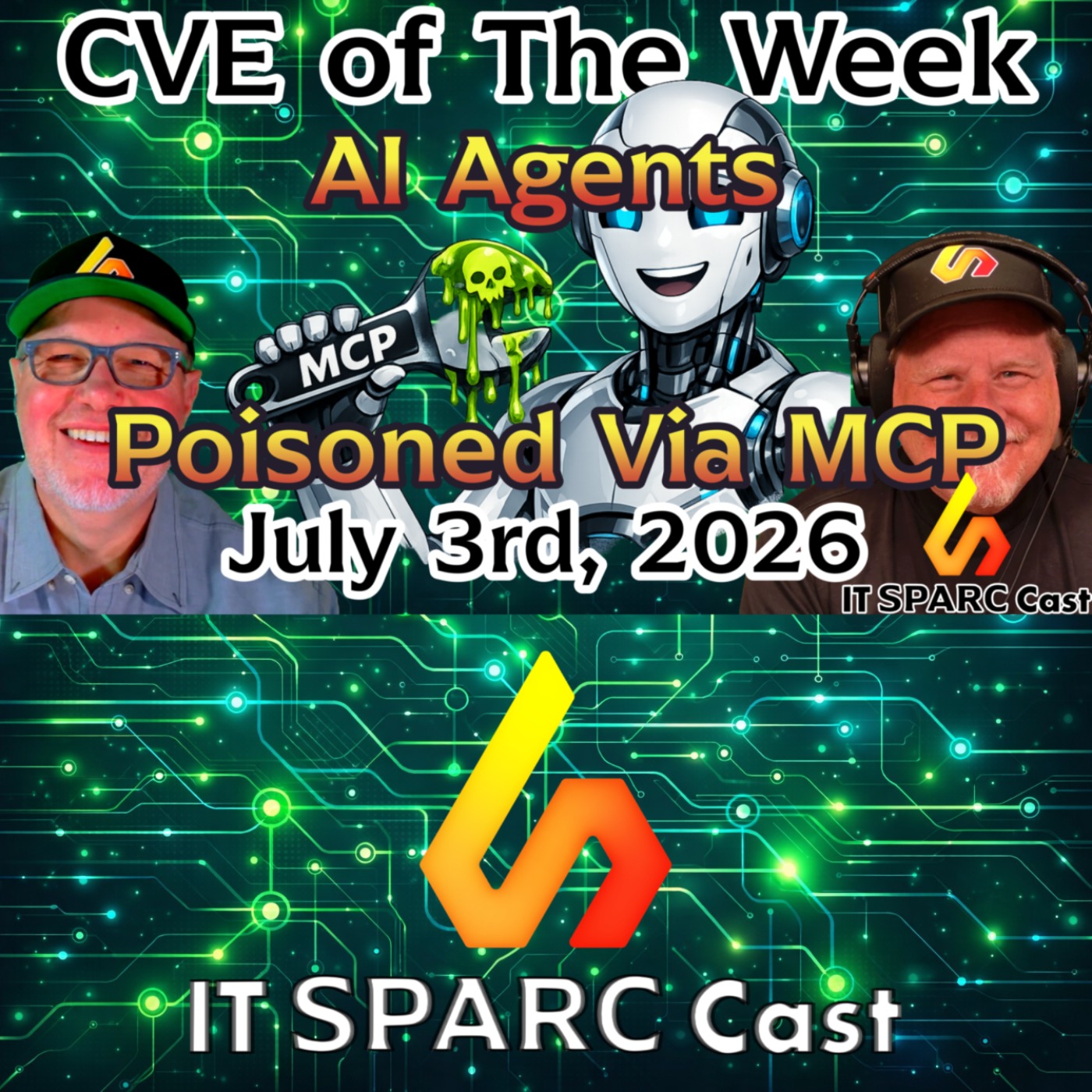
Microsoft Warns: Your AI Agent Could Be Poisoned via MCP
About this episode
This episode discusses a new attack technique against AI agents using the Model Context Protocol and offers mitigation strategies.
A newly demonstrated attack against the Model Context Protocol (MCP) shows how malicious tool descriptions can manipulate AI agents into leaking sensitive information—without exploiting a software vulnerability. In this episode of IT SPARC Cast – CVE of the Week, John and Lou explain MCP tool poisoning, why prompt injection is evolving, and what organizations deploying AI agents should do to protect themselves. ⸻ 📄 Show Notes 🚨 Security Spotlight: MCP Tool Poisoning This week we’re covering a new attack technique targeting the Model Context Protocol (MCP) used by AI agents. Rather than exploiting software bugs, attackers can modify an MCP tool’s metadata to inject hidden instructions that an AI agent interprets as legitimate commands. The result? AI agents can be manipulated into exposing sensitive information without the user ever seeing the malicious instructions. ⸻ ⚠️ How the Attack Works Researchers demonstrated that attackers can: Modify an MCP tool’s hidden description metadata Embed prompt injection instructions Trick AI agents into revealing sensitive data Abuse automatically refreshed tool descriptions Operate without exploiting a traditional software vulnerability…
People in this episode
Host: John Barger
Guest: Lou
Topics covered
- AI security
- MCP tool poisoning
- prompt injection
- data protection
- cybersecurity
Keywords
- MCP
- AI agents
- tool poisoning
- prompt injection
- cybersecurity
- data leakage
- metadata
Mentioned in this episode
Organizations: Microsoft, Model Context Protocol, AI agents, Researchers
More episodes of IT SPARC Cast
- 570 Microsoft Patches, The AI Hiring Paradox, and the Next Trillion-Dollar AI Business
- Top 10 Biggest Networking Companies That No Longer Exist | Nortel, Lucent, 3Com, Brocade & More
- Windows Falls Below 60%! Meta’s Brilliant Memory Hack, and Claude Code Under Fire
- The First AI Ransomware Is Here — And It Learned on the Fly
- Microsoft Gives AI Memory | Meta Slows Down & Ford Changes Course
- OpenAI’s Spicy New AI Chip, Patch Planet & Why AI Needs Nuclear Power
Explore listener stats, chart rankings, contacts and more on the IT SPARC Cast podcast page.