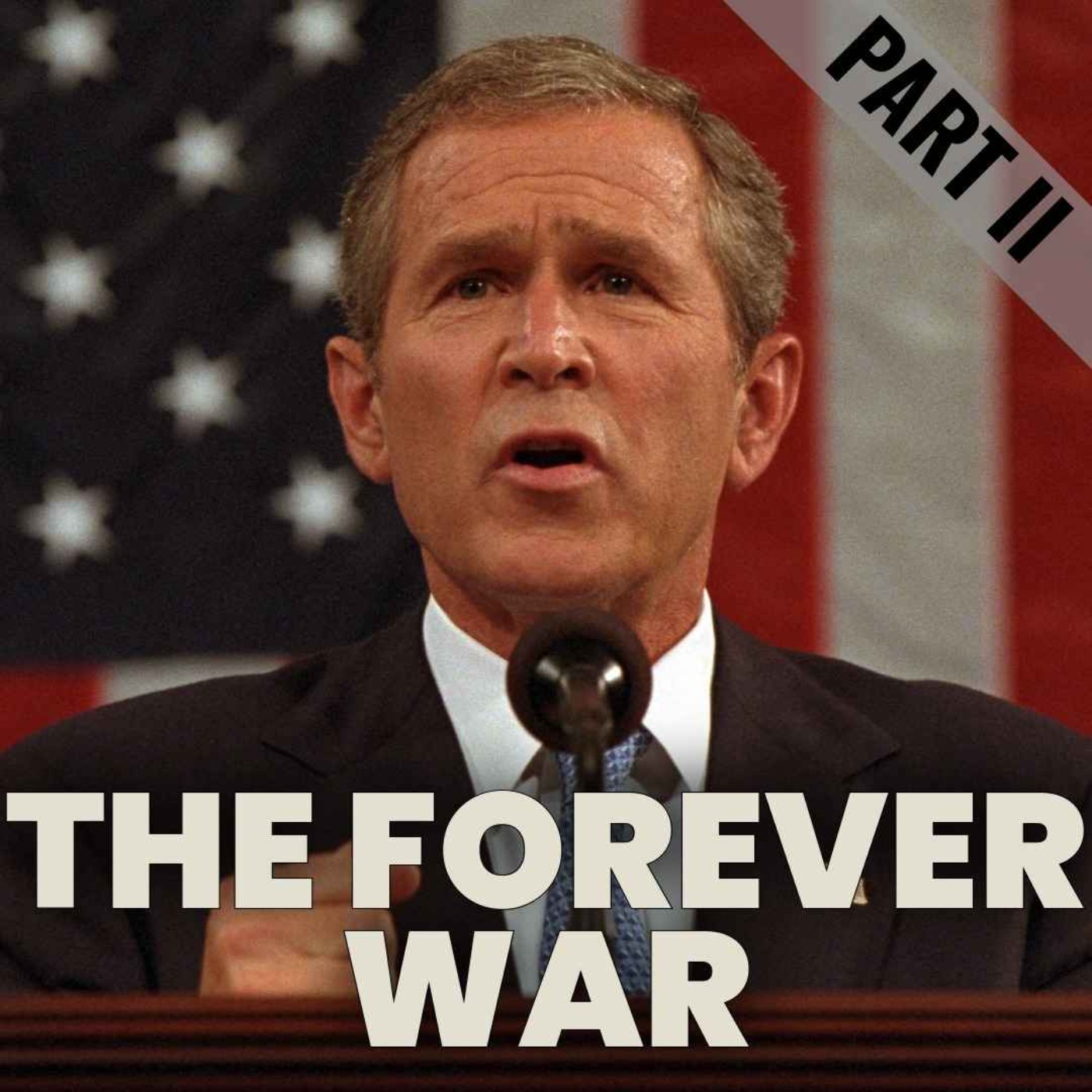
9/11: 25 Years On | The Forever War | 2
About this episode
The episode explores the consequences of 9/11, including NATO's response and the implications for British law and military operations.
Content warning: this episode describes the aftermath of 11 September 2001, including torture and civilian deaths. How does a country go from the sympathy of the entire world to invading a nation that had nothing to do with the attack? What does a blank cheque from the UN Security Council actually buy? And if torture only counts as torture when the pain is equivalent to organ failure, what exactly is everything below that line? Peter Frankopan follows the response from NATO's Article 5 to the caves of Tora Bora, while Afua Hirsch — then a trainee human rights barrister — describes what the war on terror did to British law. Within twenty-four hours, NATO invokes Article 5 for the first and only time in its history. Within three days, Congress passes a sixty-word resolution with a single vote against it; it has since been used to justify American military operations in more than twenty countries. Afghanistan is meant to be narrow and quick, and for five weeks it looks like it. Then bin Laden walks over the mountains into Pakistan, Washington's attention swings to a country with no connection to the attacks, and Colin Powell goes to the United Nations holding a small glass vial. Ten…
People in this episode
Guests: Peter Frankopan, Afua Hirsch
Topics covered
- 9/11 aftermath
- war on terror
- NATO Article 5
- civilian deaths
- torture
- US military operations
- British law
Keywords
- 9/11
- NATO
- war on terror
- torture
- civilian deaths
- Afghanistan
- Pakistan
- UN Security Council
- Congress
- Peter Frankopan
Mentioned in this episode
Organizations: NATO, UN Security Council, Congress
Places: Afghanistan, Pakistan
More episodes of Legacy
- Inbox: Genghis Khan and the Empire We Got Wrong | Marie Favereau
- 9/11: 25 Years On | The World That Made 9/11 | 1
- Inbox: Lindsey Graham and the Price of a Seat at the Table
- Modern Travel | The Full Package | 5
- Inbox: Zhu Rongji and the Price of Modern China
- Modern Travel | The Age of the Skies | 4
Explore listener stats, chart rankings, contacts and more on the Legacy podcast page.