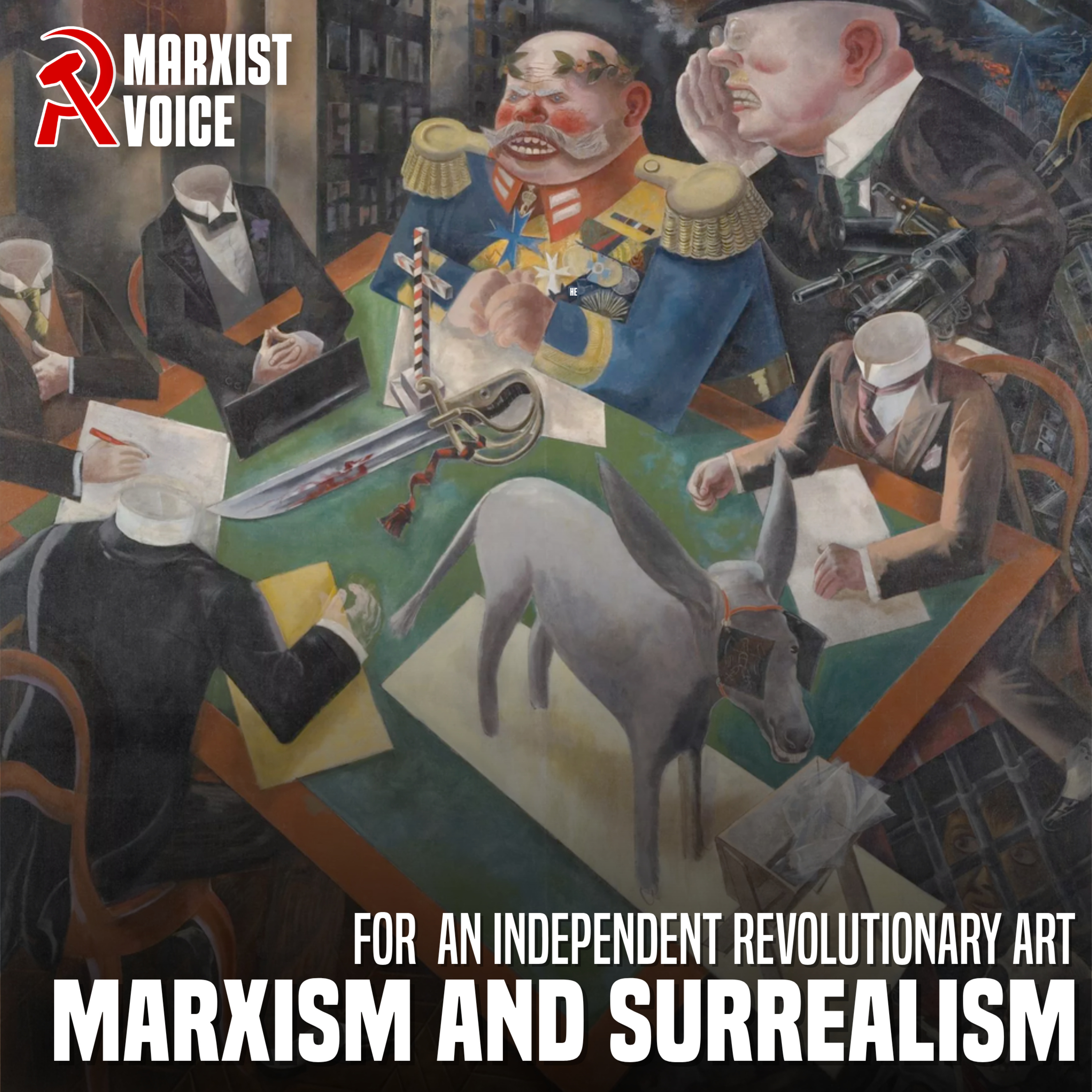
For an independent revolutionary art: Marxism and Surrealism
About this episode
The episode discusses the revolutionary aspects of surrealism and its connection to Marxism, exploring how the movement emerged from post-World War I Europe.
Surrealism was a revolutionary artistic movement founded in 1922 and led by writer and poet André Breton. The movement produced and influenced a galaxy of the 20th centuries finest artists. Surrealist artwork deals in the bizarre and the strange. On the surface, it can seem as if this is all it is - though, it stands for something much deeper. In this talk, Will Collins from the RCP Central Committee explains how surrealism grew out of the general feeling of malaise and anger that existed across Europe following the barbarism of the First World War and at the same time the inspiration from the revolutionary events that swept Europe. This revolutionary spirit reflected itself in the art produced by the surrealists. Surrealist art seeks to express a contradictory view of reality. It reveals the violence and savagery that lurks underneath the thin veneer of bourgeois civilization. The polite manners and “good taste” of bourgeois society is really just a façade that conceals the most terrible suffering, exploitation and repression. But really the essence of the surrealist movement, was to liberate the artist from the shackles of ‘official’ culture, the state, church and even of the…
People in this episode
Guest: Will Collins
Topics covered
- revolutionary art
- surrealism
- Marxism
- 20th century art
- subconscious mind
- bourgeois civilization
Keywords
- surrealism
- Marxism
- André Breton
- art movement
- subconscious
- bourgeois society
- revolutionary spirit
Mentioned in this episode
Organizations: RCP Central Committee
Books & works: Surrealism
More episodes of Marxist Voice
- Feuerbach, philosophy, and the birth of Marxism
- 100 years of Malcolm X: From Nation to Revolution
- World Perspectives 2026
- Mao Zedong: His life, legacy, and limits
- The Chartist Revolution
- The Easter Rising of 1916
Explore listener stats, chart rankings, contacts and more on the Marxist Voice podcast page.