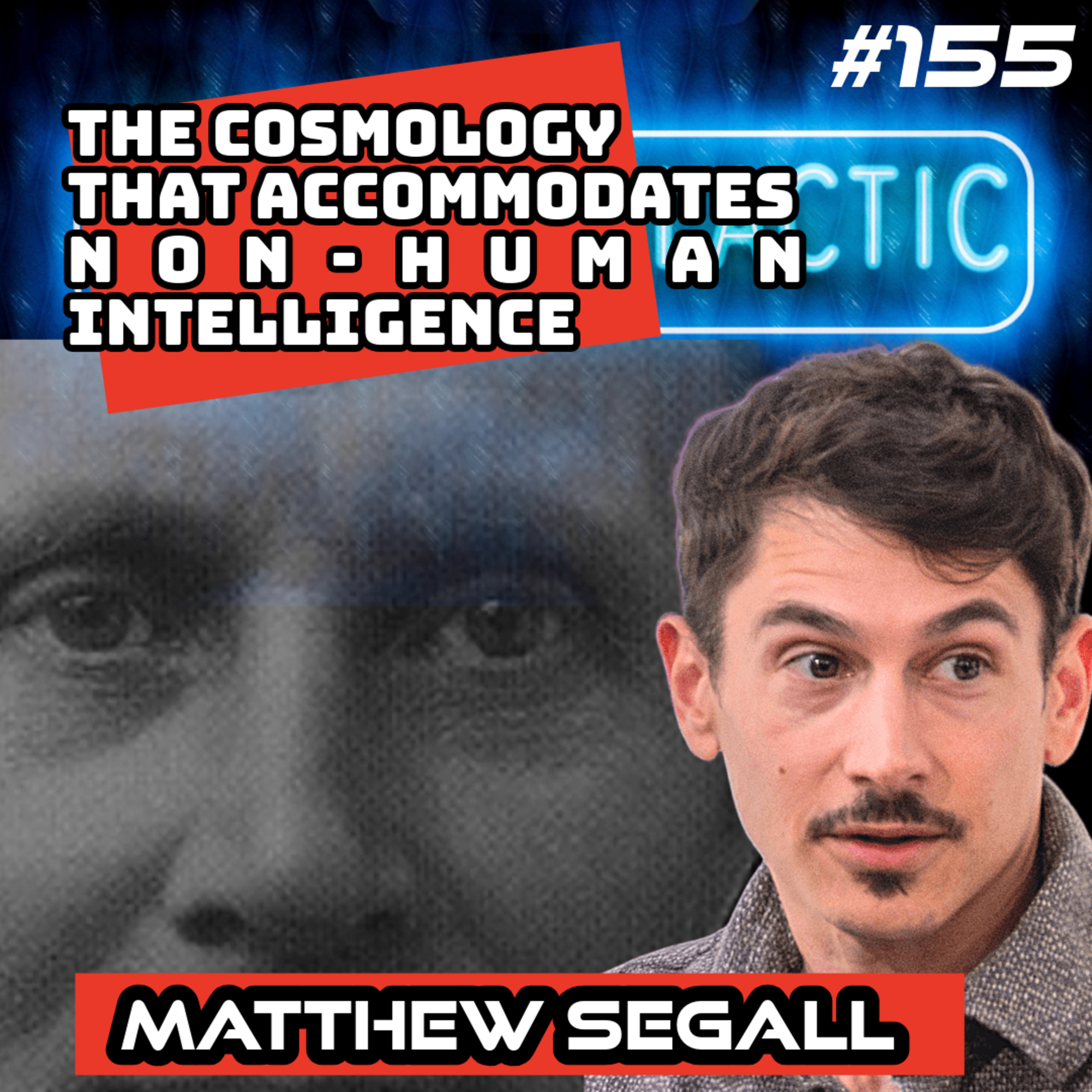
The Consciousness Conundrum: Idealism as the dark horse ontology, with Matt Segall
About this episode
James Faulk and Matthew David Segall discuss the implications of idealism versus physicalism in understanding consciousness and reality.
In this episode, I sit down with Matthew David Segall, an author, associate professor, and department chair in the Philosophy, Cosmology, and Consciousness program at California Institute of Integral Studies. We explore the physicalist ontology currently dominant in the scientific world, and how that philosophy has impacted society. Segall explains how Alfred Whitehead, a mathematician, partnered with Bertrand Russell to write "Principia Mathematica," and how that effort ended in frustration. Russell was demoralized by that failure, but Whitehead devoted himself to deep research that culminated in his development of Process Philosophy, an intellectual approach that identifies process, change, and relationship as the fundamental constituents of reality, rather than static substances. Segall and I explore how anomalies under a physicalist domain can often be better explained and/or accommodated using an idealist framework. We end the conversation by discussing how under idealism, the development of mind and intelligence is a feature, not a bug. Consciousness is everywhere, so the presence and even ubiquity of non-human intelligence is not an impossibility. To learn more…
People in this episode
Host: James Faulk
Guest: Matthew David Segall
Topics covered
- consciousness
- idealism
- physicalism
- philosophy
- Process Philosophy
- non-human intelligence
Keywords
- consciousness
- idealism
- physicalism
- Process Philosophy
- non-human intelligence
- Alfred Whitehead
- Bertrand Russell
Mentioned in this episode
Organizations: California Institute of Integral Studies, footnotes2plato.com, Substack
Books & works: Principia Mathematica
More episodes of Neon Galactic with James Faulk
- The New Shaman: How LSD gave Christopher Bache the keys to the cosmos
- The Great Reset: Astrology on the coming age of NHI & technocratic overlords, with Dan Waites
- Trumped-Up Disclosure: Promises for UFO transparency wilting so far
Explore listener stats, chart rankings, contacts and more on the Neon Galactic with James Faulk podcast page.