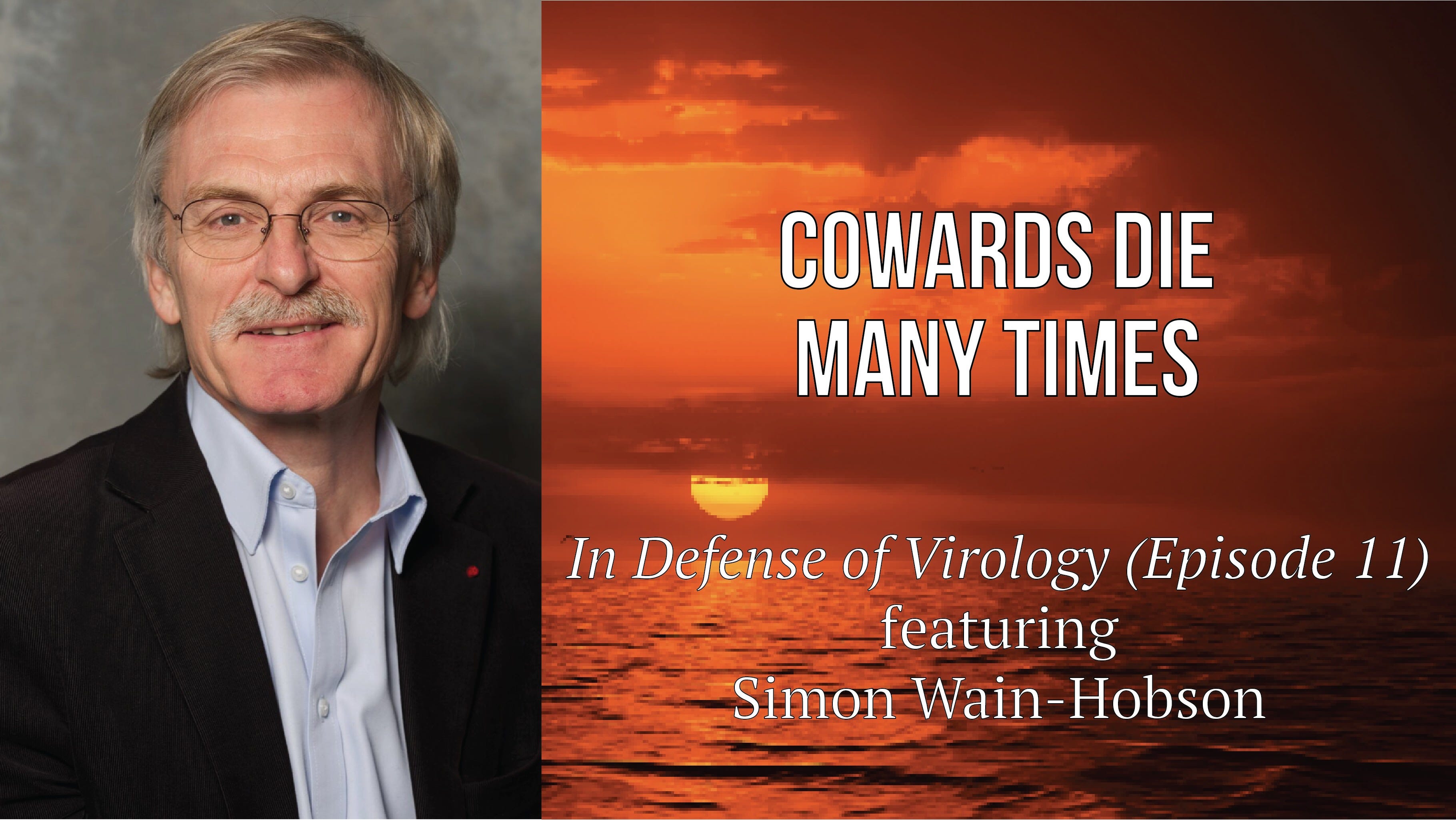
'Cowards Die Many Times' (In Defense of Virology - Episode 11)
About this episode
The episode discusses the failures of the virology community to address the risks of its research, highlighting pivotal moments and the lack of meaningful debate.
In the eleventh episode of In Defense of Virology , Bryce Nickels and Simon Wain-Hobson examine what Simon sees as a decades-long failure of the virology community to seriously confront the potential risks and societal consequences of its own research. As experiments became increasingly sophisticated and controversial, Simon argues that repeated opportunities for reflection, debate, and reform were missed. Drawing on themes from his essay “ Cowards Die Many Times ,” Simon traces a series of pivotal moments, beginning with the 2002 synthesis of poliovirus and continuing through the reconstruction of the 1918 influenza virus , the controversial H5N1 gain-of-function experiments , and ultimately the COVID-19 pandemic. Each episode raised important questions about the risks of creating and disseminating information about potentially dangerous pathogens, yet meaningful debate was discouraged, avoided, or actively shut down. The discussion covers how prominent scientists and institutions shaped these debates and, in Simon’s view, often discouraged meaningful scrutiny of controversial research. Examples include a 2005 Science editorial by Nobel laureate Philip Sharp defending the…
Explore listener stats, chart rankings, contacts and more on the Science From the Fringe podcast page.