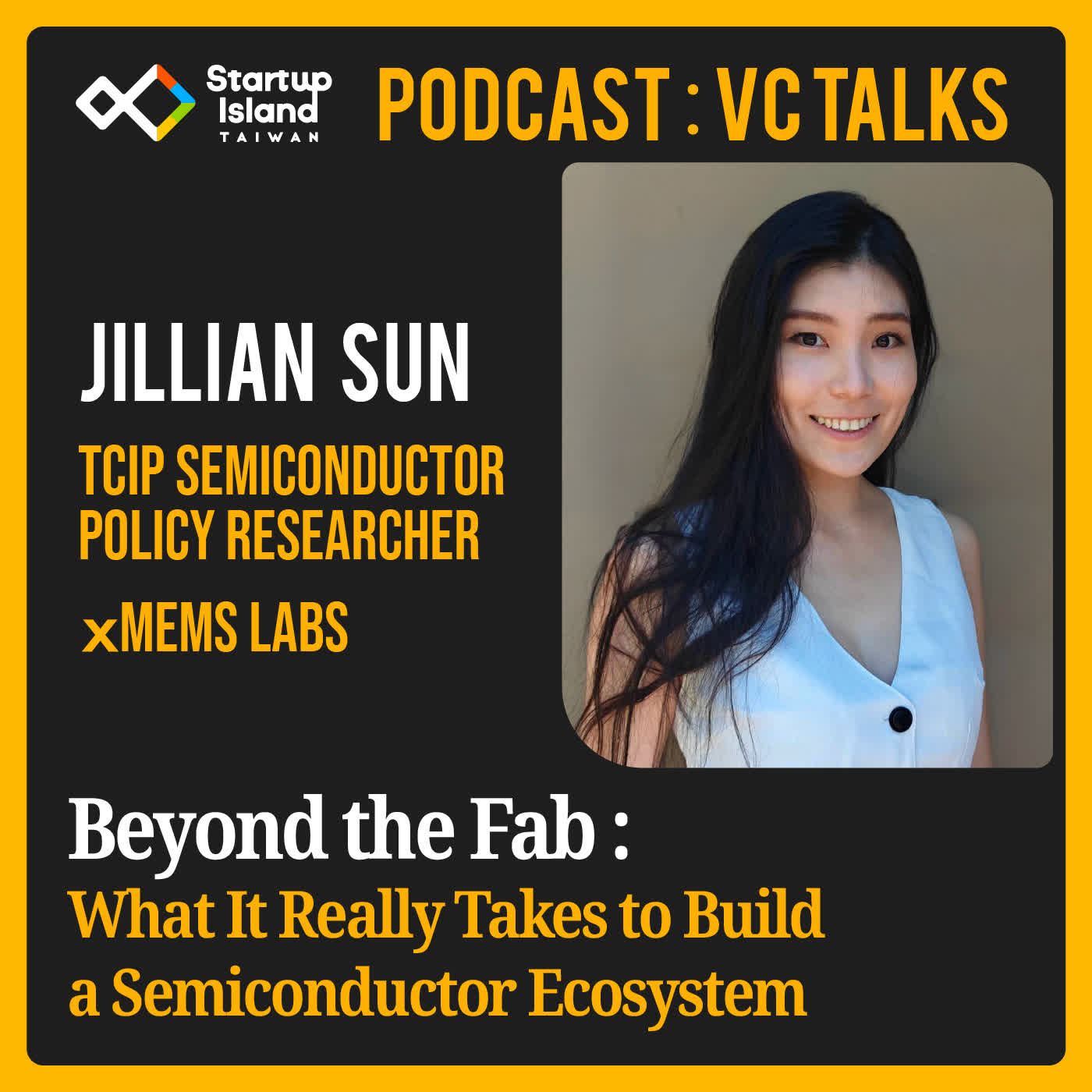
EP3-39 | 【 VC Talks 】Beyond the Fab: What It Really Takes to Build a Semiconductor Ecosystem
About this episode
Jillian Sun discusses the complexities of building a semiconductor ecosystem, emphasizing the importance of geographic density and collaboration over mere capital investment.
EP 3-39 | Beyond the Fab: What It Really Takes to Build a Semiconductor Ecosystem ft. Jillian Sun,TCIP Semiconductor Policy Researcher, xMEMS Labs 節目主持人 Uly Su 邀請曾在台灣資本市場深耕九年、後赴史丹佛商學院深造,現於柏克萊大學研究美國 CHIPS Act 政策的 Jillian Sun,從供應鏈結構出發,帶聽眾系統性地理解這個產業的全貌:從上游的 IP 授權、EDA 設計工具、設備製造商,到中游的晶圓代工廠,再到下游封裝測試,每個環節都是高度專業化、難以複製的知識積累。 節目中,Jillian 以新竹科學園區為例,說明台灣半導體產業成功的關鍵不只是資金,而是供應鏈在地理上的高度集中——騎摩托車一小時內就能走完上下游——以及跨公司、跨領域人才高強度協作解決問題的文化。對照美國推動半導體回流的現況,她指出建廠成本約為亞洲的五倍,加上人才、法規、材料取得等結構性挑戰,美國真正的優勢或許在於軟體與 AI 驅動的 EDA 新創,以及即將到來的 Edge AI 與矽光子技術浪潮。 Building a fab is just the beginning — the real challenge is building an ecosystem. In this episode, Uly Su sits down with Jillian Sun, a former Taiwan capital market specialist turned Stanford GSB graduate and Berkeley researcher studying the US semiconductor industry under the CHIPS Act. Jillian walks through the full semiconductor supply chain — from IP licensing and EDA design tools to foundries, advanced packaging, and manufacturing equipment — giving a clear-eyed picture of just how many layers of specialized knowledge hold this industry together. Drawing on Taiwan's Hsinchu Science Park as a reference point, Jillian explains why geographic density and deep…
People in this episode
Host: Uly Su
Guest: Jillian Sun
Topics covered
- semiconductor ecosystem
- supply chain
- capital investment
- geographic density
- cross-company collaboration
- CHIPS Act
- US semiconductor industry
Mentioned in this episode
Organizations: TCIP, xMEMS Labs, Stanford GSB, Berkeley, CHIPS Act
Places: Hsinchu Science Park, United States, Asia
More episodes of Startup Island TAIWAN Podcast
- EP3-41 |【 VC Talks 】From the Runway to AI Imagery: Fashion’s Next Technological Revolution
- EP3-40 | 【AI News】Computex / GTC Taipei Open This Week in Taiwan !
- EP3-38 | 【AI News】The AI Consulting War:OpenAI and Anthropic Enter Services Market
- EP3-37 | What Makes AI Leaders Different? The Taiwan Connection Behind Jensen Huang and the AI Boom
Explore listener stats, chart rankings, contacts and more on the Startup Island TAIWAN Podcast podcast page.