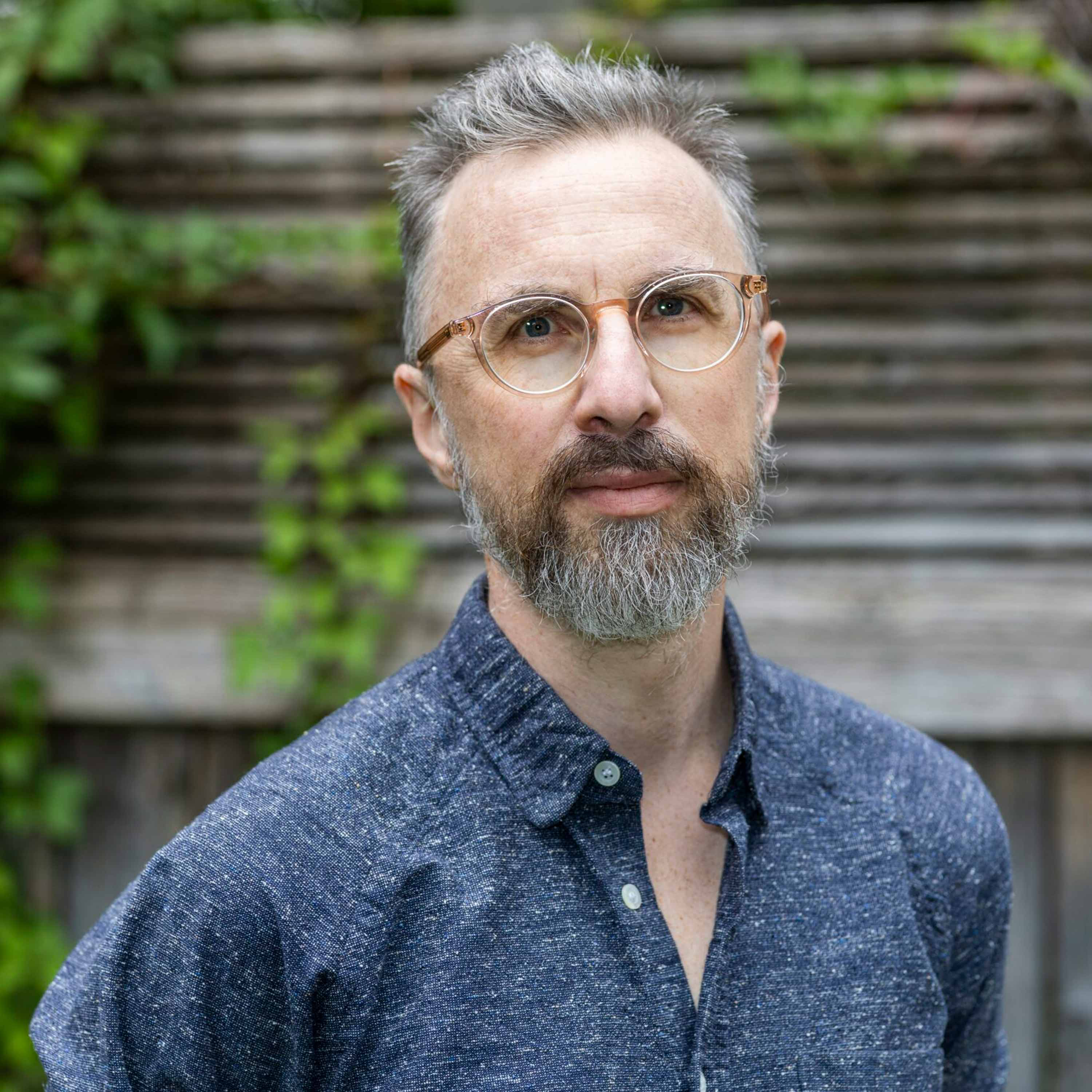
How Animals Are Adapting to Cities & Reshaping the Natural World w/ Author & Epidemiologist DAN WERB
About this episode
Dan Werb discusses how animals adapt to urban environments and the concept of synanthropes in his new book.
"So synanthropes are animals that have adapted to human-modified environments, and the Greek translation essentially is together with humans, so synanthrope. And they're a fascinating subset of wild animals that they're all around us, but we don't really notice them. And so in this new book, I was excited about writing something that had to do with the natural world. I was excited about writing something that touched on climate change. These are not just insects and earthworms and things like that. These are very large predators that have nevertheless found a way to survive among us. And that in and of itself I think is just an amazing story and what I explore in this book." If you live in a city, you’ve probably had that moment in the middle of the night. You hear a scratching in the walls, or you catch the glowing eyes of a raccoon peering out from a dumpster, and for a second, the concrete world feels a lot less 'controlled' than we like to pretend. We’ve been taught to think of cities as 'biological deserts'—places where nature goes to die. But my guest today, Dan Werb, says that’s a myth we tell ourselves to feel safe. Dan is an award-winning epidemiologist and a musician…
People in this episode
Host: Mia Funk
Guest: Dan Werb
Topics covered
- synanthropes
- urban wildlife
- climate change
- adaptation
- epidemiology
Keywords
- urban wildlife
- synanthropes
- climate change
- adaptation
- Dan Werb
Mentioned in this episode
Books & works: Our Wild Familiars
More episodes of Sustainability, Climate Change, Renewable Energy, Politics, Activism, Biodiversity, Carbon Footprint, Wildlife, Regenerative Agriculture, Circular Economy, Extinction, Net-Zero · One Planet Podcast
- Our Wild Familiars - DR. DAN WERB on Animals that Live Among Us & Urban Wildlife Conservation - Highlights
- Reincarnation, Food & Memory: AMITAV GHOSH on What Connects Us in an Age of Climate Crisis
- From Extraction to Regeneration: Redesigning Our Relationship with Nature
- Voices for the Earth: Sustainability, Nature, and the Changing World
- Building Bridges Between Nature, Memory & Architecture with SALWA & SELMA MIKOU
Explore listener stats, chart rankings, contacts and more on the Sustainability, Climate Change, Renewable Energy, Politics, Activism, Biodiversity, Carbon Footprint, Wildlife, Regenerative Agriculture, Circular Economy, Extinction, Net-Zero · One Planet Podcast podcast page.