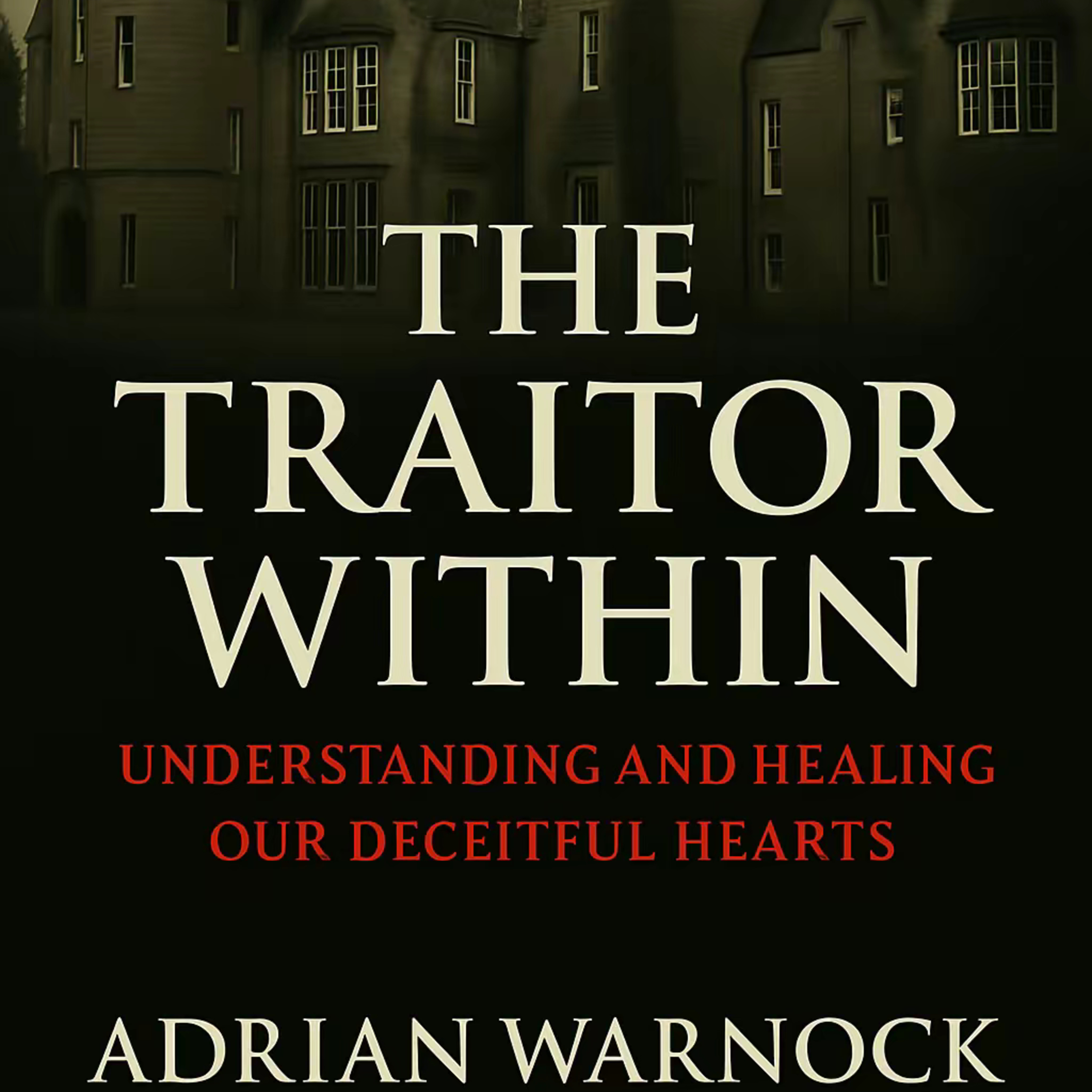
Why you can’t trust your eyes, your ears or The Traitor Within
About this episode
The episode discusses the unreliability of sensory perception in the age of deep fakes and the complexities of communication.
Seeing is not believing. We say that seeing is believing, and yet we know that's not true. Since the advent of deep fakes, particularly, we can't trust any videos we see online anymore. We don't know if that video we've just watched of a celebrity doing something, or a normal member of the public doing something, is true. It could be a sort of drama that someone's made up, or more than that, it could be something that a computer has made up. I watched one just recently of a gorilla, I think, and a child had fallen into his cage, or his enclosure, and he picked up this child and passed him up to the parents to rescue. It all looked very convincing, and then I saw, right on the video description, it said, this has been created by AI. So it was complete nonsense, and it was not true. It does mean, though, that we can't trust anything we see with our eyes anymore. But optical illusions have for centuries highlighted the many ways that we do not even see the world accurately. Our brains take signals from our optic nerves and creates an approximation of the reality which serves us very well but can mislead us in many ways. The same is true of listening to or reading other people’s…
More episodes of The Adrian Warnock Christian Podcast
- Words of hope from John Newton updated into modern English. Forgiveness gives us the time to change.
- Logos Bible Software Review Part Two
- Logos Bible Software 2026 Libraries Review PART ONE
- The Traitors Season 4 UK Final and Moral Reasoning
- Safe through life's storms: Jonah, John Newton and me!
- Why Do I Feel So Lonely? How Can I Find A Friend?
Explore listener stats, chart rankings, contacts and more on the The Adrian Warnock Christian Podcast podcast page.