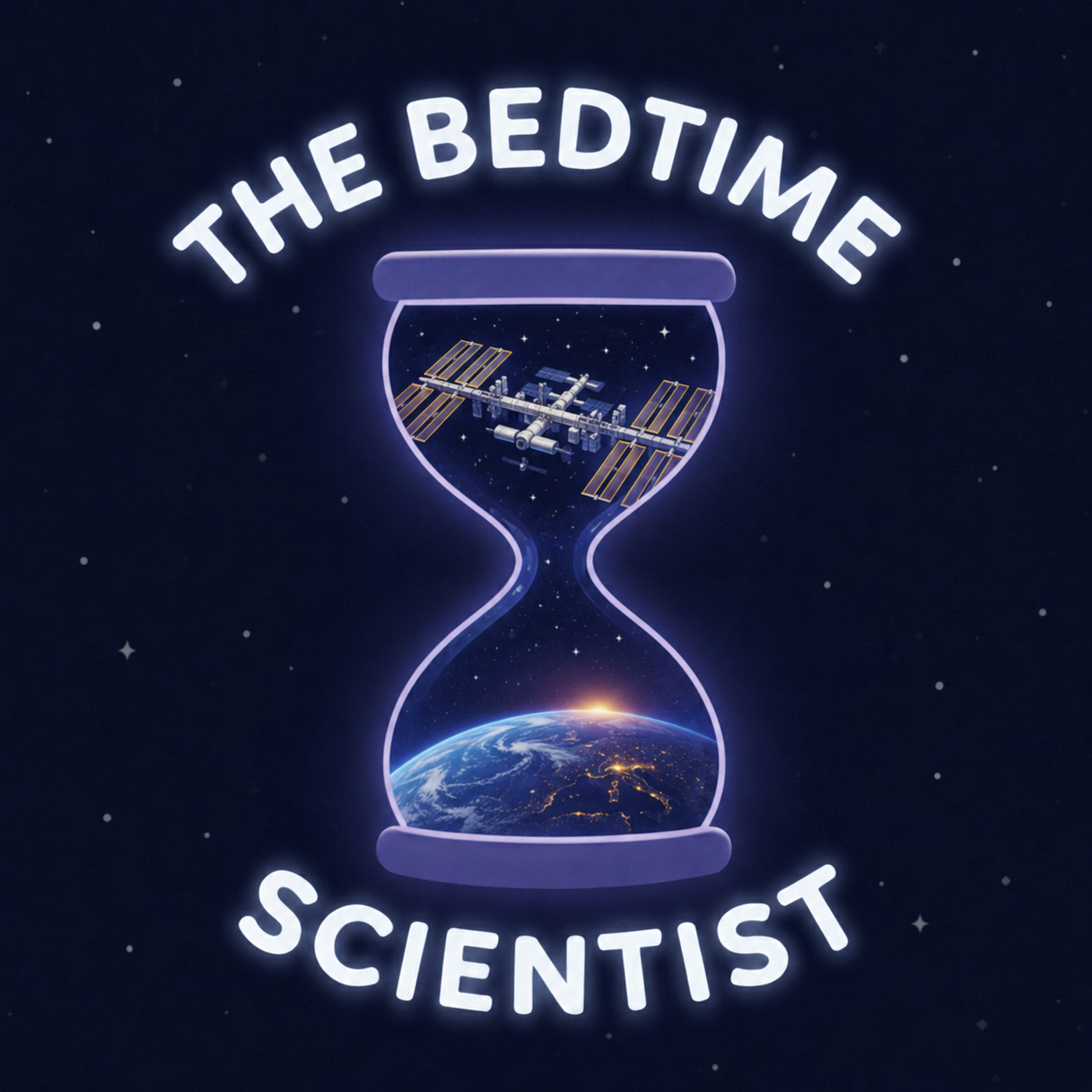
International Space Station: Sixteen Sunrises
About this episode
This episode explores the International Space Station and the unique experiences of astronauts living in space.
Tonight, we go all the way up.Two hundred and fifty miles above the Earth, a house circles our planet every ninety minutes, and the people inside it watch sixteen sunrises every single day. Please be sure to follow the show to ensure you never miss a new episode! This is the story of the International Space Station: how it floats, how it falls, and how humans from many different countries built a tiny village together in the dark above the world. We'll learn why water becomes perfect floating spheres in space, why fire turns into a small blue ball when there is no up or down, and why astronauts had to choose a bedtime even while morning kept arriving again... and again... and again outside the window. A calm bedtime story about real science, human cooperation, and the slow turning of the Earth beneath us. 🌙 The Bedtime Scientist is a sensory-friendly bedtime podcast for curious kids and the grown-ups beside them. No music. No sound effects. No loud voices. Just one steady voice, and the real wonder of the world, told at the pace of falling asleep. New episodes weekly.
People in this episode
Host: Josh Fleishman
Topics covered
- space
- International Space Station
- astronauts
- science
- human cooperation
- bedtime story
Keywords
- International Space Station
- sunrises
- space science
- astronauts
- floating spheres
- fire in space
- bedtime story
Mentioned in this episode
Places: International Space Station, Earth, many different countries
More episodes of The Bedtime Scientist: Calm Science for Sleepy Kids
- Friendship: The Science of Closeness
- Fireflies: The Light that Waited
- Clouds: The Shape Water Borrows
- Dinosaur Fossils: How Scientists Tell Time | Calm Bedtime Science for Kids & Adults
- The Chunnel: A Train Ride Beneath the Sea
- Sharks: Replacing Fear with Wonder
Explore listener stats, chart rankings, contacts and more on the The Bedtime Scientist: Calm Science for Sleepy Kids podcast page.