Jane Schoenbrun on Teenage Sex and Death at Camp Miasma
About this episode
Jane Schoenbrun discusses her film Teenage Sex and Death at Camp Miasma, exploring its themes of desire and horror.
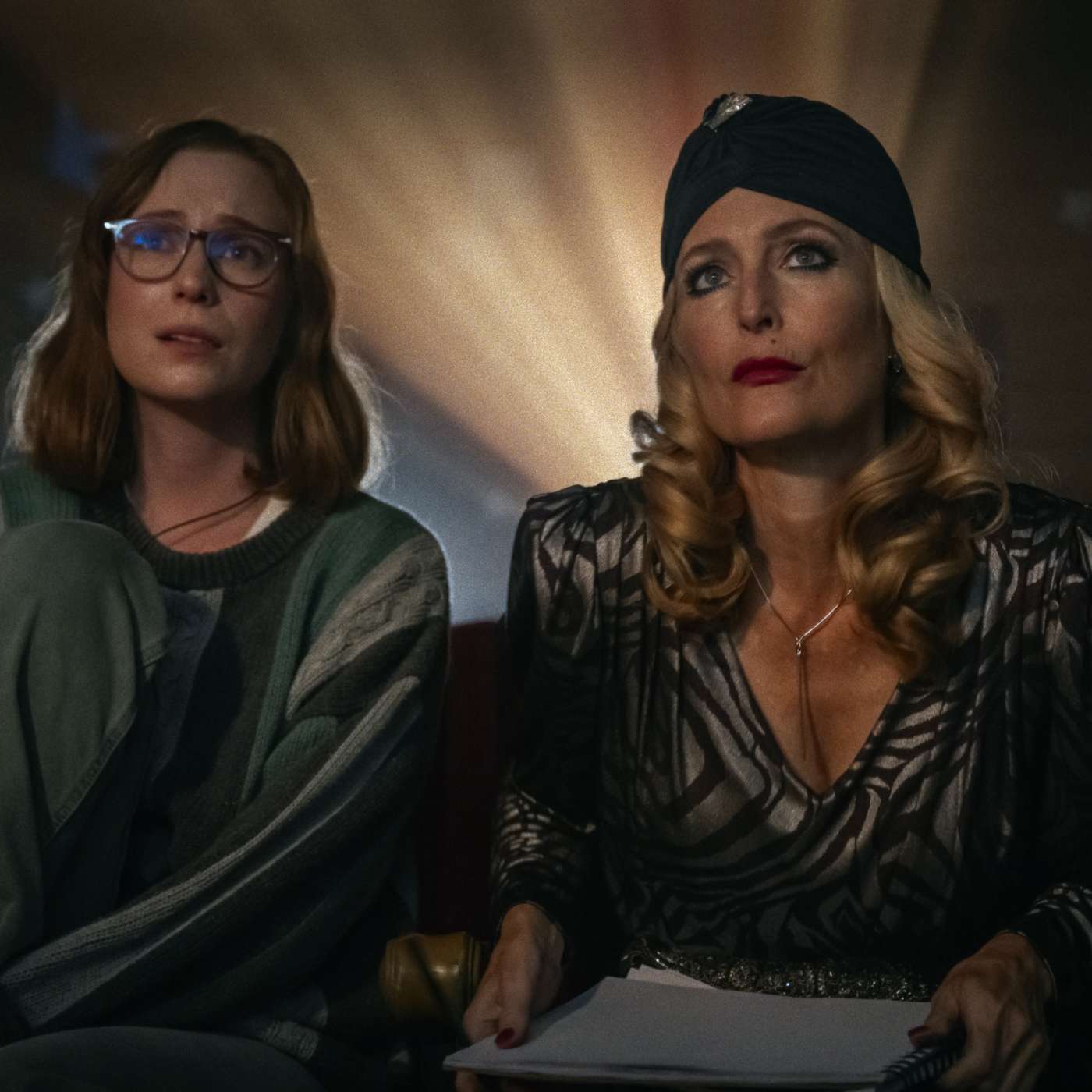
Teenage Sex and Death at Camp Miasma , Jane Schoenbrun’s third narrative feature, opens in theaters tomorrow. Dizzyingly meta-textual and deliciously, well, campy, the film stars Hannah Einbinder as an emerging queer filmmaker tasked with directing a reboot of a fictional ’80s slasher franchise titled Camp Miasma . She decides to visit the final girl of the original movie who is now an eccentric middle-aged recluse, played by Gillian Anderson, who’s living on the campgrounds where the first movie was shot. What unfolds is, in the words of our critic Nathan Lee, a “gore-soaked, titty-bouncing, sexploitation fever dream girded by real conceptual brio.” Meditations on the perverse riddles of desire as well as the queer subtexts of many slasher films and the kind of strange identification they invite from the spectator are rendered with perfectly pitched horror theatrics and laugh-out-loud humor. Film Comment Editor Devika Girish spoke with Schoenbrun about this very rich text, trying to unpack the film’s layers—but not too hard, because if there’s one thing you can take away from Teenage Sex and Death at Camp Miasma, it’s that analysis is a boner-killer and mystery is hot. Subscribe…
More episodes of The Film Comment Podcast
- Venice 2026 #5, with Jordan Cronk and Öykü Sofuoğlu
- Venice 2026 #4, with Eva Sangiorgi and Paola Casell
- Venice 2026 #3, with Jonathan Romney and Tim Grierson
- Venice 2026 #2, with Bilge Ebiri and Guy Lodge
- Venice 2026 #1, with Miriam Bale and Öykü Sofuoğlu
- Christopher Nolan’s The Odyssey, with Genevieve Yue and Inney Prakash
Explore listener stats, chart rankings, contacts and more on the The Film Comment Podcast podcast page.