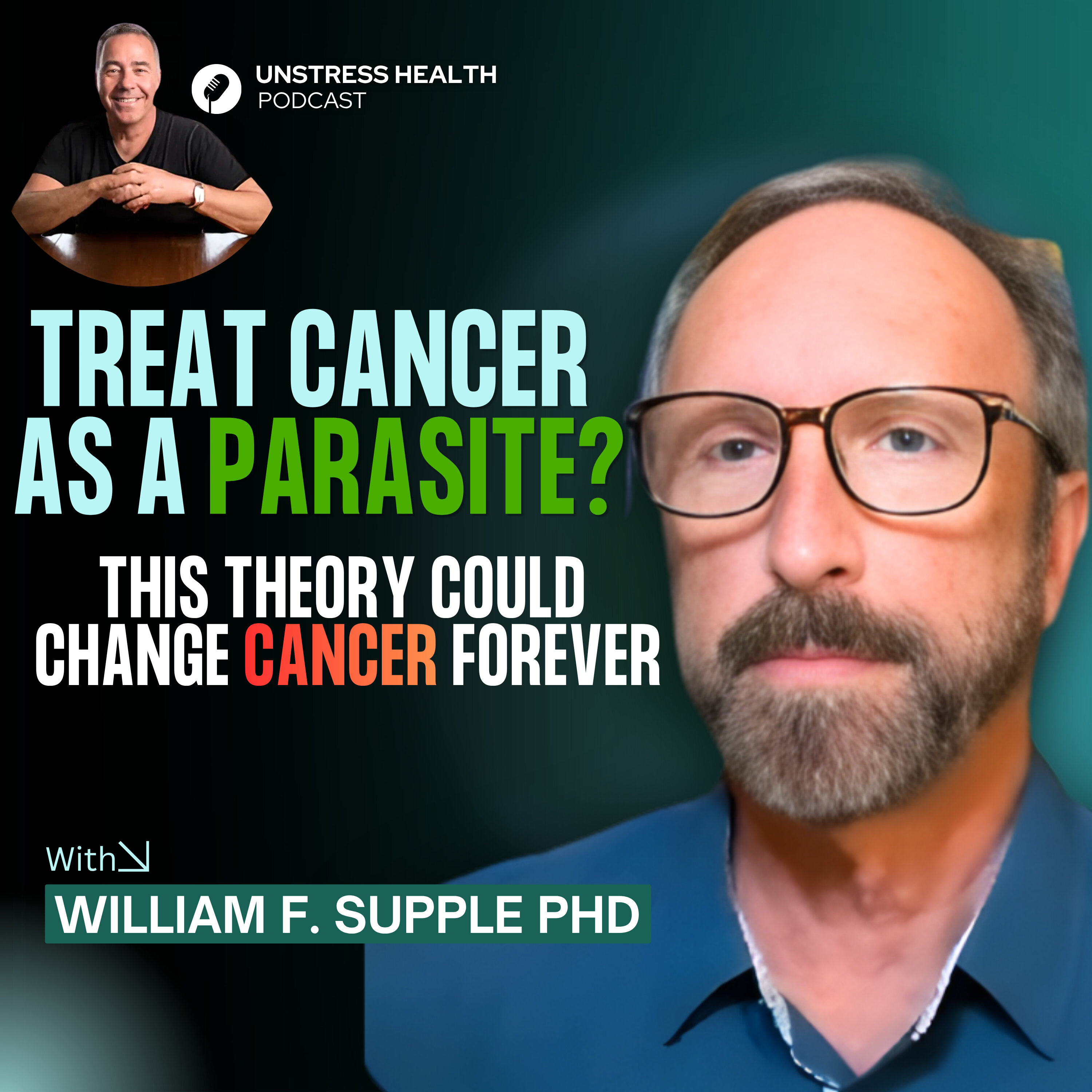
Is Cancer a Parasite? A Radical New Perspective with William F. Supple PhD
About this episode
This episode features William F. Supple PhD discussing a radical new perspective on cancer as a parasite and the implications of antiparasitic drugs in treatment.
This episode explores an alternative framework for understanding cancer biology. William Supple shares the story that led him to investigate antiparasitic drugs, particularly fenbendazole, after witnessing a remarkable recovery in a family member. He explains the similarities between parasites and cancer cells, the mechanisms behind antiparasitic drugs, and why such approaches remain outside mainstream oncology. The discussion also touches on systemic issues in medical research, global health disparities, and the role of inflammation and environmental factors in chronic disease. ◉ 𝐀𝐛𝐨𝐮𝐭 𝐨𝐮𝐫 𝐆𝐮𝐞𝐬𝐭: William F. Supple PhD is a neuroscientist trained at Dartmouth College, specializing in systems neurobiology, learning, and memory. He is the author of a book: Cancer is a Parasite The Sunlight Solution (upcoming June) He shares research and case studies via his Substack: 🔗 https://fenbendazole.substack.com ◉ 𝗪𝗵𝗮𝘁 𝗬𝗼𝘂’𝗹𝗹 𝗟𝗲𝗮𝗿𝗻 𝗶𝗻 𝗧𝗵𝗶𝘀 𝗘𝗽𝗶𝘀𝗼𝗱𝗲 ✔️ A new hypothesis: cancer as a parasite-like entity ✔️ How antiparasitic drugs may impact cancer cells ✔️ The role of microtubules in both parasites and cancer ✔️ Why some…
More episodes of Unstress with Dr Ron Ehrlich
- COVID, Immunity & The Truth We Missed – with Prof Robert Clancy
- From Food Critic to Regenerative Farmer: Rethinking What We Eat with Matthew Evans
- Leading Under Pressure: How to Master Stress & Thrive in Leadership with Dr Amar Dhall
- Breaking the Silence: Understanding Domestic Violence & Coercive Control with Patricia Gordon-Stevens
- Measuring the Invisible: Decoding Nutrient Density and the Nutrimeter with Chris Macquet
- Digital Nutrition: How to Use Tech Without Letting It Control Your Mind | Jocelyn Brewer
Explore listener stats, chart rankings, contacts and more on the Unstress with Dr Ron Ehrlich podcast page.