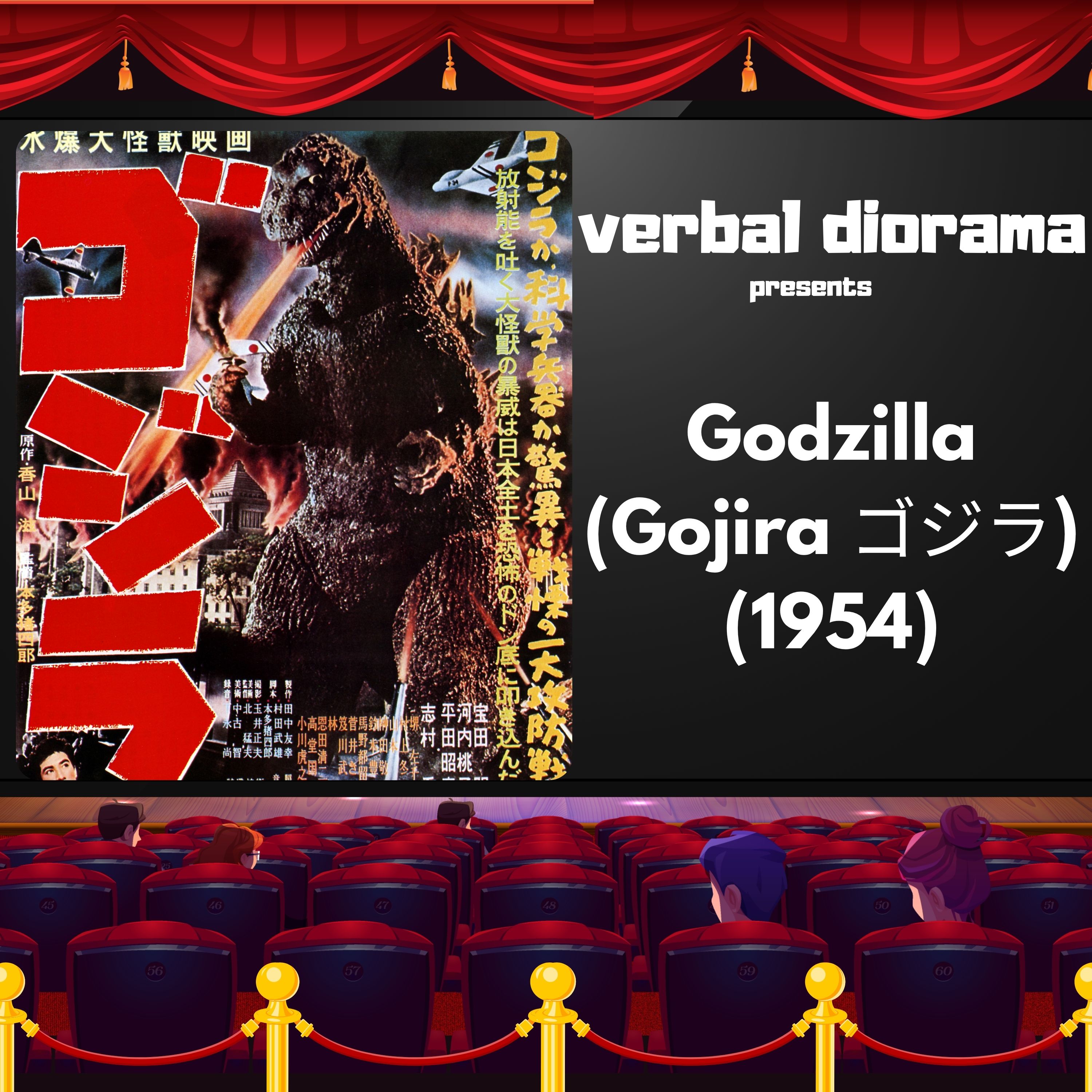
Godzilla (Gojira ゴジラ) (1954)
About this episode
This episode explores the origins and cultural significance of the 1954 film Gojira (Godzilla), reflecting on its themes of nuclear terror and national grief in post-war Japan.
In the spring of 1954, a Japanese fishing vessel called the Lucky Dragon No. 5 sailed into the fallout zone of an American hydrogen bomb test at Bikini Atoll. Its crew came home irradiated, and Japan, a nation still raw from Hiroshima and Nagasaki less than a decade earlier, found itself confronting nuclear terror all over again. Within months, Toho producer Tomoyuki Tanaka, with a collapsed co-production and an empty budget to fill, conceived a monster movie. What emerged from that collision of commercial necessity and national grief was Gojira (aka Godzilla ) ; a film in which director Ishirō Honda, effects genius Eiji Tsuburaya, and a nation's unspoken anguish combined to create something cinema had never quite seen before. The character of Godzilla has evolved over 70 years, embodying contemporary fears and anxieties in a uniquely artistic way. Godzilla was never simply a creature feature. Honda had walked through the ruins of Hiroshima after the war. When his monster surfaced from the Pacific, awakened and mutated by nuclear testing, and reduced Tokyo to ash and radiation, Japanese audiences weren't watching spectacle. They were watching their own grief and trauma on screen…
More episodes of Verbal Diorama
Explore listener stats, chart rankings, contacts and more on the Verbal Diorama podcast page.