Your Ledger Stores Balances. I Built One That Stores Intentions.
About this episode
The episode discusses a new type of blockchain ledger that records intentions behind transactions rather than just balances.
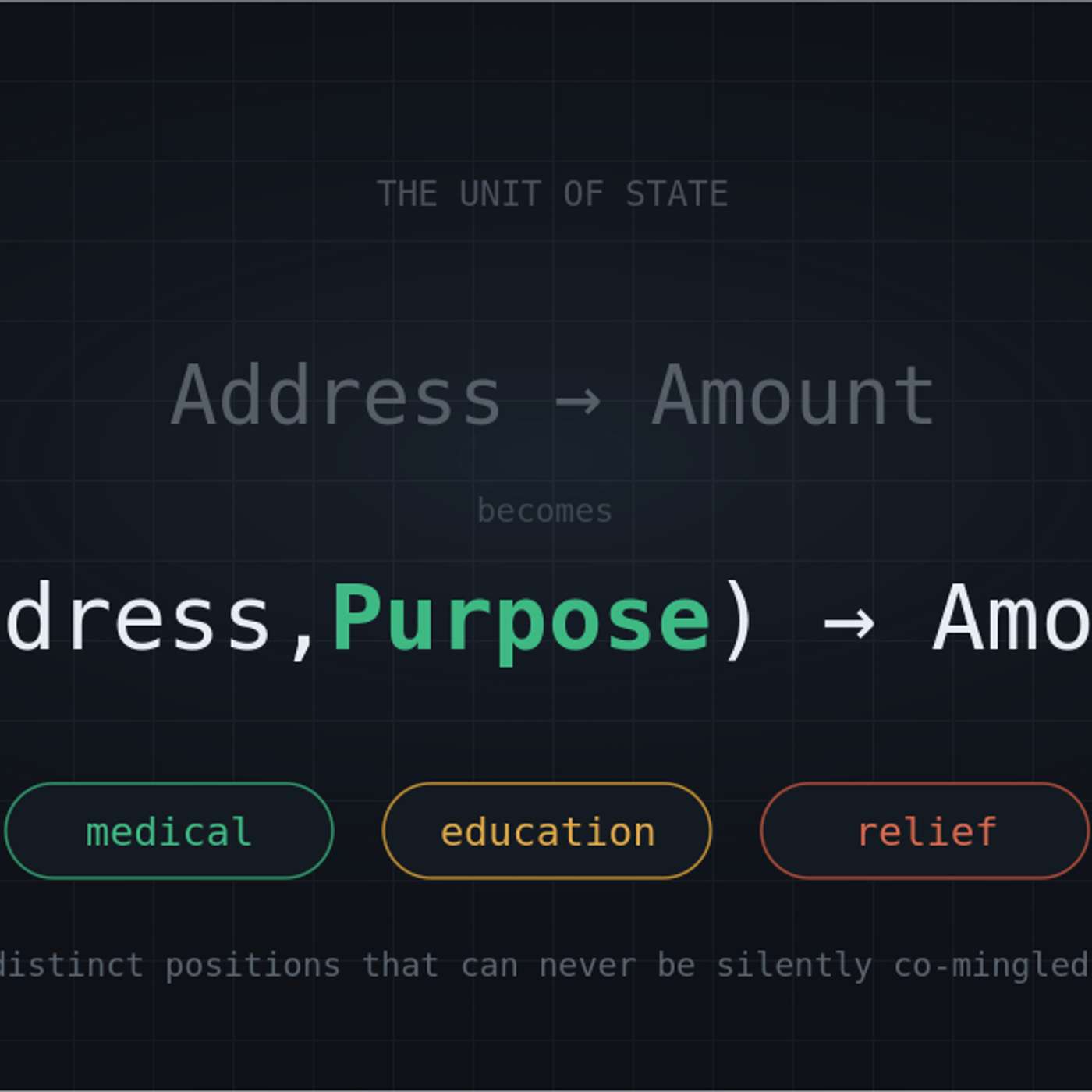
This story was originally published on HackerNoon at: https://hackernoon.com/your-ledger-stores-balances-i-built-one-that-stores-intentions . A blockchain ledger records who owns what. I built one that records what each unit was given for, as a consensus rule, with spending gated by on-chain proof Check more stories related to web3 at: https://hackernoon.com/c/web3 . You can also check exclusive content about #blockchain , #web3 , #formal-verification , #distributed-systems , #smart-contracts , #fintech , #protocol-design , #philanthropy , and more. This story was written by: @whysasha . Learn more about this writer by checking @whysasha's about page, and for more stories, please visit hackernoon.com . TL;DRIn the account model, a blockchain ledger is a map from Address to Amount. It knows who holds how much and nothing about what the money is for. When money is given for a fixed purpose, that missing field is the whole problem. So I made the state key (Address, Purpose), made non-reassignability a rule of the transition function, and put disbursement behind on-chain verification. Here is how it works, how it differs from ERC-1155 and colored coins, and where it still falls short.
More episodes of Web3 Tech Brief By HackerNoon
- NodeMeta Expands Its Multi-Utility Web3 Vision With OneKey, TrustScan AI and NTE
- Bitcoin Miners Aren’t Merely Mining Bitcoin. They’re About To Be The AI Power Layer
- TradFi Volumes Triple, 12M Users Reached as BTCC Exchange Marks 15 Years
- Your Backtest Left Out the Two Costs That Kill It
- Cantor8 Co-founder Reni Achkar on Why Private Credit Could be The Real Tokenization Opportunity
- What a Payment Protocol Bug Taught Me About Reconciliation at Scale
Explore listener stats, chart rankings, contacts and more on the Web3 Tech Brief By HackerNoon podcast page.