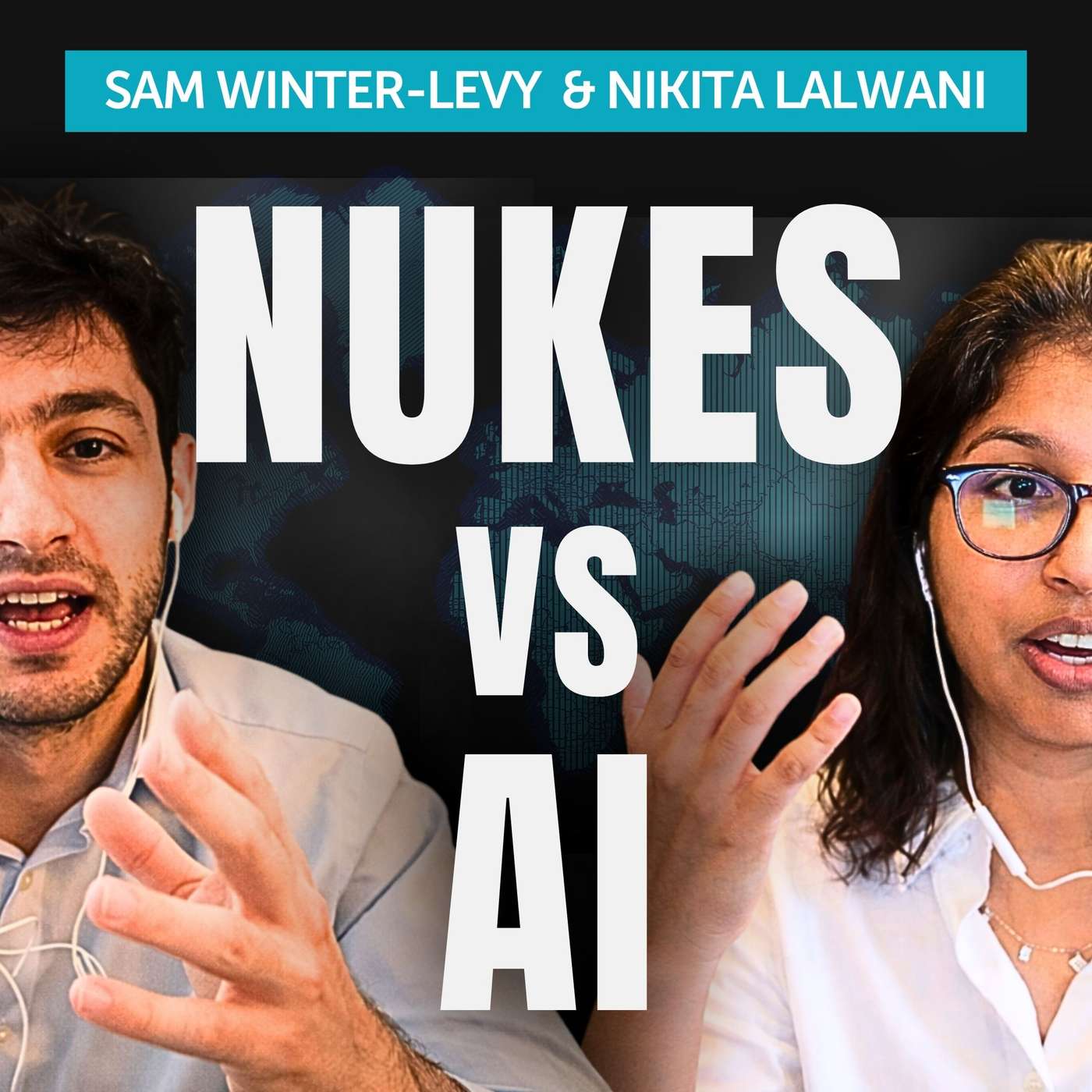
#238 – Sam Winter-Levy and Nikita Lalwani on how AGI won't end mutually assured destruction (probably)
About this episode
The episode discusses the implications of AI on nuclear deterrence and the potential dangers it poses in geopolitics.
How AI interacts with nuclear deterrence may be the single most important question in geopolitics — one that may define the stakes of today’s AI race. Nuclear deterrence rests on a state’s capacity to respond to a nuclear attack with a devastating nuclear strike of its own. But some theorists think that sophisticated AI could eliminate this capability — for example, by locating and destroying all of an adversary’s nuclear weapons simultaneously, by disabling command-and-control networks, or by enhancing missile defence systems. If they are right, whichever country got those capabilities first could wield unprecedented coercive power. Today’s guests — Nikita Lalwani and Sam Winter-Levy of the Carnegie Endowment for International Peace — assess how advances in AI might threaten nuclear deterrence: Would AI be able to locate nuclear submarines hiding in a vast, opaque ocean? Would road-mobile launchers still be able to hide in tunnels and under netting? Would missile defence become so accurate that the United States could be protected under something like Israel’s Iron Dome? Can we imagine an AI cybersecurity breakthrough that would allow countries to infiltrate their rivals’…
More episodes of 80,000 Hours Podcast
- #242 – Will MacAskill on how we survive the 'intelligence explosion,' AI character, and the case for 'viatopia'
- Risks from power-seeking AI systems (article narration by Zershaaneh Qureshi)
- How scary is Claude Mythos? 303 pages in 21 minutes
- Village gossip, pesticide bans, and gene drives: 17 experts on the future of global health
- What everyone is missing about Anthropic vs the Pentagon. And: The Meta leaks are worse than you think.
- #241 – Richard Moulange on how now AI codes viable genomes from scratch and outperforms virologists at lab work — what could go wrong?
Explore listener stats, chart rankings, contacts and more on the 80,000 Hours Podcast podcast page.