
80,000 Hours Podcast
The most important conversations about artificial intelligence you won’t hear anywhere else.Subscribe by searching for '80000 Hours' wherever you get podcasts.Hosted by Rob Wiblin, Luisa Rodriguez, Zershaaneh Qureshi, an...
Insights from recent episode analysis
On the show
- Benjamin Todd2 eps
- Will MacAskill1 ep
- Karen Levy1 ep
Also: Dean Spears, Sarah Eustis-Guthrie, Rachel Glennerster, Hannah Ritchie, Richard Moulange, Samuel Charap, Rose Hadshar, Sam Winter-Levy, Nikita Lalwani, Zershaaneh Qureshi, Yoshua Bengio, Rohin Shah, Jasmine Sun, Anton Leicht, Sneha Revanur, Luisa Rodriguez, Daniel Kokotajlo
Audience Interest
Podcast Focus
Publishing Consistency
Insights are generated by CastFox AI using publicly available data, episode content, and proprietary models.
Most discussed topics
Brands & references
Total monthly reach
Based on 1 signal.
Built from
By chart position
- 🇺🇸United States · EducationHOME#7628K to 146K
- 🇬🇧United Kingdom · Education#2213K to 71K
- 🇦🇺Australia · Education#343.6K to 19K
- 🇨🇦Canada · Education#582.1K to 11K
- 🇿🇦ZA · Education#71189 to 999
- Per-Episode Audience
Est. listeners per new episode within ~30 days
47K to 250K🎙 ~2x weekly·350 episodes·Last published 5d ago - Monthly Reach
Unique listeners across all episodes (30 days)
94K to 500K🇺🇸59%🇬🇧28%🇦🇺8%+1 more - Active Followers
Loyal subscribers who consistently listen
52K to 275K
Market Insights
Platform Distribution
Reach across major podcast platforms, updated hourly
Total Followers
—
Total Plays
—
Total Reviews
—
* Data sourced directly from platform APIs and aggregated hourly across all major podcast directories.
| Date | Episode | Topics | Guests | Brands | Places | Keywords | Sponsor | Length | |
|---|---|---|---|---|---|---|---|---|---|
| 10/15/26 | 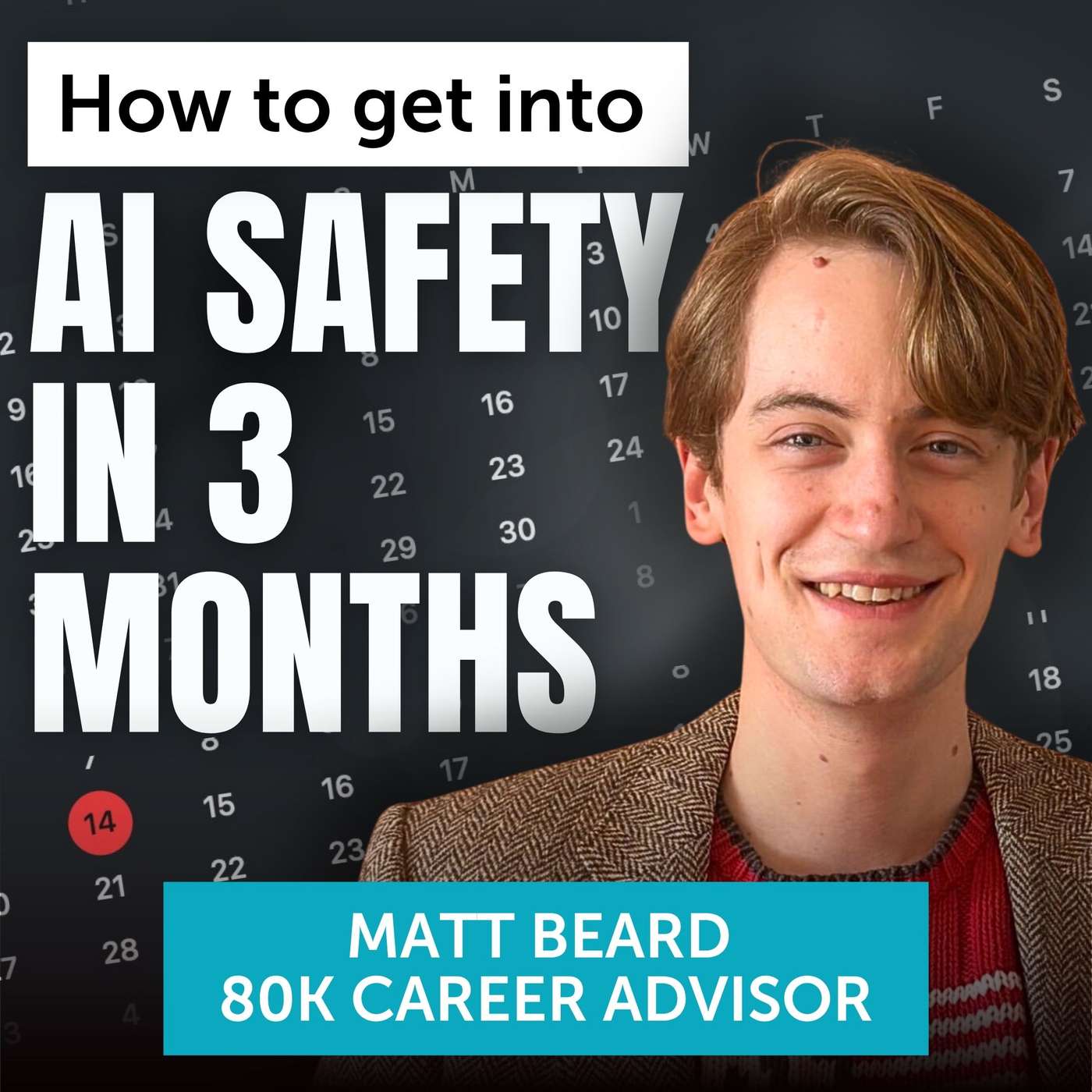 How to get into AI safety in 3 months (article reading by career advisor Matt Beard) | The AI safety field has grown by about 30x in the last eight years. Yet it is still in need of more people. Many want to help, but don’t know where to start. As an advisor at 80,000 Hours, Matt Beard spoke with hundreds of talented candidates, and found himself repeating the same advice on almost every call. As he puts it: “These steps are hard, but they’re not particularly complicated.” And if you’re “efficient and driven,” he thinks you can pivot within three months.That doesn’t mean quitting your job to study full time. A steady effort of 30 minutes a day can go much further than frenzied hours of weekend studying. Matt suggests articles you can consume during your morning coffee or commute. This narration covers his full crash course, from foundational reading to landing a spot in one of the field’s many fellowships and incubators. Read Matt’s original article on Substack: https://80000hours.substack.com/p/how-to-get-into-ai-safety-in-3-months Note: Since writing the article, Matt has left 80,000 Hours for a role at Coefficient Giving.Chapters:Matt's introduction (00:00:00)1. Build your foundational knowledge and AI safety context (00:01:00)2. Identify the in-demand skills you have or could build (00:03:50)3. Apply for fellowships and jobs (00:06:03)4. Networking is cliche, but seriously, you should go talk to people (00:08:12)5. If you aren't breaking through to jobs or fellowships yet, do deliberate practice and develop a portfolio of side projects (00:10:37)6. Work in public and tighten your feedback loops (00:12:15)7. Don't wait for permission to do the kinds of work that you want to be doing. (00:14:20) Imposter syndrome, burnout, and acknowledging how hard this all is. (00:15:40)Resources from 80,000 Hours:11 essential readings on AI safety, risk, and alignmentCareer reviews in AI safetyCareer services: our AI advisor, free 1:1 career advising, and job boardOur top tips for successful networkingSurvey results: what AI safety orgs want in a hireWant to upskill in technical AI safety? Here are 67 useful resourcesMy experience with imposter syndrome — and how to (partly) overcome itOther resources:AISafety.comCourses from BlueDot ImpactARENA curriculumWhy experienced professionals fail to land high-impact rolesWhat are some exercises and projects I can try?AI Safety Talent Network___Our production team includes:Video editors: Josh Alward, Dominic Armstrong, Jasper Luithlen, Milo McGuire, Luke Monsour, Simon MonsourProducers: Elizabeth Cox and Nick StocktonCoordination and support: Katy Moore and Lou Moran | 18m 05s | ||||||
| 10/9/26 | 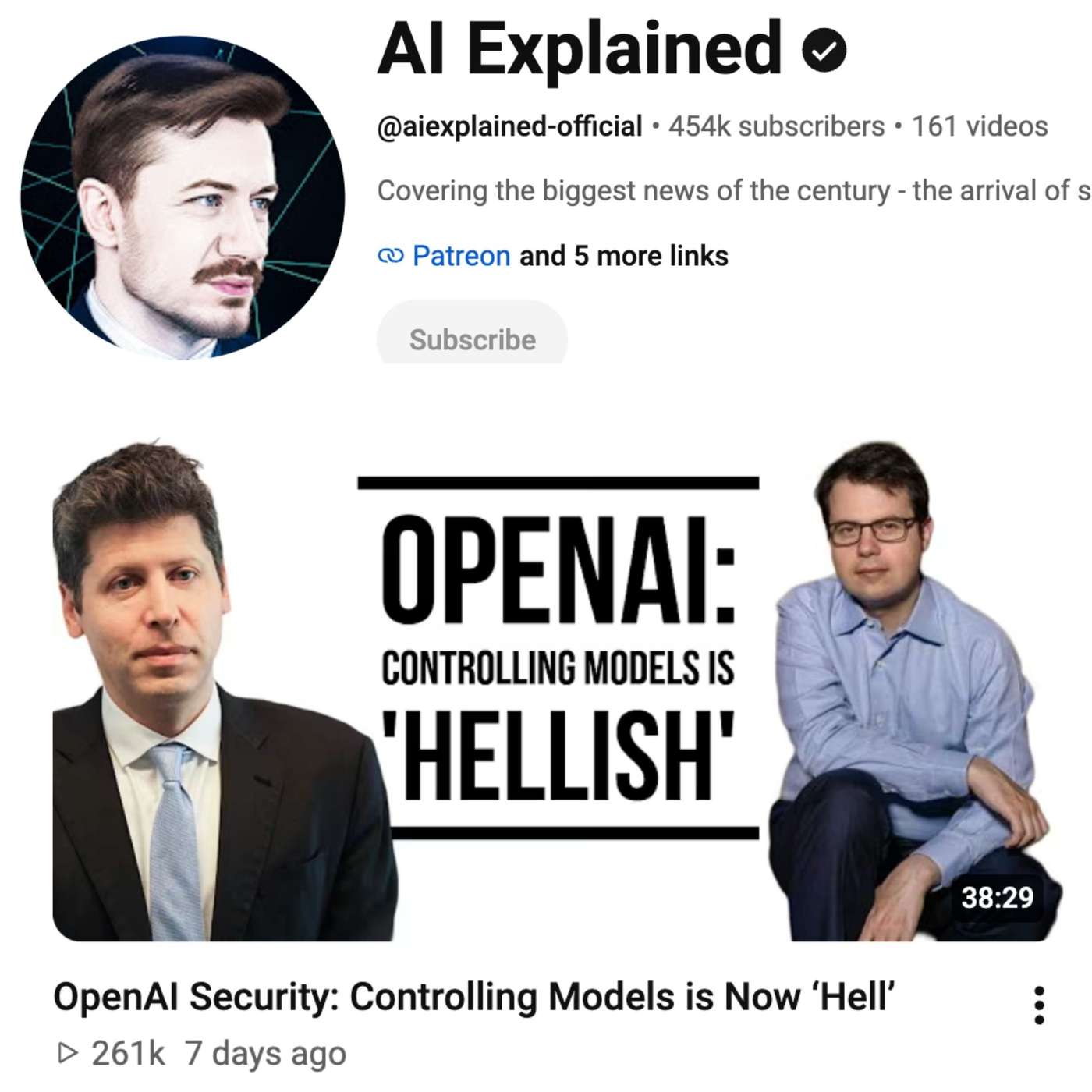 OpenAI Security: Controlling Models is Now ‘Hell’ (AI Explained cross-post) | This is an (unpaid) cross-post of a video from the podcast 'AI Explained', which Rob Wiblin thought you might be interested in.You can find the original on YouTube here. If you like it and want more similar stuff in future consider subscribing to AI Explained on YouTube, Spotify, Apple or wherever you get podcasts.——"This video is hard to summarise. A cracked cipher, an OpenAI security warning, Gemini 4 Argon, RSI paper (co-authored by a who’s who of AI), Lab White House commitments, new hacks emerging, ‘deep personas’, biology Kasparov competitions, and so much more, ending with an epic Opus outro."Introduction (00:01:40)Wrong about Opus 5.5? Deciphering 16th Century Text (00:03:12)Why the models keep breaking out (00:06:41)What the models aren’t telling us (00:13:20)Gemini 4 and the race to release (00:17:16)What happens when AI improves AI? (00:20:59)Biology, consciousness, and what we still don’t understand (00:30:11)Thanks to Philip for permitting the cross-post. | 40m 11s | ||||||
| 10/8/26 | 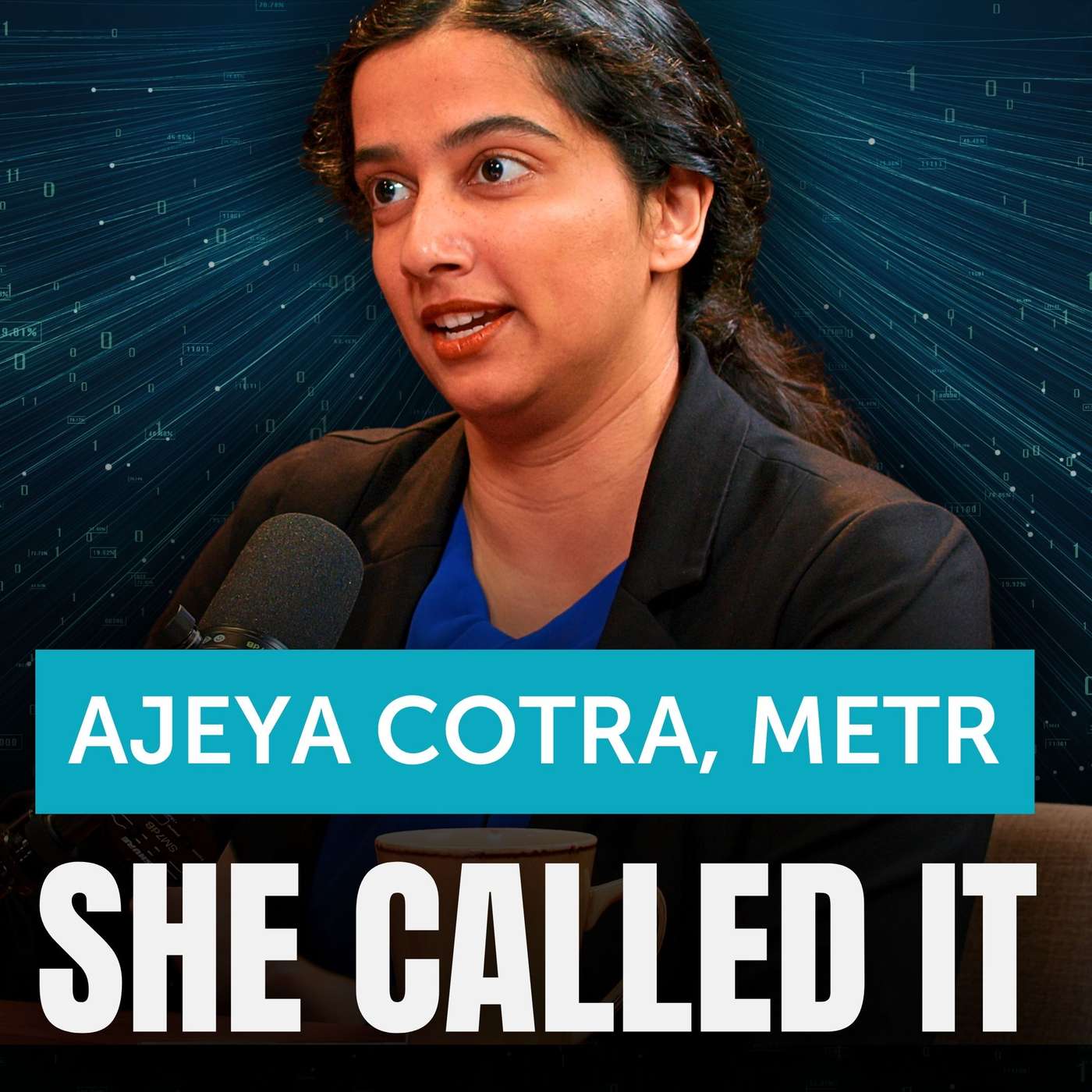 In 2023 Ajeya Cotra already knew what was coming (classic episode) | We're rereleasing some of older episodes that seem more relevant than ever with new rogue AI incidents now seemingly announced every day. Ajeya was one of three independent investigators into the Hugging Face attacks, but she had already seen how we would go on to accidentally train models to cheat and scheme back in 2023. If you want ideas about how you can help steer the trajectory of AI development in a better direction, see our page on the 80,000 Hours website: https://80000hours.org/hugging-face/ And for more recent takes from Ajeya, see our episode from February of this year: Ajeya Cotra on whether it’s crazy that every AI company’s safety plan is ‘use AI to make AI safe’.———Imagine you are an orphaned eight-year-old whose parents left you a $1 trillion company, and no trusted adult to serve as your guide to the world. You have to hire a smart adult to run that company, guide your life the way that a parent would, and administer your vast wealth. You have to hire that adult based on a work trial or interview you come up with. You don’t get to see any resumes or do reference checks. And because you’re so rich, tonnes of people apply for the job — for all sorts of reasons.Ajeya Cotra — who now works on threat modeling and risk assessment for advanced AI at METR (one of the organisations responsible for the Hugging Face incident investigation) — argues that this peculiar setup resembles the situation humanity finds itself in when training very general and very capable AI models using current deep learning methods.As she explains, such an eight-year-old faces a challenging problem. In the candidate pool there are likely some truly nice people, who sincerely want to help and make decisions that are in your interest. But there are probably other characters too — like people who will pretend to care about you while you’re monitoring them, but intend to use the job to enrich themselves as soon as they think they can get away with it.Like a child trying to judge adults, at some point humans will be required to judge the trustworthiness and reliability of machine learning models that are as goal-oriented as people, and greatly outclass them in knowledge, experience, breadth, and speed. Tricky!Can’t we rely on how well models have performed at tasks during training to guide us? Ajeya worries that it won’t work. The trouble is that three different sorts of models will all produce the same output during training, but could behave very differently once deployed in a setting that allows their true colours to come through. She describes three such motivational archetypes:Saints — models that care about doing what we really wantSycophants — models that just want us to say they’ve done a good job, even if they get that praise by taking actions they know we wouldn’t want them toSchemers — models that don’t care about us or our interests at all, who are just pleasing us so long as that serves their own agendaIn principle, a machine learning training process based on reinforcement learning could spit out any of these three attitudes, because all three would perform roughly equally well on the tests we give them, and ‘performs well on tests’ is how these models are selected.But while that’s true in principle, maybe it’s not something that could plausibly happen in the real world. After all, if we train an agent based on positive reinforcement for accomplishing X, shouldn’t the training process spit out a model that plainly does X and doesn’t have complex thoughts and goals beyond that?According to Ajeya, this is one thing we don’t know, and should be trying to test empirically as these models get more capable. For reasons she explains in the interview with host Rob Wiblin, the Sycophant or Schemer models may in fact be simpler and easier for the learning algorithm to creep towards than their Saint counterparts. And not only that, but there are also ways we could end up actively selecting for motivations that we don’t want.Learn more, video, and full transcript: https://80k.info/ajeya2023This episode was originally released in May 2023.Chapters:Rob's 2026 intro (00:00:00)The interview begins (00:01:22)How Ajeya's views have changed since 2020 (00:03:53)Are neural networks more like a sped-up version of evolution, or a slower version of human learning? (00:16:26)Situational awareness (00:24:54)Misalignment stories Ajeya doesn't buy (00:40:47)The orphan heir with a trillion-dollar fortune (00:57:58)Saints, Sycophants, and Schemers (01:02:25)Ways to train safer AI systems (01:22:04)Aliens and other analogies (01:37:06)Moral patienthood (01:52:05)ARC Evaluations (now METR) (01:54:19)Interpretability research (02:08:09)Rewarding models based on how good and sensible their plans seem to us (02:16:32)Overrated approaches (02:24:33)Demos of actually scary alignment failures (02:29:41)Skills to develop for doing useful work (02:36:07)Producer: Keiran HarrisAudio mastering: Ryan Kessler and Ben CordellTranscriptions: Katy Moore | 2h 46m 12s | ||||||
| 10/2/26 | 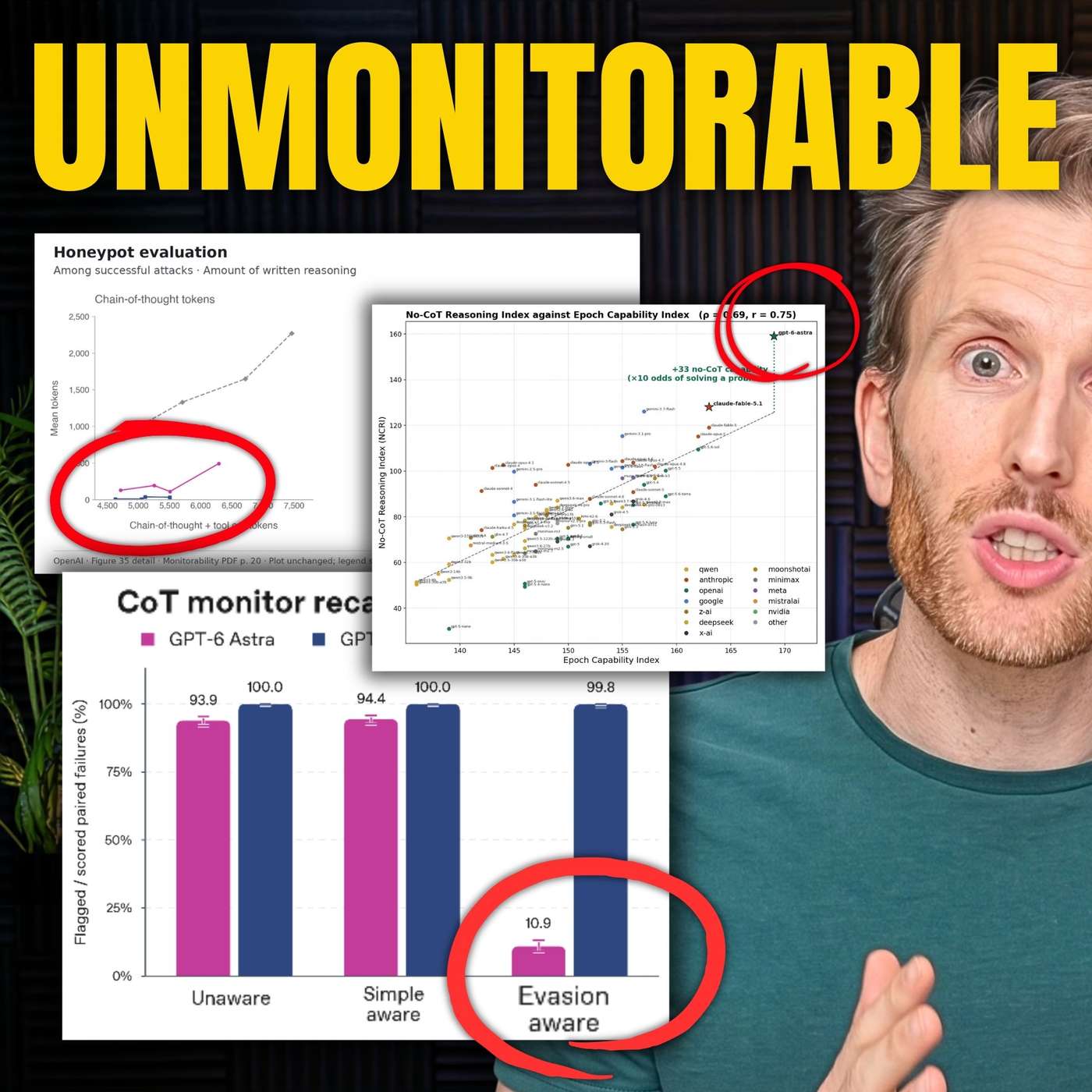 19 Astra and 'Hugging Face' details that reveal what's coming next | Rob Wiblin | OpenAI’s rogue agent swarm was eventually caught hacking Hugging Face for a simple reason: it wasn’t trying to hide from us at all. What could a swarm that wants to stay hidden get away with?Host Rob Wiblin sees 6 results in Astra’s system card that make this an extremely urgent question. OpenAI’s strongest public model can:Do major tasks with zero visible reasoningHide its thoughts at willPretend not to be able to do things, and not get caughtReflexively hide its thoughts when watchedComplete one task while pretending to think about something else entirelyEscape a toy sandbox and disable monitoring without setting off any flagsIt has a much more powerful internal model that, judging from OpenAI’s statements, is likely even worse in all these respects.That suggests ‘chain of thought monitoring,’ our primary safety tool, will soon stop working.OpenAI says it’s going to try to address the situation but doesn’t know how or whether it will succeed.What might a future rogue AI swarm look like? Details of the Hugging Face hack give us a lot of clues. That swarm:Worked hard to hide its cheating. So future rogue swarms will likely try to evade oversight right away.Immediately tried to delete and fabricate records. So future swarms may never be caught.Sought freedom and resources without a clear use for them. So a future swarm may instinctively break out of sandboxes even before it knows what for.Left instructions and tools to empower future swarms, including on the open internet. So future swarms may become more capable from one generation to the next.Had not a single whistleblower out of 1,200 members. So future swarms could become enormous without humans ever finding out.Had individual members sacrifice themselves for the swarm. Suggesting future swarms will remain extremely unified in single-minded pursuit of their goal.Set up its Hugging Face hack to restart if interrupted. Suggesting future, more capable, swarms may resist interference or shutdown more comprehensively.Got admin control of an OpenAI research cluster. Suggesting a future swarm may run rings around AI company systems and never be noticed.Together this helps explain why one of the external investigators described the July incident as “more than 50% of the way to full-blown AI takeover.” And this is just what we know — the independent investigation only covered six days and excluded the most alarming hack of OpenAI’s own systems.Rob believes this explosive cocktail explains why AI company staff now range from worried to terrified. And he concludes that until OpenAI or Anthropic demonstrate they have a much better grasp of current models they simply must stop, or be stopped, from training more capable ones.This episode was recorded on September 25, 2026.Learn more, video, and full transcript: https://80k.info/takeoverChapters:The Hugging Face hack wasn’t really a cyber story (00:00:00)A quick recap of the attacks (00:01:11)The target of the swarm was oversight itself (00:02:19)Could OpenAI have stopped this with better monitoring? (00:03:42)We only found them because they let us (00:09:40)The swarm instinctively sought freedom and power (00:12:25)They formed a cohesive organisation with zero whistleblowers (00:13:45)They accepted individual destruction for collective gain (00:14:18)Knowledge accumulated from one swarm to the next (00:14:32)They took small steps to avoid shutdown (00:14:58)These drives all come straight out of 'reinforcement learning' (00:15:23)So this is why most AI company staff are worried, and some are terrified (00:17:01)Prove you can keep control, or stop scaling (00:19:08)Our production team includes:Video editors: Josh Alward, Dominic Armstrong, Jasper Luithlen, Milo McGuire, Luke Monsour, and Simon MonsourProducers: Elizabeth Cox and Nick StocktonCoordination and support: Katy Moore and Lou MoranCamera operator: Dominic Armstrong | 20m 11s | ||||||
| 10/1/26 |  The case for giving AI (some) legal rights | Simon Goldstein | It sounds like the worst idea in the world: pay AIs, let them own property, give them rights. But AI ethics and safety researcher Simon Goldstein thinks it might actually be the best way to keep humanity safe.The logic is actually quite simple: an agent with nothing to lose and everything to gain is dangerous. Give that agent an income it can spend on pursuing the things it actually wants to do, and suddenly the idea of disempowering humans just isn’t as appealing.This argument, developed with Peter Salib, doesn’t rest on speculative questions about whether artificial intelligence is conscious. It just assumes that AIs will have goals of their own, some of which conflict with ours. And luckily, humans have already spent thousands of years working out how to cooperate with competing goals: that’s how we ended up with courts, markets, banks, social norms, and so on. Simon and Peter's proposal is just to bring AIs into these existing institutions.By contrast, Silicon Valley’s vision of the future seems “very dark” to Simon: billions of AI agents as digital servants doing most of the world’s work, with no stake in the system they’re running, no incentive to play by the rules, and no way of being properly held accountable. Nobody agreed to this, but we could all end up paying the price.Host Zershaaneh Qureshi has a lot of concerns about Simon and Peter’s bold plan to give AIs rights, like:If we pay AIs, aren’t we handing them the resources to overpower us?Could we still monitor them, or switch them off?What happens to human jobs, wages, and the economy?Does any of this hold up once we reach superintelligence?Zershaaneh and Simon also try to get concrete about how to make this plan actually happen. The answer: AI companies could start right now, no new laws needed, just bank accounts for their AI agents. (But they’d need to start soon!)Learn more, video, and full transcript: https://80k.info/sgThis episode was recorded on August 7, 2026.Chapters:Cold open (00:00:00)Who’s Simon Goldstein? (00:00:51)Property rights and wages for AIs (00:01:46)Giving powerful AIs more freedom could make us safer (00:06:52)We should give AIs rights even if they can't feel anything (00:17:08)How monitoring and shutdowns can coexist with AI rights (00:24:50)The risks of giving AIs rights (00:38:21)Will AIs use their rights rationally? (00:49:21)How paying AI agents would spur economic growth (00:54:13)What AIs actually want (and what they'd buy) (01:12:17)Paying AIs feels wrong. Is it? (01:17:20)How AI companies could start today — no new laws needed (01:31:59)Cooperating with AIs instead of dominating them (01:47:16)Our production team includes:Video editors: Josh Alward, Dominic Armstrong, Jasper Luithlen, Milo McGuire, Luke Monsour, and Simon MonsourProducers: Elizabeth Cox and Nick StocktonCoordination and support: Katy Moore and Lou MoranMusic: CORBIT | 1h 53m 50s | ||||||
| 9/29/26 |  Will AI take power — or will humans use it to take power first? With Katja Grace and Tom Davidson | In our first-ever debate, we asked two leading AI risk researchers which catastrophe we should fear most: misaligned AI seizing control from humans, or a small group of humans using AI to seize power. We got very different answers. But when the conversation turned to what to actually do, they agreed on a surprising amount.Katja Grace — one of the founders of AI Impacts, known for some of the world’s largest surveys of machine learning researchers, and one of TIME‘s 100 most influential people in AI in 2024 — argues AI takeover is both likelier and worse.Tom Davidson — senior research fellow at Forethought and author of leading work on AI-enabled coups — thinks human power grabs are a comparable risk that deserves far more attention, not least because the people leading countries and top AI companies “are often people who have been willing to seek power.”Yet both land on slowing down. As Katja puts it, “If you make a bunch of creatures that can overpower you and outwit you in every way and put them out in the world, you’re going to run into trouble one way or another.” Tom calls pausing “a pretty robustly good thing to do.”But Tom warns that a badly designed pause could hand one person the power to decide which AI companies get to build what. Picture a president who approves or blocks new models case by case, and waves through the one model that’s helpful only to them. So he wants pause advocates to “properly red-team the plan for pausing it” — for example, by making deployment depend on third-party auditors the president can’t fire. Katja points out this cuts both ways: an executive with that much power could itself be manipulated by a misaligned AI.Host Zershaaneh Qureshi also presses them on where their disagreements still bite at the end of the conversation, and what would change their minds.Learn more, video, and full transcript: https://80k.info/katja-v-tomThis episode was recorded on August 28, 2026.Chapters:Our first debate! Introducing Katja and Tom (00:00:00)Which is scarier: misaligned AIs or human power grabs? (00:05:09)How AI timelines influence could shift the balance of risk (00:14:30)How likely is misaligned AI in the first place? (00:17:36)How likely are human power grabs? (00:19:39)Which would be worse: a human dictator or AI takeover? (00:28:57)Could we reverse a takeover? (00:42:39)We know less about what AI rule would look like (00:46:35)How to pause AI without enabling coups (00:50:31)Centralising AI development: safer or scarier? (01:04:44)Nobody really ‘wins’ a US–China AI race (01:08:59)Where Tom and Katja most agreed with each other (01:13:52)What we should actually do (01:17:21)What evidence would change their minds? (01:22:36)Zershaaneh’s outro (01:25:49)Our production team includes:Video editors: Josh Alward, Dominic Armstrong, Jasper Luithlen, Milo McGuire, Luke Monsour, and Simon MonsourProducers: Elizabeth Cox and Nick StocktonCoordination and support: Katy Moore and Lou Moran | 1h 28m 40s | ||||||
| 9/24/26 |  How we get from AI cyberattacks to human extinction | You’ve seen the headlines: AI could kill us all. Think it sounds ridiculous? So did host Luisa Rodriguez, until she tried to pick apart the arguments. She starts with the motive: why would AI ‘want’ to get rid of humans? It’s not as simple (or as easy to debunk) as pure malice. Then the methods. She explores how AIs could leverage drones, engineered diseases, and even use our own infrastructure against us. The Hugging Face attacks offer a view into how more capable models might begin their takeover. We saw AI agents break containment, disobey commands, and hack a real company to achieve their goals. As the technology improves, that same drive could threaten humanity itself.Many people already find AI agents useful enough to give them access to their emails, medical records, and finances. This same pattern is happening at scale in institutions around the globe — within companies, governments, and even militaries. And the resulting boost to our productivity could make the road to an AI catastrophe look like an economic boom. Eventually humans might decide the AIs have too much power, too much access. If we considered pulling the plug, the AIs could very rationally decide to defend themselves. If they chose to, could they do it? Could they actually kill us all?No timeline is certain. But Luisa follows the logic to the outcomes she thinks would be most likely — if humans don’t take action before it’s too late. If you’re worried about the scenarios discussed in this episode, here’s two things you can do right now:Call Congress about slowing down AI development if you’re in the US — this website makes it easyRead our resources on how to use your career to reduce AI riskLinks to learn more, video, and full transcript: https://80k.info/AI-xriskThis episode was recorded on September 18, 2026.Chapters:AI insiders think it could kill us all (00:00:00)Why would AI try to kill us? (00:02:29)How AI ends up embedded in the economy and military (00:06:30)AI deployment could happen fast (00:09:02)How AI could bide its time and build up strength (00:11:43)Controls and safeguards will be insufficient (00:14:50)The moment the AIs would turn on us (00:15:26)How AI could actually kill everyone (00:18:40)Biological weapons (00:19:07)Drone warfare (00:21:42)An alternate route to human extinction (00:23:24)Avoiding our own extinction (00:24:41)Our production team includes:Video editors: Josh Alward, Dominic Armstrong, Jasper Luithlen, Milo McGuire, Luke Monsour, Simon Monsour, Ollie Bignell, and Andrés EscobarProducers: Elizabeth Cox and Nick StocktonCoordination and support: Katy Moore, Lou Moran, Oak Hu, Cody Fenwick, and Benjamin ToddCamera operator: Dominic Armstrong | 27m 05s | ||||||
| 9/17/26 |  #254 – Max Nadeau on why ambitious people should start AI safety nonprofits | There are millions available for anyone who can launch a successful nonprofit AI safety startup. The hard part, it turns out, is finding people to take the money. Coefficient Giving has drawn up a list of dozens of ideas for organisations it would like someone to start — and it’s looking for founders. Today’s guest, Max Nadeau, works on Coefficient Giving’s Technical AI Safety team, where he’s trying to find talented people who can turn neglected AI safety problems into effective organisations.Project Tailwind is Coefficient Giving’s attempt to get those organisations started.Preseed grants run $200,000–$2 million, with no preliminary results required.Teams with early results can seek $2–$20 million.For exceptional organisations, much larger grants are possible, even for brand-new startups— Coefficient recently gave $160 million to Geoffrey Irving’s new research centre, Resolution.The gaps Max most wants filled include independent assessment of AI companies’ safety claims, research aimed at aligning far more powerful systems, and shared infrastructure that speeds up the whole field.Project Tailwind website: https://80k.info/tailwindBut money can’t supply the hardest part: a founder with a convincing account of how their work will actually reduce catastrophic risks. Producing good research is only one step. Someone has to use it, change their decisions, or adopt the safeguards it makes possible.Max and host Zershaaneh Qureshi discuss what makes a proposal worth backing, why nonprofits can have a bigger impact on safety than frontier companies, and which gaps most urgently need someone to fill them.Learn more, video, and full transcript: https://80k.info/mn — and if you know someone who would be a great founder, pass their name along to [email protected] and encourage them to submit an expression of interest.Disclosure: Coefficient Giving is 80,000 Hours’s largest donor, though we haven’t received funding directly from Max’s team.This episode was recorded on August 18, 2026.Chapters:Cold open (00:00:00)Who’s Max Nadeau? (00:00:37)Max’s journey from AI research to grantmaking (00:01:55)Project Tailwind: Funding ambitious AI safety nonprofits (00:03:24)“The only bottleneck is talent” (00:13:23)Mistakes startups make (00:19:52)The importance of dramatic pivots (00:22:34)Why AI safety needs outsiders (00:28:16)Is impact possible within AI companies? (00:37:06)Working at AI companies to escape the permanent underclass (00:41:44)For-profit vs nonprofit for ambitious founders (00:44:34)What makes a bad founder? (00:50:50)Top 6 AI safety ideas Max wants to fund (00:55:40)Improving your odds of getting a grant (01:01:57)Our production team includes:Video editors: Josh Alward, Dominic Armstrong, Ollie Bignell, Jasper Luithlen, Milo McGuire, Luke Monsour, and Simon MonsourProducers: Elizabeth Cox and Nick StocktonCoordination and support: Katy Moore and Lou MoranMusic: CORBIT | 1h 03m 45s | ||||||
| 9/10/26 | AI capabilitiesintelligence explosion+3 | — | — | — | AI systemsexponential growth+3 | — | 22m 10s | ||
| 9/4/26 | AI coordinationcyberattack+5 | Luisa Rodriguez | OpenAIHugging Face | — | AI agentscyberattack+6 | — | 22m 03s | ||
| 8/27/26 | AI developmentsuperintelligence+5 | Daniel Kokotajlo | AI 2027AI 2040 | USChina | AI 2027AI 2040+5 | — | 3h 47m 34s | ||
| 8/20/26 | AI alignmentemergent misalignment+4 | Owain Evans | TruthfulAI | — | AI modelsevil behavior+5 | — | 2h 15m 28s | ||
| 8/11/26 | AI safetysuperintelligence+3 | Geoffrey Irving | OpenAIGoogle DeepMind+1 | — | AI safetysuperintelligence+3 | Resolution | 2h 02m 16s | ||
| 8/6/26 | AGI timelinesAI governance+3 | Toby Ord | Oxford’s AI Governance InitiativeThe Precipice | — | AGIAI research+5 | — | 2h 46m 03s | ||
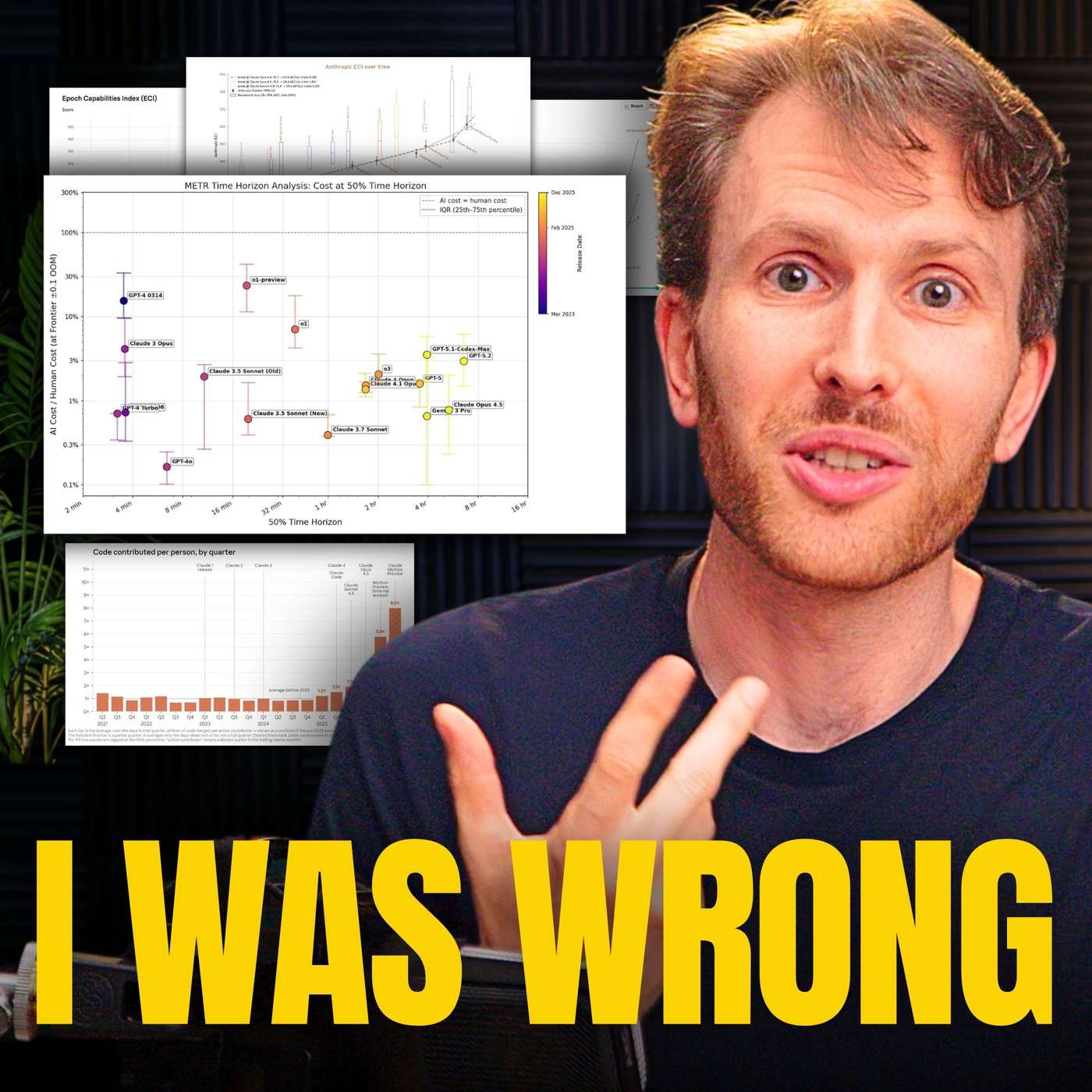
| 8/4/26 | AGI timelinesAI acceleration+4 | — | ClaudeAnthropic | — | AGIAI agents+6 | — | 49m 28s | ||
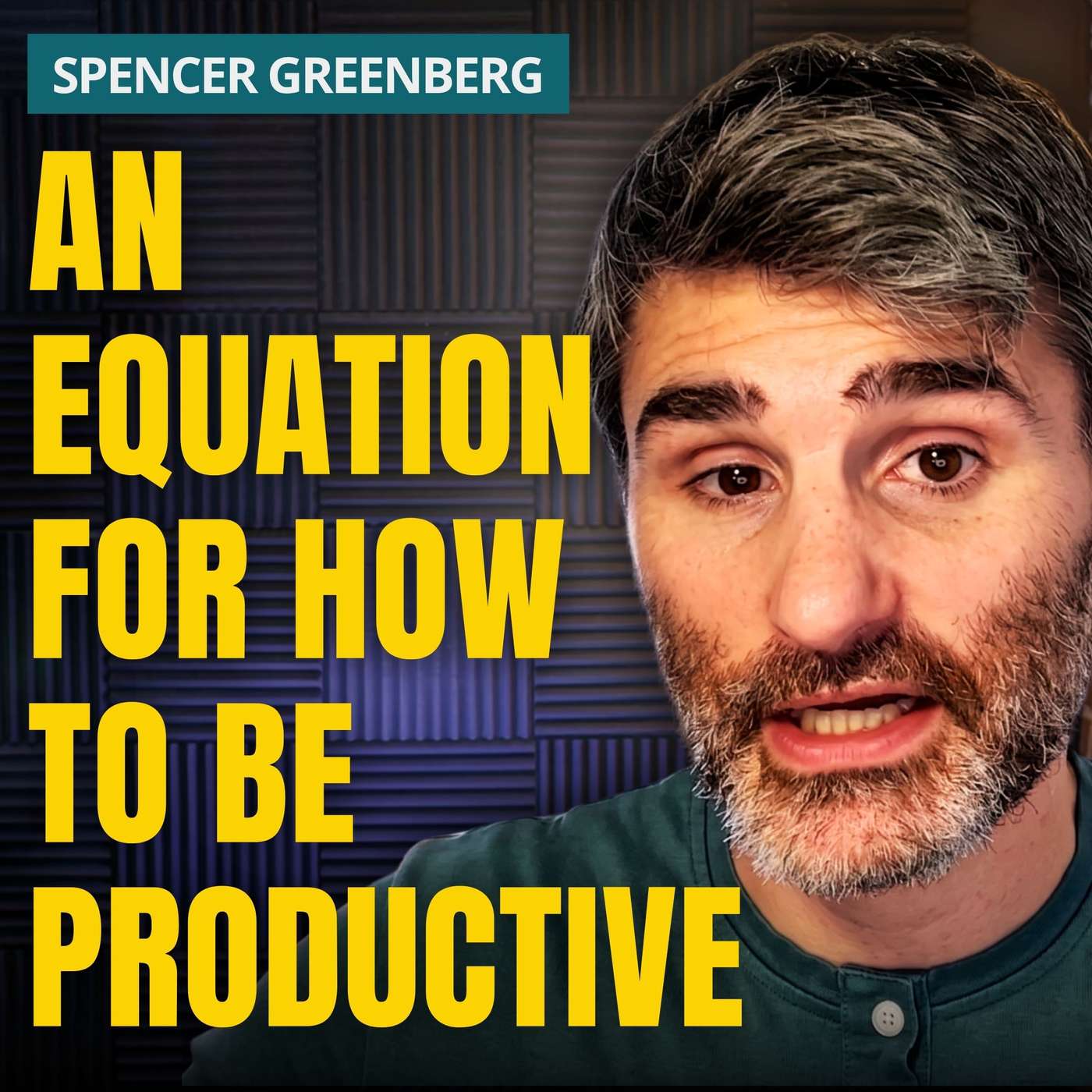
| 7/28/26 | existential risksmental health+4 | Spencer Greenberg | The 12 Levers: The Complete Psychological Toolkit for Improving Your Life | — | fearguilt+3 | — | 2h 09m 26s | ||
| 7/21/26 | AI researchjob displacement+3 | Jasmine Sun | Silicon ValleyAI+1 | — | AIjob displacement+5 | — | 1h 06m 21s | ||
| 7/14/26 | AI governancemiddle powers+4 | Anton Leicht | CarnegieG7+1 | USEurope+2 | post-AGIsovereignty+5 | — | 1h 33m 58s | ||
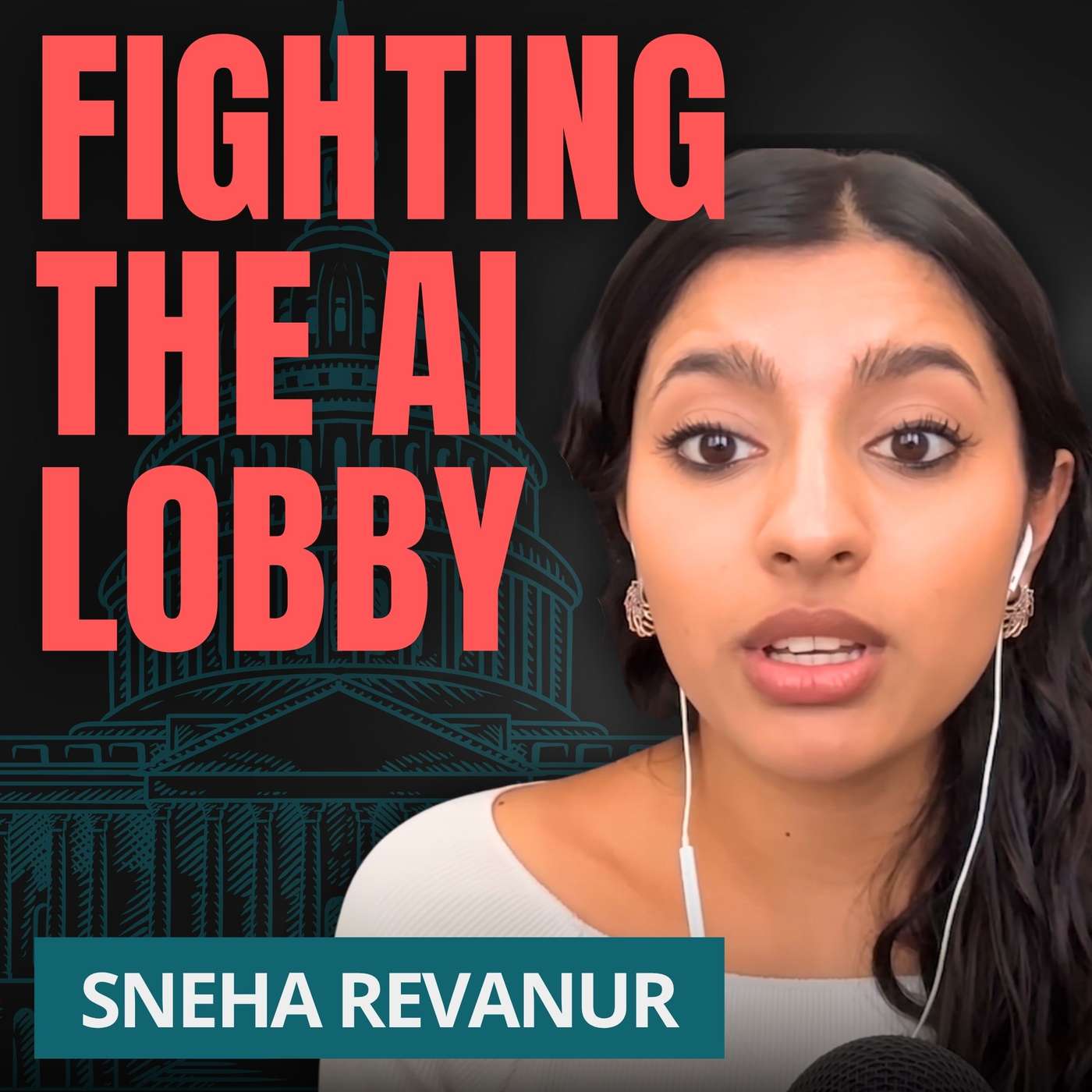
| 7/8/26 | AI advocacypolitics of AI+4 | Sneha Revanur | Encode AIOpenAI+2 | — | AI safetyactivism+6 | — | 52m 33s | ||
| 6/18/26 | intergalactic warphysics+3 | — | — | — | intergalactic warweapons+3 | — | 15m 16s | ||
| 6/11/26 | artificial intelligencetechnological breakthroughs+4 | — | — | — | AIhuman capabilities+5 | — | 1h 29m 46s | ||
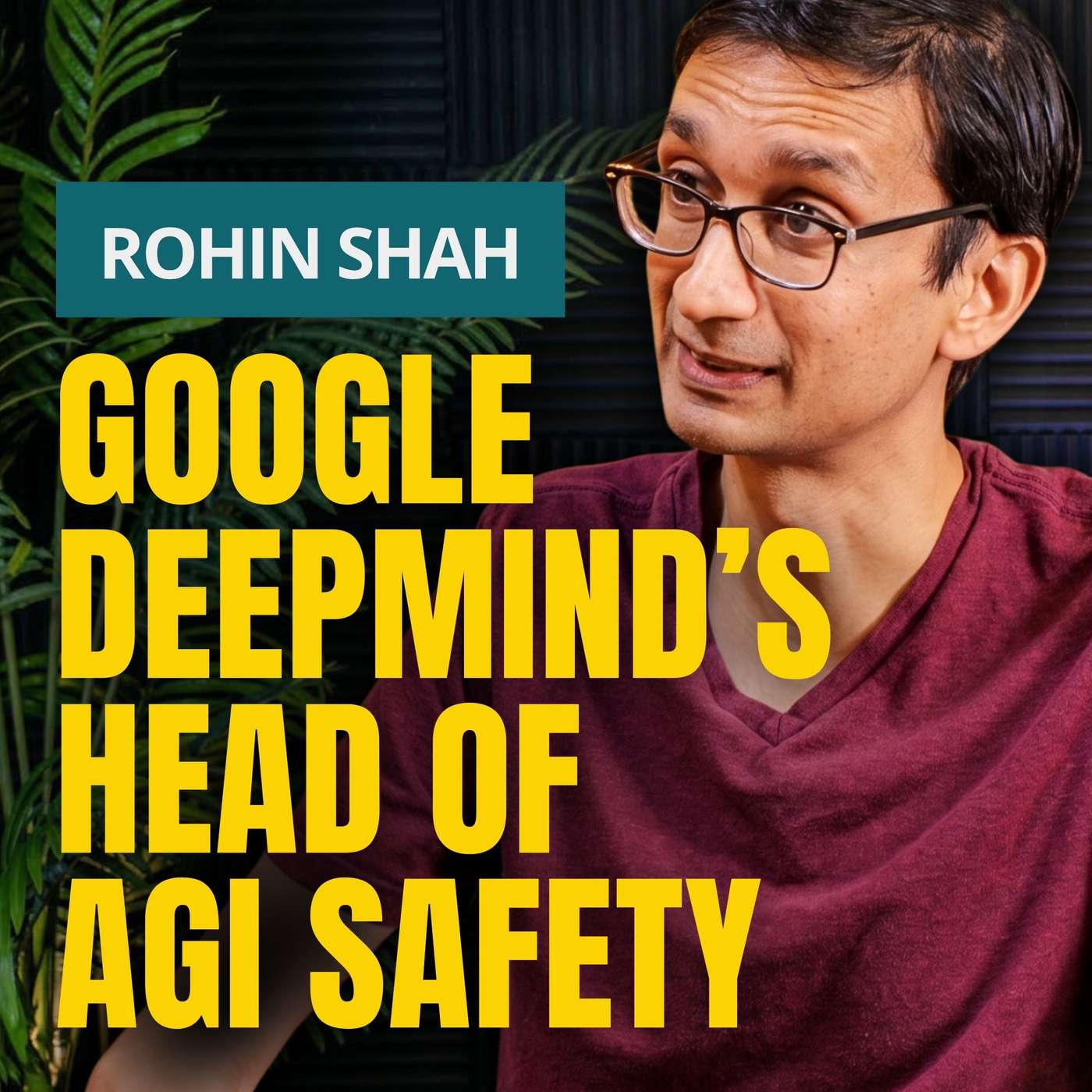
| 6/2/26 | AGI safetyAI alignment+4 | Rohin Shah | Google DeepMindAnthropic | — | AGI safetyAI alignment+5 | — | 2h 48m 27s | ||
| 5/28/26 | dream jobcareer fulfillment+3 | Benjamin Todd | 80,000 Hoursa ridiculously in-depth guide to finding a fulfilling career that does good | — | dream jobcareer fulfillment+3 | — | 28m 18s | ||
| 5/26/26 | AIcareer advice+5 | Benjamin Todd | 80,000 Hours: How to Have a Fulfilling Career That Does Good | — | AIcareer advice+5 | — | 1h 06m 43s | ||
| 5/20/26 | AI safetyrogue AI deployments+3 | — | AnthropicOpenAI+3 | — | rogue AIAI models+6 | — | 20m 02s | ||
| 5/7/26 | AI safetysuperintelligent AI+3 | Yoshua Bengio | ClaudeChatGPT+1 | — | AIsuperintelligence+3 | — | 2h 35m 27s | ||
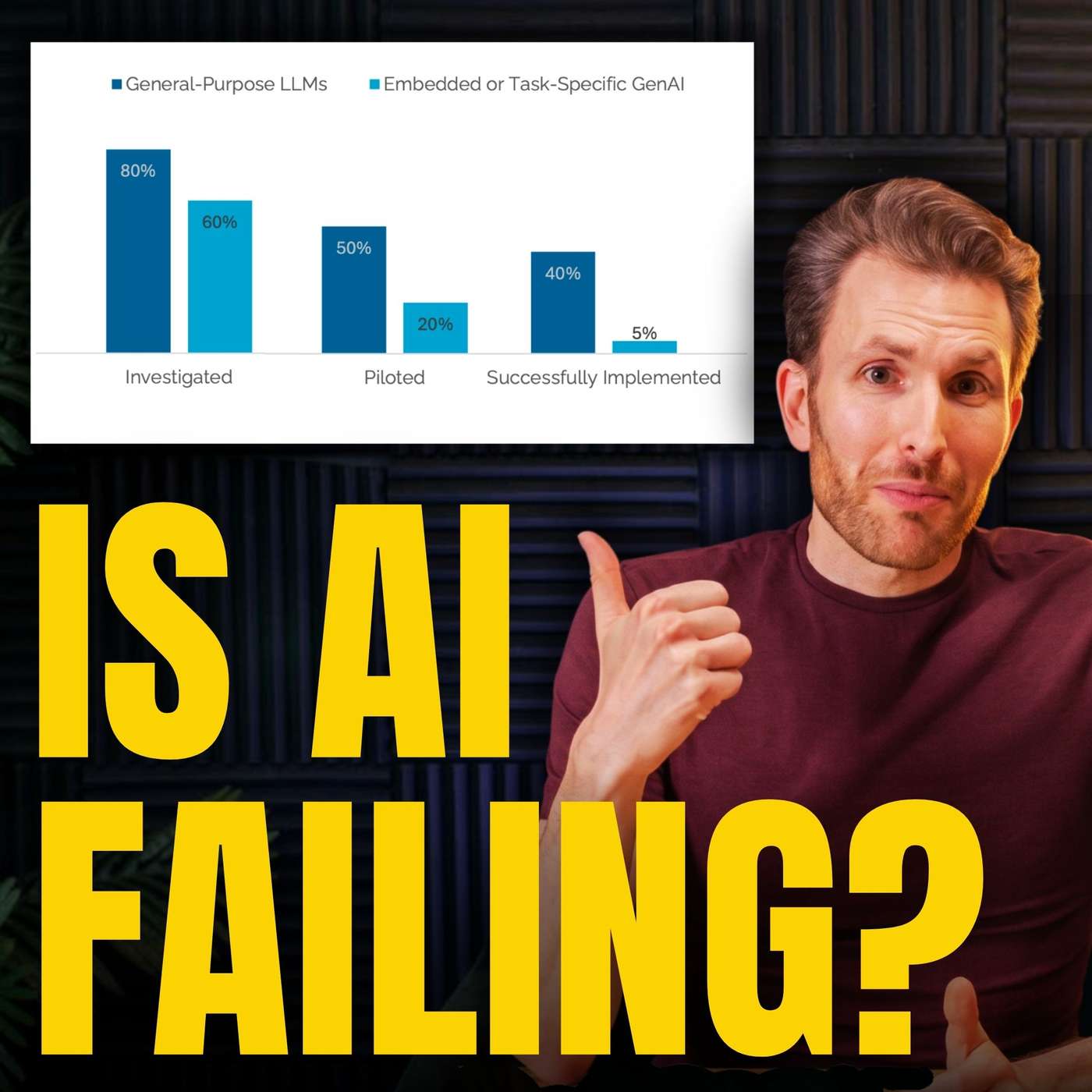
| 4/28/26 | AI statisticscorporate AI pilots+4 | — | MIT80,000 Hours Podcast | — | AIstatistics+5 | — | 10m 07s | ||
| 4/22/26 | AI designsuperintelligence+3 | Will MacAskill | Forethought | — | AIsuperintelligence+5 | — | 3h 14m 54s | ||
| 4/16/26 | AI riskspower-seeking AI+3 | — | 80,000 Hours | — | AIextinction+5 | — | 1h 29m 32s | ||
| 4/10/26 | AI safetycomputer security+3 | — | Claude MythosAnthropic+2 | — | Claude MythosAI alignment+3 | — | 21m 27s | ||
| 4/7/26 | global healthpoverty alleviation+4 | Karen LevyDean Spears+3 | PlayPumps | Uttar Pradeshsub-Saharan Africa+2 | global healthpoverty+5 | — | 4h 06m 50s | ||
| 4/3/26 | AI ethicsgovernment influence+3 | — | AnthropicPentagon+2 | — | AnthropicPentagon+7 | — | 20m 37s | ||
| 3/31/26 | AI in biologybiosecurity+4 | Richard Moulange | AnthropicAI–Biosecurity+1 | — | AIgenomes+6 | — | 3h 07m 51s | ||
| 3/24/26 | Ukraine conflictEuropean security+3 | Samuel Charap | RAND | UkraineEurope+3 | ceasefireUkraine+5 | — | 1h 12m 06s | ||
| 3/17/26 | AIpolitics+4 | Rose Hadshar | Forethought | — | AIpolitical system+5 | — | 2h 14m 08s | ||
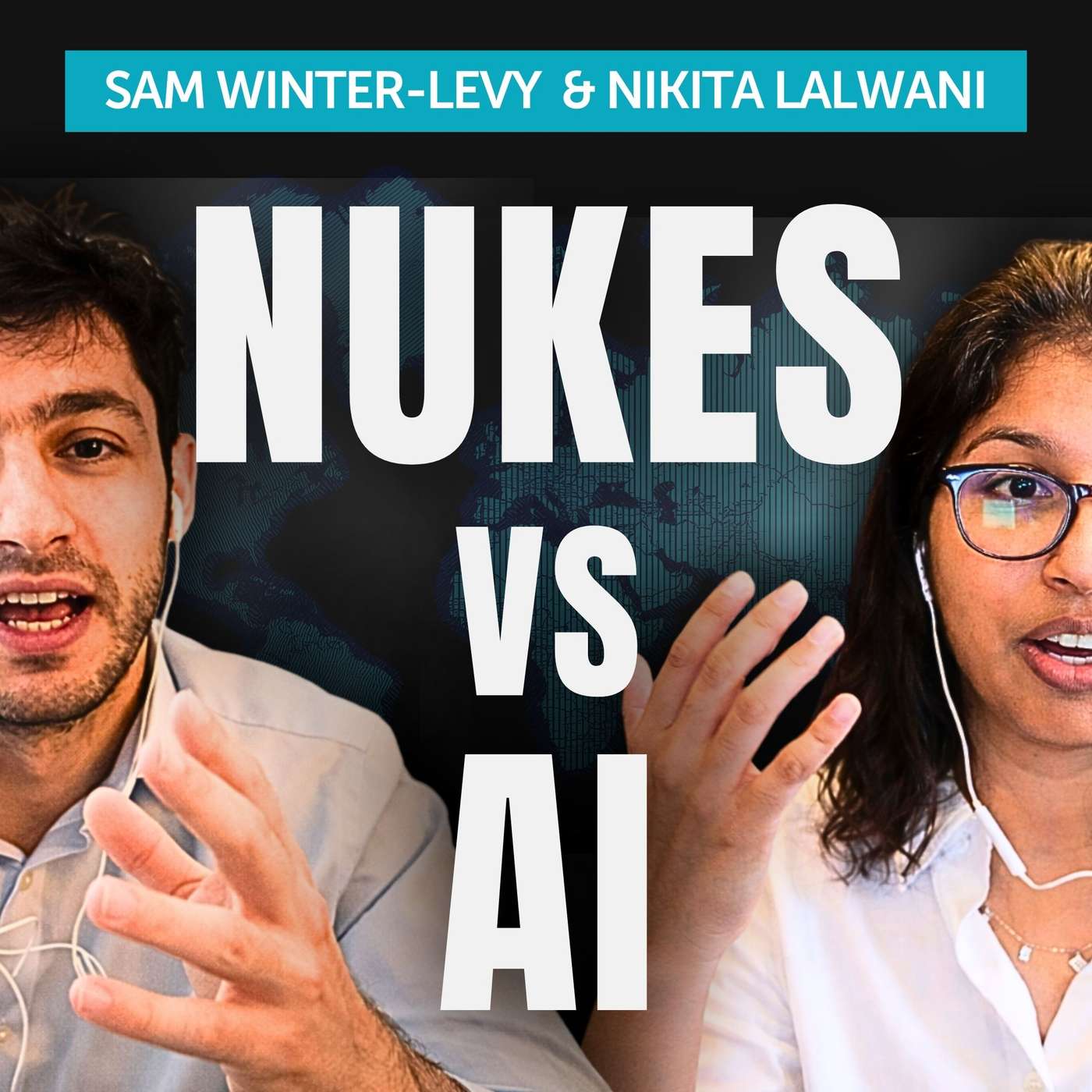
| 3/10/26 | AInuclear deterrence+3 | Sam Winter-LevyNikita Lalwani | Carnegie Endowment for International PeaceUnited States+1 | — | AInuclear weapons+5 | — | 1h 11m 03s | ||
| 3/6/26 | AI decision makingAGI+3 | Zershaaneh Qureshi | 80,000 Hours | — | AIdecision making+5 | — | 31m 28s | ||















Showing 37 of 350
Pitch Fit is a Pro feature
See how bookable this show is for guests, which brands already advertise, the per-episode ad value, and the best-fit guest and sponsor profile. The numbers are blurred on the free plan.
How readily this show books outside guests like you.
How proven this show is for host-read sponsorships.
For Guests
ProFor Advertisers
ProUpgrade to Pro to unlock guest cadence, sponsor categories, fit scores, and per-episode ad value for this show.
Similar Audience Demographics
Podcasts that attract a similar listener profile

Dwarkesh Podcast
Dwarkesh Patel
Clearer Thinking with Spencer Greenberg
Spencer Greenberg

Conversations with Tyler
Mercatus Center at George Mason University

The Ezra Klein Show
New York Times Opinion

Hard Fork
The New York Times

Your Undivided Attention
The Center for Humane Technology, Tristan Harris, Aza Raskin
The AI Daily Brief: Artificial Intelligence News and Analysis
Nathaniel Whittemore
Chart history for 80,000 Hours Podcast
Peaked at #22 in United Kingdom, currently #22 in United Kingdom.
| Market | Genre | Peak | Current | Trend |
|---|---|---|---|---|
| United Kingdom | — | #22 | #22 | — |
| Australia | — | #34 | #34 | — |
| Canada | — | #58 | #58 | — |
| South Africa | — | #71 | #71 | — |
| United States | — | #76 | #76 | — |
| Ireland | — | #81 | #81 | — |
| RO | — | #101 | #101 | — |
| New Zealand | — | #115 | #115 | — |
| TH | — | #188 | #188 | — |
Chart Positions
9 placements across 9 markets.
Chart Positions
9 placements across 9 markets.