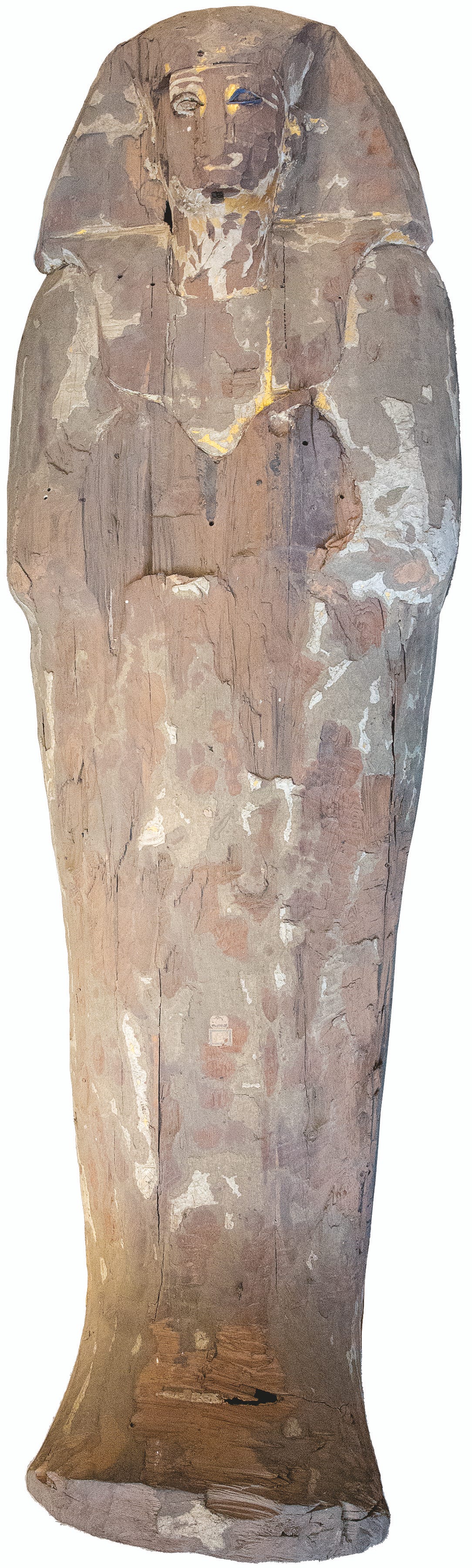
Using the Corpses of Dead Kings as Power Talismen: A Case Study of the Coffin of Thutmose III
About this episode
Kara and Amber discuss the historical significance and forensic details of the coffin of Thutmose III as a power talisman.
Kara and Amber unpack what Kara has described as perhaps the most consequential object of her career: the coffin used to (re)bury Thutmose III. The story behind this king’s coffin spans centuries—running from the height of the 18th Dynasty—when it was first made—through the Late Ramesside turmoil—when it was first exhumed—and into the 20th–21st Dynasties—when the coffin was opened, closed, and reopened to source gold and use the body of the king as a kind of talisman for power. This coffin provides an excellent case study to help us understand how royal burials—and royal corpses—were manipulated, remade, and redeployed as tools that manufactured social power. Kara walks us through the forensic clues on the object itself—two uraeus holes (think vulture and cobra on the mask of Tutankhamun!), layers of plaster (that means redecoration!) tool marks (scraping away all that gilding!), traces of gilding (regilding a thin layer after taking a thick layer), and multiple sets of mortise-and-tenons (as the case and lid sides get thinner and thinner!)—to show at least two major interventions before the coffin was finally cached in Deir el-Bahri 320, stripped of just about all its precious…
People in this episode
Host: Kara Cooney
Guest: Amber
Topics covered
- royal burials
- ancient Egypt
- power talismans
- forensic analysis
- civil conflict
- commodification
Keywords
- Thutmose III
- coffin
- royal corpses
- forensic clues
- ancient power
- Egyptian history
- 18th Dynasty
- Deir el-Bahri
Mentioned in this episode
Organizations: 18th Dynasty, Late Ramesside, 20th–21st Dynasties
Places: Deir el-Bahri
More episodes of Afterlives of Ancient Egypt with Kara Cooney
- Anatomy of the Ancient Egyptian Soul: The Ka
- Anatomy of the Ancient Egyptian soul: The Ba
- The Old Man and the Sun: Sex, Death, and the Turin Erotic Papyrus
- Finding the 'Elusive' Libyans w/ Jason Silvestri
- Listener Q&A – October 2025
- Restitution after Reuse: How 21st Dynasty Egyptian Rulers Healed the Harms Done to Royal Coffins and Mummified Kings
Explore listener stats, chart rankings, contacts and more on the Afterlives of Ancient Egypt with Kara Cooney podcast page.