Insights from recent episode analysis
Audience Interest
Podcast Focus
Publishing Consistency
Platform Reach
Insights are generated by CastFox AI using publicly available data, episode content, and proprietary models.
Most discussed topics
Brands & references
Total monthly reach
Estimated from 2 chart positions in 2 markets.
By chart position
- 🇯🇵JP · History#1211K to 10K
- 🇵🇱PL · History#853K to 10K
- Per-Episode Audience
Est. listeners per new episode within ~30 days
2K to 10K🎙 Weekly cadence·135 episodes·Last published 6d ago - Monthly Reach
Unique listeners across all episodes (30 days)
4K to 20K🇯🇵50%🇵🇱50% - Active Followers
Loyal subscribers who consistently listen
1.6K to 8K
Market Insights
Platform Distribution
Reach across major podcast platforms, updated hourly
Total Followers
—
Total Plays
—
Total Reviews
—
* Data sourced directly from platform APIs and aggregated hourly across all major podcast directories.
On the show
From 10 epsHost
Recent guests
Recent episodes
The Hidden and the Formalized: Female Queerness in Ancient Egypt
May 26, 2026
1h 00m 44s
Anatomy of the Ancient Egyptian Soul: The Ka
Mar 19, 2026
1h 22m 21s
Anatomy of the Ancient Egyptian soul: The Ba
Feb 27, 2026
59m 34s
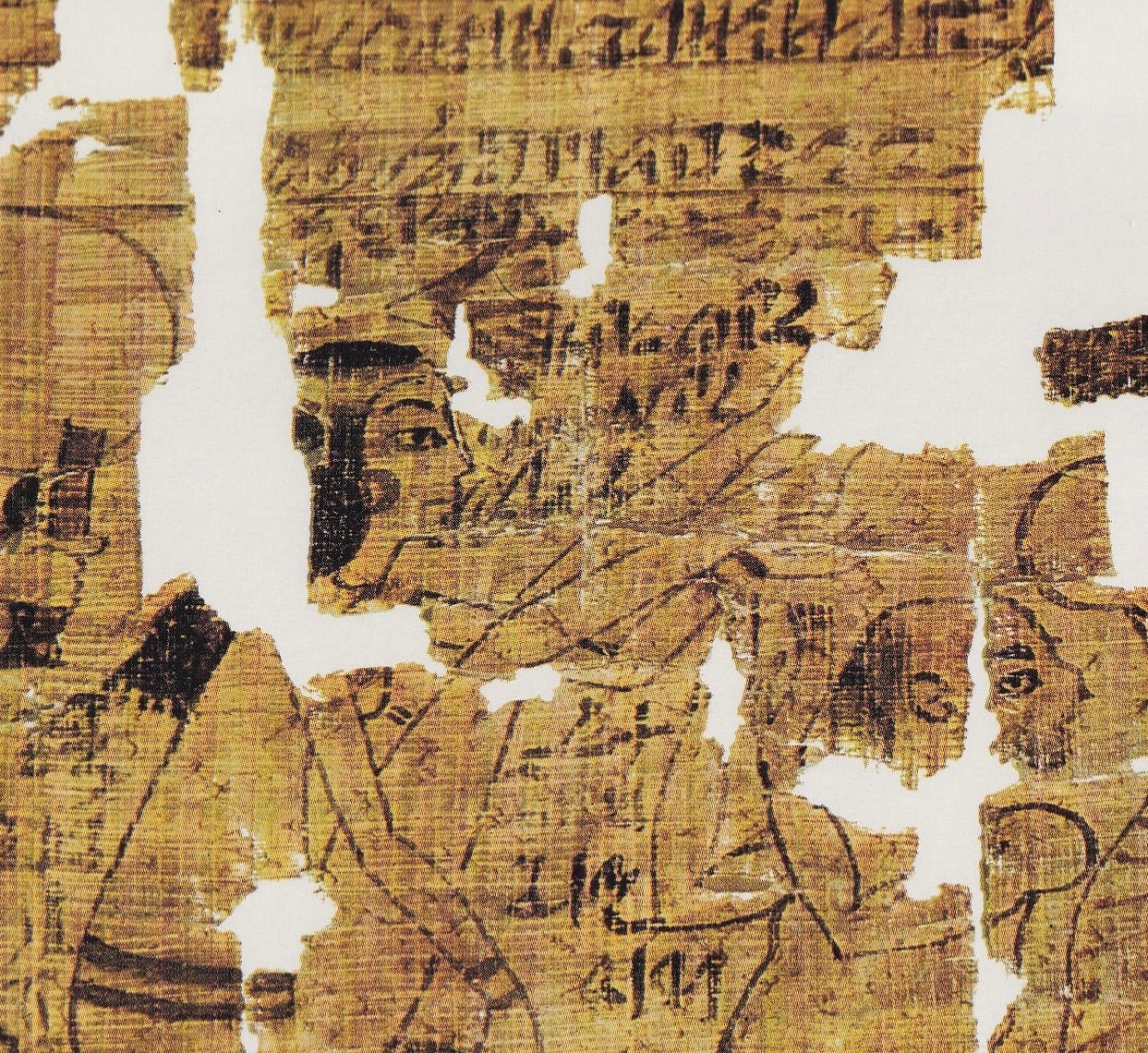
The Old Man and the Sun: Sex, Death, and the Turin Erotic Papyrus
Jan 30, 2026
1h 29m 12s
Finding the 'Elusive' Libyans w/ Jason Silvestri
Jan 20, 2026
1h 21m 17s
Social Links & Contact
Official channels & resources
Official Website
Login
RSS Feed
Login
| Date | Episode | Topics | Guests | Brands | Places | Keywords | Sponsor | Length | |
|---|---|---|---|---|---|---|---|---|---|
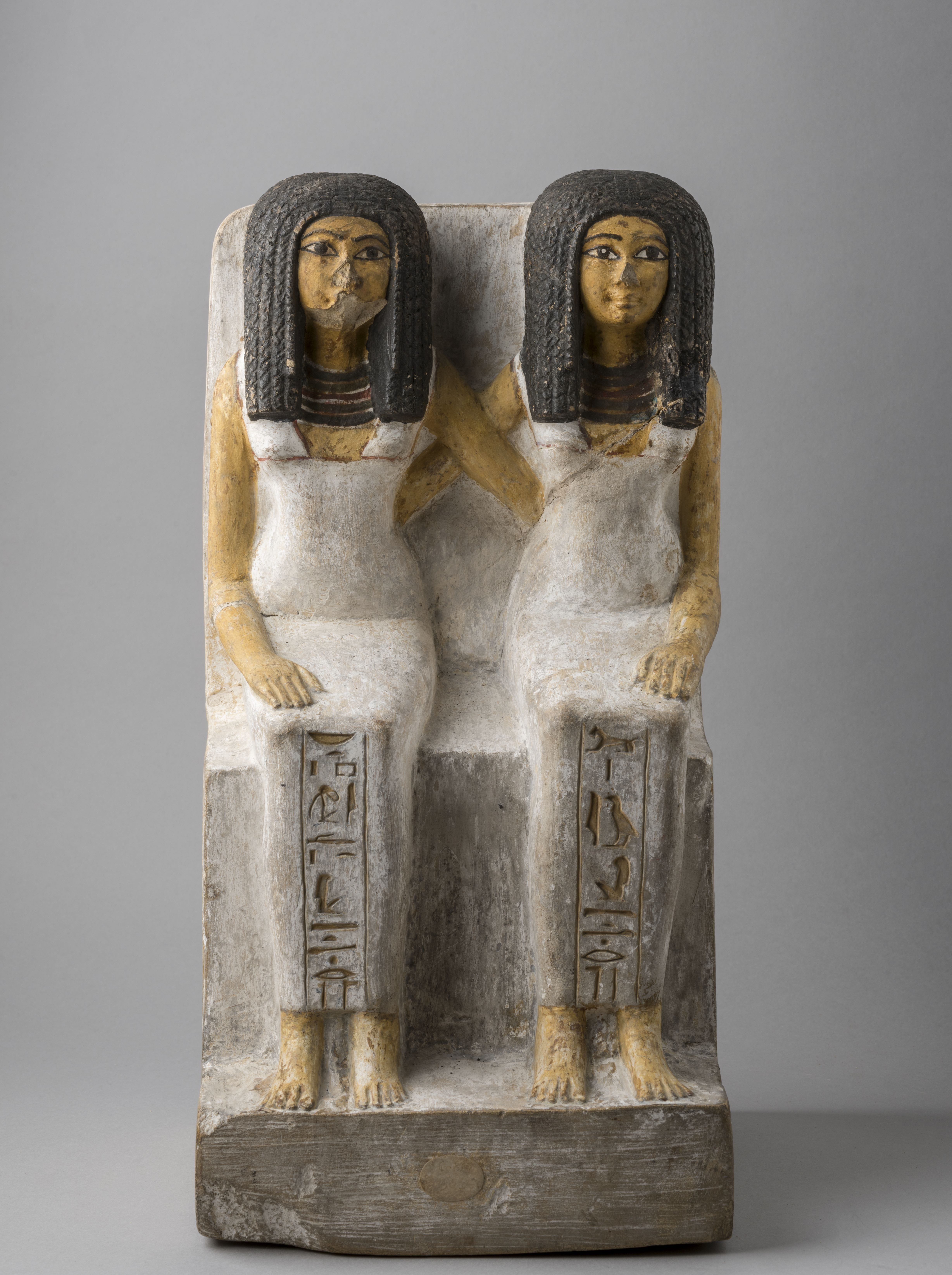
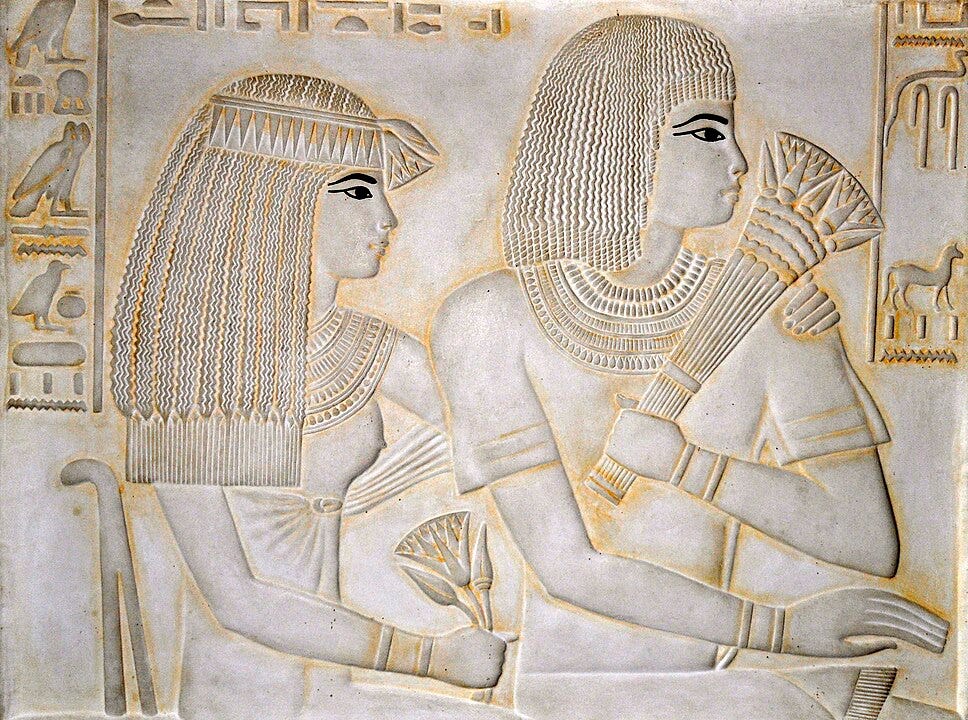
| 5/26/26 | ![]() The Hidden and the Formalized: Female Queerness in Ancient Egypt | Thank you paid subscribers, KinchStalker, Phoenix, Tomas Johansson, and many others for tuning into this live video with Jordan Galczynski and Amber Myers! You filled the chat with such sharp and interesting questions. This is exactly the kind of conversation we love — primary sources, spirited disagreement, duck genitalia, and the occasional new moon. We’ll be back soon. CW— mature themes; sex; sexuality; sexual assaultWhat does it mean to look for queer lives in the ancient world? We don’t want to impose today’s freedoms onto a patriarchal past, but we also don’t want to erase the biological reality that queer people have always existed in the world. That tension—generative, unresolved, and genuinely fun to argue about—animated our latest live conversation, and we’re thrilled so many of you joined us for it.Two Women, Arms EntwinedWe kicked things off with a pair statue currently held at the Museo Egizio in Turin. Amber had shared it earlier in the week and it immediately sparked debate among the three of us. Dating to the Thutmosid period and likely from a tomb in the Theban necropolis, it shows two women — Idu and Rui — seated side by side in white linen shifts and elegant bipartite wigs, arms wrapped around each other in precisely the embrace you’d expect to see between a husband and wife. The museum’s own description calls the relationship between them “unclear.”Which is, of course, the perennial problem.Are they friends? Sisters? Mother and daughter? Could they be something more? Kara was the self-described cynical voice in the room, skeptical that ancient Egyptian society would have allowed a formally commemorated queer female relationship — while also being completely open to the possibility that a very real relationship could have existed behind the scenes, just one that could and would never be named outright. Jordan pointed out something quietly fascinating: Idu holds the title nebet per — Mistress of the House — while Rui carries no title at all, no indication of kinship or any named social role. That asymmetry suggests a dependent relationship, but of what kind, we simply can’t say. They seem to have wanted to show themselves as the core of their household.What we can say is that someone commissioned this statue, paid for it, and had it placed in a tomb context so that both women would receive offerings in the afterlife. That’s not nothing. Whatever Idu and Rui were to each other, there was care—plus money, and intention—and a desire to keep this person in one’s eternal company.The group also floated an intriguing hypothesis: what if Idu had outlived her husband, inherited his property, and then got to live exactly as she chose? Two women, a shared household, just friends, obviously. Roommates even. The ancient world’s version of companions traveling down the Nile together — who, as Jordan noted, everyone quietly understood were probably lovers, but who would never in a thousand years have said so in a formal inscription.The Notorious Tomb of Niankhkhnum and KhnumhotepFrom there we moved to the far more famous case of the two manicurists of the Old Kingdom royal court: Niankhkhnum and Khnumhotep, buried together at Saqqara in a shared tomb decorated with images of the two men nose-to-nose, embracing in ways typically reserved for married couples. Scholars have argued they were brothers, conjoined twins, or colleagues — with Kara noting, drily, that “conjoined twins” seems like a remarkable amount of effort just to avoid the word gay. But who knows? This scene is unique and perplexing. We should not try to flatten the complexity of the image: we can acknowledge that queer people existed in the ancient world without pretending they enjoyed anything like modern queer freedom or visibility in society.What the Texts Actually Say (or Don’t)So what does the written record give us? Rather less than you might hope, and rather more ambiguous than anyone would like.Jordan pulled up Book of the Dead 125—the famous Negative Confession—the list of sins the deceased declares they have not committed before the scales of Ma’at. One entry reads something like: I have not copulated with a catamite — or, depending on your translation, I have not copulated with a boy, or I have not laid with a man. The Egyptian word in question, Kara noted, is a hapax legomenon: it appears nowhere else in the corpus, which makes translation genuinely treacherous. The word catamite, the group agreed, implies pederasty — a prohibition against the sexual exploitation of a prepubescent boy — which is something categorically different from a prohibition against adult same-sex desire. The distinction matters. More investigation (after the podcast!) revealed the phrase to translate into something like “I did not fuck a fucker of fuckers,” which implies a refusal to have slept with someone who is already sleeping with others. But who knows? You decide; see the Egyptian below!* “I have not penetrated the penetrater of a penetrater (Variant: “I have not copulated with a boy”); I have not masturbated” (n nk.i nkk nkk n dAdA.i) * nkk [nkk] = 𓈖𓎡𓎡𓂺𓀀 (Thesaurus Linguae Aegyptiae); lit. the one who fucks; male sex worker; homosexual?* We presume they are attaching the male gender to this noun because of the presence of a penis in the word, but Book of the Dead 125 is the only use of this word!* Also see Betwixt the Sheets, “History of Homophobia”Contending of Horus and Seth gave us rather more vivid primary source material. The story is, to put it mildly, a lot: Seth attempts to assault Horus in their sleep; Horus outsmarts him by catching the semen in his hand; his mother Isis disposes of the evidence—by cutting Horus’s hand off and growing him a new one as one does—and fashions a trap, placing Horus’s semen into the lettuce Seth habitually eats; and when Seth boasts of his conquest before the gods, the divine tribunal calls the semen forth — whereupon it emerges from Seth’s own head like a crown, to the hilarity of everyone assembled. The story is funny, and also pointed: what makes Seth’s act monstrous is not same-sex desire per se, but domination, humiliation, and the horror of being placed in the feminized, receptive position. As Kara observed, the ancient Egyptian antipathy here is not really about queerness. It’s about misogyny. To be penetrated is to be made a woman, and being made a woman is, within this patriarchal framework, a degradation. The female body’s hiddenness, Jordan added, made female queerness simultaneously the most subversive and the most invisible form of desire—something that likely happened constantly and simply never showed up in the legal or mortuary record because it threatened no man’s property and produced no illegitimate heirs.A brief and gleeful tangent addressed the so-called “Hatshepsut graffito” at Deir el-Bahri — a piece of erotic wall art that scholars persistently attribute to the female pharaoh on no stronger grounds than that it’s located in a cliff above her mortuary temple at Deir el Bahari, a space that, Kara pointed out, was built up by approximately everyone. The figure is wearing something that might be a wig, might be a nemes headdress, but the group voted: no, It’s a wig. Moving on.On Morality, Property, and Free LoveOne of the conversation’s richest threads concerned why ancient Egyptian society seems, comparatively speaking, to have been rather relaxed about sexual transgression. No stoning for adultery. No virginity tests. Premarital sex left relatively unpoliced. Kara connected this to land ownership — or rather, the lack of it. In a society where the Nile flood periodically erased field boundaries and where the great institutions (the Temple of Amun, the royal palace) were the primary landowners, the tight relationship between sexual morality and property inheritance that drove so much ancient Mediterranean legislation simply didn’t apply in the same way. You couldn’t easily lose heritable land over a sexual scandal when most people didn’t own heritable land to begin with.This also explains why female queerness, in particular, would have been almost entirely invisible to official record-keeping: no property changed hands, no paternity was threatened, no inheritance could be disputed. The patriarchal system cared deeply about women’s bodies as reproductive resources — but only insofar as those bodies produced legitimate heirs. What happened otherwise, behind closed doors or in a shared household, was simply not the law’s business.The picture shifts, the group agreed, with the arrival of the Greeks. Ptolemaic Egypt imported stricter social structures around female bodies: veiling, endogamous marriage to keep property within families, the concept of illegitimacy as a barrier to succession. These were new ideas, and not Egyptian ones.Priests, Priestesses, and the Gods’ Wives of AmunA subscriber question about priestly celibacy sent us down another rewarding path. The short answer is: Egyptian priests were, for most of the pharaonic period, married members of elite society who served on a rotating schedule, and the prescriptions around ritual purity—no sex, no fish, no leather—applied only during their active service, much like a young man in Thailand entering a temple for a period of education and contemplation before returning to ordinary life. The longer and thornier answer involves the Divine Adoratrices of the Late Period, the so-called God’s Wives of Amun, who held extraordinary political and religious power, adopted their successors rather than bearing biological children, and named no husbands in their records. Were they celibate? Almost certainly not in any enforced sense. They were the most powerful women in Egypt. Whatever they did, they did as they chose. Lovers were not memorialized on stone monuments, after all, and we should not expect them to have been.Closing with Psychedelics (As One Does)We ended, naturally, on psychedelics. Kara had recently received word of a study on a Bes jar—those delightful vessels bearing the face of the apotropaic dwarf deity—owned by the Tampa Museum of Art, in which residue analysis revealed a cocktail of the blue lotus (Nymphaea caerulea), Syrian rue, and other psychoactive substances. The blue lotus, long associated with sensuality and altered states in Egyptian iconography, turns out to have been rather more than decorative. Whether mushrooms or other psychedelics made their way into the Egyptian ritual pharmacopeia remains an open question, one we’d love to dig into further.Show Notes & Further Reading* Homosexuality in Ancient Egypt — Wikipedia* Pair statue of two women seated against a back slab — Museo Egizio* Tomb of the Two Brothers Niankhkhnum and Khnumhotep — Egyptian Monuments* Evans & Woods 2016. Further evidence that Niankhkhnum and Khnumhotep were twins. Journal of Egyptian Archaeology 102, 55–72.* Reeder 2000. Same-sex desire, conjugal constructs, and the tomb of Niankhkhnum and Khnumhotep. World Archaeology 32(2), 193–208.* Reeder 2008. Queer Egyptologies of Niankhkhnum and Khnumhotep. In Graves-Brown (ed.), Sex and Gender in Ancient Egypt.* Vasiljević 2008. Embracing his double. Studien zur Altägyptischen Kultur 37, 363–372.* Baines 1985. Egyptian twins. Orientalia 54(4), 461–482.* The Contending of Horus and Seth — Wikipedia* Book of the Dead 125, Negative Confession — UCL Digital Egypt* Betwixt the Sheets: “A History of Homophobia”* Tanasi et al. 2024. Multianalytical investigation reveals psychotropic substances in a Ptolemaic Egyptian vase. Scientific Reports 14. DOI: 10.1038/s41598-024-78721-8* Greco, van Oppen, Samorini, Tanasi & Tykot 2024. A Bes mug in Tampa. In van Oppen de Ruiter & Bianchi (eds.), Under the Spell of Bes, 105–116. Abercromby Press.* Tanasi, Davide, Branko F. van Oppen de Ruiter, Fiorella Florian, Radmila Pavlovic, Luca Maria Chiesa, Igor Fochi, Chiaramaria Stani, Lisa Vaccari, Dale Chaput, Giorgio Samorini, Alberto Pallavicini, Sabrina Semerano, Anastasia Serena Gaetano, Sabina Licen, Pierluigi Barbieri, and Enrico Greco 2024. Multianalytical investigation reveals psychotropic substances in a Ptolemaic Egyptian vase. Scientific Reports 14 (article no. 27891). DOI: 10.1038/s41598-024-78721-8.* Greco, Enrico, Branko van Oppen, Giorgio Samorini, Davide Tanasi, and Robert H. Tykot 2024. A Bes mug in Tampa. In Oppen de Ruiter, Branko F. van and Robert Steven Bianchi (eds), Under the spell of Bes, 105-116. Wallasey: Abercromby Press.Ancient/Now is a reader-supported publication. To receive new posts and support my work, consider becoming a free or paid subscriber. Get full access to Ancient/Now at ancientnow.substack.com/subscribe | 1h 00m 44s | ||||||
| 3/19/26 | ![]() Anatomy of the Ancient Egyptian Soul: The Ka✨ | ancient Egyptian soulka+5 | Amber | Yale UniversityGriffith Institute+5 | — | kaancient Egypt+7 | — | 1h 22m 21s | |
| 2/27/26 | ![]() Anatomy of the Ancient Egyptian soul: The Ba✨ | ancient Egyptian soulba+4 | Amber | The Dialogue of a Man with His BaAncient Egyptian literature | — | ancient Egyptsoul+7 | — | 59m 34s | |
| 1/30/26 | ![]() The Old Man and the Sun: Sex, Death, and the Turin Erotic Papyrus✨ | ancient Egyptsexual themes+5 | Amber | Museo EgizioTurin Erotic Papyrus | — | Turin Erotic Papyrusancient Egyptian pornography+5 | — | 1h 29m 12s | |
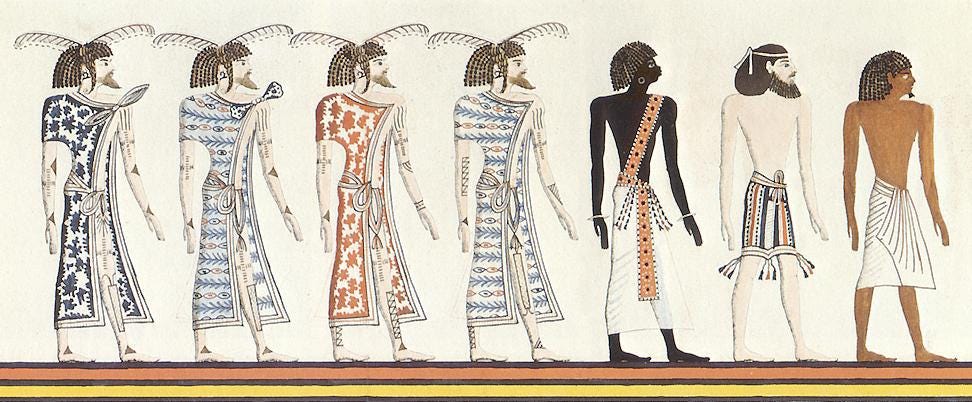
| 1/20/26 | ![]() Finding the 'Elusive' Libyans w/ Jason Silvestri✨ | LibyansEgypt's Third Intermediate Period+4 | Jason Silvestri | University of TorontoUC Berkeley+3 | El Hibeh | LibyansThird Intermediate Period+5 | — | 1h 21m 17s | |
| 12/7/25 | ![]() Listener Q&A – October 2025✨ | Q&Aancient Egypt+4 | — | Grand Egyptian MuseumOsirisnet+3 | — | NefertitiCleopatra+6 | — | 1h 04m 00s | |
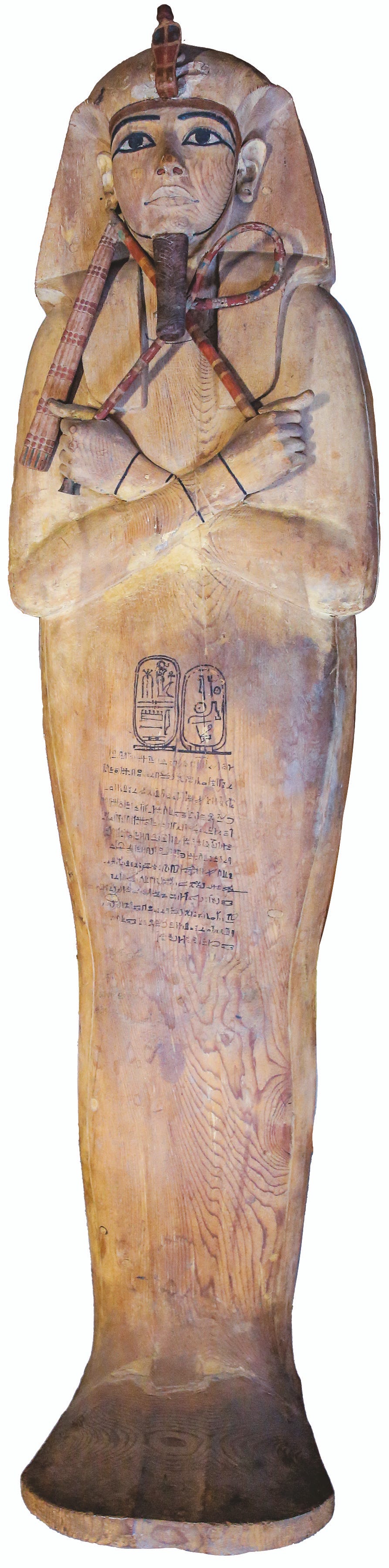
| 11/6/25 | ![]() Restitution after Reuse: How 21st Dynasty Egyptian Rulers Healed the Harms Done to Royal Coffins and Mummified Kings✨ | royal coffinsmummification+5 | Amber | ArtsAmen Priesthood | KV35TT320+2 | reusificationroyal burials+8 | — | 1h 16m 42s | |
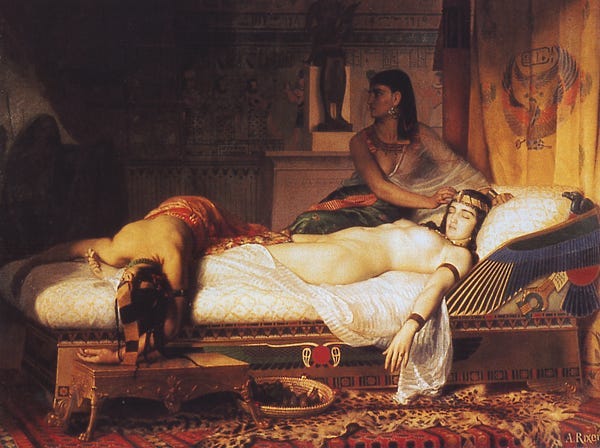
| 10/24/25 | ![]() Cleopatra, Patriarchy, and the Trap of Honor✨ | Cleopatra's deathpatriarchy+4 | Amber | — | — | Cleopatrasuicide+5 | — | 1h 09m 24s | |
| 10/19/25 | ![]() How ancient societies collapsed✨ | ancient societiescollapse+3 | — | Ancient/NowSubstack | — | ancient societiescollapse+3 | — | 1h 05m 42s | |
| 10/18/25 | ![]() Using the Corpses of Dead Kings as Power Talismen: A Case Study of the Coffin of Thutmose III✨ | royal burialsancient Egypt+4 | Amber | 18th DynastyLate Ramesside+1 | Deir el-Bahri | Thutmose IIIcoffin+6 | — | 1h 21m 39s | |
Want analysis for the episodes below?Free for Pro Submit a request, we'll have your selected episodes analyzed within an hour. Free, at no cost to you, for Pro users. | |||||||||
| 9/26/25 | ![]() Feeding the Aten: Akhenaten's Offering Obsession✨ | AkhenatenAten+5 | Amber Myers Wells | Amarna Project | AkhetatenEgypt | AkhenatenAten+6 | — | 1h 53m 57s | |
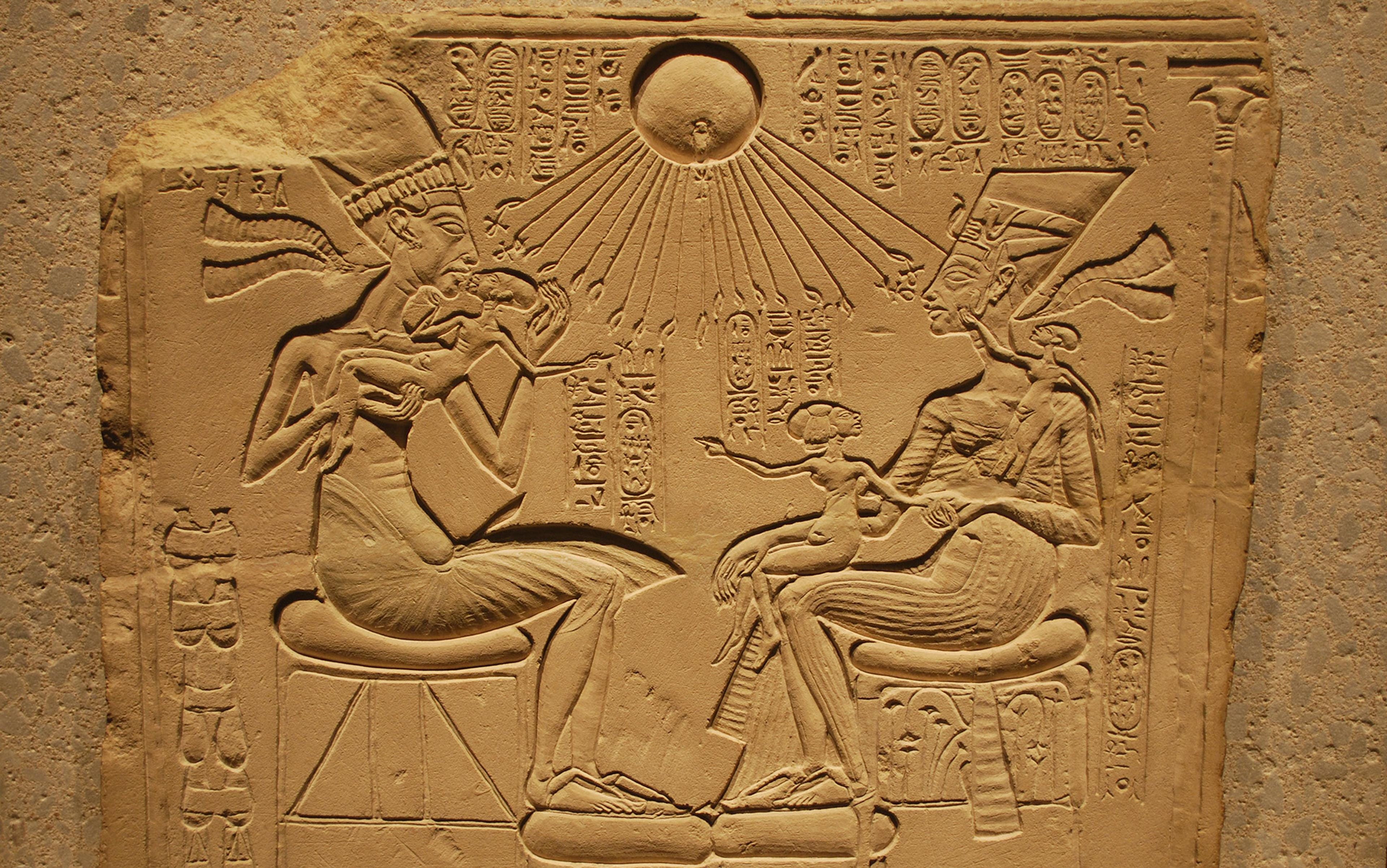
| 9/14/25 | ![]() Sex and Succession: Interpreting an Amarna Royal Family Scene | CW: This episode includes discussion of sexual themes, including incest and child sexual abuse. Listener discretion advised.In this episode, Kara and Amber take on one of Amarna’s most famous images—the so-called “house altar” showing Akhenaten, Nefertiti, and their three daughters beneath the Aten (Ägyptisches Museum/Neues Museum, Staatliche Museen zu Berlin, Inv. no ÄM 14145). At a glance, this relief seems to show a sweet private scene of domesticity and familial affection, but taking the time to do some close-looking reveals how the scene might covey so much more. Kara unpacks how—to initiated elite eyes, at least—the piece encodes theology, court politics, sexual and reproductive power. What might Nefertiti’s unique blue crown signal about containment of solar power? Why are the girls’ bodies shown the way they are, like tiny women but with the heads of infants? And how might a palace loyalist use such an altar to telegraph succession hopes—and anxieties—without writing a word? It’s all here, encoded in the stone. Along the way Kara and Amber also explore ancient Egyptian ideas of divine conception, the harem as a political machine, why Amarna “realism” isn’t exactly realism, but an idealized magical end goal, and how royal bodies carried the burden of sustaining royal legitimacy and succession. Show notesObject entry on Google Arts & CultureFor more on the commodification of women’s and girl’s bodies, see:Episode #69 - Bodies and Power in the Ancient WorldCooney, Kathlyn M. 2025. Body power in the ancient world: patriarchal power and the commodification of women. In Thompson, Shane M. and Jessica Tomkins (eds), Understanding power in ancient Egypt and the Near East, volume I: Approaches, 104-135. Leiden; Boston: Brill. DOI: 10.1163/9789004712485_006.For more on harems in ancient Egypt, see:Episode #41 - Power and Politics in the Egyptian HaremCooney, Kathlyn M., Chloe Landis, and Turandot Shayegan 2023. The body of Egypt: how harem women connected a king with his elites. In Candelora, Danielle, Nadia Ben-Marzouk, and Kathlyn M. Cooney (eds),Ancient Egyptian society: challenging assumptions, exploring approaches, 336-348. London; New York: Routledge. DOI: 10.4324/9781003003403-31.For the Amenhotep III conception scene discussed in the episode, see:Krauss, Rolf. “Die Amarnazeitliche Familienstele Berlin 14145 Unter Besonderer Berücksichtigung von Maßordnung Und Komposition.” Jahrbuch Der Berliner Museen 33 (1991): 7–36. https://doi.org/10.2307/4125873. Get full access to Ancient/Now at ancientnow.substack.com/subscribe | 1h 35m 15s | ||||||
| 9/4/25 | ![]() Being a Priest in ancient Egypt: Power, Ritual, and the Divine | Egyptian priests didn’t just waft incense and mutter incantations; they had to run the cosmic machine, make sure the sun rose and set, the Nile rose and receded as appropriate. From feeding the gods to managing temple estates, priesthood sat where divinity, money, and monarchy intersected. It’s not that the Egyptian priests were so simple-minded as to believe humans were needed for grand actions of cosmic continuance, but rather they realized pleasing the gods would bring the best version of divine power into the human world—whether that best version was copper (Hathor), wheat and barley (Osiris), inundation (Sobek), healthy children (Isis), or miraculous craft (Ptah). The Egyptians thus knew they had to create a perfect habitat to pull the gods into their human spaces. First the god needed a body, a sacred statue made of precious things like gold, silver, electrum, precious stones, glass. Then that body needed a grand house, the temple. And the divinity would have to be carefully cleaned and anointed, fed the best bread and beer, wine and beef, duck and lettuce. The gods had to be dressed in fine linens, entertained with dancing and music. Without such magnificent bribery, they wouldn’t be pulled into the realm of the human, we are told, and they wouldn’t bestow their gifts. This was a give and take world, after all. Divine-human quid pro quo. When you tug on the priestly thread of religion in ancient Egypt, the garment unravels into issues of restricted knowledge, kingship, patriarchy, money, land, and power. Let’s start with the basics: what was a priest in ancient Egypt? When you think of an Egyptian priest, think of a specialist, someone set apart and equipped with bespoke and unusual knowledge of how to connect with the divine. He could read and write; he had thousands of incantations memorized. He knew the movements to make in front of the shrine, how loudly or quietly to speak, when to raise or lower his eyes. He held restricted knowledge that few had—spells that woke the god, calmed them, provided the conditions for their transformations—because in the end every god was representative of a life and death cycle that had to be renewed. Osiris had to be transformed seasonally, the sun god daily, the goddess yearly. Never forget that his knowledge of texts and spells made him privileged. It gave him power and access to those with political, economic and military power. And in ancient Egypt, these worldly powers were combined with religious powers such that the pharaoh was the highest of high priests atop a hierarchy descending down to his chief priests, lector priests, and on to the lowest wab priest, all of them helping to run the whole sacred-human game. But alongside the rituals that sustained the gods and the cosmos came bureaucracy, taxes, the constant search for income to keep the temple open. Priests didn’t just chant incantations and carry out their religious duties—they managed vast estates, redistributed offerings, and, in many cases, enriched themselves. They also needed to pay / feed their employees, other priests. When the state pulled their financial support, they invented a number of income creating schemes, including animal mummies and votives available for purchase. Selling a couple thousand of those a year would set a Late Period temple up well. So, were the Egyptians devout? Absolutely. But not in the way we think of “belief.” They didn’t sit around wondering if the gods were real. Divinity was everywhere—the sun on your skin, the river rising or not, the fate of your harvest. You got up in the morning and did your rituals because if you didn’t, the whole system might collapse. It wasn’t a question of faith. It was survival—pull the gods into your man-made temples or suffer the consequences. So go hug a tree, light a candle, pull a tarot card—make your own connection to the spirit world. The Egyptians would tell you it’s not about belief. It’s about participation.Show Notes* Forshaw, Roger. The Role of the Lector in Ancient Egyptian Society. Archaeopress, 2014. JSTOR, https://doi.org/10.2307/j.ctvqc6jxb. Accessed 1 Sept. 2025.* Sauneron, Serge. 1960. The priests of ancient Egypt. Translated by Ann Morrissett. Evergreen Profile Book 12. New York: Grove.* Wilkinson. 2000. The Complete Temples of Ancient Egypt. * Lazaridis, Nikolaos. 2010. Education and apprenticeship. Edited by Elizabeth Frood and Willeke Wendrich. UCLA Encyclopedia of Egyptology 2010 (October), 14 p., 2 figs [ills].* Haring, Ben. 2007. Ramesside temples and the economic interests of the state: crossroads of the sacred and the profane. In Fitzenreiter, Martin (ed.), Das Heilige und die Ware: Eigentum, Austausch und Kapitalisierung im Spannungsfeld von Ökonomie und Religion, 165-170. London: Golden House.* Haring, B. J. J. 1997. Divine households: administrative and economic aspects of the New Kingdom royal memorial temples in western Thebes. Egyptologische Uitgaven 12. Leiden: Nederlands Instituut voor het Nabije Oosten.* Gillam, Robyn. 2016 “The Priestesses of Hathor: Their Function, Decline and Disappearance.”* God’s Wife of Amun* Ayad, Mariam F. (2009). God's Wife, God's Servant: The God's Wife of Amun (c. 740–525 BC). Routledge. ISBN 9780415411707.* See also Kara’s monograph on Hatshepsut, “The Women Who Would Be King” * Personal Piety* Baines, John. 2021. Was the king of Egypt the sole qualified priest of the gods? In Collombert, Philippe, Laurent Coulon, Ivan Guermeur, and Christophe Thiers (eds), Questionner le sphinx: mélanges offerts à Christiane Zivie-Coche 1, 73-97. Le Caire: Institut français d'archéologie orientale.* Kemp, Barry J. 1995. How religious were the ancient Egyptians? Cambridge Archaeological Journal 5 (1), 25-54. DOI: 10.1017/S0959774300001177* Sola Busca TarotAncient/Now is a reader-supported publication. All is free and available, but Jordan and Amber cannot work for free! To receive new posts and support our work, consider becoming a free or paid subscriber. Get full access to Ancient/Now at ancientnow.substack.com/subscribe | 1h 03m 24s | ||||||
| 8/19/25 | ![]() Tutankhamun, Nefertem, and the Lotus of Rebirth | [Content Warning: This episode includes discussions of sexual themes(!), power(!!), and the exploitation of bodies(!!!).]Join Kara and Amber for a deep dive into one of the most peculiar and beautiful objects from the tomb of Tutankhamun (we think!)—a painted wooden head emerging from a blue lotus. Was it meant to show the child god Nefertem? A cosmic birth scene? A sensual drug trip? Or all of the above? In this episode, we explore the sculpture’s religious symbolism, Amarna influences, sketchy findspot, and what it tells us about birth, rebirth, and the power of divine femininity. One object, endless meanings.Don’t miss Kara’s companion post to this episode on Ancient/Now!Show notesTutankhamun Head of Nefertem, New Kingdom, 18th Dynasty, reign of Tutankhamun, ca. 1332-1323 BC. Found at the entrance of his tomb (KV62). Valley of the Kings, West Thebes. Now in the Egyptian Museum, Cairo. JE 60723Howard Carter’s object card (Griffith Institute)WikipediaBlue lotus flowerReferencesHawass, Zahi. 2007. The Head of Nefertem. In King Tutankhamun. The Treasures of The Tomb. Thames & Hudson, London 2007, p. 16.Hoving, Thomas. 1980. Tutankhamun: The Untold Story. Rowman & Littlefield (reprint, 2002). James, T. G. H. 2000. Tutankhamun. White Star: Metro Books.Munro, Peter. 1980. "Tutanchamun als Sonnengott." In the exhibition catalogue Tutanchamun in Köln. von Zabern, Mainz, p. 140–141.Schlögl, Hermann 1977. Der Sonnengott auf der Blüte: eine ägyptische Kosmogonie des Neuen Reiches. Aegyptiaca Helvetica 5. Genève: Éditions de Belles-Lettres.Seton-Williams, M. V. 1980. Tutanchamun. Der Pharao. Das Grab. Der Goldschatz. Ebeling, Luxembourg, p. 120. Get full access to Ancient/Now at ancientnow.substack.com/subscribe | 59m 27s | ||||||
| 8/12/25 | ![]() Pregnancy and Childbirth in Ancient Egypt | Content Warning: Adult themes of sex and sexuality; death and traumaIn this podcast episode, we take a deep dive into pregnancy and giving birth in ancient Egypt. How were fertility issues dealt with? How was conception conceptualized? What was the childbirth process like? What role did magical rituals and belief in the gods play? What role did midwives, doctors, wet nurses, and others play in the process? And what can we gain from the experiences of these ancient people today? We ultimately come to understand that ancient Egyptian birth was a private matter that took place in the home, that the baby and mother received the support of intimate and extended family, that the new mother was welcomed back into society with celebrations of her beauty and fecundity, a rite of passage in which community was integral. Indeed, all of this is exactly what pregnant individuals and new parents are missing and seeking out in 2025. We might assume that it is better to be pregnant now than in the ancient world. And in some ways it is— antibiotics, anesthesia, and sonograms save lives everyday. But we also know healthcare access is not equal across race and socio-economic status, governments are defunding care facilities, and a woman’s right to choose are all under threat. To make matters worse, as of a 2023 JAMA study, U.S. pregnancy-related deaths are on a steep uptake since 1999, especially amongst Indigenous and Black communities. The defunding of pregnancy and childbirth-related services, like Planned Parenthood, is one contributing factor. Given that cuts to abortion access are meant to push women back into traditional, shut-in, patriarchal roles, please don’t expect a glorification of the ancient world here. But we can’t laud the modern situation either. Let’s just say that we can learn useful lessons from both sides of our human selves. It’s complicated.All of our current medical possibilities have created their own unintended overmedicalized consequences that no one in the ancient world had to suffer. Today’s drug-induced births, often chosen for the convenience of medical staff, create contractions that are ten times more painful than normal contractions. The high number of chemically induced births demands that modern American mothers labor for hours under epidural spinal pain blocking, accompanied by heavy opioids. The inability to feel anything during the birth process takes agency away from the mother entirely. She cannot move; she pushes from her back. No squatting and birth bricks for her. No gravity to assist the descent of the baby in the birth canal. Instead, very long labor can result in traumatized mothers with ripped tissue, babies squeezed and pulled out of the birth canal. Many modern births result in overmedicalized interventions, thus the high rate of cesarean sections, which are 5x more likely to cause complications than vaginal births. The COVID-19 pandemic hit pregnant and post-childbirth individuals particularly hard. Even celebrities— people we would assume would have the best medical treatment available— have had near-death experiences (Read about Serena Williams’ ordeal). In many ways, the modern (American) birth process is a system perfected to create trauma and loneliness. I think if we had the choice presented to us with clarity, most of us would want to give birth the ancient way—with community and agency—but with modern aids like surgical ways of dealing with a cord wrapped around the baby’s neck, or a stuck shoulder, or a placenta blocking the birth canal, or means of stopping hemorrhaging, or antibiotics to stop infection. Somehow our discussions about childbirth have become very black and white, such that anyone demanding a midwife is putting their baby in mortal danger to the level of Oh-You-Would-Have-Wanted-The-Nazis-to-Win-World-War-II kind of rhetoric. But the ancient world can provide some much-needed nuance in our perspective of maternal agency, healthy outcomes, and community involvement.One of the most shocking findings of a recent study was the prevalence of mental health-related death in the 4th trimester (the time between birth and 12-week post-partum). Modern childbirth usually places the mother in charge of her baby alone. New parents are not getting the support and care they need. Instead of the embrace of the community in the ancient world, women today experience loneliness, anxiety, and isolation. But we are still those same people, in many ways, with the same desires, emotions, and bodies. And we don’t like being cut off from care. We want human connection during this essential rite of passage. It is no surprise that we are seeing a rise in midwifery and doulas as a way for pregnant individuals to take back the process. A doula is like a claim of emotional support, direct from the ancient world. Midwives are not just women taking care of women in the old ways, but a rejection of the formal doctor-knows-all over patient relationship. TikTok and other social media apps are also comparing how divergent countries deal with pregnancy and childbirth—making many Americans curious about more non-hyper-medicalized options.The modern world is so disassociated from community care that we have outsourced it, paying a postpartum nanny if you can afford it, to help support the parent during the precarious 4th trimester, for example. The ancient (patriarchal) world would have placed the new mother and baby in the arms of other mothers, aunts, and grandmothers. The ancient pre-patriarchal world would have allowed more caregiving from the father, uncles, and grandfathers, too.We don’t mean to romanticize the old ways. Indeed, in the ancient world, pregnancy and childbirth carried extraordinary risks and complications. One study on ancient Greece argued for a childbirth mortality rate as high as 30%. Though some recent studies of pre-modern Europe have pushed back against the idea that pregnancy and childbirth were always über dangerous— pregnancy complications, birth obstructions, hemorrhage, and infection were all too common.Prof. Anne Austin’s bioarchaeological work (2024) at Deir el-Medina found a high rate of female deceased in young adulthood, which could be linked to childbirth complications. Experts have even identified mummified individuals who died during childbirth with the fetus still in the birth canal (though one is debated…). Babies who died as a result of miscarriage, stillbirth, or early childhood deaths received special burial treatment, often within the confines of the home or in pots. The ancient Egyptians didn’t place their youngest and most vulnerable into the necropolis; they were kept in the home, usually under the floor.Yes, childbearing was and is hard, but it wasn’t all doom and gloom…. There was magic and a hippo goddess!!Ancient/Now is a reader-supported publication. All our content is free and open to the public. To receive new posts and support my work, consider becoming a free or paid subscriber.Show NotesFertility Treatments & Issues* Votive figurines* Waraksa, E. Female Figurines from the Mut Precinct: Context and Ritual Function. Orbis Biblicus et Orientalis 240. Fribourg; Göttingen: Academic Press; Vandenhoeck & Ruprecht, 2009.* Teeter, E. Baked Clay Figurines and Votive Beds from Medinet Habu. OIP 133. Chicago: Oriental Institute, 2010* Plant aphrodisiacs – Blue lotus & mandrake* Ibrahim, Venice and Shehatta Attia. 2022. Some sedative plants in ancient Egypt: Egyptian blue lotus, hemp, mandrake & opium poppy. In Győry, Hedvig (ed.), Aegyptus et Pannonia VIII: Acta symposii anno 2021, volume 2, 259-297. Budapest: MEBT-ÓEB* Counsell, D. J. 2010. Blue lotus: ancient Egyptian narcotic and aphrodisiac? In Cockitt, Jenefer and Rosalie David (eds), Pharmacy and medicine in ancient Egypt: proceedings of the conferences held in Cairo (2007) and Manchester (2008), 51-55. Oxford: Archaeopress.* Comestic Spoons* Peter Lacovara – The Meaning and Symbolism of Swimming-Girl Spoons from EgyptConceptualizing Conception* Roth, Ann Macy. 2000. Father earth, mother sky: ancient Egyptian beliefs about conception and fertility. In Rautman, Alison E. (ed.), Reading the body: representations and remains in the archaeological record, 187-201. Philadelphia: University of Pennsylvania Press. * Ancient Egyptian creation mythsGender Preferences and Infanticide* Mahi, Ali Tigani El. 2000. Prehistoric population controls in the Sudanese Nile Valley: a consideration of infanticide. Beiträge zur Sudanforschung 7, 103-118.* Schneider, Thomas. 2015. God's infanticide in the night of Passover: Exodus 12 in the light of ancient Egyptian rituals. In Arbel, Vita Daphna, Paul C. Burns, J. R. C. Cousland, Richard Menkis, and Dietmar Neufeld (eds), Not sparing the child: human sacrifice in the ancient world and beyond: studies in honor of Professor Paul G. Mosca, 52-76. London; New York: Bloomsbury T&T Clark. DOI: 10.5040/9780567659170.ch-003.Depictions of Pregnancy in Egyptian ArtChildbirth Practices and Rituals* Samir, Nermeen. 2023. Childbirth postures within the Egyptian mammisis. In Abdelhalim Ali, Ali and Dagmar Budde (eds), Mammisis of Egypt: proceedings of the first international colloquium, held in Cairo, 27-28 March 2019, 279-290. Le Caire: Institut français d'archéologie orientale. * Andreeva, Anna, Erica Couto-Ferreira, and Susanne Töpfer. 2014. Childbirth and women’s healthcare in pre-modern societies: an assessment. Dynamis 34 (2), 279-287. DOI: 10.4321/S0211-95362014000200001.* Ladinig-Morawetz, Franz-Stephan. 2023. Defining "magic" using the example of Egyptian gynaecology. In Aguizy, Ola el- and Burt Kasparian (eds), ICE XII: proceedings of the Twelfth International Congress of Egyptologists, 3rd-8th November 2019, Cairo, Egypt 2, 1109-1115. [Cairo]: Institut français d'archéologie orientale.* The Role of Birth Wands and Bricks* Roth, Ann Macy and Catharine H. Roehrig. 2002. Magical bricks and the bricks of birth. Journal of Egyptian Archaeology 88, 121-139.* Miller, Jordan. 2021. Emblematic representation on ancient Egyptian apotropaic wands. Archaeological Review from Cambridge 36 (2), 119-141. DOI: 10.17863/CAM.86209* Involvement of the gods – Bes, Tawaret, Hathor, and Isis Midwives, Doulas, and Village Support* Austin, Anne. 2024. Healthmaking in ancient Egypt: the social determinants of health at Deir el-Medina. Culture and History of the Ancient Near East 138. Leiden; Boston: Brill. DOI: 10.1163/9789004700871.* O. Cairo J 72452, where the workmen’s crew got off for a childbirth* Amulets for childbirth that most likely originated from Deir el-Medina suggest that childbirth could have been within the purview of a zA.w or xrp-Srq.t (Austin 2024).* Geraldine Pinch, “Childbirth and Female Figurines at Deir El-Medina and El-‛Amarna,” Orientalia 52, no. 3 (1983): 405–14.* Arnette, “Purification Du Post-Partum et Rites Des Relevailles Dans l’Égypte Ancienne.”Thanks for reading Ancient/Now! This post is public and free, so feel free to share it. Get full access to Ancient/Now at ancientnow.substack.com/subscribe | 1h 07m 14s | ||||||
| 8/2/25 | ![]() Ancient Tactical Magic | How was magic/ritual practice used in the lives of ancient Egyptians to resist and gain a sense of agency? In this episode of Afterlives of Ancient Egypt, Kara, Jordan, and extra special guest Dr. Jonathan Winnerman delve into the concept of 'magical resistance,' exploring how ancient Egyptians and people today use magic and rituals to gain a sense of power and agency. They discuss broad definitions of magic, because yeah scholars really fight about what magic is and what it isn’t, its role in the assassination of Ramses III, and the fine line between state–sanctioned and subversive magical practices. The inspiration for this episode was a Substack article from Ancient Rome, Modern Witch which looked at how ancient Romans used magic as a form of resistance. And also please remember HBO’s Rome when Servilla curses Attia with all the elite witchcraft in her ancient Roman toolkit.With everything that is going on in the world—wild gesture—people are seeking different methods of resistance, including modern forms of magic. Now we aren’t telling you to go out and curse anybody, because that shit always comes back at you (!), but please use this podcast and the plentiful show notes below as inspiration to create some some good, magical, ancient defensive tactics for the days to come….Show Notes* FREE DOWNLOAD – Robert Ritner, SAOC 54. The Mechanics of Ancient Egyptian Magical Practice. (Fourth Printing, 2008).* Frazer’s Golden Bough (1890) – a seminal (read masculine AF) work on comparative mythology and religion* Magic → religion → science and rational materialism (!!)Harem Conspiracy * Papyrus Rollins“It happened because writings were made for enchanting, for banishing, for confusing, because some gods were made into wax and some men also– and furthermore for enfeebling the limbs of men and which writing were placed in the hand of Pay-bak-kamen…” (P. Rollins)* Goedicke, Hans (December 1963). "Was Magic Used in the Harem Conspiracy against Ramesses III? (P.Rollin and P.Lee)". The Journal of Egyptian Archaeology. 49: 71–92. doi:10.2307/3855702. JSTOR 3855702.Protection* Isis Knot and other amulets“Spell for a knot amulet of red jasper. “You have your blood, O Isis; you have your power, O Isis; you have your magic, O Isis.” As for him for whom this is done, the power of Isis will be the protection of his body, and Horus son of Isis will rejoice over him when he sees him; no path will be hidden from him, and one side of him will be towards the sky and the other towards the earth. A true matter; you shall not let anyone see it in your hand, for there is nothing equal to it.” (Formula 156, Book of Coming Forth by Day)* Killed Captives at boundary markers* Mut Precinct (unpublished)* Mirgissa Deposit CursesSpell against an Enemy - “You will stop, whoever comes! I am the one who enters the sleeping place and comes from upon the ground. A man who fights. You will stop! Where are you with regard to me? I will enter your belly as a fly, and I will see your belly from the inside. I will turn your face into the back of your head; the front of your foot into your heel. Your speech is no use; it will not be heard. Your body will be weak and your knee will be feeble. You will stop! I am Horus, the son of Isis, I will leave on my feet.” (McDowell, 117)Tomb Fragment (National Museum of Scotland)“It is to you that I speak; all people who will find this tomb passage! Watch out not to take (even) a pebble from within it outside. If you find this stone you shall transgress against it. Indeed, the gods since (the time of) Pre, those who rest in [the midst] of the mountains gain strength every day (even though) their pebbles are dragged away. ’Look for a place worthy of yourselves and rest in it, and do not constrict gods in their own houses, as every man is happy in his place and every man is glad in his house. As for he who will be sound, beware of forcefully removing this stone from its place. As for he who covers it in its place, great lords of the west will reproach him very very very very very very very very much.”Execration Ritual(s) “Every rebel of this land, all people, all patricians, all commoners, all males, all eunuchs, all women, every chieftain, every Nubian, ever Strongman, every messenger, every confederate, every ally of every land who will revel in Wawat, Zatju, Yam, Ianeh, Masit, and Kauw, who will rebel or who will plot by saying plots, or speaking anything evil against Upper or Lower Egypt forever.”“spit on him four times . . . trample on him with the left foot . . . smite him with a spear . . . slaughter him with a knife . . . place him on the fire . . . spit on him in the fire many times”* Breaking of the Red Pots RitualLetters to the DeadCairo Bowl (CG 25375)“Given by Dedi to the priest Antef, born of Iwnakht. As for this serving-maid Imiu who is sick, you do not fight for her night and day with every man who is doing her harm and every woman who is doing her harm. Do you wish your threshold to be desolated? Fight for her today as though it were something new, so that her household may be established… Save her from all the men and women who are doing her harm! Then your house and your children will be established! Thanks for listening!”Specialists* Priesthoods & Corruption- can we see the increase in votive animal mummies in the Late Period as evidence of increasing corruption in the priesthood á la the Catholic buying of indulgences?* Divination * Wise women* Austin, Anne and Cédric Gobeil 2016. Embodying the divine: a tattooed female mummy from Deir el-Medina. Bulletin de l'Institut Français d'Archéologie Orientale 116, 23-46. DOI: 10.4000/bifao.296. Get full access to Ancient/Now at ancientnow.substack.com/subscribe | 59m 12s | ||||||
| 6/23/25 | ![]() The "Younger Memnon": A Colossal Case of Ancient Reuse and Modern Empire | What happens when an ancient Egyptian king recycles a statue—and then an empire steals it more than 3,000 years later? In this episode of Afterlives of Ancient Egypt, Kara Cooney and Amber Myers Wells take you on a deep dive into the life, reuse, and relocation of the colossal statue fragment known as the “Younger Memnon” (British Museum, EA 19). Once a towering monument to Amenhotep III, then reused by Ramses II, and finally carted off to London as a result of 19th-century colonialism, this statue has lived many lives—and it still looms large in the British Museum. It’s the first thing you see when you turn the corner to the Egyptian galleries…Tune into learn how a two-toned block of granite became a symbol of solar kingship, modern colonial power, and the politics of museum display. From Shelley’s Ozymandias to the ethics of repatriation, it’s a conversation about ownership, ideology, and the stories we choose to tell. What a magnificently complicated piece.Don’t miss Kara’s written companion post to this episode, “The ‘Younger Memnon’: A Colossal Lesson in Power, Reuse, and Colonial Trophy Hunting,” on the Ancient/Now Substack.Ozymandias by Percy Bysshe ShelleyThe Younger Memnon, British Museum EA 19 Get full access to Ancient/Now at ancientnow.substack.com/subscribe | 1h 30m 52s | ||||||
| 6/11/25 | ![]() Understanding Ancient Egypt with Kara Cooney | Anya and I had so much fun in our recent Substack Live with Classical Wisdom. Anya was in Greece, I in California, and the topic was ancient Egypt. One of our main points of discussion was the newly conserved hypostyle hall at Karnak, which Anya had just seen in person. Enthusiastic as I am about this extraordinary space, I expressed a teeny tiny bit of concern about fresh paint colors being newly revealed. Don’t get me wrong: the newly conserved hypostyle hall looks bright and fresh, but we must remember that these colors are now exposed to air and light, and that means degradation. I have to assume the columns have been convered in some modern material to avoid decay, but one worries nonetheless. I am very much torn about all this conservation, and a large part of me is happy to have them more safely preserved under layers of soot and dirt. But that’s problematic protectionism, perhaps. In addition, I mentioned to Anya how the cracks between the column drums are now covered with modern conservation materials—which indeed better reconstructs how they would have looked in the Ramesside period. But, it limits our study: the joins between column drums are now invisible, and given many of them were put back in the wrong places after collapse, there is no way to further study the individual parts and construction methods of the hypostyle hall. We must be very grateful to Peter Brandt for his team’s published documentation of the hypostyle hall before this extensive conservation. Indeed, in my own work with coffin reuse I find myself apoplectic when a coffin has been so conserved that I cannot see where painted plaster has fallen away from the wood. Making the object perfectly beautiful almost always destroys further research possibilities; indeed, it also makes the object more modern than it is ancient…but this is a topic all on its own, and I’ll leave it there! Anya and I also discussed the extraordinary geology underneath the Giza Plateau—because that is what was recently discovered with ground penetrating radar: rock formations. It is our own human minds that are making this geology into human / alien constructions. The Giza pyramids were built on this plateau for a reason; this is and was a dynamic and awe-inspiring place. There was a rock formation on this plateau in the shape of a crouching lion! Because that leonine outcropping was shaped into a human headed Sphinx with nemes headdress and beard by the ancient Egyptians, we humans have cognitively transformed this entire space into a humanly constructed one. I would urge caution: this is an earthly plain perceived as magical and empowered, thus chosen by 4th Dynasty kings for their mountains of stone. If we put this into a Chicken and Egg dynamic, the plateau came first; it is the Egg. But the Chickens—those three pyramids— are so overwhelming to our senses that they have somehow transformed our view of the Egg. To really understand the power of this space, and these recent discoveries, I urge us all to imagine a Giza Plateau in the millennia before human claims and transformations.And then Anya’s internet connection died (!), at which point I strangely and abruptly ended the live feed! Ah well, but we at Ancient/Now have learned a few things about live Substacks and will attempt a few of our own. So be on the lookout. Thank you Kimber S Prewit, Isabelle Plante, Jim Sanders, Tee Ree, Ama Diya aka Alaya Dannu, and many others for tuning into my live video with Classical Wisdom! Join me for my next live video in the app. :) Get full access to Ancient/Now at ancientnow.substack.com/subscribe | 1h 05m 31s | ||||||
| 5/21/25 | ![]() Listener Q&A – Texts, Tombs, and Destiny | In this episode, Kara and Jordan tackle supporter questions from the month of April, ranging from tomb decoration, Egyptian concepts of fate and destiny, religious texts, and our craziest theories—as well as some rabbit holes. If you would like to submit a question, consider becoming a paid subscriber. Paid subscribers join our live Q&A and get all their questions answered!The show notes below support our conversation, and there is some wacky stuff. We hope you enjoy diving down some of these rabbit holes yourself!Show Notes:Cannibal Hymn & Eating the Gods* Daily Cult Ritual* Lacovara - The Meaning and Symbolism of Swimming-Girl Spoons from Egypt* Mandrakes & Lilies as Aphrodiasiacs* Swapping Sex for Drugs: Mandrake Mythology and Fertility in Genesis 30* Kate Bosse-Griffiths, “The Fruit of the Mandrake in Egypt and Israel,” in Amarna Studies and Other Selected Papers (ed. by J. Gwyn Griffiths), pp. 82-96, Orbis Biblicus et Orientalis 182 (Fribourg, Switzerland and Göttingen, 2001).“In love poems and in contexts where rejuvenation is the theme, such as in the festival city of Amenhotep III, we find many images and representations of this beautiful but toxic little fruit.”* Ducks in Ancient Egypt* Rozenn Bailleul - LeSeur - Between Heaven and Earth - Birds in Ancient Egypt “…he [the tomb owner] is also guranteed renewed sexual vigor and thus rebirth, which is implied by the presence of the waterfowl, inhabited in the marshes, the quintessential place for creation and domain of the goddess Hathor” (162).Keeping the Joy in EgyptologyHow do we engage with the “truth” without being killjoys!? “The authenticity of the ancient world is always cooler than any made up shit that Hollywood can come up with.” What ya’ll think!?Tomb Decoration* Tomb Decoration and lamps* Stocks, Denys A. 2020. The materials, tools, and work of carving and painting. In Davies, Vanessa and Dimitri Laboury (eds), The Oxford handbook of Egyptian epigraphy and palaeography, 115-128. New York: Oxford University Press. DOI: 10.1093/oxfordhb/9780190604653.013.8. * Ostraca UC39608* "Year 29, month 2 of spring, day 9; on this day, distribution of the linen fibre to the crew to make into lamp(wick)s…”* Textile-pattern ceilings* Elizabeth Barber - Reconstructing The Ancient Aegean/Egyptian Textile TradeFate & Destiny* Dream Interpretation* Kasia Szpakowska- Dream of Early Ancient Egypt * Szpakowska, Kasia 2011. Dream interpretation in the Ramesside age. In Collier, Mark and Steven Snape (eds), Ramesside studies in honour of K. A. Kitchen, 509-517. Bolton: Rutherford. * ‘King in the Egg’Divine flesh's holy egg, of noble mien; Come from the womb he wore the crown; Conquered the earth while yet in the egg (THE GREAT SPHINX STELA OF AMENHOTEP II AT GIZA)* Tale of the Doomed Prince* Seven HathorsThen came the Hathors to determine a fate for him. They said,,"He will die through the crocodile, or the snake, or the dog.”* Westcar Papyrus * The god ShaiThanks for reading Ancient/Now! This post is public so feel free to share it. Get full access to Ancient/Now at ancientnow.substack.com/subscribe | 50m 53s | ||||||
| 5/8/25 | ![]() The Destruction of Mankind | There is this strange and confusing text about a pissed off goddess sent off to destroy the world and gobble up all of humanity. The sun god Re sends her out on a mission of destruction. She’s called the Eye of Re, meaning she’s a part of her father, the god, but also somehow separate, a goddess in her own right named Hathor. The Egyptians seem to be telling us that when you have a problem that needs immediate solving, you send a woman, a really angry woman. Re’s problem is nothing short of rebellion against his rule. He’s become old and worn out, and no one is listening to his orders anymore. Time for a clean slate, Re thinks. Let’s annihilate the humans! (I mean, who hasn’t had such thoughts lately, right?) My daughter Hathor can do the deed! Except, Re second-guesses himself after seeing the carnage. Creator gods always feel bad when they witness the deep-sixing of their creation, after all, thinking well maybe I want these pesky humans around after all. They do give me offerings… They’re not bad all the time… But once unleashed, the goddess will not be calmed, enraged in her thirst for blood. Can Re pull the Eye of Re back in time? What will he do?The Destruction of Mankind is not a tale exactly, but it’s not a religious text either. The first version was inscribed on one of the gilded wooden shrines surrounding Tutankhamun’s burial ensemble, meaning its creation must predate that time. Some think it finds its origins in the confusing post-Amarna period when people were extra traumatized by Akhenaten’s solar obsessions. Other scholars believe it predates Tutankhamun’s reign and finds its origins in deep questioning about the place of humanity in the world: Why are we here? Do we matter at all?In this episode Kara and Amber dive deep into the myth of the “Destruction of Mankind,” a confusing blend of religious text and fairy tale. The discussion explores the themes of divine judgment, the power dynamics between masculine and feminine deities, and the emotional versus rational dichotomy within patriarchal systems. The narrative returns to how the sun god Re considers obliterating humanity but then chooses to keep his creation, ultimately using trickery to mitigate the destruction. The brutal lioness version of the goddess must be turned into a soft and pliable version of herself using humanity’s favorite elixir—beer, died red to resemble human blood. Kara and Amber delve into Ancient Egyptian mythology, the roles of gods and goddesses, and the social and emotional implications this mythology holds for contemporary patriarchal structures. The crux of it all is: if the Eye of Re is an offshoot of her father Re, can her violent power be considered resistance, or is she just a tool? There’s lots going on here, so check out the links:Theban Mapping Project: Photo of the Heavenly Cow in the tomb of Seti I (KV 17)Theban Mapping Project: Line drawing of the Book of the Heavenly Cow I the tomb of Seti I (KV 17) (copy reversed from orientation of the original)SourcesGuilhou, Nadine. 2010. “Myth of the Heavenly Cow.” In Jacco Dieleman and Willeke Wendrich (eds.), UCLA Encyclopedia of Egyptology. Los Angeles. http://digital2.library.ucla.edu/viewItem.do?ark=21198/zz002311pm.Hornung, Erik. 1982. Der Ägyptische Mythos von der Himmelskuh. Eine Ätiologie des Unvollkommenen. Vandenhoeck & Ruprecht; Auflage. Lichtheim, Miriam. 2006. Ancient Egyptian Literature: Volume II: The New Kingdom. 2nd ed. University of California Press. http://www.jstor.org/stable/10.1525/j.ctt1ppr00.Spalinger, Anthony. 2000. “The Destruction of Mankind: A Transitional Literary Text.” Studien Zur Altägyptischen Kultur 28, 257–82. http://www.jstor.org/stable/25152827. Get full access to Ancient/Now at ancientnow.substack.com/subscribe | 1h 11m 43s | ||||||
| 4/18/25 | ![]() Disruptive Transfers of Power | SummaryJoin Kara and Jordan on a thrilling, hair-tingling journey through ancient Egypt's wild dynastic power shifts! From the dramatic reign of Tutankhamun to the strategic brilliance of Hatshepsut, explore how these rulers navigated assassinations, epic battles, and family drama to seize the throne. Discover the parallels between ancient power struggles and today’s political landscape, and dive into the ultimate royal showdowns featuring invaders like the Hyksos, Libyans, and Nubians. Buckle up for tales of epic reigns, royal intrigue, and the cunning ways rulers took their crowns in a world where the only constant was change. Show NotesToo Short of Reign* Djet → Merneith (as queen regent, at least, and to her son Den, should he live)* Cooney, When Women Ruled the World— see Chapter 1 on Merneith!In the end, what was Merneith’s legacy? Do we remember her? Or, more important, did the Egyptians? The answer may be the expected and deflating no. Memory of her would be short-lived, as patriarchy demanded, even if it was her cautious, feminine rule that saved Egypt’s kingship. She does appear on a king list found in the tomb of her son—but just a few reigns later, on inscriptions from the last part of Dynasty 1 from the tomb of Qa’a, one of Den’s successors, there is no longer any mention of Merneith* Recent discoveries of wine from the tomb of Merneith * Amenemhat III → Sobekneferu (the last ruler of Dynasty XII)* Cooney, When Women Ruled the World— see Chapter XX on Sobekneferu!* Newberry, P. E. 1943. Co-regencies of Ammenemes III, IV and Sebknofru. Journal of Egyptian Archaeology 29, 74-75* Callender, V. G. 1998. Materials for the reign of Sebekneferu. In Eyre, C. J. (ed.), Proceedings of the Seventh International Congress of Egyptologists, Cambridge, 3-9 September 1995, 227-236. Leuven: Peeters.* Pignattari, Stefania 2018. Amenemhat IV and the end of the Twelfth Dynasty: between the end and the beginning. BAR International Series 2906. Oxford: BAR Publishing* Tutankhamun → Smenkhare/Neferneferuaten/NefertitiTo the historian familiar with Egypt’s patterns of succession, the most compelling thing about Tutankhamun’s youthful kingship is the fact that he had no female regent that we can identify as the decision-maker (Cooney, When Women Ruled the World).* Dodson, Aidan 2022. Tutankhamun: king of Egypt. His life and afterlife. Cairo: American University in Cairo Press.* Dodson, Aidan 2009. Amarna sunset: Nefertiti, Tutankhamun, Ay, Horemheb, and the Egyptian counter-reformation. Cairo, New York: American University in Cairo Press.* Reeves, Nicholas 2019. The decorated north wall in the tomb of Tutankhamun (KV 62) (The burial of Nefertiti? II). Amarna Royal Tombs Project - Valley of the Kings, Occasional Paper 3. [n.p.]: ARTP* Reeves, Nicholas 2020. The tomb of Tutankhamun (KV 62): supplementary notes (The burial of Nefertiti? III). Graphics and animations by Peter Gremse. Amarna Royal Tombs Project - Valley of the Kings, Occasional Paper 5. [n.p.]: ARTP.* Reeves, Nicholas 2016. Tutankhamun's mask reconsidered. In Elleithy, Hisham (ed.), Valley of the Kings since Howard Carter: proceedings of the Luxor Symposium November 4, 2009, 117-134. Cairo: Ministry of Antiquities.* Reeves, Nicholas 2015. Tutankhamun's mask reconsidered. Bulletin of the Egyptological Seminar 19, 511-526.* Reeves, Nicholas 2015. The tomb of Tutankhamun: a double burial? British Archaeology 145, 36-39.A Reign too long* Pepi II—> discord and a series of short-lived rulers* Kanawati, Naguib. Conspiracies in the Egyptian Palace, Unis to Pepy I (London: Routledge, 2003), 4.170.* Ramses II—>Merneptah, the 13th son* Kitchen, Kenneth (1982). Pharaoh Triumphant: The Life and Times of Ramesses II, King of Egypt. London: Aris & Phillips. ISBN 978-0-85668-215-5.* Brand, Peter J. (2023). Ramesses II, Egypt's Ultimate Pharaoh. Lockwood Press. ISBN 978-1-948488-49-5.Lack of Heir or a Sudden Change of Heir* Mentuhotep IV → Amenhotep I* Callender, Gae (2003). "The Middle Kingdom Renaissance (c. 2055–1650 BC)". In Shaw, Ian (ed.). The Oxford History of Ancient Egypt. Oxford: Oxford University Press. pp. 137–171. ISBN 978-0-19-815034-3.* Translation of Wadi Hammmat Graffito* HatshepsutBut Hatshepsut wasn’t the sole king. And she wasn’t a man. There was a king still living, Thutmose III, who would rule another 30 years after the death of his aunt, making those sons of Nefrure, if they existed, very old—40 or 50 or dead—by the time Thutmose III himself passed on: older and established men who did not need a queen-regent mother to guide them. For Hatshepsut and Nefrure, the timing was actually a catastrophe (Cooney, When Women Ruled the World).* The Women Who Would be King* Ay/Horemheb → Ramses* “The New Kingdom of Egypt under the Ramesside Dynasty,” in: Oxford History of the Ancient Near East, Karen Radner, Nadine Moeller, and D.T. Potts, eds., Oxford: Oxford University Press (2022).Assassination or Asassination Attempts* Possibly usurpation by Userkaf (Teti murdered)* Kanawati, Naguib. Conspiracies in the Egyptian Palace, Unis to Pepy I (London: Routledge, 2003), 4.170.* The murder of Ramses III* Turin Judicial PapyrusInternal Threat/ Usurpation* Pepi I (lots of damnatio memoriae of Teti/Userkaf officials)* Mentuhotep IV → Amenemhat I* Amenmesse/Seti II/ Siptah/ Tausret/ SetnakhteTawosret would have no legacy, no children. If she was still of childbearing age when she took the kingship (very likely) and hoped to bear a son, then that plan hadn’t worked. Any sexual- romantic partner of King Tawosret would have been looked upon with great suspicion anyway, and there is no record of such a man. The next king would not be her son. Instead, we see a continuation of the power of that mighty and overly large extended family of Ramses the Great (Cooney, When Women Ruled the World). * the Third Intermediate Period!External Threat* Second Intermediate Period— Hyksos and Nubia* Third Intermediate Libyan Dynasties* 25th Dynasty Get full access to Ancient/Now at ancientnow.substack.com/subscribe | 1h 28m 17s | ||||||
| 3/31/25 | ![]() March 2025 Q&A | This episode’s conversation delves into the role of music and rituals in ancient Egypt, the mysterious artifacts held by Egyptian statues, and the evidence for ancient Egyptian coups compared to modern political tensions.Awakening of the Gods - Mythvison* Galczynski & Price (2023). “Fashioning Sensescapes through Ancient Egyptian Dress” in Textiles in Motion. Dress for Dance in the Ancient World* Harper’s Songs* Dance in ancient Egypt* “The Daily Offering Meal in the Ritual of Amenhotep I: An Instance of the Local Adaptation of Cult Liturgy,” co-authored with J. Brett McClain, Journal of Ancient Near Eastern Religions 5, 41-79 (2005).What are the things the statues hold?!* Fischer, Henry G. 1975. An elusive shape within the fisted hands of Egyptian statues. Metropolitan Museum Journal 10, 9-21.Political Turmoil in Ancient Egypt* Good Kings: Absolute Power in Ancient Egypt and the Modern World* Conspiracies in ancient Egypt* Teti “assassination” mentioned in Manetho * Pepi I Harem issues mentioned in the Autobiography of Weni* Amenemhat I's “assassination” mentioned in the Tale of Sinuhe and The Instructions of Amenemhat * Ramses III Harem Conspiracy In year 30, third month of Inundation, day 7, the god attained his horizon, the King of Upper and Lower Egypt Sehetepebre. He flew to heaven and was united with the sun's disk [i.e. he died]; the flesh of the god was merged in him, who made him. Then was the Residence hushed; hearts were filled with mourning; the Great Portals were closed; the courtiers crouched head on lap; the people grieved.Now His Majesty had dispatched an army to the land of the Temhi, and his eldest son [Senwosret I] was the captain thereof, the good god Sesostris. Even now he was returning, having carried away captives of the Tehenu and cattle of all kinds beyond number. And the Companions of the Royal Palace sent to the western border to acquaint the king's son with the matters that had come to pass at the Court. And the messengers met him on the road, they reached him at time of night. Not a moment did he wait; the Falcon flew away with his henchmen, not suffering it to be known to his army. Howbeit, message had been sent to the Royal Children who were with him in this army, and one of them had been summoned. And lo, I stood and heard his voice as he was speaking, being a little distance aloof; and my heart became distraught, my arms spread apart, trembling having fallen on all my limbs. Leaping I betook myself thence to seek me a hiding-place, and placed me between two brambles so as to sunder the road from its traveller.(Excerpt from the Tale of Sinuhe)Tell us what you think!! Get full access to Ancient/Now at ancientnow.substack.com/subscribe | 47m 25s | ||||||
| 3/18/25 | ![]() Solarism and the Great Hymn to the Aten | What does sun worship mean? The sun is the giant ball of fire in the sky. It warms us, embraces us. It lights up the air all around us, and its absence creates coldness, an implicit threat of non-return, something we must placate with entreaties, offerings, brave deeds. The sun is the most powerful element in our sky, heroically returning to us every morning, helping us start our daily labors of farming or carpentry or war, and as such, the sun usually takes on the guise of a masculine ruler. Indeed, solar worship is permeated with elements of kingship—thrones, crowns, scepters, sovereignty. This is masculinity incarnate. Ancient cultures did not feminize the sun; its fiery abilities are associated with masculinized omnipotence, omniscience, omnipresence. The ruler, he is always watching; he knows all. He is wealth unparalleled, like pure yellow gold that seems to give off its own light from the depths of the mine. In ancient Egypt, people created solarism in tandem with the formation of their state, perfecting it as they marched through the millennia. They built straight sided pyramids, their angles personifying solar rays hitting the earth, essentially creating mountains of miraculous sunlight. The obelisk was a monolith of red granite, meant to be a shaft of light hitting the earth in perfect symmetry and purpose, its placement in temples like Heliopolis charging it with the sun god’s intimate presence. Amenhotep III of the 18th Dynasty transformed himself into Egypt’s “Dazzling Sun,” the epitome of transformative kingship. His son, also named Amenhotep, would change his name to Akhenaten—The One Who Is Effective for the Aten—showing his intimate, and unique, connection to that physical ball of fire in the sky. His new solar theology was one focused on the physicality of the sun—its warmth, its ability to make things grow, its light that allows people to see. For Akhenaten, everything was about this precious light. He built temples with no covering so that the sun’s rays could touch every part. His radical, new theology was about the sun’s creation of everything, everywhere. In this episode Kara and Amber discuss solarism in ancient Egyptian religion and how it coincided with the rise of divine kingship, solar hymns, the Great Hymn to the Aten, and the theological universalism that emerged in the late New Kingdom from the contemplation of the divine centered on the sun and light. And we contemplate how the sun doesn’t just create things, but also destroys them.SourcesSuty & Hor stelaRead more about the Great Hymn to the Aten Great Hymn to the Aten – Original text Baines, John. 1998. The dawn of the Amarna age. In O'Connor, David B. and Eric H. Cline (eds.), Amenhotep III: perspectives on his reign. Ann Arbor: University of Michigan Press p. 271–312.Lichtheim, Miriam. 2006. Ancient Egyptian literature. A book of readings, volume II: The New Kingdom. Berkeley, CA; London: University of California Press. Get full access to Ancient/Now at ancientnow.substack.com/subscribe | 1h 26m 37s | ||||||
| 3/6/25 | ![]() Akhenaten, Atenism, and the Mirror of Monotheism | The concept of monotheism often hijacks the history of ancient Egyptian king Akhenaten because he funneled all his attention to one, previously little-known god, the Aten, the visible sun in the sky. Many scholars ask: Was Akhenaten, ancient Egypt’s so-called “heretic king,” the world’s first known monotheist? Did he say that other gods did not exist? Did he impose the belief that the Aten was superior to all other gods? In this episode, Kara and Amber discuss Atenism, the exclusionary and dogmatic religion at the center of Akhenaten’s regime. What is our understanding of it, and why have some people been so eager to connect his religious revolution with monotheism? Or, should one even follow the monotheistic angle? In many ways, our monotheistic obsessions say more about us that they do about the ancient Egyptians. Because monotheism is such a modern concept of European theology, it might not even be appropriate to apply it to ancient Egypt. Listen and find out what we think!Further readingHoffmeier, James K. 2016. The Great Hymn of the Aten: the ultimate expression of Atenism? Journal of the Society for the Study of Egyptian Antiquities 42 (2015-2016), 43-55.Hoffmeier, James K. 2015. Akhenaten and the origins of monotheism. Oxford; New York: Oxford University Press.Lichtheim, Miriam 2006. Ancient Egyptian literature. A book of readings, volume II: The New Kingdom. Berkeley, CA; London: University of California Press.Lipson, C. (2013). Comparative Rhetoric, Egyptology, and the Case of Akhenaten. Rhetoric Society Quarterly, 43(3), 270–284. https://doi.org/10.1080/02773945.2013.792696Reeves, Nicholas 2001. Akhenaten: Egypt's false prophet. London: Thames & Hudson.Redford, Donald, “The Monotheism of the Heretic Pharaoh: Precursor of Mosaic monotheism or Egyptian anomaly?,” Biblical Archaeology Review 13:3, May/June 1987.Redford, Donald B. 1984. Akhenaten: the heretic king. Princeton, NJ: Princeton University Press.If you haven’t yet, don’t forget to join our online community and sign up for a free subscription to Kara’s Substack Ancient/Now! Get full access to Ancient/Now at ancientnow.substack.com/subscribe | 1h 15m 14s | ||||||
| 2/28/25 | ![]() February 2025 Q&A – 1000 Bread, 1000 Beer – Tombs, Death, and the Afterlife in Ancient Egypt | This episode is a recording from our quarterly live event series where supporters are invited to chat with us live over Zoom and ask all their burning questions—if you would like to support our work, consider becoming a paid subscriber:Show NotesThutmose II (?) Tomb Discovered?!* Live Science: Thutmose II tomb discovery raises new mysteries: Where is his mummy, and why wasn't he buried in the Valley of the Kings?* * Thutmose II Biography* MET Catalogue, “Hatshepsut: from Queen to Pharaoh”* Theban Mapping Project* And his body ends up in the Royal Cache…What are your thoughts on the new “discovery?Child Burials* Arbuckle MacLeod, Caroline 2023. The value of children in ancient Egypt. In Candelora, Danielle, Nadia Ben-Marzouk, and Kathlyn M. Cooney (eds), Ancient Egyptian society: challenging assumptions, exploring approaches, 140-151. London; New York: Routledge. DOI: 10.4324/9781003003403-16.* Barba, Pablo 2024. Studying age identities through funerary dimensions: a discussion of child and adult burials from Lower Egypt (4th mil. BCE). Cildhood in the Past: an International Journal 17 (2), 68-92. DOI: 10.1080/17585716.2024.2380134.* Kaiser, Jessica 2023. When death comes, he steals the infant: child burials at the Wall of the Crow cemetery, Giza. In Kiser-Go, Deanna and Carol A. Redmount (eds), Weseretkau "mighty of kas": papers in memory of Cathleen A. Keller, 347-369. Columbus, GA: Lockwood Press. DOI: 10.5913/2023853.22.The Beginnings of Boat Burials & Significance of Boat in Egyptian Religion* Vanhulle, Dorian 2024. Boat burials and boat-shaped pits from their origins to the Old Kingdom: tradition, continuity and change in early Egypt. International Journal of Nautical Archaeology 53 (1), 1-19. DOI: 10.1080/10572414.2023.2264551.* Wegner, Josef 2017. A royal boat burial and watercraft tableau of Egypt's 12th Dynasty (c.1850 BCE) at South Abydos. International Journal of Nautical Archaeology 46 (1), 5-30. DOI: 10.1111/1095-9270.12203.* Ward, Cheryl 2006. Boat-building and its social context in early Egypt: interpretations from the First Dynasty boat-grave cemetery at Abydos. Antiquity 80 (307), 118-129. DOI: 10.1017/S0003598X00093303* O'Connor, David 1995. The earliest royal boat graves. Egyptian Archaeology 6, 3-7.* Cooney, Kathlyn M. 2023. People of Nile and sun, wheat and barley: ancient Egyptian society and the agency of place. In Candelora, Danielle, Nadia Ben-Marzouk, and Kathlyn M. Cooney (eds), Ancient Egyptian society: challenging assumptions, exploring approaches, 225-234. London; New York: Routledge. DOI: 10.4324/9781003003403-23. Mummified Remains Smell Nice?!* BBC Report: Ancient Egyptian mummies still smell nice, study findsCelebration and Commemoration of the Ancestors* Draycott, Catherine M. and Maria Stamatopoulou (eds) 2016. Dining and death: interdisciplinary perspectives on the 'funerary banquet' in ancient art, burial and belief. Colloquia antiqua 16. Leuven: Peeters.* Beautiful Festival of the Valley or the Wag Festival* Festivals of the Dead around the World* Deified Ancestors: Heqaib* Letters to the DeadHuman Sacrifice in Ancient Egypt* Listen to Part I and II of our Human Sacrifice in Early Dynastic Egypt with Dr. Rose Campbell!* Campbell, Roselyn A. 2024. The social context of human sacrifice in ancient Egypt. In Walsh, Matthew J., Sean O'Neill, Marianne Moen, and Svein H. Gullbekk (eds), Human sacrifice and value: revisiting the limits of sacred violence from an archaeological and anthropological perspective* Morris, Ellen F. 2014. (Un)dying loyalty: meditations on retainer sacrifice in ancient Egypt and elsewhere. In Campbell, Roderick (ed.), Violence and civilization: studies of social violence in history and prehistory, 61-93. Oxford; Oakville, CT: Oxbow.* Morris, Ellen F. 2007. Sacrifice for the state: First Dynasty royal funerals and the rites at Macramallah's rectangle. In Laneri, Nicola (ed.), Performing death: social analyses of funerary traditions in the ancient Near East and Mediterranean, 15-37. Chicago: Oriental Institute of the University of Chicago. DOI: 10.7916/D8H14JF0.Disability in Ancient Egypt * Morris, A. F. & Vogel, H. (2024) Disability in Ancient Egypt and Egyptology : All Our Yesterdays. 1st ed. Oxford: Taylor & Francis Group.* BM Exhibit- Eight histories of disabled people in ancient Egypt* Siptah * Karen Kobylarz, “A TALE OF TWO BOY KINGS: HOW THE MUMMIFIED REMAINS OF AN OBSCURE PHARAOH MIGHT SHED LIGHT ON THE LIFE OF KING TUT”* Morris, Alexandra F. 2020. Let that be your last battlefield: Tutankhamun and disability. Athens Journal of History 6 (1), 53-72. DOI: 10.30958/ajhis.6-1-3.Thanks for reading Ancient/Now! This post is public so feel free to share it. Get full access to Ancient/Now at ancientnow.substack.com/subscribe | 1h 07m 03s | ||||||
Showing 25 of 136
Sponsor Intelligence
Sign in to see which brands sponsor this podcast, their ad offers, and promo codes.
Chart Positions
2 placements across 2 markets.
Chart Positions
2 placements across 2 markets.