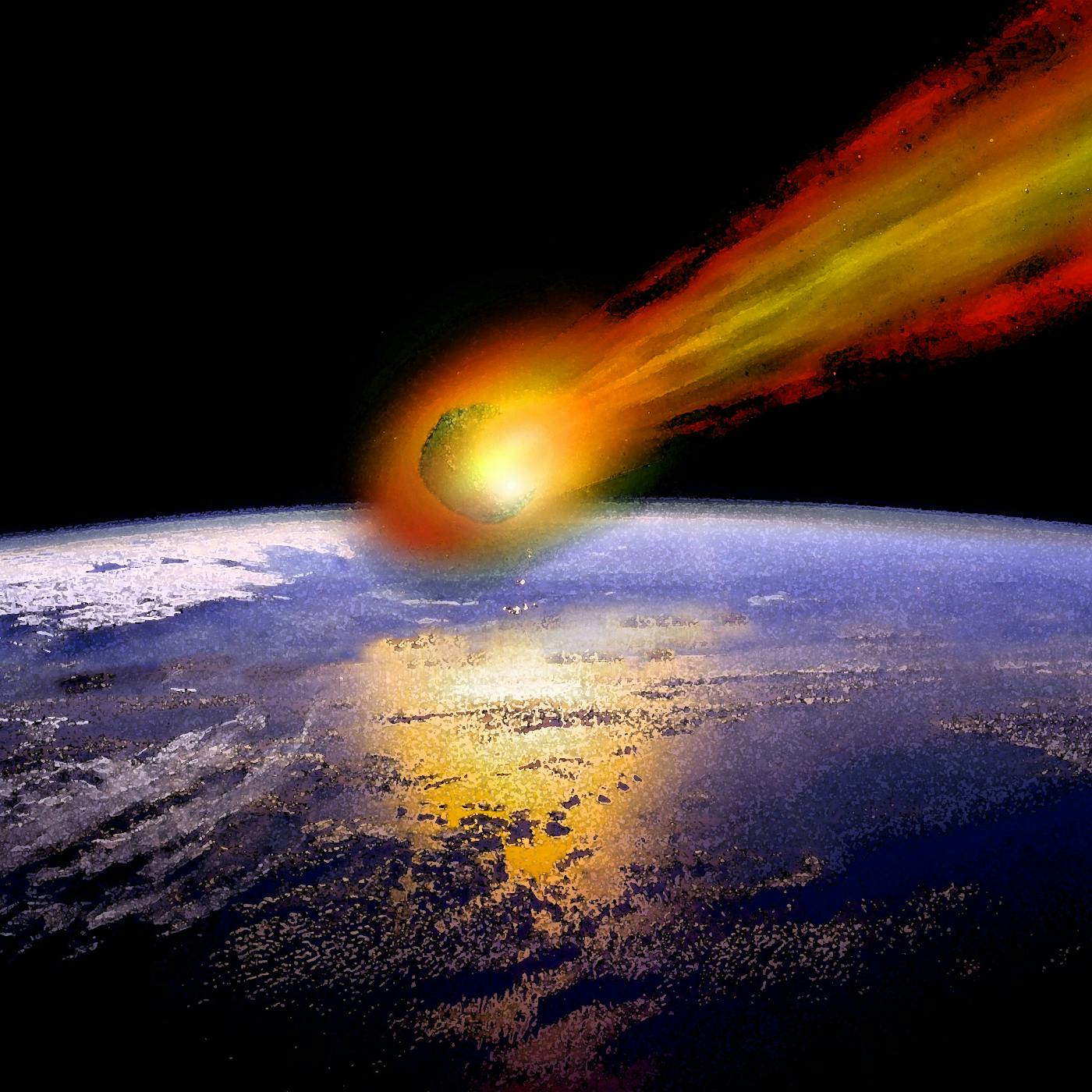
Chasing an Asteroid
About this episode
This episode explores the threat of asteroids, recent deflection experiments, and the potential for asteroids to have brought the building blocks of life to Earth.
Everyone knows that a big rock wiped out the dinosaurs. But the danger from an asteroid hitting Earth is not limited to ancient history. To deal with this threat, scientists recently ran an experiment to deflect a potential “city killer.” We’ll hear the results of that experiment, and about a visit to another asteroid. In the dusty material NASA brought back from the asteroid Bennu, scientists found the chemical building blocks of life, including many of the amino acids that are found in our cells. Could an asteroid have brought the ingredients for life to ancient Earth? In this episode, we look at our paradoxical relationship with the space rocks that taketh way – and may help giveth - life. Guests: Scott Sandford - Astrophysicist and Research Scientist at NASA’s Ames Research Center Robin George Andrews - Science journalist, volcanologist, and author of "How to Kill an Asteroid: The Real Science of Planetary Defense" Descripción en español Featuring music by Dewey Dellay and Jun Miyake Big Picture Science is part of the Airwave Media podcast network. Please contact advertising@airwavemedia.com to inquire about advertising on Big Picture Science. You can get early access to…
More episodes of Big Picture Science
- 40 Years After Chernobyl
- Skeptic Check: Feeling Risky
- Old School
- Amazing Arctic
- Flower Power
- Fantastic-er Voyage
Explore listener stats, chart rankings, contacts and more on the Big Picture Science podcast page.