The Productivity Trap No Election Can Fix
About this episode
The episode discusses the low productivity levels in Jamaica and other developing countries, highlighting the role of government in perpetuating economic gaps.
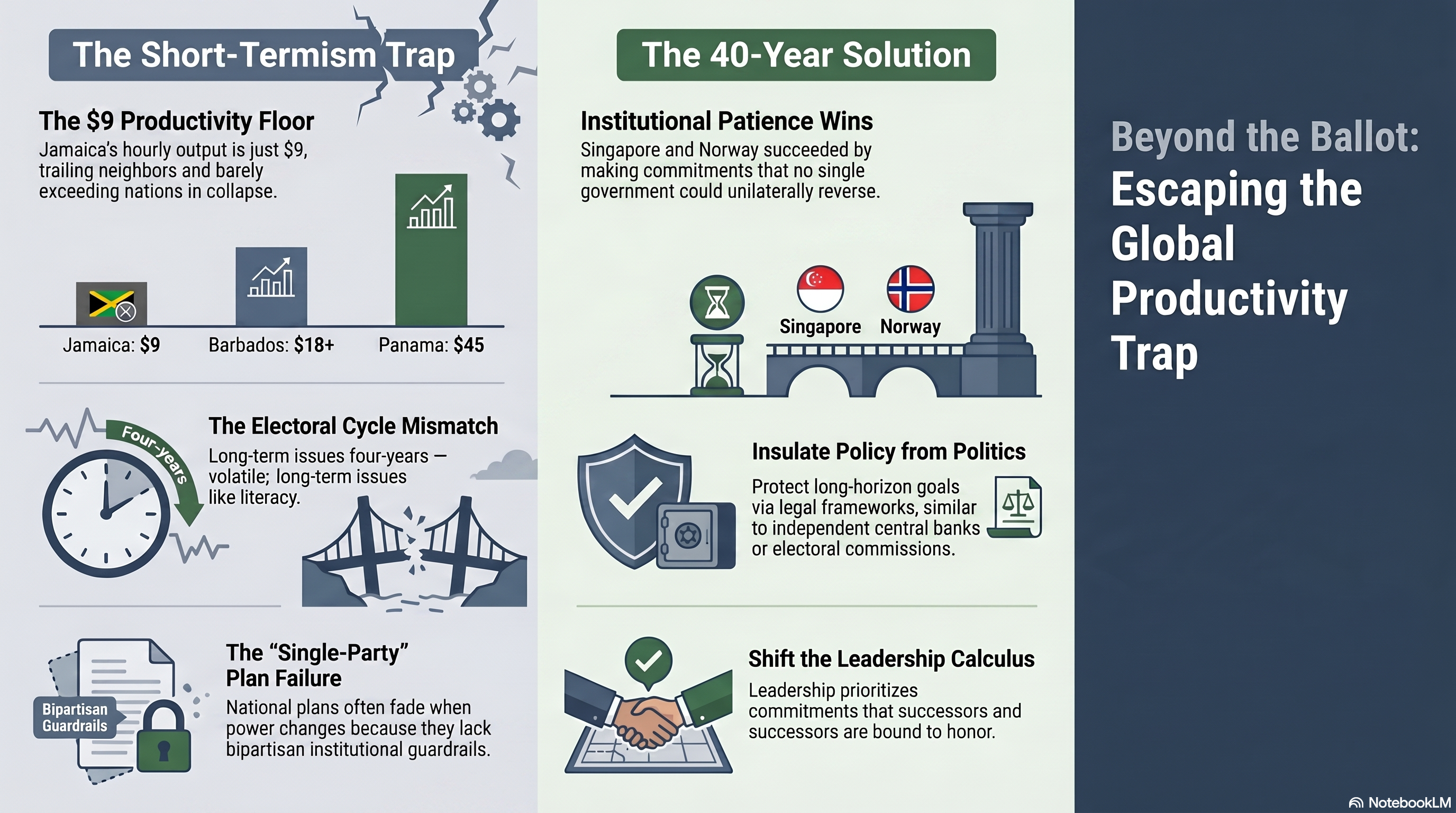
There’s a number most government leaders would rather not think about. For Jamaica, it’s nine dollars. That’s the country’s productivity measured as output per hour worked — US$9. Barbados, a neighboring island economy, produces more than twice that. Panama produces five times as much. Most strikingly, Jamaica’s hourly output is only marginally ahead of Haiti’s — a country that has experienced decades of political collapse and natural disaster. The numbers are sobering. But they are not unique to Jamaica. Across the developing world, governments face a version of the same arithmetic: their economies are generating far less per hour of human effort than they should, the gap is wide, and it has been wide for decades. What is less often discussed is the role that government itself plays in perpetuating that gap. The Largest Economic Actor in the Room In many developing economies, government directly produces somewhere between 15 and 20 percent of GDP through goods and services. That makes it the single largest economic actor in the country — larger than any company, sector or industry. But its true influence extends much further. Government shapes the entire environment in which the…
People in this episode
Host: Francis Wade
Topics covered
- productivity
- government influence
- economic performance
- developing economies
- GDP
- macroeconomic stability
Keywords
- productivity
- Jamaica
- government
- GDP
- economic growth
- developing countries
- Barbados
- Panama
- Haiti
Mentioned in this episode
Places: Jamaica, Barbados, Panama, Haiti
Explore listener stats, chart rankings, contacts and more on the Chronicles from a Caribbean Cubicle Podcast podcast page.