Insights from recent episode analysis
Audience Interest
Podcast Focus
Publishing Consistency
Platform Reach
Insights are generated by CastFox AI using publicly available data, episode content, and proprietary models.
Most discussed topics
Brands & references
Est. Listeners
Based on iTunes & Spotify (publisher stats).
- Per-Episode Audience
Est. listeners per new episode within ~30 days
10,001 - 25,000 - Monthly Reach
Unique listeners across all episodes (30 days)
25,001 - 75,000 - Active Followers
Loyal subscribers who consistently listen
15,001 - 40,000
Market Insights
Platform Distribution
Reach across major podcast platforms, updated hourly
Total Followers
—
Total Plays
—
Total Reviews
—
* Data sourced directly from platform APIs and aggregated hourly across all major podcast directories.
On the show
From 10 epsHost
Recent guests
Recent episodes
The Two Meetings That Turn Long-Term Strategy Into Motion
May 5, 2026
17m 52s
Blue Ocean Strategy Has a Flaw Nobody Talks About
Apr 30, 2026
15m 42s
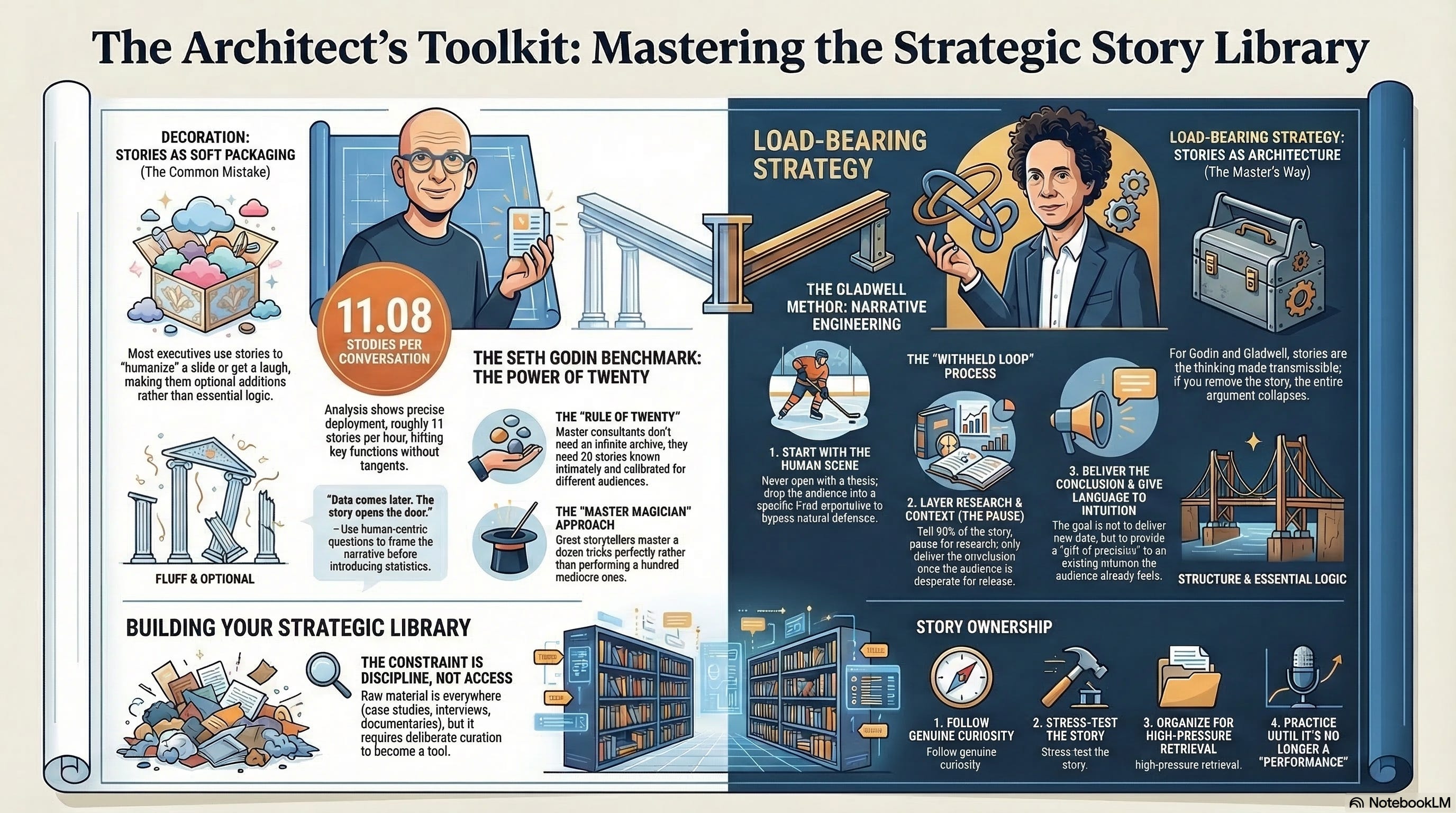
The Moment I Realised My Story Library Was Embarrassingly Small
Apr 6, 2026
11m 19s
Your Mission-Driven Organization Deserves Better Strategy Tools
Mar 18, 2026
12m 26s
When Excellence Breeds Failure: Why Your Best Team Might Be Building Your Worst Disaster
Feb 24, 2026
10m 52s
Social Links & Contact
Official channels & resources
Official Website
Login
RSS Feed
Login
| Date | Episode | Topics | Guests | Brands | Places | Keywords | Sponsor | Length | |
|---|---|---|---|---|---|---|---|---|---|
| 5/5/26 | ![]() The Two Meetings That Turn Long-Term Strategy Into Motion✨ | long-term strategyexecutive leadership+3 | — | — | — | executivesstrategy+4 | — | 17m 52s | |
| 4/30/26 | ![]() Blue Ocean Strategy Has a Flaw Nobody Talks About✨ | Blue Ocean Strategybusiness strategy+3 | — | Cirque du SoleilBlue Ocean Strategy | — | Blue Ocean Strategybusiness strategy+5 | — | 15m 42s | |
| 4/6/26 | ![]() The Moment I Realised My Story Library Was Embarrassingly Small✨ | storytellingprofessional development+3 | Seth Godin | — | — | story libraryprofessional humiliation+3 | — | 11m 19s | |
| 3/18/26 | ![]() Your Mission-Driven Organization Deserves Better Strategy Tools✨ | non-profit strategyorganizational planning+3 | — | — | — | non-profitstrategy tools+4 | — | 12m 26s | |
| 2/24/26 | ![]() When Excellence Breeds Failure: Why Your Best Team Might Be Building Your Worst Disaster✨ | leadershipfailure+3 | — | NCAAMVP Track Club | — | excellencefailure+5 | — | 10m 52s | |
| 2/16/26 | ![]() The Strategy Handoff Crisis: Why Your Successor Can’t Think Like You Do✨ | strategic thinkingexecutive transition+4 | — | — | — | strategic capabilitytransition materials+3 | — | 13m 49s | |
| 2/11/26 | ![]() Why Your 2050 Strategy Must Start Today: Lessons from a 15-Year Failure✨ | strategic planningorganizational challenges+3 | — | US Coast GuardProject Evergreen | — | 2050 strategyorganizational survival+3 | — | 13m 49s | |
| 2/8/26 | ![]() The YouTube Strategy School: Why Your MBA Didn’t Teach You Strategic Thinking✨ | strategic thinkingMBA education+3 | — | CEOMBA+1 | — | strategic capabilitiesMBA+3 | — | 14m 56s | |
| 12/29/25 | ![]() The Uncomfortable Truth: Good Leadership and the Transformational Non-Obvious✨ | leadershiporganizational change+3 | — | boardcompany+1 | — | leadershipCEO+5 | — | 11m 40s | |
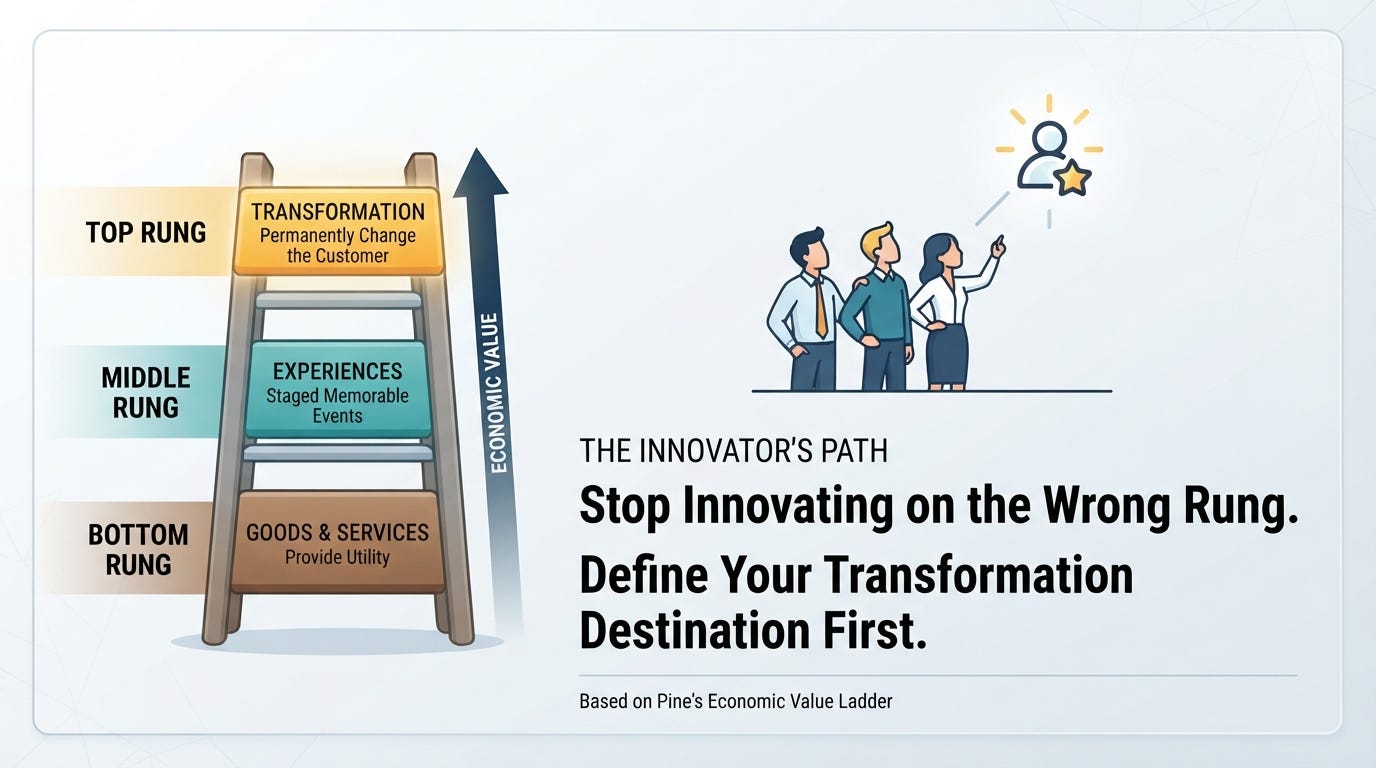
| 12/22/25 | ![]() Stop Calling It Recovery: Why Your Business Needs a Different Word | When disaster strikes, the language leaders choose reveals everything about their future.In late October 2024, Hurricane Melissa tore through Jamaica as a Category 4 storm, causing widespread devastation. Within days, business leaders across the island were using the same word: “recovery.” Getting back to where they were before the hurricane hit.But here’s the problem with that word—and why it matters far beyond Jamaica’s shores.“Recovery” assumes your old business model was viable. For most organizations, it wasn’t. That’s why they’re calculating hurricane damage for the third time this decade, why they’re responding to their fourth supply chain crisis in two years, why they’re addressing the same vulnerabilities again and again.The word matters because it shapes the destination. And if that destination is simply “back to normal,” you’re planning to fail in exactly the same way next time.The Recovery TrapLet me be direct: If your post-crisis strategic plan looks like “restore operations to pre-crisis levels,” you’re planning to fail again.Recovery language creates a dangerous illusion. It suggests there was a golden era you need to return to—a time when the business was humming, customers were happy, and growth was steady. Then the crisis hit and disrupted everything.But that’s fiction.The truth most leaders know but won’t say out loud: Your business had fundamental vulnerabilities long before the crisis made them visible. The hurricane, the pandemic, the market shock—it didn’t create your problems. It revealed them.You already knew your supply chain was too dependent on a single source. You already knew your physical infrastructure couldn’t handle severe weather. You already knew your cash reserves were too thin. You already knew your team’s digital capabilities were years behind competitors.The crisis just made these truths undeniable.So when you talk about “recovery,” what are you actually recovering to? A fragile business model? An outdated strategy? An eroded competitive position? A workforce unprepared for what’s coming?That’s not a plan. That’s a delusion.What Transformation Actually Looks LikeLet’s look at what organizations that escaped this trap actually did.Sony, Post-War Japan: When Sony emerged from the devastation of World War II, they didn’t try to rebuild Japan’s pre-war electronics industry. That industry was based on cheap labor and imitation of Western products. Instead, Sony’s founders asked a different question: “What could Japan become if we built for the world that’s coming?”They invested in miniaturization technology when everyone said radios had to be large. They pioneered the transistor radio when the market didn’t exist. While Japan was rebuilding roads, they built global distribution networks.Sony didn’t recover. They transformed into something their pre-war selves couldn’t have imagined.The defining moment came in 1955 when Bulova proposed a massive deal that would have guaranteed immediate revenue. Co-founder Akio Morita refused: “If we accept, they will be promoting the Bulova name. In five years, no one will remember Sony. But if I spend 50 years selling Sony-branded products, I will build a brand that lasts for decades.”That’s the difference between recovery thinking and transformation thinking.Indonesia, Post-Tsunami: After the 2004 tsunami devastated Aceh province, killing over 160,000 people in Indonesia alone, the government didn’t just rebuild the fishing villages that were destroyed. They relocated entire communities to higher ground, created early warning systems that didn’t exist before, and diversified local economies away from single-industry dependence.The new Aceh wasn’t a recreation of the old one. It was designed for a future where tsunamis would happen again—but with radically different outcomes.New Orleans, Post-Katrina (A Counter-Example): What happens when you choose recovery over transformation? Look at New Orleans after Hurricane Katrina in 2005.The city spent billions rebuilding in the same flood-prone areas, restoring the same vulnerable levee systems, recreating the same economic dependencies. Twenty years later, the city remains vulnerable to the same threats. The recovery was successful. The transformation never happened.That’s the cost of choosing the wrong word—and the wrong destination.The Question That Changes EverythingHere’s what transformational thinking looks like in practice:Instead of asking “How do we get back to normal?” you ask a different question: “If we were building this business from scratch today, knowing what we know about technology, climate, markets, and geopolitics, what would we build?”This isn’t theoretical. Jamaica is facing exactly this choice right now.Since 2009, Jamaica has been working toward Vision 2030 Jamaica—a national development plan with the ambitious goal of achieving developed-country status by 2030. It was a bold, comprehensive framework covering everything from education to economic policy to social development.But as Prime Minister Andrew Holness acknowledged in late 2024, many of its original aspirations are now beyond reach. Jamaica won’t become a developed country in the remaining years of the plan.Yet Vision 2030 did something crucial: it demonstrated that long-term thinking is possible, even in a country accustomed to short-term crisis management. It planted the seeds of what comes next.Vision 2050: Transformation, Not RestorationWhat Jamaica needs now—and what your organization likely needs too—is a Vision 2050.Not a recovery plan. Not a restoration strategy. A transformation roadmap.A Vision 2050 should be hard-hitting enough that it forces uncomfortable questions. What does a mid-century resilient organization look like in a world of climate chaos, technological disruption, and geopolitical instability? What capabilities must we build? What dependencies must we eliminate? What assumptions must we abandon?It should be detailed enough that you can work backward to inform today’s decisions. If we need X capability in 2050, what must we start building in 2025? If Y vulnerability will be fatal in 2040, what must we eliminate now?And it should be transformative, not restorative. The goal isn’t to get back to 2024. The goal is to leapfrog to something that would have been impossible to imagine in 2024.The Opportunity Crisis CreatesHere’s the paradox: Crisis is the only time most organizations have permission - the full freedom - to transform.In normal times, there’s too much momentum, too many stakeholders invested in the status quo, too many reasons to optimize rather than revolutionize. Crisis breaks that inertia. It creates a brief window where fundamental change becomes possible—even expected.Hurricane Melissa offers Jamaica this opportunity. Your next crisis—and there will be one—offers it to you also.The question is whether you’ll use it for recovery or transformation.Recovery is easier. It’s more comfortable. It doesn’t require you to question fundamental assumptions or abandon familiar approaches. You can point to what existed before and say “let’s get back to that.”Transformation is harder. It requires admitting that what you’re losing wasn’t worth preserving in its current form. It demands imagination about futures that don’t yet exist. It means making irreversible decisions based on incomplete information.But only one of these approaches positions you for the world that’s actually coming.The Fork in the RoadEvery organization facing disruption stands at a fork in the road. One path leads back. One path leads forward. They’re labeled with different words.One sign says “Recovery.”The other says “Transformation.”The choice reveals everything about what comes next—and whether you’ll be having this same conversation after the next crisis hits.Choose the right word. It determines your destination.——————————-This article is based on a column published in the Jamaica Sunday Gleaner Business Section by Francis Wade This is a public episode. If you'd like to discuss this with other subscribers or get access to bonus episodes, visit longtermstrategy.substack.com/subscribe | 11m 55s | ||||||
Want analysis for the episodes below?Free for Pro Submit a request, we'll have your selected episodes analyzed within an hour. Free, at no cost to you, for Pro users. | |||||||||
| 12/8/25 | ![]() Why Your Strategic Plan Is Probably Just an Expensive Wish List | TranscriptAsk most CEOs about their strategic plan and you’ll hear about vision statements, multi-year roadmaps, and quarterly KPIs. What you won’t hear is the one thing that actually matters: What do we believe has to be true for this to work?That missing question—the absence of a testable hypothesis—is why most strategic plans gather dust while organizations spin their wheels solving the same problems year after year.Dianne McIntosh and Jamaica’s Citizens Security Secretariat (CSS) discovered this the hard way. Their story reveals how treating strategy like a scientific experiment—not a sacred document—can unlock progress that seemed impossible.The Problem with Most Strategic PlansHere’s the uncomfortable truth: calling something a “strategic plan” doesn’t make it strategic.Most planning exercises produce elaborate action lists. Deploy new technology. Improve customer service. Expand into new markets. These aren’t strategies-they’re activities. And activities without an underlying theory about why they’ll work are just expensive guesses dressed up in PowerPoint.Real strategy requires what Dr. Peter Compo describes as a central rule: a single guiding choice that directly addresses the system’s bottleneck—the critical constraint standing between you and your aspiration. A true strategy is not a laundry list of initiatives but a clear, testable bet about how overcoming that bottleneck will unlock progress. The central rule can then be tested, adapted, or abandoned as evidence accumulates.Why don’t more leaders think this way? Because genuine strategic thinking is genuinely hard. It demands:Making peace with incomplete informationCommitting to multi-year time horizonsAccepting you might be wrongFollowing evidence even when it contradicts your initial beliefsMost executives understandably retreat to the comfort of detailed plans and busy work. At least that feels like progress.When Reality Breaks Your Beautiful PlanWhen Jamaica formed the CSS to tackle violent crime, they followed the standard playbook: multi-sectoral coordination, justice reform, community programs. Their flagship initiative? Train 99,000 parents of at-risk youth through the Parenting Commission.It was comprehensive. It was ambitious. It was wrong.The program failed spectacularly—burning through a million euros in EU funding before collapsing under the weight of insufficient capacity and entrenched behavioral patterns. The target was fantasy, not strategy.This is where most organizations double down on the original plan or blame “execution failures.” The CSS did something different: they admitted their hypothesis was flawed and went looking for a better one.The Question That Changed EverythingTony Anderson, then Commissioner of Police, posed a challenge that redirected their entire approach: “When are you going to do something about the few schools producing most of our criminals?”That question sent McIntosh’s team into Jamaica’s education data for the first time. What they found confirmed Anderson’s instinct—but revealed something far more important.The data exposed the bottleneck: children leaving primary school reading at Grade Two level, many traumatized, seeking achievement and belonging in criminal gangs instead of classrooms.This wasn’t about parenting programs. The constraint was literacy and unaddressed trauma in the education system itself.Suddenly, the CSS had a testable hypothesis: If we close learning gaps and treat trauma in vulnerable schools, we can predictably reduce the pipeline of youth into criminality.That’s a hypothesis you can build experiments around. That’s a hypothesis that points to specific interventions. That’s a hypothesis that, if wrong, tells you exactly where your assumptions broke down.The Scientific Approach to StrategyThe CSS’ turnaround demonstrates a replicable four-step process:First: Treat Your Plan as a Temporary HypothesisStop calling it “the strategy” and start calling it “our current best guess.” The CSS abandoned their parenting program quickly because they viewed it as a testable assumption, not a political commitment. This requires intellectual humility—and organizational culture that rewards learning over face-saving.Second: Let Data Reveal the True ConstraintThe CSS didn’t commission a new consulting study. They analyzed existing school inspection reports and educational outcomes data. The constraint revealed itself: students trapped in learning failure, falling further behind each year.Theory of Constraints teaches that every system has one primary bottleneck limiting performance. Your job isn’t solving every problem—it’s identifying which constraint actually matters, then exploiting it relentlessly.Third: Build a Cause-Effect Model You Can MeasureThe CSS formalized their new hypothesis as the Inter-Ministerial School Support Strategy (IMSSS). Success became concrete: move a child from Grade One to Grade Four reading level in ten weeks.This shift is critical. Unlike short-term police operations that yield immediate metrics, social development requires years to show results. But intermediate indicators—reading level improvements, trauma treatment completion—let you track whether your hypothesis is working long before final outcomes appear.You’re not waiting five years to discover you were wrong. You’re testing assumptions continuously.Fourth: Institutionalize the Learning ProcessBorrowing from Tony Blair’s UK government, the CSS established itself as a delivery coordination center—managing the “science of delivery” across multiple ministries.Why does this matter? Because one-off experiments don’t create lasting capability. You need institutional mechanisms that turn hypothesis testing into organizational DNA.Does Your Plan Have a Hypothesis?Most strategic documents hide their assumptions rather than stating them explicitly. You can fix this today with a simple diagnostic.Take your current strategic plan and ask an AI to analyze it using these prompts:What’s our stated long-term objective?What are our top five proposed actions?What cause-and-effect chain connects these actions to that objective? (State it explicitly: “We believe X leads to Y because of Z”)What’s the implicit hypothesis? (“The constraint preventing our success is...”)Are these actions surgical interventions testing our hypothesis—or just business-as-usual activities we hope will help?Can you state our central strategic hypothesis in one clear, testable sentence?If the AI can’t find a clear hypothesis, neither can your team. You’re operating on hope, not strategy.The Ultimate TestAfter running this analysis, ask yourself one question McIntosh would recognize:“If we executed this plan perfectly and still failed to achieve our goals, would we know exactly which assumption was wrong?”If you can’t answer “yes”—if you can’t pinpoint the specific cause-effect belief that would be disproven—then you don’t have a strategic hypothesis. You have a prayer disguised as a plan.But if you can articulate what would have to be true, what evidence would prove you wrong, and what you’d learn from failure—then you’re thinking scientifically.The CSS didn’t contribute to reducing Jamaica’s violent crime by 40% through willpower or resources. They did it by treating strategy as science: form a hypothesis, design experiments, follow the evidence, adjust ruthlessly.Your constraints are different. Your bottleneck isn’t literacy or trauma. But your challenge is identical: stop planning and start hypothesizing.The evidence is waiting to tell you what’s actually true. The only question is whether you’re ready to listen.This article was inspired by my regular column in the Jamaica Gleaner. This is a public episode. If you'd like to discuss this with other subscribers or get access to bonus episodes, visit longtermstrategy.substack.com/subscribe | 11m 44s | ||||||
| 11/24/25 | ![]() Why Your Strategic Vision Falls Flat | As a senior executive, you’ve delivered passionate presentations about your organization’s strategic vision. You’ve crafted compelling narratives about transformation, growth, and impact. Yet somehow, your message resonates in the boardroom but dies somewhere between middle management and the frontlines.Sound familiar?Most executives communicate like it’s 1995 - a pre-digital world. They craft one message and assume it will resonate equally across all levels of the organization. Unfortunately, they remain trapped in a predictable pattern: the C-Suite is energized, department heads are cautiously optimistic, supervisors are skeptical, and frontline staff are mentally planning their next vacation.This enthusiasm gap has killed more strategic initiatives than market downturns, budget cuts, or competitive threats combined.But what if you could access an AI assistant that never tires of brainstorming and never judges your half-formed ideas? Some executives are already discovering this secret weapon. What follows are three 10-minute prompting strategies that require only copying, pasting, and customization. By the end, you’ll have created a new Super Colleague who works for free.The Level-Specific TranslatorYour strategic passion resonates at the top, wavers in the middle, and completely dissolves at lower organizational tiers. One-size-fits-all messaging simply cannot work when you’re speaking to executives worried about market position, managers concerned about operational changes, and frontline employees focused on daily workflows.Start with this basic prompt:“I need to communicate our strategic initiative to different levels of my organization. Here’s our core message: [INSERT YOUR MESSAGE]. Please create 4 versions tailored for: 1. Senior executives (focus on strategic impact) 2. Middle managers (focus on operational changes) 3. Supervisors (focus on team implications) 4. Frontline staff (focus on daily work impact). For each level, address their specific concerns and use language they relate to.”To deepen this approach, upload relevant strategic documents, previous planning frameworks, and organizational assessments. But go further.Great communication begins with genuine empathy for your audience. Modern tools like Jobs to Be Done and Design Thinking can take you into your staff’s actual experience. Once there, you can tap into deeper motivations than just “getting a paycheck.”Feed these insights into your AI and ask it to generate multiple message options. This gives you choices rather than hoping your first attempt works.The Resistance DetectorEven with perfect messaging, you should expect skepticism. While employees nod politely in meetings, their real objections remain unspoken, quietly sabotaging your efforts. You’re fighting invisible resistance because people won’t voice their true concerns publicly.Use your AI to anticipate objections before they derail your initiative:“I’m rolling out strategic initiatives in my [TYPE OF ORGANIZATION]. Based on typical employee concerns, what are the likely unstated objections from: 1. Middle managers worried about implementation 2. Supervisors concerned about their teams 3. Frontline staff skeptical about change. For each group, identify their top 3 unspoken concerns and suggest how I should address them in my communication.”Feed in data from employee surveys, focus groups, and engagement metrics. Your AI Super Colleague will analyze every piece simultaneously—a feat no human consultant can match.Expect some surprises. You’ll also receive specific strategies to address lurking issues before they become problems, helping you craft proactive responses rather than reactive damage control.The Tactical Action GeneratorIf you’ve gained traction with the above methods, congratulations—but you’re far from finished. Strategic success relies on thousands of individuals taking specific actions that fall well outside business-as-usual operations.That’s the entire point of strategic transformation.Now you need concrete activities that departments can integrate into their operational plans:“Our organization is pursuing [INSERT SPECIFIC STRATEGIC GOAL]. We are a [TYPE OF ORGANIZATION] with departments including [LIST DEPARTMENTS]. For each department, create 3-5 specific actions they can take in the next 90 days that directly contribute to this goal. Make sure each action is SMART and requires minimal additional resources.”The specific answers won’t be perfect, but they’ll accelerate your thinking exponentially. You’ll move from abstract strategy to concrete tactics in minutes rather than months.Beyond Traditional ConsultingSkeptics might argue these are questions leadership teams discuss regularly. True—but we know that fresh perspective can shake up stale thinking considerably. Your AI Super Colleague brings unlimited patience, vast knowledge synthesis, and zero political agenda to strategic planning.Unlike human consultants who deliver recycled frameworks, AI generates organization-specific insights. Unlike internal brainstorming that gets trapped in groupthink, AI challenges assumptions. Unlike expensive advisory relationships that drain budgets, AI provides unlimited strategic thinking support.The transformation isn’t just about better communication—it’s about democratizing access to strategic thinking tools that were previously available only to organizations with massive consulting budgets.Start TodayYour AI Super Colleague is waiting, ready to transform how you bridge the gap between strategic vision and organizational reality. While others struggle with the same old enthusiasm gaps and communication breakdowns, you can become the leader who finally cracks the code on organization-wide alignment.The prompts are here. The technology is accessible. The choice is yours. Why not start today?This article was inspired by my recent column in the Jamaica Gleaner. This is a public episode. If you'd like to discuss this with other subscribers or get access to bonus episodes, visit longtermstrategy.substack.com/subscribe | 8m 47s | ||||||
| 11/18/25 | ![]() Beyond the Annual Planning Checklist | TranscriptImagine you lead a government ministry, department, or agency. As you approach the season for submitting annual reports and corporate plans, you realize something is missing. The very reason you entered public service is being lost in paperwork.This challenge isn’t unique to any single country—it’s a global phenomenon affecting government leaders worldwide, whether they’re working within established national development frameworks or considering creating one.A Case Study in National Vision: Jamaica’s ExperienceTo understand this dynamic, consider Jamaica’s Vision 2030—one of the world’s most comprehensive national development plans. For over 16 years, more than one hundred government organizations have submitted detailed annual plans to parent ministries, creating a rigorous process that private sector executives often admire. It represents a remarkable achievement in sustained strategic execution.Dr. Wesley Hughes, the plan’s architect, originally envisioned something transformational. In his forward to the Vision 2030 document, he wrote: “Today, our children have access to technologies that were once considered science fiction. They seek opportunities to realize their full potential. This Plan is to ensure that, as a society, we do not fail them.”Hughes continued: “We have a duty to ourselves, to the sacrifices of past generations and to the hopes of future generations, to preserve the best of our country and to transform the worst. The outcome in 2030 is dependent on the decisions we make today.”However, as insiders know, even the most well-intentioned national frameworks can become sources of bureaucratic dread rather than inspiration. How does this happen, and what can leaders worldwide learn from this experience?The National Vision Compliance TrapThe primary problem—whether in Jamaica or any country with strategic planning processes—is that organizations typically complete their internal plans before “aligning” them with the national vision. Compliance checking becomes the final step rather than the foundational starting point.This approach is fundamentally backwards, like deciding to travel somewhere before determining why the journey matters.Consequently, civil servants feel constrained rather than inspired by their national development framework. For countries without established national plans, this offers a crucial lesson: the implementation process matters as much as the vision itself.Universal Principles for Government LeadersWhether you’re operating within an existing national framework or considering developing one, the solution involves reclaiming strategic voice through fundamental questions:“What does our country need from this organization to accomplish our national vision?”“What game-changing outcomes aren’t explicitly captured in current planning but have become critical?”“What goals should influence the next (or first) iteration of national planning?”Reconnect with Original PurposeStudy Dr. Hughes’ approach as a model. He didn’t lead the creation of Vision 2030 Jamaica as a bureaucratic compliance exercise—he crafted it as a covenant with future generations. Government leaders worldwide can apply this principle by:* Returning staff to the original purpose behind strategic frameworks.* Connecting teams with the deeper reasons they joined public service.* Making inspirational founding documents part of organizational culture.* Recognizing that most public servants want to accomplish more than mere survival.From Following to Leading: The Jamaica Model and BeyondJamaica’s experience offers both cautionary tale and opportunity. The country now stands at a unique inflection point—with remaining years in the Vision 2030 timeline that could become its finest contribution to national development.This mirrors a broader truth: research shows humans overestimate short-term potential while underestimating long-term possibilities. Strategic initiatives often build momentum gradually, achieving exponential impact toward their timeline’s end.For countries without national development plans, Jamaica’s experience suggests several critical design principles:* Start with inspirational purpose, not compliance requirements, and convert these into frequent practices.* Build implementation processes that energize rather than drain participants.* Create feedback loops that celebrate progress toward transformational goals.* Design planning cycles that connect daily work to generational impact.The Global Leadership ChoiceWhether you’re working within Jamaica’s Vision 2030, another country’s national framework, or considering developing strategic planning processes, the fundamental choice remains the same.The question isn’t whether you have authority to lead transformational change—you do. The question is whether you have courage to use it.Right now, government leaders across the globe face this choice. Will you spend your tenure perfecting compliance reports? Or will you use strategic planning as foundation for breakthrough leadership?Dr. Hughes helped design Vision 2030 to prevent society from failing its children. His vision applies universally: every government leader has opportunity to ensure their work serves future generations rather than mere bureaucratic efficiency.Lessons for Countries Without National PlansJamaica’s experience offers valuable insights for nations considering comprehensive strategic planning:* Start with inspirational architecture like Hughes created—connect planning to generational responsibility.* Design implementation processes that inspire rather than constrain participants.* Build momentum systems that recognize long-term strategic initiatives often achieve greatest impact at timeline’s end.* Create cultural integration that makes strategic thinking part of daily organizational life.History won’t remember executives who filed the most thorough paperwork. It will remember those who transformed their area of responsibility when game-changing leadership mattered most.The choice, and the legacy, are yours—whether you’re building on Jamaica’s model or creating your own path toward national transformation.This article was inspired by my recent Jamaica Gleaner column. This is a public episode. If you'd like to discuss this with other subscribers or get access to bonus episodes, visit longtermstrategy.substack.com/subscribe | 9m 36s | ||||||
| 11/10/25 | ![]() When Good News Becomes a Business Risk | TranscriptWhen Good News Becomes a Business Risk: How Falling Crime Can Disrupt Your StrategyA Shift Few Leaders ExpectFalling crime rates are usually celebrated as a sign of progress. Safer communities, stronger economies, and a brighter future—what’s not to like? Yet for business leaders, this kind of change can also be profoundly disruptive. If your company has been operating for decades in an environment shaped by insecurity, what happens when that reality suddenly shifts?Jamaica offers a striking example. For years, high levels of violence defined everyday life and business practices. Many firms adapted, building their operations on an assumption of danger. Now, crime is falling. If this trend proves durable, the very foundations of corporate strategy in the country could be shaken.The same dynamic applies globally. Whether it’s crime, inflation, regulation, or even cultural norms, long-standing conditions shape business models. When those conditions change, the leaders who cling to old assumptions often suffer the most.Beyond Skepticism: Could the Change Be Real?History encourages caution. In Jamaica, crime dipped after the 2010 “Dudus crackdown,” when nearly a hundred criminals were eliminated or fled. The effect was temporary; crime rebounded. Understandably, leaders today hesitate to celebrate.But current indicators suggest something different. The Citizens Security Plan (CSP), launched in 2020, has applied coordinated interventions across policing, communities, and schools. These are not random shifts but measurable, systemic efforts. According to Dianne McIntosh of the Citizens Security Secretariat (CSS), the downward trend was predicted and intentional, not accidental.If this approach is sustainable, Jamaica may be entering a new era. For business leaders, that requires more than casual observation—it demands strategic reconsideration.When Old Assumptions Become DangerousExecutives often claim to have “a long-term plan.” Sometimes it exists only in their heads; other times it’s reduced to lofty mission statements. But when tested, many leadership teams struggle to articulate a coherent strategy. That’s manageable when conditions remain stable. It’s perilous when they change.Falling crime isn’t just a social good—it’s an economic shock. Studies suggest that Jamaica’s high crime rate has shaved 2–4% off annual GDP growth. If that burden is lifted, the economy could expand in ways that reward some sectors while destabilizing others.Consider Colombia. Between 2002 and 2010, murders and kidnappings plummeted. While the country as a whole benefited, one sector suffered: private security. With half a million armed guards—more than the army and police combined—the industry had thrived on fear. When violence declined, demand collapsed. Firms that assumed the old reality would last indefinitely faced sudden disruption.The same could happen anywhere. Companies built on entrenched conditions may discover that their core business model no longer fits.Lessons from a Pandemic SurpriseThis pattern isn’t limited to crime. In 2017, a financial services client dismissed the idea that their country was ready for online banking. They imagined digital adoption as a distant event.In discussions, I encouraged them to carve out an actual timeline: a 10-year goal. Then the COVID-19 pandemic hit. Overnight, physical branches closed, and the digital future arrived.Fortunately, the company had at least sketched out a plan. They accelerated it, shifting in months what they thought would take a decade. Those without foresight were left scrambling.The lesson is clear: change rarely arrives on schedule. Leaders who prepare for disruption—whether it comes from crime rates, technology, or global crises—are positioned to adapt. Those who rely on yesterday’s success become their own worst enemy.Why Foresight Matters NowHarvard professor Clay Christensen once observed that organizations grow addicted to what made them successful. They defend the familiar rather than exploring the new. This is comforting but risky.If crime falls sustainably, a country like Jamaica will experience profound change. Real estate values could climb. Tourism could expand. Consumer confidence could rise. Yet industries tied to fear—private security, certain insurance products, or defensive real estate designs—may shrink.Globally, the principle is the same: whenever a long-standing challenge begins to ease, leaders must ask, what happens to us if the world really does change?Turning Good News into Strategic AdvantageFalling crime is an undeniable win for society. But for business leaders, it’s also a challenge. The question is not whether to celebrate, but whether to adapt.Here are three steps to consider:* Validate the DataDon’t rely on rumors or short-term headlines. Understand the leading indicators, the policies behind them, and whether the change is likely to last.* Stress-Test Your ModelAsk how your operations, costs, and markets would shift if the old assumptions disappeared. If your business relies on high levels of fear, inflation, or any entrenched condition, prepare alternatives.* Rebuild Before You’re Forced ToWaiting until the change is undeniable often means it’s too late. Instead, use foresight to redesign your company around the future that could emerge.The Bottom LineA safer society is a gift. But it is also a test of leadership. True foresight requires seeing risks where others see only triumph.The companies that thrive will be those willing to let go of outdated assumptions and embrace a new normal—even when the news is good.This article was inspired by my recent Jamaica Gleaner column. This is a public episode. If you'd like to discuss this with other subscribers or get access to bonus episodes, visit longtermstrategy.substack.com/subscribe | 8m 28s | ||||||
| 11/3/25 | ![]() Why Your Strategy Isn't Inspiring Anyone | TranscriptAs a senior executive, you’ve probably felt the weight of expectation when it comes to inspiring your team. The board expects it. Your direct reports need it. But despite your best efforts—the carefully crafted presentations, the all-hands meetings, the motivational speeches—something isn’t working.Your people seem disengaged. They nod politely during strategy sessions, but you can sense their minds wandering. The quarterly results suggest they’re just going through the motions rather than truly buying into your vision for the future.Your first instinct might be to blame yourself. Maybe you need better presentation skills, more charisma, or additional leadership training. But before you sign up for another executive coaching program, consider this: the problem might not be you at all.The Outdated PlaybookMost organizations still rely on industrial-age methods to communicate their strategic vision. The playbook hasn’t changed much in decades:Step one: Leadership team crafts a comprehensive strategic plan during an off-site retreat.Step two: Create a polished presentation and distribute lengthy PDF documents.Step three: Hold a company-wide meeting where the CEO delivers an inspiring speech.Step four: Trust middle managers to cascade the message down through their teams.Step five: Hope the enthusiasm lasts more than a few weeks.This approach assumes that inspiration works like a broadcast signal—send it out once, and everyone receives it clearly. But that’s not how human psychology works, especially in our current information-saturated environment.Consider this reality check: the average employee finds more engagement in a one-minute Tik Tok video than in most hour-long corporate strategy presentations. This isn’t a reflection of shortened attention spans—it’s about relevance and interactivity.Rethinking Employee ActivationInstead of trying to temporarily pump up your workforce, focus on creating what consultant Amie Devero calls “activated” employees. These are people who either genuinely care about your company’s future or have discovered how their personal aspirations align with organizational goals.In most companies, roughly half the workforce falls into one of these categories naturally. They want to contribute meaningfully and grow professionally. The challenge is that traditional communication methods only effectively reach about 10% of non-executive staff members.Why such a low connection rate? Most employees simply lack the background or time to digest complex strategic documents. Even when materials are well-written and intentions are good, the gap between executive thinking and front-line understanding remains vast.When leaders notice this disconnect, they often make things worse by trying harder with the same failed methods. They speak louder, write longer documents, and add pressure on middle managers to better “sell” the message.But what does a truly activated employee look like in practice?They regularly reference the company vision when making decisions. They have genuine curiosity about strategic initiatives and how their work contributes. Most importantly, they feel connected to colleagues around shared purpose rather than just shared tasks.The question becomes: how do you create this level of engagement systematically?The AI-Powered SolutionRecent advances in artificial intelligence offer a completely different approach to vision and strategy communication. Large Language Models—sophisticated chatbots that can engage in natural conversation—have opened new possibilities for organizational learning.More specifically, there’s a subset called Source Language Models that work exclusively with materials you provide. Think of it as creating a custom search engine that only knows about your company’s strategy documents, leadership videos, planning materials, and related content.Unlike general-purpose AI that draws from the entire internet, these focused systems answer questions using only your uploaded materials. This means employees can have detailed, accurate conversations about your specific strategic vision without getting generic business advice.The practical applications are remarkable. An employee wondering how their department fits into the five-year plan can get instant, detailed answers. Someone curious about market assumptions underlying your strategy can explore those topics in depth. A team member with ideas for improvement can understand exactly where their suggestions might fit.Modern platforms can automatically generate supplementary materials from your core documents: podcast-style audio summaries for commuters, interactive quizzes to test understanding, visual mind maps showing strategic connections, and even video presentations that break down complex concepts.Beyond Traditional EngagementThis AI-powered approach addresses several problems with conventional vision communication:Personalized pacing: Instead of forcing everyone to absorb information at the same rate during meetings, people can explore strategic concepts at their own speed and depth.Continuous availability: Rather than limiting strategic discussion to quarterly all-hands meetings, employees can engage with your vision whenever questions arise in their daily work.Interactive learning: Instead of passive consumption of presentation slides, people can ask follow-up questions, explore specific areas of interest, and test their understanding.Identifying blind spots: As employees interact with your strategic materials, they often surface insights that leadership teams miss. Front-line workers frequently spot emerging technologies, customer trends, or operational challenges that could reshape your industry.When this happens at scale, you essentially gain access to a tireless strategy consultant who knows your business intimately and never sleeps. Your AI system becomes increasingly valuable as more employees engage with it, asking questions that reveal both strengths and gaps in your strategic thinking.The Leadership ShiftThis approach represents a fundamental shift in how we think about inspirational leadership. Instead of placing the entire burden on executives to be charismatic communicators, it creates systems that meet each person where they are.Some employees learn best through detailed written analysis. Others prefer audio explanations during their commute. Still others need visual frameworks to understand complex relationships. An AI-powered system can serve all these learning styles simultaneously.The result is genuine activation rather than temporary motivation. When people can explore your vision on their own terms, at their own pace, they develop deeper understanding and stronger commitment.As a leader, this doesn’t diminish your role—it amplifies your impact. Instead of being limited by your personal bandwidth and communication style, you can reach every team member in ways that resonate with their individual needs and interests.The future of vision communication isn’t about becoming a more inspiring speaker. It’s about creating more engaging, accessible, and interactive ways for people to connect with your company’s purpose, strategy and direction.This article was inspired by my column in the Jamaica Gleaner. This is a public episode. If you'd like to discuss this with other subscribers or get access to bonus episodes, visit longtermstrategy.substack.com/subscribe | 10m 09s | ||||||
| 10/27/25 | ![]() Beyond the Boardroom and Its Voices | TranscriptWhen companies embrace long-term, aspirational strategic thinking, they often stumble upon a neglected truth: not all stakeholders have a voice. Some are silent—like the natural environment, social infrastructure, or even future generations. These sometimes non-human entities are easily overlooked because they don’t speak up, file lawsuits, or stage protests. Yet, their well-being may determine the future success or failure of your organization.Consider the Hotelier’s DilemmaImagine you’re a hotel owner. Guests praise your beachfront property—drawn to the beauty, the warmth of the staff, and the authentic local culture. You enjoy a reputation built over decades, and visitors return annually, treating your resort like a second home.But as you prepare for your next strategic planning retreat, the future doesn’t look quite as sunny. The once-pristine beach is eroding year by year. Crime in the nearby community is inching upward. Long-time guests are beginning to voice their concerns—some loudly. And deep down, you know they’re right.These aren’t new problems. You’ve noticed the beach disappearing one foot at a time. The rising tension in the community isn’t news either. But like the proverbial frog in warming water, you’ve adapted, explaining it all away as “the cost of doing business.” Worse, your previous attempts to raise these concerns during past meetings were met with polite nods and quick pivots to more “urgent” topics.Now, as your team embarks on a long-term strategy session—looking ahead 15, 20, even 30 years—you sense a chance. These issues can no longer be swept under the rug. But how do you surface them meaningfully, especially when they don’t fall neatly into traditional stakeholder categories?Step 1: Rethink What a Stakeholder IsIn most boardrooms, a stakeholder is understood to be anyone with a vested interest in your company’s activities—customers, employees, shareholders, suppliers, regulators. The common thread? They’re human, vocal, and often powerful.But in the context of long-term strategy, that definition is limiting. It omits key players—those without voices—who nonetheless play a pivotal role in your enterprise’s future. These silent stakeholders might include:* A fragile ecosystem like a beach or watershed.* A vulnerable public utility or road network.* An endangered product ecosystem or supply chain.* A future executive team that hasn’t been born yet.These stakeholders don’t show up in your inbox or on quarterly earnings calls, but ignoring them could cost your company everything.Step 2: Understand the Nature of Silent StakeholdersWhat makes these stakeholders “silent”? They don’t complain when mistreated. They don’t strike or picket. They may be conceptual, abstract, or not yet in existence. But their relevance to your organization’s future is profound.Take that eroding beach. Today, it’s a scenic asset. Tomorrow, it could be the reason your tourism business collapses. Or consider the future leaders of your company. Today, they’re in primary school—or not even born. Yet your decisions now will shape the environment they inherit, including the problems they’ll be tasked with solving.These aren’t philosophical musings. They are strategic realities. And recognizing them is the first step toward future-proofing your enterprise.Step 3: Spot Silent Stakeholders in Real TimeIt’s tempting to generate a list of silent stakeholders as a pre-work exercise. While useful, such lists are often constrained by the current thinking of participants. Instead, look for these stakeholders as you build your strategy.One helpful tool comes from the Strategy Map framework by Robert Kaplan and David Norton. Traditionally, it includes a “customer perspective,” encouraging companies to view their operations through the eyes of customers. But you can go further. What if you considered how the strategy looks from the viewpoint of a future community member, a depleted aquifer, or a degraded coastline? Or even an abstraction like a supply chain or business ecosystem?In sessions I’ve led, teams begin to see these non-traditional entities not as passive resources, but as active partners in a long-term relationship. A beach becomes more than a commodity—it’s a co-steward of your brand. A road system isn’t just infrastructure—it’s part of your delivery promise. A stable climate isn’t background noise—it’s foundational to your survival.Step 4: Make the Strategic CaseSome executives will push back. “We can’t worry about what we can’t control,” they’ll say. But that’s a false dichotomy. You don’t need direct control to take action. Awareness and influence can be just as powerful.To make the case, bring stories. Describe the hotelier who ignored the early signs of decay, only to face a PR and revenue crisis later. Highlight how failing to address today’s issues amounts to borrowing against the future—without consent.Silent Stakeholders Are Strategic StakeholdersYour company’s future doesn’t only depend on customers and cash flow. It hinges on the entities that can’t speak for themselves but whose health and presence are essential to your strategy. These silent stakeholders are often the canaries in the coal mine—overlooked until it’s too late.As you engage in long-term planning, don’t wait for them to raise their voices. They never will. But their impact will be felt—whether you choose to listen or not.Closing ThoughtSilent stakeholders shape your future—whether a beach, a community, or unborn leaders. Ignoring them risks irreversible damage. Today’s strategy must speak for those who can’t. Will you listen before it’s too late?This article was inspired by my regular column in the Jamaica Gleaner. This is a public episode. If you'd like to discuss this with other subscribers or get access to bonus episodes, visit longtermstrategy.substack.com/subscribe | 8m 27s | ||||||
| 9/30/25 | ![]() Tumultuous Times? Learn to Persuade Others to Think Decades Ahead | As a member of the C-suite with a commitment to long-term success, you may find yourself at odds with the culture around you. You’ve come to realize that your role has subtly but fundamentally shifted. While others are chasing quarterly numbers, you’ve begun to see your job through a different lens: one of legacy-building. You’re being pulled into the future, tasked—whether formally or not—with the responsibility of stewarding the organisation across decades, not just financial years.But here’s the challenge: how do you bring others along with you? How do you persuade a board of directors, fellow executives, investors, and employees to prioritize the long game in a world of short-term incentives?This is not an easy undertaking. In fact, changing how leaders think about strategy is one of the most difficult challenges in any organisation—especially successful ones.The Resistance You’ll MeetTake a step back. The leaders around you didn’t get to the top by being slow or visionary. They were rewarded—often repeatedly—for producing immediate results. Many of them built careers by tackling crises, hitting aggressive targets, and outpacing competitors. To them, leadership is synonymous with rapid action and tangible wins.So when you start talking about “the next decade” instead of “the next quarter,” expect to encounter skepticism—or worse, indifference. You’ll find yourself talking about long-term transformation to people whose reputations, bonuses, and egos are anchored in the short term.Yet your instincts tell you that this moment demands something different. You’ve seen what happens to companies that delay the future. Think Netflix versus Blockbuster. Apple’s iPhone versus Nokia and Blackberry. You understand that anticipating and shaping what’s next is no longer optional—it’s essential for survival.When the Future Becomes Your ResponsibilityThe strange thing is, you probably didn’t sign up for this. Most executives aren’t formally tasked with long-range planning. You may not have a title like “Chief Vision Officer” or “Head of Strategic Futures.” But somewhere along the line, the burden of long-term thinking has landed on your shoulders. You are the unofficial guardian of the future.And while some rise to the challenge, others freeze. Some feel paralysed, unsure of how to move forward without formal authority or clarity. Others rationalize their inaction: “The world is changing too fast,” they say. “We need to stay agile, not idealistic.” Or, “We can’t focus on tomorrow when we’re struggling to meet payroll today.”Those may sound like pragmatic statements—but left unchallenged, they become excuses that entrench short-termism and degrade strategic clarity.You Might Be a LiabilityHere’s a difficult truth: if you’ve seen the need for long-term strategy and choose not to act on it, you may be doing more harm than good.Executives often see promotions as rewards for past performance. Some become preoccupied with proving they belong in the role. Others fall into the trap of “Imposter Syndrome,” second-guessing their right to think differently or challenge existing paradigms. And many double down on what worked in the past: more short-term execution, more urgency, more firefighting.But that’s not what your organisation needs from you now.Remember Kodak? At its height, it was a global juggernaut. But a failure to confront long-term realities cost it over US$31 billion in value and 128,000 jobs. The signs were there. What was missing was leadership willing to act on them.Persuasion as a Strategic SkillIf you’re waiting to take a course or attend a strategy retreat before acting, think again. The pace of change means you can’t afford to disappear for even a day without consequence.Instead, see persuasion itself as a mode of learning. Every time you initiate a courageous conversation with a colleague about the future, you sharpen your understanding. Use questions like:* “What’s the long-term impact of this decision?”* “What systemic issues are we failing to address?”* “What future trends are we not discussing?”* “What goals would inspire our stakeholders ten years from now?”* “Which breakthroughs are we ignoring because they don’t pay off this quarter?”These questions are disarming. They don’t require formal authority. But they do require courage.You’ll need to tailor your approach to your context—whether you’re in a multinational corporation, a government ministry, a non-profit, an educational institution, or a startup. The principles remain the same: be the voice of long-term thinking in rooms dominated by short-term pressure.Building Fluency, Not Just FaithYou may wonder whether it’s enough to just champion long-termism and let your enthusiasm carry the message.Unfortunately, no.If you’re not fluent in the arguments and counterarguments, you’ll be vulnerable to professional naysayers—those who use sophisticated logic to resist change. They’re often well-respected, experienced, and deeply invested in the status quo. Without preparation, they will derail your meetings, stall your initiatives, and seed doubt in others.So don’t stop at intuition. Build expertise. Study long-term successes and failures. Read case studies. Watch YouTube documentaries. Analyze how visionaries like Steve Jobs, Satya Nadella, or Zohran Mamdani frame the future in specific, compelling language. Study the language of leaders who inspire action across timeframes.Becoming fluent allows you to do more than make a good point—it allows you to win the room.Final ThoughtNo one is born with the ability to shift other minds from a focus on “this quarter” to “this decade.” It’s not a natural skill—it’s a deliberate one. But if you cultivate it, refine it, and use it consistently, you’ll help your organisation navigate the future with intention instead of reaction.Otherwise, you risk remaining a hostage—trapped by the logic of short-term thinkers and the inertia of yesterday’s success.Start the practice today. The future is waiting for your leadership.This article was rewritten based on an earlier Jamaica Gleaner column. This is a public episode. If you'd like to discuss this with other subscribers or get access to bonus episodes, visit longtermstrategy.substack.com/subscribe | 8m 39s | ||||||
| 9/22/25 | ![]() Strategy Communication to Staff: One-Way Message or Two-Way AI? | As a senior executive, one of your most crucial and delicate responsibilities is the communication of strategic plans to employees, board members, and key stakeholders. But how should you do it? Is it enough to share a dense, one-off report? Or can AI finally offer a way to transform this traditionally frustrating task into something more interactive and engaging?Most leaders dread this stage of the strategy cycle. The excitement of a successful off-site retreat or board strategy session has passed. Now, the hard part begins: conveying the essence of the plan to those who weren’t in the room, yet are expected to bring it to life.The conventional approach hasn’t changed much in decades. First, circulate a written document filled with bullet points, jargon, and long-term goals. Next, convene a town hall meeting, supported by a string of PowerPoint slides. Questions are few. Attention drifts. Finally, you pass the baton to middle managers to cascade the strategy to their teams, hoping they convey the message with clarity and enthusiasm. Often, they don’t. Miscommunication spreads. Employees receive mixed signals. Strategic alignment becomes a fantasy.The result is predictable: confusion, disengagement, and inertia.The Communication GapWhy does this happen, even in well-managed companies?Because strategy is inherently difficult to explain. Unlike routine business matters, it deals with the future—a future that is unpredictable and unknowable. Strategic thinking requires executives to rely on incomplete data, make educated bets, and reason through complex interdependencies.Most employees, however, are trained to execute, not theorize. They want certainty. But strategy rarely offers it. It requires abstract thinking, conceptual frameworks, and trust in leadership judgment.To compound the problem, many employees have no idea what the company’s strategy is. Surveys routinely show that a significant portion of the workforce cannot articulate their organisation’s strategic direction. That’s not because they lack intelligence, but because the way strategy is usually communicated makes it inaccessible.The old approach—a top-down, one-way message—no longer suffices in a world where you are hiring for brains, not brawn. If your employees are going to make smart, real-time decisions that support the strategy, they need to understand the “why” behind the “what.”From Monologue to DialogueToday’s leaders must embrace a new mindset: communication is not just about broadcasting; it’s about engagement. The onus is no longer on the employee to decipher a static report or passively sit through a presentation. Instead, it is the executive’s responsibility to foster understanding—to create conditions in which meaningful dialogue can occur.Fortunately, advances in artificial intelligence offer new pathways. Specifically, large language models (LLMs) such as NotebookLM, a “Source Language Model,” can help transform strategy communication from a passive event into an interactive, personalised experience.What Makes NotebookLM Different?Unlike general-purpose AI tools that respond based on pre-trained knowledge, NotebookLM grounds its responses entirely in documents you upload. This means your actual strategy files—slide decks, board reports, workshop outputs—become the exclusive source of truth. The app processes your data, then allows users to interact with it intelligently.Here’s how to use it.Upload your strategic materials. These could include the formal plan, background analyses, executive summaries, transcripts or even FAQs.Design prompt sets for different levels of strategic maturity:Basic Prompts for new hires or employees unfamiliar with strategic planning. These focus on summaries, definitions, and the background story—ideal for onboarding or setting context.Intermediate Prompts for general staff. These might explore implications, comparisons, and potential challenges in execution.Advanced Prompts for experienced team members or high-potentials. These require synthesis across documents, evaluation of assumptions, or the generation of novel ideas based on strategic intent.The goal is to provide each employee with an opportunity to interrogate the strategy at their own level. Because the responses are personalised and context-aware, employees engage with the material in a way that suits their curiosity, experience, and role.Make It Playful and ChallengingTo increase engagement, you can even add a layer of gamification. Frame the interaction around a scenario—for example, “Play the Devil’s Advocate.” Ask staff to identify potential flaws, contradictions, or unspoken assumptions. Give their inputs scores or feedback. Celebrate insightful critiques.This simple, low-cost exercise can breathe life into a strategy document that would otherwise be skimmed or ignored. It empowers employees to participate in shaping strategic thinking, rather than being passive recipients of edicts from above.A New Era of Strategic EngagementWe are entering an era where employees expect more than a memo or slide deck. They want to understand the company’s direction, contribute ideas, and be involved in shaping the future. AI tools like NotebookLM don’t just allow this—they encourage it.For the first time, executives can enable a genuine two-way dialogue about strategy, at scale. They can foster a sense of ownership among staff who would otherwise feel excluded or overwhelmed.The days of rolling out a strategic plan as a one-way monologue are over. Embrace a model that invites curiosity, fosters understanding, and deepens engagement. With the right tools and mindset, your strategy won’t just be communicated—it will be understood, internalised, and acted upon. This is a public episode. If you'd like to discuss this with other subscribers or get access to bonus episodes, visit longtermstrategy.substack.com/subscribe | 8m 39s | ||||||
| 9/15/25 | ![]() Inspiration in Leadership | Anchor Your Message in a Compelling Future | “Inspiration in Leadership | Anchor Your Message in a Compelling Future”As a leader—whether in politics or business—you want to inspire people. You want them to care, commit, and go above and beyond. But earning this level of engagement is difficult. In fact, it’s one of the most elusive challenges in leadership.Inspiration, after all, isn’t automatic. It doesn’t come from holding a title or issuing commands. It’s something that must be carefully cultivated, often against the backdrop of public skepticism. That’s one reason why political campaigns, like Jamaica’s upcoming election cycle, can offer unexpected leadership lessons—if viewed through the right lens.Today, many are disenchanted with politics. Voter turnout in Jamaica has declined steadily, echoing global trends that point to growing cynicism about leadership, institutions, and the future. And this problem isn’t confined to government. In the corporate world, executives also struggle to mobilize teams and customers around a vision—especially in environments marked by uncertainty, competition, and fatigue.Ideally, leaders shouldn’t need to bribe, pressure, or manipulate people into action. Instead, they aim to win over hearts and minds so that others willingly contribute their discretionary time, energy, and creativity. That’s what genuine inspiration looks like—but it’s easier said than done.Leaders, even well-intentioned ones, often destroy followership without realizing it. They lose focus, fail to articulate a compelling vision, or make careless remarks that erode trust. You’ve likely seen this happen—where someone in authority squanders goodwill with a single tone-deaf comment or decision.Amidst this leadership crisis, I recently came across a video from Wavell Hinds, the former West Indies cricketer and now a political aspirant with Jamaica’s PNP. His short Facebook message, filmed at a deserted Sabina Park, offers a masterclass in communicating a purpose-driven future—one that transcends personal ambition or partisan gain.Grounded in Painful TruthsHinds begins with brutal honesty: West Indies cricket has declined. Once the pride of the Caribbean, it now commands little interest or passion. For many young Jamaicans, he argues, the game no longer holds any allure because they never grew up seeing it at its best.Standing in an empty Sabina Park, once a symbol of cricketing greatness, he laments: “There’s silence, no noise, no matches, no drinks.” He speaks not just as a politician, but as someone who lived the dream—having represented the West Indies in 45 Test matches and winning a Champions Trophy.His message is credible precisely because it’s personal. Cricket, he says, was a vehicle for his childhood ambitions. Now, he mourns what appears to be its slow death in the region’s consciousness.Avoiding Cynicism and Cheap ShotsYet despite the raw emotion, Hinds avoids the kind of toxic finger-pointing that dominates many political messages. Yes, he questions the current government’s commitment, criticizing superficial gestures like ribbon cuttings and photo ops. But his tone isn’t bitter. He doesn’t vilify.“Where is the action once the lights and cameras are off?” he asks. The question lands—not because it attacks—but because it invites reflection.This is instructive. Too often, leaders believe they must attack rivals in order to stand out. But in both politics and business, overemphasizing competition can alienate your audience. Customers don’t care who your competitors are. Employees don’t necessarily rally behind a “we beat them” mentality. And voters? They grow weary of petty battles.The Power of a Shared FutureWhat people do care about is the future—and whether a leader has a credible, inclusive path to get there.Hinds doesn’t merely lament the past or criticize the present. He paints a vision of what could be: a resurgence of West Indies cricket that unites generations and rekindles national pride. It’s not about winning the next match or the next election. It’s about anchoring today’s actions in a future worth striving toward.For corporate leaders, this is an important lesson. It’s tempting to focus narrowly on market share, quarterly results, or outperforming the competition. But those goals rarely ignite passion. Instead, leaders must craft “probable futures”—like “Sustainable Manufacturing 2040” or “AI for Human Flourishing”—that spark hope and demand innovation.People don’t follow leaders because they outperform the competition. They follow those who offer a bigger vision—one that includes them, stretches their imagination, and makes them feel part of something meaningful.Become an Ambassador from the FutureEffective leaders speak and act as if they’ve already visited the future—and are now returning to guide us toward it. They describe what they’ve seen in vivid, practical terms. They acknowledge the obstacles, yes—but they also lay out a clear path forward.This kind of visionary leadership is difficult. It can be lonely. But it’s also the most fulfilling and impactful kind of work.So ask yourself: what future are you inviting others to help create? Are you giving them something worth committing to—not just because it benefits your organization, but because it matters to the wider world?The takeaway is clear: whether you’re in the boardroom or on the campaign trail, being inspiring is hard. But when your message is grounded in truth and tied to a compelling, collective future, people will follow—not because they must, but because they choose to. This is a public episode. If you'd like to discuss this with other subscribers or get access to bonus episodes, visit longtermstrategy.substack.com/subscribe | 7m 55s | ||||||
| 9/8/25 | ![]() The Hidden Risk of Success: How Short-Term Drift Erodes Long-Term Leadership | The Stability TrapYour organisation is doing well. Revenue is strong. Customers are satisfied. Partners are dependable. From the outside, all indicators suggest smooth sailing.But under the surface, a dangerous shift is taking place—short-term drift. Ironically, this subtle threat emerges not from crisis, competition, or disruption, but from long-term stability itself.Consider what has happened in Canada. For decades, Canadian businesses assumed their relationship with the United States—its largest trading partner—was rock solid. The long-term outlook seemed secure. So leaders prioritised immediate operational concerns over deeper, strategic ones.But when political shifts began to destabilise cross-border relations, many companies were caught off guard. While a few heeded early warnings from U.S. leadership, most dismissed the risks. That complacency became apparent only in hindsight. What they lost was not just preparedness—but the ability to think long-term in an environment that demanded it.This is short-term drift in action: the gradual and unconscious narrowing of focus to what seems most urgent, while neglecting the truly important.And it’s not just Canadian firms. This phenomenon is playing out across industries and borders.How “Success” Dulls Strategic ThinkingTake a moment to consider your own company. If you’re relying on a traditional five-year strategic planning cycle, short-term drift may already be taking root.Why? Because a five-year lens quietly removes anything further out from serious discussion. Questions about the world in 10 or 20 years—customer needs, technology evolution, global regulations, talent pipelines—fade from view. The long-term horizon becomes a foggy abstraction. In some Asian corporations, by contrast, planning horizons stretch to 100 years or more.In many mid-sized or large organisations, strategy retreats become little more than operational reviews dressed up with glossy presentations and smart-sounding goals. These so-called strategies are rarely the product of deep re-evaluation. Instead, they reflect a preference for safety and familiarity. Existing assumptions remain unchallenged. Difficult trade-offs are postponed.When the unexpected occurs—think pandemics, AI disruption, climate-related volatility or geopolitical conflict—the organisation is caught flat-footed. Recovery is often slow, sometimes impossible.A case in point: Intel. The once-dominant chipmaker was warned of competitive threats two decades ago. Founder Andy Grove even wrote a book—Only the Paranoid Survive—that outlined how close the company came to losing its lead. Yet that wasn’t enough. By the 2020s, Intel had drifted, allowing TSMC and Nvidia to outpace them in both innovation and growth. The result? A painful loss of relevance in an industry it once defined.Where True Stability Comes FromThe answer to this quiet erosion isn’t reactive crisis management. Nor is it simply extending your planning timeline.Instead, leaders must draw confidence and stability not from present success or external conditions, but from their organisation’s ability to think—and act—long-term.Here’s how:1. Challenge the Five-Year LimitThe five-year plan has become a default tool in many companies. But relying on it alone is a dangerous blindfold. Many known forces shaping your future lie beyond that window—demographic changes, technological revolutions, climate transformation, shifts in global power.To begin, surface long-term issues currently gathering dust in the boardroom. Think of trends everyone knows are coming—but no one is seriously discussing.2. Rehearse the Future with Scenario PlanningScenario planning offers a powerful way to break the tyranny of short-termism. Used in global institutions—and even to craft national visions like Vision 2030 Jamaica—this method allows teams to map a range of future possibilities and stress-test their strategies against them.Done properly, scenario planning becomes a kind of corporate rehearsal: the leadership team imagines what could happen, what the organisation’s instinctive response would be, and how a more prepared, visionary plan might fare.Such exercises reveal fragilities before they become fatal. And they generate resilience far more effectively than motivational slogans or “change readiness” workshops.3. Replace Positivity Theatre with Real CourageMany executive teams avoid long-term thinking because it’s uncomfortable. It introduces uncertainty. It invites pessimism. And it requires confronting possible failure.In some companies, a forced optimism takes root—“bring me solutions, not problems” becomes the motto. Dissenting voices are silenced in the name of unity. Difficult conversations are sidelined in favour of morale-boosting pep talks.But this denial of risk is not leadership—it’s theatre.Real leadership requires courage. Not the kind that wins applause, but the kind that invites scrutiny, tough questions, and occasional setbacks. It means accepting the possibility of reputational harm, negative press, or even internal dissent if it serves the long-term health of the organisation.Conclusion: Lead Beyond the Comfort ZoneShort-term drift is a subtle, silent threat. It doesn’t come with alarms or sirens. It hides behind strong earnings and confident forecasts. But it’s corrosive—and by the time its effects are visible, it may be too late.To guard against it, executives must replace passive stability with proactive foresight. Real strategy starts where comfort ends. It begins with asking the hard questions—about what lies beyond five years, beyond this market cycle, beyond current success.If you want to protect the future, build your strategy on vigilance, not victory. Reconnect your organisation to its long-term mission. Challenge today’s assumptions. Engage with tomorrow’s unknowns.Only then can you truly lead—not just for now, but for the decades to come.The above article is adapted from my regular column in the Jamaica Gleaner newspaper. This is a public episode. If you'd like to discuss this with other subscribers or get access to bonus episodes, visit longtermstrategy.substack.com/subscribe | 8m 42s | ||||||
| 9/3/25 | ![]() How Your Staff Could Be Inspired By Your Strategy Using AI | TranscriptAs a senior executive, you’ve probably felt the weight of expectation when it comes to inspiring your team. The board expects it. Your direct reports need it. But despite your best efforts—the carefully crafted presentations, the all-hands meetings, the motivational speeches—something isn’t working.Your people seem disengaged. They nod politely during strategy sessions, but you can sense their minds wandering. The quarterly results suggest they’re just going through the motions rather than truly buying into your vision for the future.Your first instinct might be to blame yourself. Maybe you need better presentation skills, more charisma, or additional leadership training. But before you sign up for another executive coaching program, consider this: the problem might not be you at all.The Outdated PlaybookMost organizations still rely on industrial-age methods to communicate their strategic vision. The playbook hasn’t changed much in decades:Step one: Leadership team crafts a comprehensive strategic plan during an off-site retreat.Step two: Create a polished presentation and distribute lengthy PDF documents.Step three: Hold a company-wide meeting where the CEO delivers an inspiring speech.Step four: Trust middle managers to cascade the message down through their teams.Step five: Hope the enthusiasm lasts more than a few weeks.This approach assumes that inspiration works like a broadcast signal—send it out once, and everyone receives it clearly. But that’s not how human psychology works, especially in our current information-saturated environment.Consider this reality check: the average employee finds more engagement in a one-minute Tik Tok video than in most hour-long corporate strategy presentations. This isn’t a reflection of shortened attention spans—it’s about relevance and interactivity.Rethinking Employee ActivationInstead of trying to temporarily pump up your workforce, focus on creating what consultant Amie Devero calls “activated” employees. These are people who either genuinely care about your company’s future or have discovered how their personal aspirations align with organizational goals.In most companies, roughly half the workforce falls into one of these categories naturally. They want to contribute meaningfully and grow professionally. The challenge is that traditional communication methods only effectively reach about 10% of non-executive staff members.Why such a low connection rate? Most employees simply lack the background or time to digest complex strategic documents. Even when materials are well-written and intentions are good, the gap between executive thinking and front-line understanding remains vast.When leaders notice this disconnect, they often make things worse by trying harder with the same failed methods. They speak louder, write longer documents, and add pressure on middle managers to better “sell” the message.But what does a truly activated employee look like in practice?They regularly reference the company vision when making decisions. They have genuine curiosity about strategic initiatives and how their work contributes. Most importantly, they feel connected to colleagues around shared purpose rather than just shared tasks.The question becomes: how do you create this level of engagement systematically?The AI-Powered SolutionRecent advances in artificial intelligence offer a completely different approach to vision and strategy communication. Large Language Models—sophisticated chatbots that can engage in natural conversation—have opened new possibilities for organizational learning.More specifically, there’s a subset called Source Language Models that work exclusively with materials you provide. Think of it as creating a custom search engine that only knows about your company’s strategy documents, leadership videos, planning materials, and related content.Unlike general-purpose AI that draws from the entire internet, these focused systems answer questions using only your uploaded materials. This means employees can have detailed, accurate conversations about your specific strategic vision without getting generic business advice.The practical applications are remarkable. An employee wondering how their department fits into the five-year plan can get instant, detailed answers. Someone curious about market assumptions underlying your strategy can explore those topics in depth. A team member with ideas for improvement can understand exactly where their suggestions might fit.Modern platforms can automatically generate supplementary materials from your core documents: podcast-style audio summaries for commuters, interactive quizzes to test understanding, visual mind maps showing strategic connections, and even video presentations that break down complex concepts.Beyond Traditional EngagementThis AI-powered approach addresses several problems with conventional vision communication:Personalized pacing: Instead of forcing everyone to absorb information at the same rate during meetings, people can explore strategic concepts at their own speed and depth.Continuous availability: Rather than limiting strategic discussion to quarterly all-hands meetings, employees can engage with your vision whenever questions arise in their daily work.Interactive learning: Instead of passive consumption of presentation slides, people can ask follow-up questions, explore specific areas of interest, and test their understanding.Identifying blind spots: As employees interact with your strategic materials, they often surface insights that leadership teams miss. Front-line workers frequently spot emerging technologies, customer trends, or operational challenges that could reshape your industry.When this happens at scale, you essentially gain access to a tireless strategy consultant who knows your business intimately and never sleeps. Your AI system becomes increasingly valuable as more employees engage with it, asking questions that reveal both strengths and gaps in your strategic thinking.The Leadership ShiftThis approach represents a fundamental shift in how we think about inspirational leadership. Instead of placing the entire burden on executives to be charismatic communicators, it creates systems that meet each person where they are.Some employees learn best through detailed written analysis. Others prefer audio explanations during their commute. Still others need visual frameworks to understand complex relationships. An AI-powered system can serve all these learning styles simultaneously.The result is genuine activation rather than temporary motivation. When people can explore your vision on their own terms, at their own pace, they develop deeper understanding and stronger commitment.As a leader, this doesn’t diminish your role—it amplifies your impact. Instead of being limited by your personal bandwidth and communication style, you can reach every team member in ways that resonate with their individual needs and interests.The future of vision communication isn’t about becoming a more inspiring speaker. It’s about creating more engaging, accessible, and interactive ways for people to connect with your company’s purpose, strategy and direction.This article is based on my recent column (8-31-2025) in the Jamaica Gleaner newspaper. This is a public episode. If you'd like to discuss this with other subscribers or get access to bonus episodes, visit longtermstrategy.substack.com/subscribe | 10m 09s | ||||||
| 9/1/25 | ![]() Trauma-Proof Strategy: How to Tap Your Team’s Thinking with AI Prompts | As a CEO or senior leader, you’re responsible for steering your organization into the future. But if you’re being honest, you may feel like you’re falling short. The day-to-day noise is deafening. How can you rise above it all and think strategically—especially now, when AI tools like Large Language Models (LLMs) are reshaping the game?In the past, you likely comforted yourself with a familiar belief: “We’ll think long-term later...once this urgent issue is behind us.” There was always supposed to be time—just around the corner—to lift your head up and see the big picture.But when you stop to look back, you realise: that moment never arrived.Instead, the pressure to be constantly reactive has taken over. Working nights, weekends, even holidays has become your team’s new normal. They understand the stakes. You’ve done your best under the circumstances. And yet, in quiet moments, you fear “It’s not enough.”You think of the companies whose leaders failed to plan for the obvious. Today’s executives in those firms are frustrated, pointing fingers at past C-suites who missed what, in hindsight, was plain to see.Consider the example of Digicel and its success in Jamaica since 2001. You can imagine the regret at Cable & Wireless. Or look at Canadian companies that relied too heavily on U.S. trade policies—only to find themselves exposed here in 2025. Think of Intel, struggling to compete with Nvidia and TSMC.In each case, when reality finally forced a wake-up call, it was too late.You might say, “But I trust my own instincts. I’ve pulled off miracles before.” That may be true. But today, that won’t be enough.Even if you locked yourself in a room with the best business thinker in the world, you’d still face a serious limitation: your competitors can now access smarter thinking faster. LLMs, paired with local, data-driven insight, are leveling the playing field. You’re not just competing with other executives—you’re competing with every team that knows how to ask better questions.That’s why strategy today is no longer about just having the “right” answer. It’s about involving your people in the process. Provoking new thinking from insiders who know the terrain best.Here’s how to do it.Rethink How You Prompt Your PeopleIf you’ve used LLMs like ChatGPT, you know: a well-crafted prompt makes all the difference. The same idea applies to your team. You need to move beyond weak prompts—like town halls, company retreats, or basic SWOT exercises.Instead, create what we’ll call an ultra-prompt. Start with these ingredients if you’re looking to revamp the way you hire top talent:* List 5–10 of your organization’s thorniest issues. Pick one—say, attracting top-tier talent under 35.* Gather internal data and case studies. Include hiring stats, exit interviews, culture surveys, pay equity reviews, and more.* Frame the issue differently. Teach a new lens like Jobs to Be Done or Category Design to shift how the problem is seen.* Form diverse, cross-functional teams. Mix tenure, departments, and seniority. Give them a focused 30–120 minutes.* Encourage the use of prompts for input in their LLM of choice. For example:“Imagine you’re an external consultant hired to diagnose and solve our challenge in attracting top young talent. Based on our data, industry, culture, and location—what invisible obstacles might be pushing people away? What hidden advantages could we better use? Give us three bold, actionable insights. Then suggest strategic moves to make them sustainable. Be bold, but grounded. Push us beyond our echo chamber.”You can even ask your teams to refine their thinking by requesting ideas in the voice of Peter Drucker or another visionary.What Happens Next? Expect DisruptionThe debriefs—both written and spoken—will be revealing. You’ll hear from employees who are wide awake. Some may offer challenging, unconventional ideas. That’s the point.Expect friction. Uncertainty. Breakthroughs. You’re not just solving problems—you’re surfacing potential that’s been hiding in plain sight.Strategy Can’t WaitLet go of the fantasy that you’ll find “a better time” to think strategically. That ship has sailed.In today’s landscape, the organizations that win are the ones brave enough to ask hard questions now. While others are buried in busyness, outdated tools, and endless meetings, you can be the one guiding your team with smart prompts—and real engagement.Not because you’re the smartest person in the room. But because you created a space where the smartest thinking could finally emerge.Longevity isn’t guaranteed. But with the right prompts, you’ll be ready when the next wake-up call comes. This is a public episode. If you'd like to discuss this with other subscribers or get access to bonus episodes, visit longtermstrategy.substack.com/subscribe | 8m 42s | ||||||
| 6/23/25 | ![]() Growing the Economy with a Grand Strategy: Four Unavoidable Truths | As a business leader, you’re tired of hearing about countries with stagnant economies. Perhaps your own nation is among them — stuck in low-growth mode, with seemingly no way out. Yet, you’re committed to finding answers. You’re ready for bold ideas, not short-term gimmicks.Here’s one worth your time.A few weeks ago, I watched a YouTube video from a university research day featuring Michael Lopez, a BioPharma innovator with ties to Canada and South Korea. He’s also my cousin, so I thought I knew his backstory. But this presentation hit differently.Lopez has a bold vision: establish a BioPharma manufacturing industry in the Caribbean. He’s not talking about theory — he’s proposing a proven model, grounded in global best practices. And while the facility could go anywhere in the region, he believes Jamaica is the natural leader. It has the infrastructure, location, and skilled talent pool to outcompete neighbours like Barbados or Guyana.But this isn’t a weekend project. The investment? Around US$80 million over five years. The potential return? A sustainable 5–10% annual GDP boost. Not bad for a “wicked” problem — one that looks impossible until it’s solved.Facing the FactsOther Caribbean nations have had growth spurts, thanks to fossil fuels. Trinidad and Tobago and Guyana both tapped into oil and gas to ignite rapid development. Jamaica, on the other hand, leans heavily on tourism — and not especially well.For example, the average tourist visiting the Bahamas spends about 120% more than one visiting Jamaica. And the Bahamian economy is far better structured to support the tourism sector end-to-end.This hard truth makes one thing clear: there’s no quick win for Jamaica or countries like it. There’s no magic bullet. No five-year plan will cut it. What’s needed is a Grand Industrial Strategy — a long-term, focused commitment to economic transformation.A Vision Beyond 2030You might recall Jamaica’s Vision 2030 — a national roadmap launched to transition the country to developed status. While it didn’t dive deep into industrial policy, it offered a framework for change. But now, it’s become fashionable to be cynical about such visions.That’s a mistake.If we take a longer view — what Apple CEO Tim Cook calls “the long arc of time” — we may be closer to breakthrough than it appears. This is not the moment to give up. It’s the moment to double down.Let’s look at four unavoidable truths, informed by history and grounded in realism.Truth #1: Transformations Take DecadesMajor economic wins don’t happen overnight. Consider the Jamaican company GraceKennedy and its “GK 2020” plan. It took 25 years of disciplined execution to turn vision into results. Real change takes long-term thinking — and staying the course.Truth #2: Politics Can Get in the WayAs another election cycle looms, many countries face the same problem: political battles overshadow growth strategies. Even when elections are peaceful, short-term thinking often trumps long-term policy. That’s a structural challenge.Truth #3: We Can Achieve Great Things TogetherHistory shows we can come together to achieve national milestones — from winning independence to dramatically reducing debt-to-GDP ratios. When we align across sectors and silos, we move mountains.Truth #4: Some Goals Must Transcend PoliticsBig ideas — like a regional BioPharma industry — can’t be reduced to partisan talking points. Political leaders may be tempted to take credit, but nation-building requires collective ownership. No single party or figure should be at the centre.If these truths resonate, then support those who aim to build cross-sector alliances — across political parties, businesses, civil society, churches, and everyday citizens. This collaborative approach is how Vision 2030 was born: through six years of engagement with thousands of Jamaicans from all walks of life.It wasn’t perfect, but it created lasting alignment. Now we must take what we learned, let go of our cynicism, and aim higher.Time to Build AgainAs elections approach, we have a unique opportunity. Why not use this moment to begin drafting the next grand vision — one that spans 2030 to 2040 and beyond? A plan bigger than any single government, industry, or company.BioPharma is just one example. But it shows what’s possible when we focus on innovation and long-term investment instead of short-term survival.You may never see your name etched in history books. But like Dr. Martin Luther King Jr. said, “You may not get there with them.” Still, the sacrifice of planting the seeds — of thinking long-term, of putting country above self — could be the difference between stagnation and transformation.You may not be called a hero.But your effort as a business leader may just help rewrite the future.This article was rewritten based on an earlier Jamaica Gleaner column. This is a public episode. If you'd like to discuss this with other subscribers or get access to bonus episodes, visit longtermstrategy.substack.com/subscribe | 7m 01s | ||||||
Showing 23 of 137
Sponsor Intelligence
Sign in to see which brands sponsor this podcast, their ad offers, and promo codes.