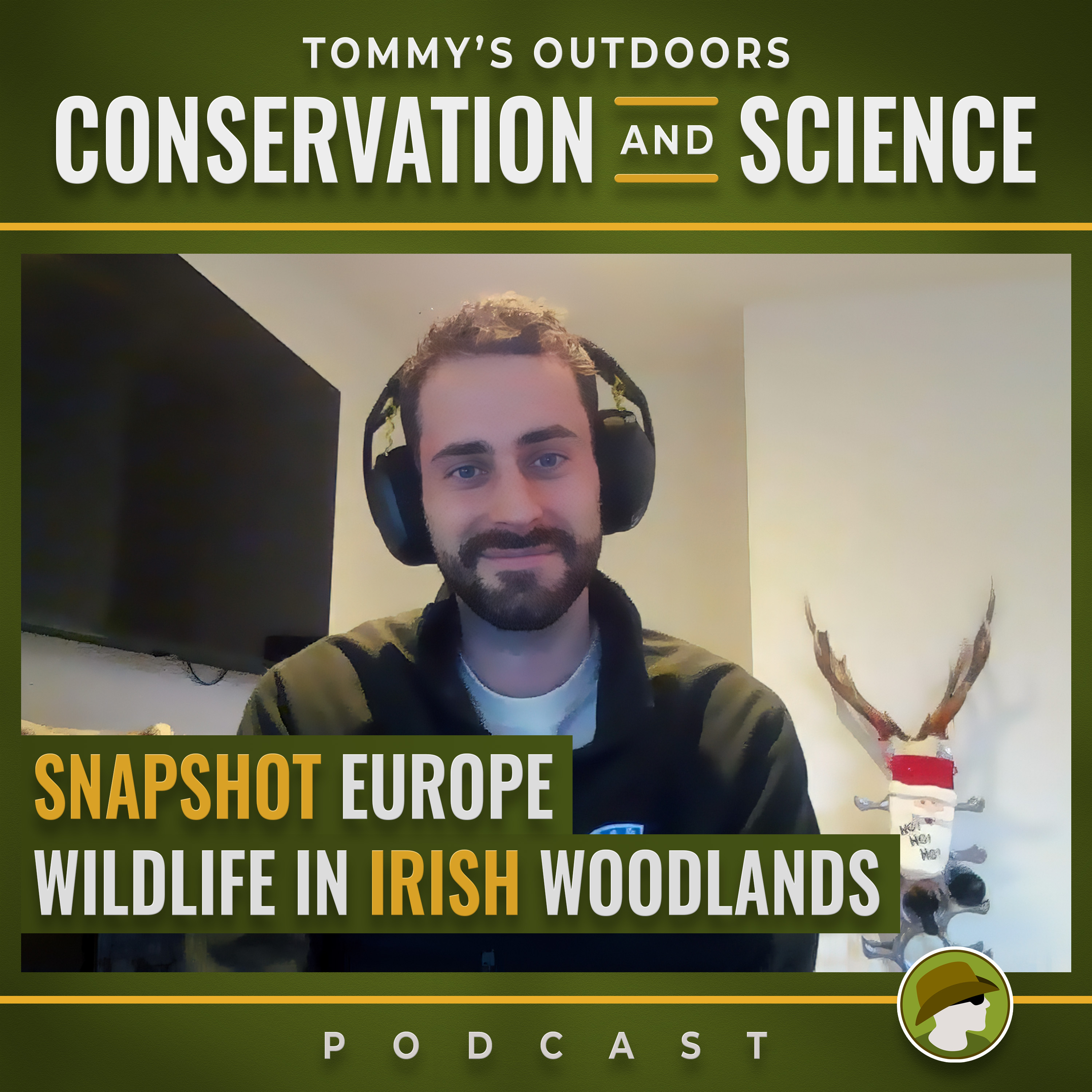
221: Snapshot Europe - Wildlife in Irish Woodlands with Adam F. Smith
About this episode
The episode explores the methodology and challenges of tracking wildlife in Irish woodlands using camera traps.
What does it take to track wildlife across 250 square kilometres of Irish woodland? How do you position cameras to capture elusive species like otters and pine martens without introducing bias into your data? What happens when floodwaters threaten your carefully placed equipment? Join us as we follow a camera trap survey through the Clara Vale in central County Wicklow, where systematic monitoring reveals the lives of Ireland's mammals. Throughout the episode, we've included footage from the field showing the actual process of retrieving cameras from flooded mixed woodlands. So, if you're watching the video version, you'll see the camera trap images of otters and deer, the moment we discover whether the equipment survived the floods, and the landscapes where these surveys take place. We also discuss the importance of systematic camera placement, why all cameras point north, and how spacing them kilometres apart provides better population sampling. The approach demonstrates how proper methodology reduces bias and creates representative data about wildlife distribution across diverse landscapes. Beyond the technical aspects, we explore what it means to survey wildlife across…
More episodes of Conservation and Science
- 227: Rewilding At the Edge with Peter Cairns
- 225: How Many Wolves Is Enough with Joachim Mergeay
- 224: Conservation Labour with Anwesha Dutta and Nick Harvey Sky
- SCOTLAND: The Big Picture | Podcasthon 2026
- 223: Waters of Life with Tom Bowser
- 222: Saving Scotland's Red Squirrels with James Kennedy
Explore listener stats, chart rankings, contacts and more on the Conservation and Science podcast page.