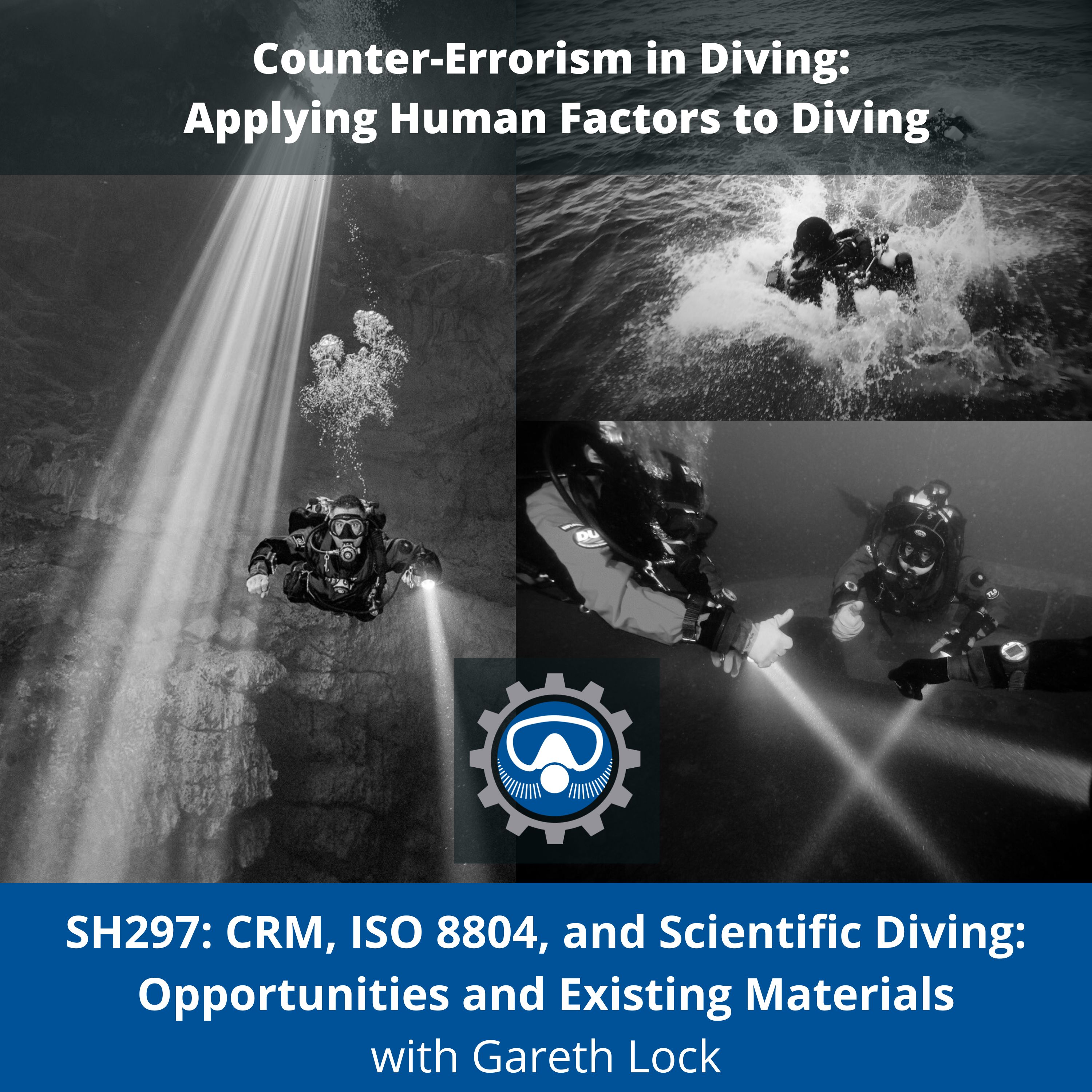
SH297: CRM, ISO 8804, and Scientific Diving: Opportunities and Existing Materials
About this episode
This episode discusses the importance of human factors in scientific diving, emphasizing communication and teamwork alongside technical skills.
This episode explores the growing recognition that safe and effective scientific diving depends on more than technical skill, equipment, and certification. Prompted by new research into applying Crew Resource Management (CRM) to scientific diver training, it examines why communication, leadership, teamwork, and decision-making are essential in complex underwater operations where divers must manage both life support and scientific tasks under pressure. Drawing on lessons from aviation, healthcare, and other high-risk industries, the discussion highlights key challenges such as cognitive overload, distributed situational awareness, and authority gradients that can prevent divers from speaking up or adapting effectively when conditions change. It also reviews the existing research, training tools, and practical frameworks already available to support this shift, while recognising that long-term improvement depends on treating diving safety as an ongoing process of learning rather than a box-ticking exercise. The message is clear: true safety is built through the conditions teams create, the culture they sustain, and how they respond when concerns are raised—always striving to be…
People in this episode
Host: Gareth Lock
Topics covered
- scientific diving
- Crew Resource Management
- communication
- leadership
- teamwork
- decision-making
- safety culture
Mentioned in this episode
Organizations: The Human Diver
More episodes of Counter-Errorism in Diving: Applying Human Factors to Diving
- SH296: When 'I'm Fine' Isn't True: Speaking Up and Ending the Dive
- SH295: Four Ways We Talk About 'Human Factors' in Diving
- SH294: Clickbait, trolls and comments. How dive incident posts can teach us — if we let them
- SH293: Why does nothing change? Why do the same failures keep happening?
- SH292: Learning or Blaming: The Choice the Diving Industry Needs to Make. Part 3 of 3.
- SH291: What the Data Told Us: Fear, Trust, and the Stories That Never Get Told. Part 2 of 3.
Explore listener stats, chart rankings, contacts and more on the Counter-Errorism in Diving: Applying Human Factors to Diving podcast page.