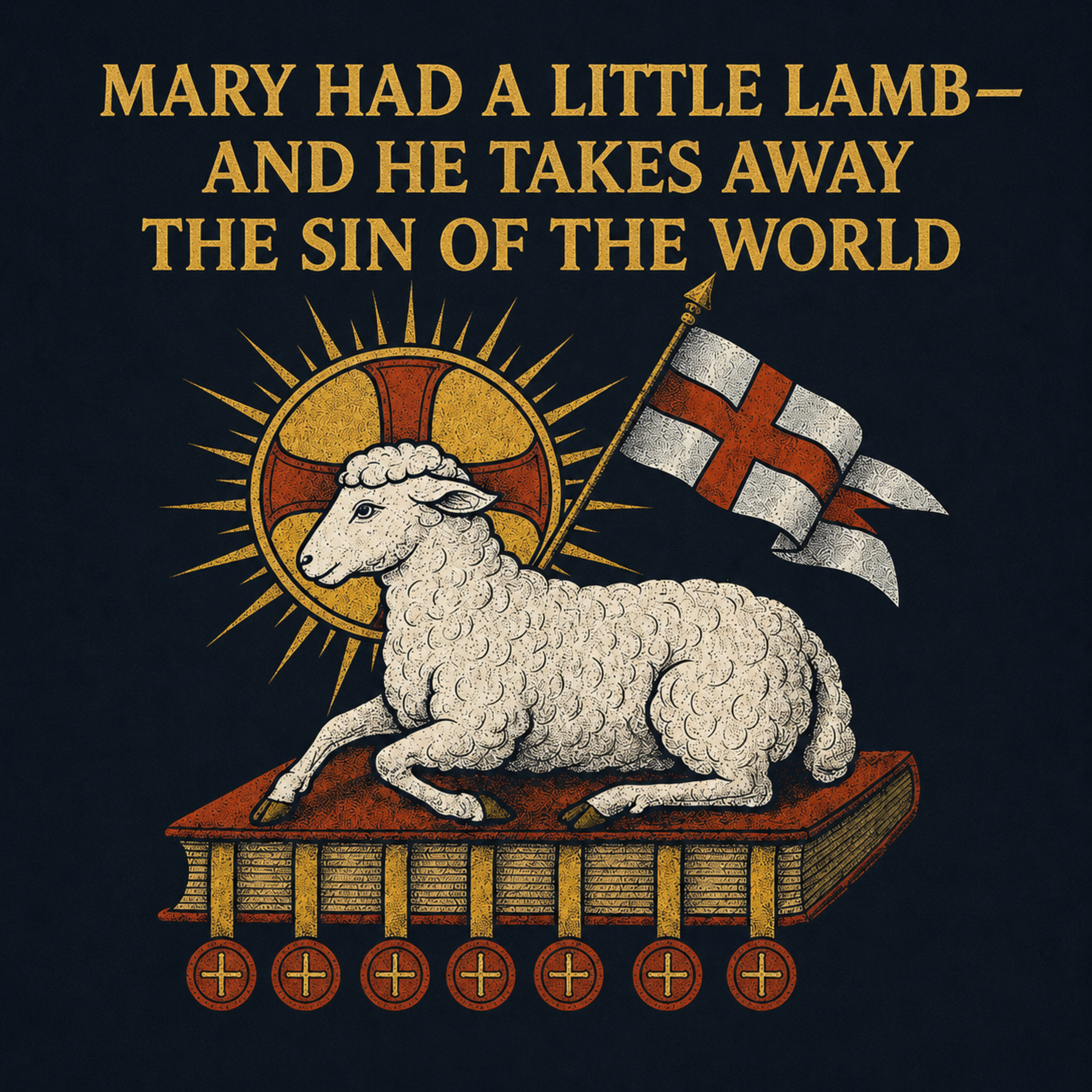
Mary Had a Little Lamb—And He Takes Away the Sin of the World
About this episode
This episode explores the significance of Jesus as the Lamb of God throughout Scripture and its implications for worship and redemption.
Why does Scripture call Jesus the Lamb of God? Was it merely a metaphor, or is it the key that unlocks the entire story of redemption? In this episode, we trace the biblical theology of the Lamb from Genesis to Revelation. Beginning with the first sacrifices after the Fall, we follow the thread through Abel, Noah, Abraham, the Passover, the Tabernacle, the Temple, and the prophets, showing that biblical worship has always been sacrificial at its core. We then examine John the Baptist’s declaration: “Behold, the Lamb of God who takes away the sin of the world!” Why did he identify Jesus this way? How does Christ fulfill the Passover? Why does John’s Gospel carefully structure the Passion around the slaughter of the Passover lambs? And what does Revelation’s vision of the Lamb standing as though slain reveal about worship in heaven? Along the way, we’ll explore the testimony of the Church Fathers, including Melito of Sardis, Irenaeus, Cyprian, Chrysostom, and Leo the Great, who all saw Christ as the fulfillment of every sacrificial type in Scripture. Most importantly, we’ll consider what Revelation 5 reveals about the heavenly liturgy and how the worship of heaven centers forever…
People in this episode
Host: Stephen Boyce
Topics covered
- Lamb of God
- sacrificial worship
- redemption
- biblical theology
- heavenly liturgy
- Christianity
Keywords
- Lamb of God
- sacrifice
- Passover
- worship
- redemption
- biblical theology
- heavenly liturgy
Mentioned in this episode
Books & works: Revelation, Genesis, John's Gospel
More episodes of FACTS
- Perpetua and Felicity: The Prison Diary of Two Female Martyrs
- The Chair of St. Peter: From Moses’ Seat to Rome
- Who Wrote the Book of Hebrews?
- Did a Medieval Pope Excommunicate Slave Traders?
- Women’s Orders: Why the SBC is Correct—But Can’t Defend It
Explore listener stats, chart rankings, contacts and more on the FACTS podcast page.