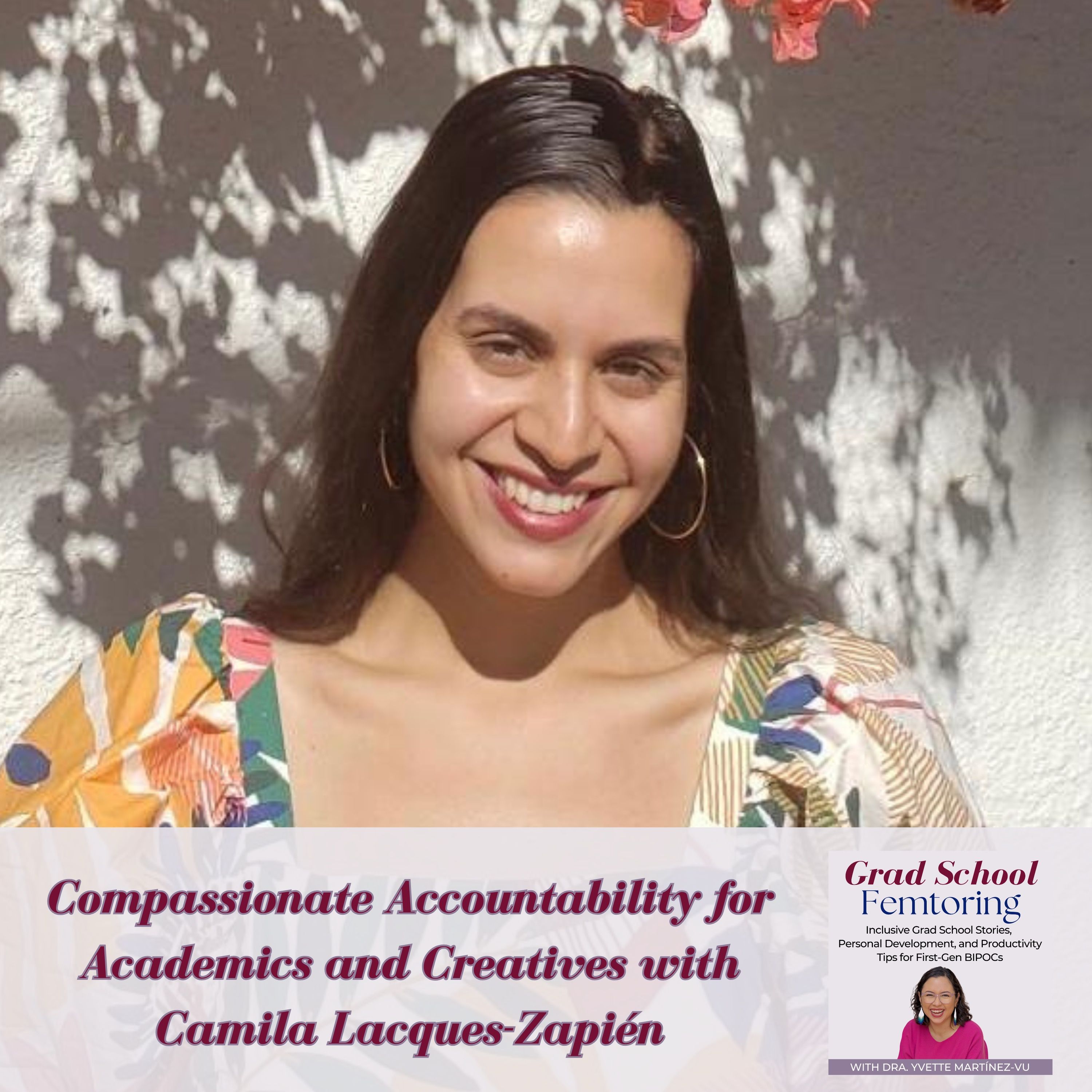
378: Compassionate Accountability for Academics and Creatives with Camila Lacques-Zapien
About this episode
The episode discusses compassionate accountability and its importance for first-generation BIPOC individuals in achieving their goals sustainably.
In this episode of the Grad School Femtoring podcast, I sit down with my friend returning guest Camila Lacques-Zapién, a coach who supports academics, creatives, professionals, and leaders. Together, we explore what compassionate accountability really means and why so many first-generation, BIPOC, and community-centered individuals have learned to associate accountability with pressure, shame, or overwork instead of care and self-trust. Drawing from our coaching experiences, we discuss how creating supportive and relational spaces can help people reconnect with their values, honor their capacity, and reach their goals more sustainably. Throughout our conversation, we examine how accountability can be rooted in consent, self-awareness, and compassion rather than external expectations. We discuss common barriers that keep people feeling stuck, including burnout, fear, guilt, shame, and limited capacity, while also exploring how coaching creates space for reflection, creativity, and more grounded decision-making. Whether you're navigating graduate school, building a creative practice, leading others, or pursuing your next professional goal, this episode offers a framework for moving…
People in this episode
Guest: Camila Lacques-Zapién
Topics covered
- compassionate accountability
- first-generation BIPOC
- coaching
- mental health
- sustainable goals
- self-awareness
Keywords
- accountability
- BIPOC
- coaching
- burnout
- self-trust
- mental health
- creative practice
More episodes of Grad School Femtoring: Inclusive Grad School Stories, Personal Development, and Productivity Tips for First-Gen BIPOCs
- 381: How to Build a Flexible Note-Taking System for Academic Reading
- 380: Why You’re Stuck: Identifying the Hidden Bottleneck Blocking Your Progress
- 379: Building a Meaningful Life Through Uncertainty: Lessons from Disability Culture
- 377: Graduate PLUS Loans Are Ending: What You Need to Know Before Accepting an Offer
Explore listener stats, chart rankings, contacts and more on the Grad School Femtoring: Inclusive Grad School Stories, Personal Development, and Productivity Tips for First-Gen BIPOCs podcast page.