Aaron Newman: A Breakthrough Blood Test for Cancer
About this episode
The episode discusses a groundbreaking blood test for cancer developed by Aaron Newman and his team, focusing on the tumor microenvironment and its implications for diagnostics.
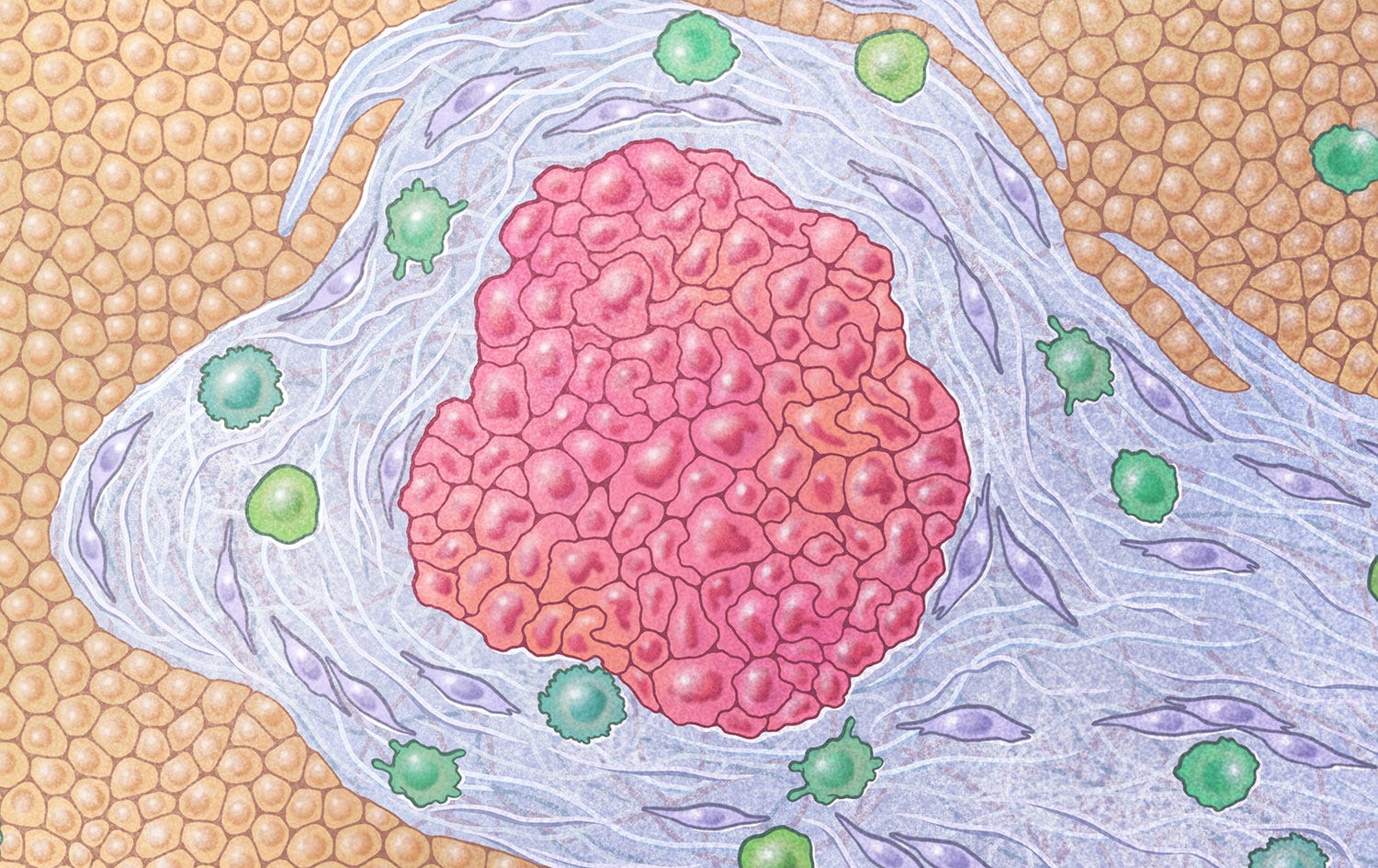
The tumor microenvironment (TME) , composed of immune cells, fibroblasts, and endothelial cells, has emerged as critical to pathogenesis, prognosis and treatment for cancer (schematic Figure below). There’s no such thing as TMI (too much information) for TME! Yet there’s still no way of assessing it in the clinic by a blood test, and even by invasive biopsy the sampling bias for TME without broader geographic context can lead to important mistakes. That isn’t used for clinical decision making. The TME field is about to change. Recently, Professor Aaron Newman at Stanford and colleagues from many US leading centers published a landmark paper in Nature . It may ultimately be considered one of the most important leaps in cancer diagnostics in decades. Ground Truths is a reader-supported publication. To receive new posts and support my work, consider becoming a free or paid subscriber. This was a massive undertaking involving 10 million single-cell RNAseq in 10 types of cancer to define 9 TME types by spatial omics which they called “spatial ecotypes”. It was AI-enabled by machine learning ( Spatial Ecotyper from biopsy samples) and extrapolating that to knowledge to deep learning AI…
More episodes of Ground Truths
Explore listener stats, chart rankings, contacts and more on the Ground Truths podcast page.