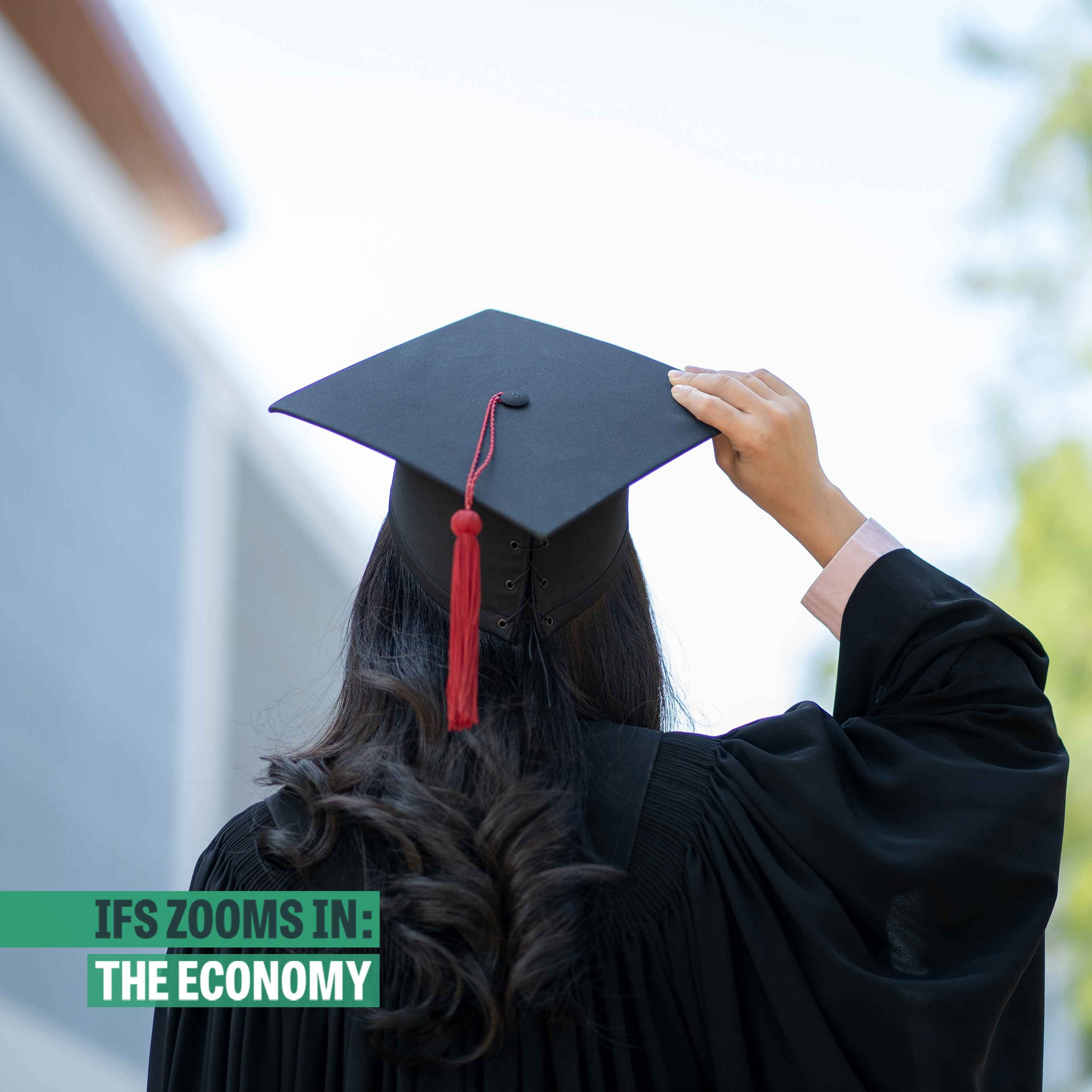
Who really benefits from university?
About this episode
The episode explores the financial implications of attending university and the varying outcomes for graduates across different fields and institutions.
More young people than ever are going to university, but the financial stakes have also risen. Many graduates begin their careers with around £50,000 of student debt and could make repayments for up to 40 years. While some degrees deliver substantial lifetime earnings gains, others may leave graduates financially worse off than if they had not attended university. Helen Miller is joined by IFS economists Christine Farquharson and Kate Ogden to examine what the evidence tells us about the financial returns to higher education. They discuss why graduate outcomes vary so widely across subjects, institutions and students; whether low-earning courses provide value to taxpayers; and whether government should restrict funding for degrees with poor financial outcomes. They also consider how artificial intelligence and wider labour-market disruption could affect today’s students, and whether historic earnings data can reliably guide decisions about careers that may last into the 2070s. Become a member: https://ifs.org.uk/individual-membership Find out more: https://ifs.org.uk/podcasts-explainers-and-calculators/podcasts Hosted on Acast. See acast.com/privacy for more information.
People in this episode
Host: Helen Miller
Guests: Christine Farquharson, Kate Ogden
Topics covered
- higher education
- student debt
- graduate outcomes
- financial returns
- artificial intelligence
- labour market disruption
Keywords
- university
- student debt
- graduate earnings
- financial outcomes
- higher education
Mentioned in this episode
Organizations: Institute for Fiscal Studies
More episodes of IFS Zooms In: The Economy
- How does immigration affect the public finances?
- Land value tax: the perfect tax?
- Are business rates 'killing the high street'?
- Are people saving enough for retirement?
Explore listener stats, chart rankings, contacts and more on the IFS Zooms In: The Economy podcast page.