IFS Zooms In: The Economy
Step beyond the headlines with in-depth, independent analysis from the experts at the Institute for Fiscal Studies. Hosted by IFS Director Helen Miller, this podcast brings you objective insights from the researchers sha...
Insights from recent episode analysis
On the show
- Jonathan Cribb7 eps
- David Phillips4 eps
- Ben Zaranko4 eps
Also: Max Warner, Heidi Karjalainen, Peter Levell, Stuart Adam, Joe Rossiter, Mairi Spowage, Bee Boileau, Nick Hillman, Kate Ogen, David Miles, Eduin Latimer, Professor Alan Manning, Olly Harvey-Rich, Bobby Duffy, Paul Johnson, Chris Giles, Dieter Helm
Audience Interest
Podcast Focus
Publishing Consistency
Insights are generated by CastFox AI using publicly available data, episode content, and proprietary models.
Most discussed topics
Brands & references
Total monthly reach
Based on 1 signal.
Built from
By chart position
- 🇬🇧United Kingdom · News CommentaryHOME#1079K to 419K
- 🇨🇴CO · News Commentary#85.4K to 29K
- 🇮🇳India · News Commentary#701.6K to 8.5K
- 🇭🇰HK · News Commentary#21813 to 4.3K
- 🇫🇷France · News Commentary#103543 to 2.9K
- Per-Episode Audience
Est. listeners per new episode within ~30 days
89K to 470K🎙 ~2x weekly·194 episodes·Last published 3d ago - Monthly Reach
Unique listeners across all episodes (30 days)
178K to 940K🇬🇧89%🇨🇴6%🇮🇳2%+2 more - Active Followers
Loyal subscribers who consistently listen
98K to 517K
Market Insights
Platform Distribution
Reach across major podcast platforms, updated hourly
Total Followers
—
Total Plays
—
Total Reviews
—
* Data sourced directly from platform APIs and aggregated hourly across all major podcast directories.
| Date | Episode | Topics | Guests | Brands | Places | Keywords | Sponsor | Length | |
|---|---|---|---|---|---|---|---|---|---|
| 10/22/26 |  Budget 2026: what should we expect? | What should we expect from the upcoming Budget? With energy prices rising, pressure on public services and government borrowing already high, the Chancellor faces some difficult choices.Recorded live at the British Library as part of the Economic and Social Research Council's (ESRC) Festival of Social Science, Helen Miller is joined by IFS economists Max Warner and Stuart Adam to discuss what might be announced at the October Budget.They explore how the government could support households facing higher energy bills, whether businesses might receive further help, and how any new measures could be funded. Could the Chancellor borrow more, raise taxes on banks and landlords, or make bigger changes to the tax and benefit system?They also discuss the pressures facing public services, the limits imposed by the government's tax pledges, and the measures they'd most like the Chancellor to avoid.Become a member: https://ifs.org.uk/individual-membershipFind out more: https://ifs.org.uk/podcasts-explainers-and-calculators/podcasts Hosted on Acast. See acast.com/privacy for more information. | 53m 20s | ||||||
| 10/15/26 |  Is the Chancellor’s spending plan credible? | >>> Sign up to our live event: https://ifs.org.uk/events/ifs-zooms-live-look-ahead-budget <<<The economic outlook has worsened since the spring. Inflation is expected to be higher for longer, borrowing costs have risen, and the conflict in the Middle East has added fresh uncertainty for households, businesses and the public finances.In this episode of IFS Zooms In, we examine what this means for the Chancellor’s first Budget. While the Office for Budget Responsibility may still forecast that the fiscal rules will be met, the underlying spending plans look increasingly difficult to deliver.With departmental budgets set in cash terms, higher inflation erodes their real value. Combined with pressure to increase defence spending and protect the NHS, this could leave other public services facing deep cuts - or require the Chancellor to make difficult choices on tax, benefits or borrowing.IFS researchers João Sousa and Bee Boileau explain why “headroom” against the fiscal rules is only part of the story, why credible spending plans matter, and what the Chancellor needs to set out ahead of next year’s Spending Review.This episode draws on new IFS research published as part of the 2026 Green Budget. The 2026 edition of the IFS Green Budget is funded by the Nuffield Foundation, Barclays and the Economic and Social Research Council (ESRC) through the Centre for Microeconomic Analysis of Public Policy (CPP).Become a member: https://ifs.org.uk/individual-membershipFind out more: https://ifs.org.uk/podcasts-explainers-and-calculators/podcasts Hosted on Acast. See acast.com/privacy for more information. | 54m 31s | ||||||
| 10/8/26 | 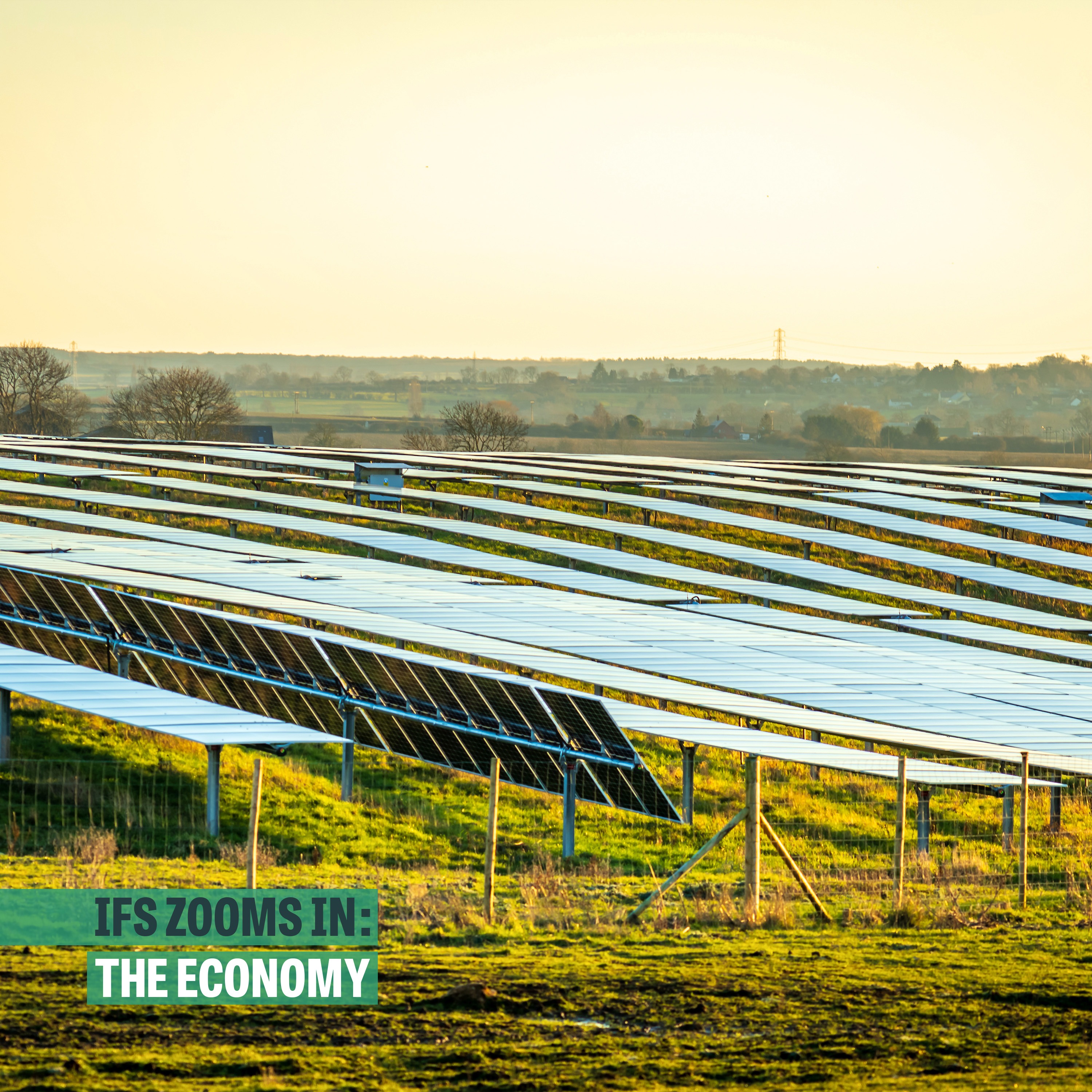 Are renewables making electricity more expensive? | >>> Sign up to our live event: https://ifs.org.uk/events/ifs-zooms-live-look-ahead-budget <<<Renewable energy is at the centre of the debate about Britain's high electricity prices. Some argue that wind and solar power are driving up costs, requiring expensive subsidies, backup generation and upgrades to the electricity grid. Others point to the falling cost of renewable technologies and argue that expanding them is the best way to bring down bills. So who's right?In this episode, Helen Miller is joined by IFS researcher Peter Levell and Stephen Jarvis, Assistant Professor of Environmental Economics at the London School of Economics, to explore the economics of renewable energy.They explain why gas often determines the price of electricity, even as Britain generates more power from wind and solar, and examine how investment in renewables has affected electricity costs over the past decade. They also discuss whether the government should slow down its plans to decarbonise electricity, how falling technology and battery costs could change the picture, and what growing demand from data centres might mean for Britain's energy system.This episode draws on new IFS research published as part of the 2026 Green Budget. The 2026 edition of the IFS Green Budget is funded by the Nuffield Foundation, Barclays and the Economic and Social Research Council (ESRC) through the Centre for Microeconomic Analysis of Public Policy (CPP).Become a member: https://ifs.org.uk/individual-membershipFind out more: https://ifs.org.uk/podcasts-explainers-and-calculators/podcasts Hosted on Acast. See acast.com/privacy for more information. | 54m 18s | ||||||
| 9/30/26 | 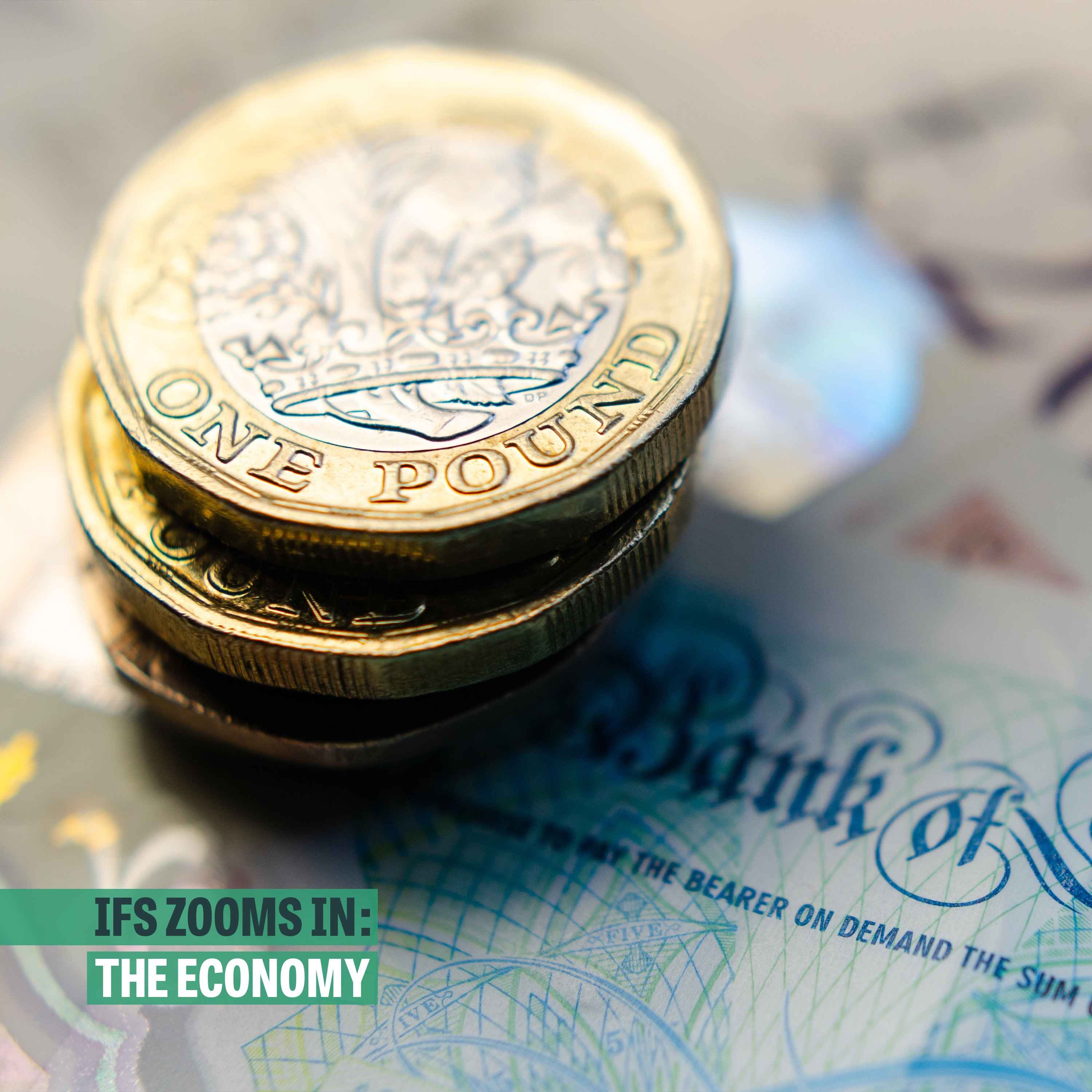 Has the triple lock been fixed? | >>> Sign up to our live event: https://ifs.org.uk/events/ifs-zooms-live-look-ahead-budget <<<The government has announced a major change to the state pension triple lock. The new system will continue to protect pensions against inflation and guarantee increases of at least 2.5%, but changes how increases in earnings feed through into the state pension over time.So how will the new triple lock actually work? Why did the existing system create a “ratchet effect” in pension spending? How does the new approach address that problem, and what role does the 2.5% guarantee still play?Helen Miller is joined by IFS economists Jonathan Cribb and Heidi Karjalainen to explain what is changing, what it could mean for pensioners and the public finances, and the questions the reform leaves unresolved.Become a member: https://ifs.org.uk/individual-membershipFind out more: https://ifs.org.uk/podcasts-explainers-and-calculators/podcasts Hosted on Acast. See acast.com/privacy for more information. | 29m 20s | ||||||
| 9/24/26 | 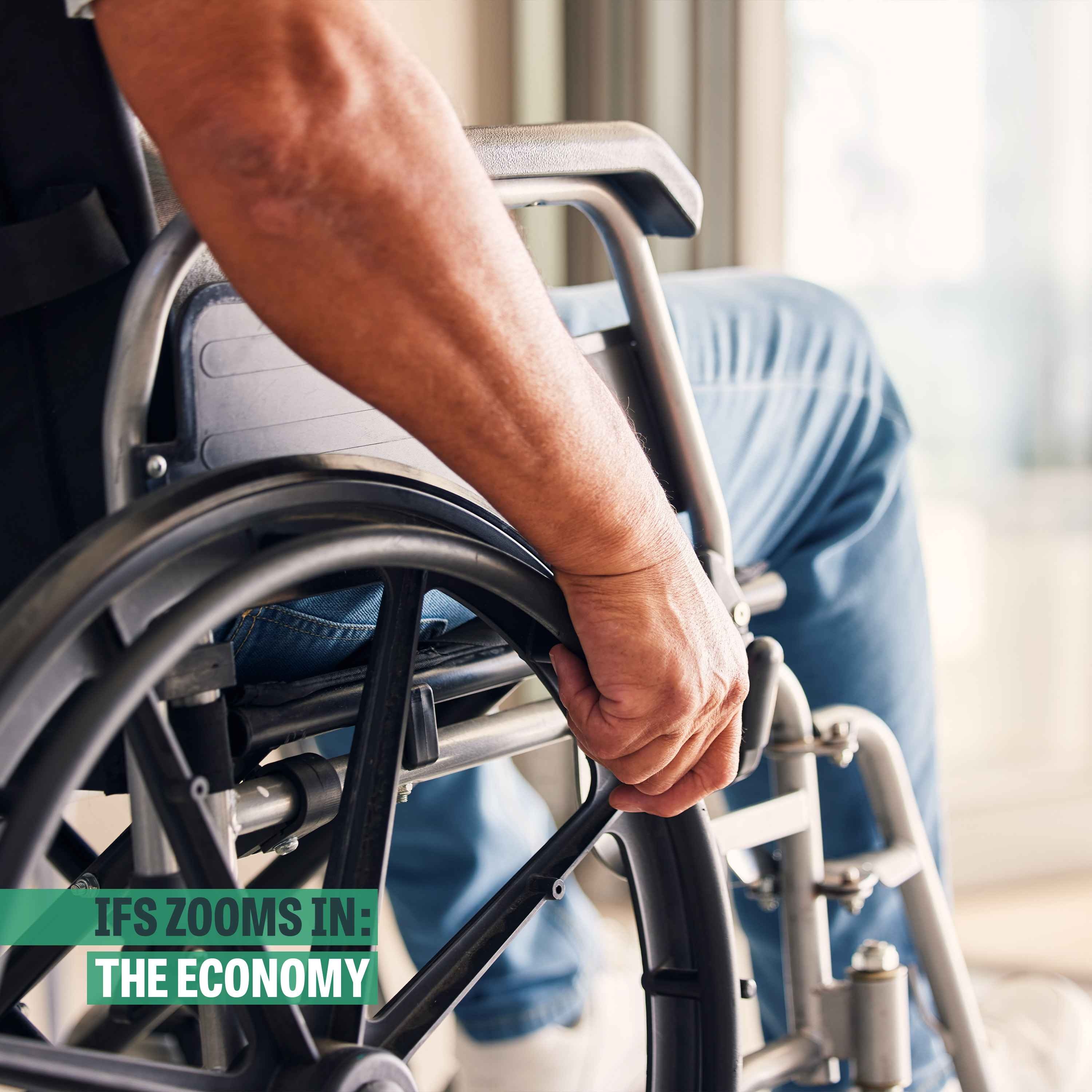 Do disability benefits need reform? | >>> Sign up to our live event: https://ifs.org.uk/events/ifs-zooms-live-look-ahead-budget <<<The number of people receiving disability benefits has risen sharply in recent years, pushing up government spending and prompting renewed debate about how the system should work.In this episode, Helen Miller is joined by IFS economists Eduin Latimer and Tom Waters to explain how Personal Independence Payment (PIP) works, who receives it and why claims have increased. They examine the choices facing the government as the Timms Review considers the future of disability benefits.Should PIP remain a universal cash benefit? Could more support be provided in kind? Should eligibility depend more on the severity or type of a person’s condition? And what would different reforms mean for claimants and the public finances? The discussion explores the difficult trade-offs involved in reforming disability benefits - including who receives support, what form that support takes and how much the government spends.This episode draws on new IFS research published as part of the 2026 Green Budget. The 2026 edition of the IFS Green Budget is funded by the Nuffield Foundation, Barclays and the Economic and Social Research Council (ESRC) through the Centre for Microeconomic Analysis of Public Policy (CPP).Become a member: https://ifs.org.uk/individual-membershipFind out more: https://ifs.org.uk/podcasts-explainers-and-calculators/podcasts Hosted on Acast. See acast.com/privacy for more information. | 42m 03s | ||||||
| 9/17/26 |  What would it take to fix social care? | Social care reform has challenged successive governments for decades. Now, the government wants to create a national care service and has launched a new push to find a long-term solution.But how does social care actually work? Who currently pays for it, and why can some people face such large and unpredictable costs? What pressures does the system place on councils? And what would meaningful reform cost?Helen Miller is joined by Andrew Dilnot, former Chair of the Commission on Funding of Care and Support and former IFS Director, and David Phillips, an Associate Director at IFS, to explain the problems with England’s social care system, the options for reform and why finding a solution has proved so difficult.Become a member: https://ifs.org.uk/individual-membershipFind out more: https://ifs.org.uk/podcasts-explainers-and-calculators/podcasts Hosted on Acast. See acast.com/privacy for more information. | 44m 00s | ||||||
| 9/10/26 | immigrationpublic finances+3 | Madeleine SumptionMax Warner | Migration ObservatoryUniversity of Oxford+3 | — | immigrationpublic finances+3 | — | 49m 25s | ||
| 9/4/26 | land value taxeconomics+4 | Stuart AdamBen Zaranko | Institute for Fiscal Studies | — | land value taxeconomics+6 | — | 52m 59s | ||
| 8/27/26 | business rateshigh street decline+4 | Stuart AdamBen Zaranko | Institute for Fiscal Studies | Britainhigh streets+2 | business rateshigh street+6 | — | 49m 05s | ||
| 8/6/26 | higher educationstudent debt+4 | Christine FarquharsonKate Ogden | Institute for Fiscal Studies | — | universitystudent debt+3 | — | 41m 20s | ||
| 7/31/26 | retirement savingspension contributions+3 | Jonathan CribbHeidi Karjalainen | Institute for Fiscal StudiesPensions Commission | — | retirementpensions+5 | — | 50m 31s | ||
| 7/16/26 | taxationpublic spending+3 | Max WarnerTom Waters | Institute for Fiscal Studies | Downing Street | Andy Burnhamfiscal constraints+4 | — | 48m 40s | ||
| 7/9/26 | devolutionUK economy+4 | Tony TraversDavid Phillips | Institute for Fiscal StudiesLSE Department of Government+2 | — | devolutionUK economy+4 | — | 49m 59s | ||
| 6/25/26 | job qualityinequality+4 | Jonathan CribbNaomi Clayton | Institute for Employment StudiesInstitute for Fiscal Studies+1 | — | good jobsinequality+6 | — | 45m 07s | ||
| 6/18/26 | geographical inequalityregional divides+4 | Jonathan CribbXiaowei Xu | Institute for Fiscal StudiesNuffield Foundation | UKLondon+1 | geographical inequalityregional policy+4 | — | 37m 37s | ||
| 6/11/26 | inequalitypublic opinion+3 | Jonathan CribbBobby Duffy | Institute for Fiscal StudiesKing’s College London | — | inequalityincome gap+3 | — | 47m 31s | ||
| 6/4/26 | inequalityincome+5 | Paul JohnsonJonathan Cribb | Institute for Fiscal Studies | BritainUK | inequalityincome inequality+6 | — | 47m 56s | ||
| 5/28/26 | public financesUK government+3 | Max WarnerChris Giles | Institute for Fiscal StudiesFinancial Times | UKBritain | public debtborrowing+3 | — | 47m 27s | ||
| 5/21/26 | energy pricesUK electricity+4 | Dieter HelmPeter Levell | Institute for Fiscal StudiesUniversity of Oxford | UKMiddle East | electricity pricesUK energy+5 | — | 49m 30s | ||
| 5/14/26 | local governmentcouncil responsibilities+5 | David PhillipsAileen Murphie | Institute for Fiscal StudiesDurham University+2 | — | local governmentcouncils+8 | — | 42m 16s | ||
| 4/15/26 | Wales government electionfiscal policy+3 | Joe RossiterDavid Phillips | Institute of Welsh Affairs | WalesWestminster+1 | Walesgovernment+7 | — | 44m 59s | ||
| 4/8/26 | Scottish Governmentpublic services+4 | Mairi SpowageDavid Phillips | Fraser of Allander InstituteInstitute for Fiscal Studies | ScotlandEngland | Scotlandpublic services+7 | — | 46m 57s | ||
| 3/26/26 | state pension ageretirement+4 | Jonathan CribbHeidi Karjalainen | Institute for Fiscal Studies | UK | state pensionretirement age+6 | — | 44m 24s | ||
| 3/20/26 | pensionersincomes+4 | Jonathan CribbHeidi Karjalainen | Institute for Fiscal Studies | Britain | pensionerswealth+6 | — | 40m 39s | ||
| 3/4/26 | Spring ForecastUK economy+4 | Ben ZarankoBee Boileau | Institute for Fiscal Studies | UKMiddle East | Spring ForecastUK economy+7 | — | 40m 47s | ||
| 2/19/26 | fiscal ruleseconomic policy+4 | Ben Zaranko | Institute for Fiscal StudiesIFS | UK | fiscal ruleseconomic policy+5 | — | 47m 30s | ||
| 2/12/26 | student loanshigher education+4 | Nick HillmanKate Ogen | Higher Education Policy InstituteInstitute for Fiscal Studies | — | student loan debtincome-contingent repayments+3 | — | 49m 30s | ||
| 2/6/26 | inflationcost of living crisis+3 | David MilesPeter Levell | Bank of EnglandInstitute for Fiscal Studies+1 | — | inflationcost of living+3 | — | 52m 11s | ||
| 1/29/26 | minimum wageemployment effects+3 | Eduin LatimerProfessor Alan Manning | Institute for Fiscal StudiesLSE | UK | minimum wageemployment+3 | — | 37m 54s | ||
| 1/16/26 | NHS performancehealthcare funding+4 | Olly Harvey-RichMax Warner | NHSInstitute for Fiscal Studies | England | NHSwaiting lists+6 | — | 37m 44s | ||





Showing 30 of 194
Pitch Fit is a Pro feature
See how bookable this show is for guests, which brands already advertise, the per-episode ad value, and the best-fit guest and sponsor profile. The numbers are blurred on the free plan.
How readily this show books outside guests like you.
How proven this show is for host-read sponsorships.
For Guests
ProFor Advertisers
ProUpgrade to Pro to unlock guest cadence, sponsor categories, fit scores, and per-episode ad value for this show.
Similar Audience Demographics
Podcasts that attract a similar listener profile


Chart history for IFS Zooms In: The Economy
Peaked at #8 in CO, top 10 in 2 of 20 tracked markets, currently #8 in CO.
| Market | Genre | Peak | Current | Trend |
|---|---|---|---|---|
| CO | — | #8 | #8 | — |
| United Kingdom | — | #10 | #10 | — |
| HK | — | #21 | #21 | — |
| New Zealand | — | #48 | #48 | — |
| CO | — | #60 | #60 | — |
| AT | — | #70 | #70 | — |
| India | — | #70 | #70 | — |
| TH | — | #98 | #98 | — |
| France | — | #103 | #103 | — |
| United Kingdom | — | #104 | #104 | — |
| NG | — | #114 | #114 | — |
| Finland | — | #119 | #119 | — |
| Denmark | — | #122 | #122 | — |
| VN | — | #125 | #125 | — |
| Mexico | — | #139 | #139 | — |
| PT | — | #164 | #164 | — |
| HK | — | #180 | #180 | — |
| Ireland | — | #187 | #187 | — |
| BE | — | #190 | #190 | — |
| Netherlands | — | #192 | #192 | — |
Chart Positions
20 placements across 17 markets.
Chart Positions
20 placements across 17 markets.