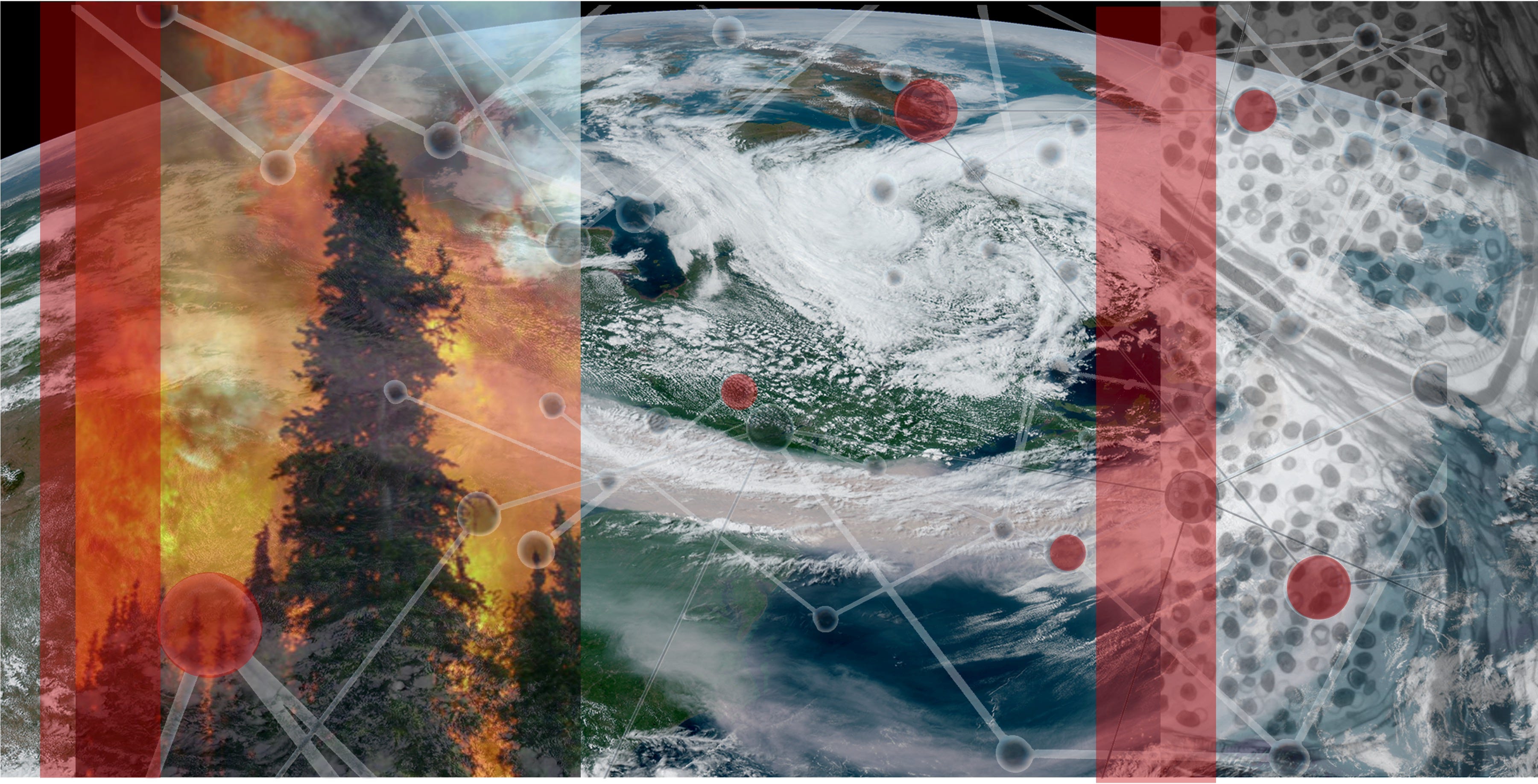
Burning Both Ends
About this episode
The episode discusses the implications of wildfire smoke and climate crises on ecological relationships and forest recovery in North America.
Hello Interactors, As Canadian and Alaskan wildfire smoke drifts across North American borders, it’s easy to resort to feelings and language of crisis in the demand for urgent, immediate control. But fires are not new to these landscapes, and this “crisis” sits alongside others that are also on fire. Climate crises events bring into focus which histories we forget, whose knowledge we ignore, and which relationships we disrupt. Turns out it’s happening at a cellular level too. The real danger is a world and ecology changing so quickly, and understood so narrowly, that it erases the very temporal patterns, memories, and ecological relationships that make adaptation possible. FIRE’S FRACTURED FREQUENCY The climate crisis is often communicated through rising averages. We read of climbing global temperatures, sea levels, atmospheric carbon dioxide concentrations, and acres burned. These measurements are indispensable, but averages can make crisis feel distant and abstract. In a forest, climate change is also experienced as an altered interval — as too little time between one disturbance and the next. A forest is not a passive surface. It actively shapes its own microclimate, stores…
More episodes of Interplace
Explore listener stats, chart rankings, contacts and more on the Interplace podcast page.