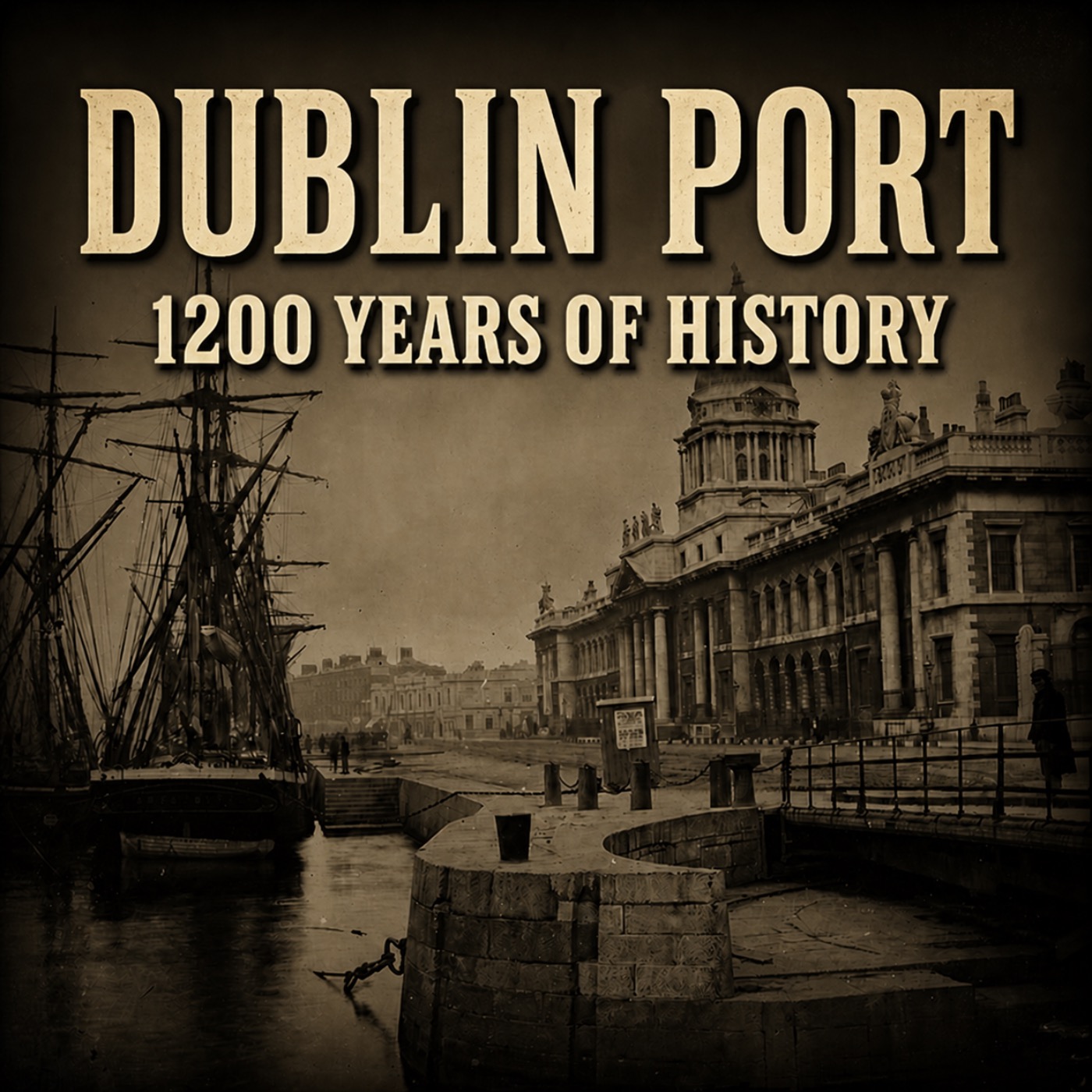
Dublin Port Has Seen It All: 1,200 Years of History.
About this episode
This episode explores the 1,200-year history of Dublin Port, highlighting its significance in Irish history and its impact on trade, emigration, and engineering.
Dublin is famous for its Georgian squares, medieval cathedral, castle and revolutionary history. But the cornerstone of Dublin's history is undoubtedly the port. Nearly 1,200 years ago, the Vikings established a settlement on the banks of the Liffey, and from that moment, Dublin's fate was tied to the sea. The port became the gateway where Ireland met the wider world. Ships carried goods, armies, ideas and people in and out of the city, connecting Dublin to Britain, Scandinavia, the Mediterranean and the far reaches of empire. But Dublin Port's history is far more than commerce. It witnessed slavery and trade, military occupation and revolution, famine and emigration, labour struggles and war. It was also shaped by a centuries-long battle against nature itself. Sandbanks, silting and storms forced generations of engineers to reshape the coastline with quays, docks, lighthouses and massive sea walls, creating one of Ireland's most remarkable engineering achievements. In this episode, recorded on the Great South Wall, I speak with historian Lar Joye, Heritage Director at Dublin Port, to explore the extraordinary 1,200-year history of Dublin Port. From Viking traders and Norman…
People in this episode
Host: Fin Dwyer
Guest: Lar Joye
Topics covered
- Dublin Port history
- Viking settlement
- Irish history
- engineering achievements
- trade and commerce
- emigration
- military occupation
Keywords
- Dublin Port
- Irish history
- Vikings
- engineering
- trade
- emigration
- famine
- revolution
Mentioned in this episode
Organizations: Dublin Port, Port Archive
Places: Dublin, Liffey
More episodes of Irish History Podcast
- Taking the War to England: The IRA in Britain
- A Conspiracy of Fear & Silence: The Maamtrasna Murders
- Daily Life in the Middle Ages: Worse Than You Think [Listener Favourite]
- Solidarity, Suspicion and Conspiracy: Jews and the Irish Revolution
- Drogheda & Beyond: The Terrifying Reality of Siege Warfare in Ireland
Explore listener stats, chart rankings, contacts and more on the Irish History Podcast podcast page.