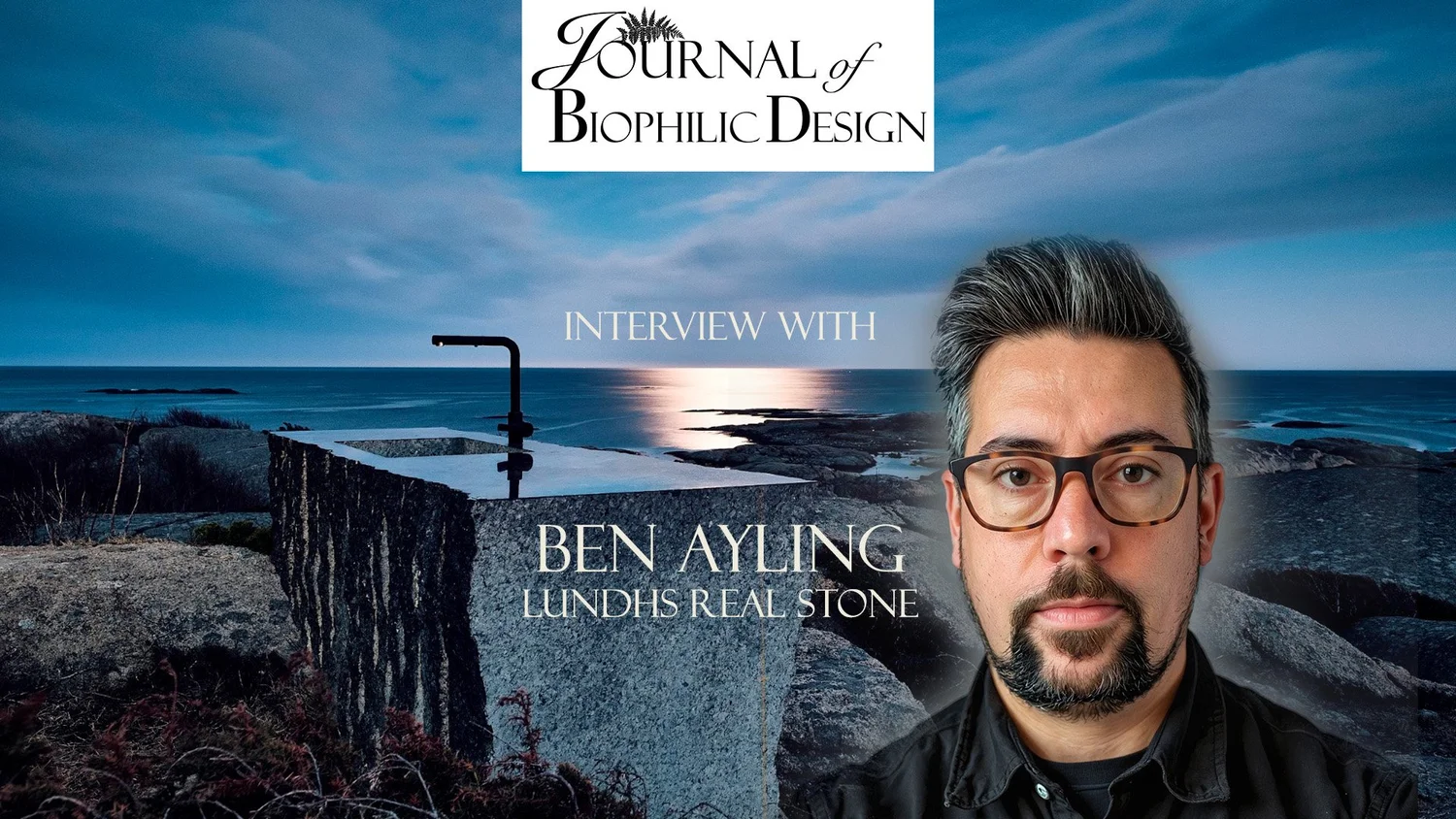
Dare to Dream - Why Stone is calling us back to Nature
About this episode
Benjamin Ayling discusses the significance of natural stone in biophilic design and its historical context.
"Engage with the material… don't dictate. Let the material help dictate the design… and dare to dream." — Benjamin Ayling There is something deeply timeless about holding a piece of natural stone. Perhaps it is the cool surface beneath our fingertips. Perhaps it is the intricate mineral patterns that could never be replicated twice. Or perhaps it is something much older than conscious thought—a recognition that for almost all of human history, stone has been our shelter, our monuments, our meeting places and our memories. While we are searching for healthier, more sustainable ways to design our buildings, natural stone deserves to be part of the Biophilic Design conversation once again. During this conversation on The Journal of Biophilic Design Podcast, Benjamin Ayling, UK Business Development Manager for Lundhs and founding member of the Stone Collective, reflected on why this ancient material still resonates so deeply today. More than a material "It's not just a material, it's a geological process," Ben explains. Every slab tells the story of immense natural forces—volcanoes, minerals, pressure and time. Lundhs' Larvikite, quarried in Norway, is around 300 million years old…
More episodes of Journal of Biophilic Design
- How many plants do we need for wellbeing?
- Biophilia: Africa, Nature and Remembering What It Means to be Human
- Sleep by Design - Can your bedroom improve your health?
- Why we need nature inside our buildings - The Future of Healthy Buildings with Biophilic Design
Explore listener stats, chart rankings, contacts and more on the Journal of Biophilic Design podcast page.