Insights from recent episode analysis
Audience Interest
Podcast Focus
Publishing Consistency
Platform Reach
Insights are generated by CastFox AI using publicly available data, episode content, and proprietary models.
Most discussed topics
Brands & references
Total monthly reach
Estimated from 3 chart positions in 3 markets.
By chart position
- 🇦🇺AU · Documentary#1605K to 30K
- 🇷🇴RO · Documentary#1003K to 10K
- 🇰🇪KE · Documentary#150500 to 3K
- Per-Episode Audience
Est. listeners per new episode within ~30 days
2.5K to 13K🎙 Daily cadence·100 episodes·Last published 2d ago - Monthly Reach
Unique listeners across all episodes (30 days)
8.5K to 43K🇦🇺70%🇷🇴23%🇰🇪7% - Active Followers
Loyal subscribers who consistently listen
3.4K to 17K
Market Insights
Platform Distribution
Reach across major podcast platforms, updated hourly
Total Followers
—
Total Plays
—
Total Reviews
—
* Data sourced directly from platform APIs and aggregated hourly across all major podcast directories.
On the show
From 10 epsHost
Recent guests
Recent episodes
Why we need nature inside our buildings - The Future of Healthy Buildings with Biophilic Design
May 18, 2026
Unknown duration
Is Colour the Missing Link in Nature-Centric Biophilic Spaces
Apr 24, 2026
57m 10s
The Future of Material Innovation and Biophilic Design
Apr 14, 2026
39m 59s
The Biophilic Imperative - From Sustainability to Regeneration
Apr 10, 2026
44m 02s
The New Stone Age
Mar 26, 2026
41m 12s
Social Links & Contact
Official channels & resources
Official Website
Login
RSS Feed
Login
| Date | Episode | Topics | Guests | Brands | Places | Keywords | Sponsor | Length | |
|---|---|---|---|---|---|---|---|---|---|
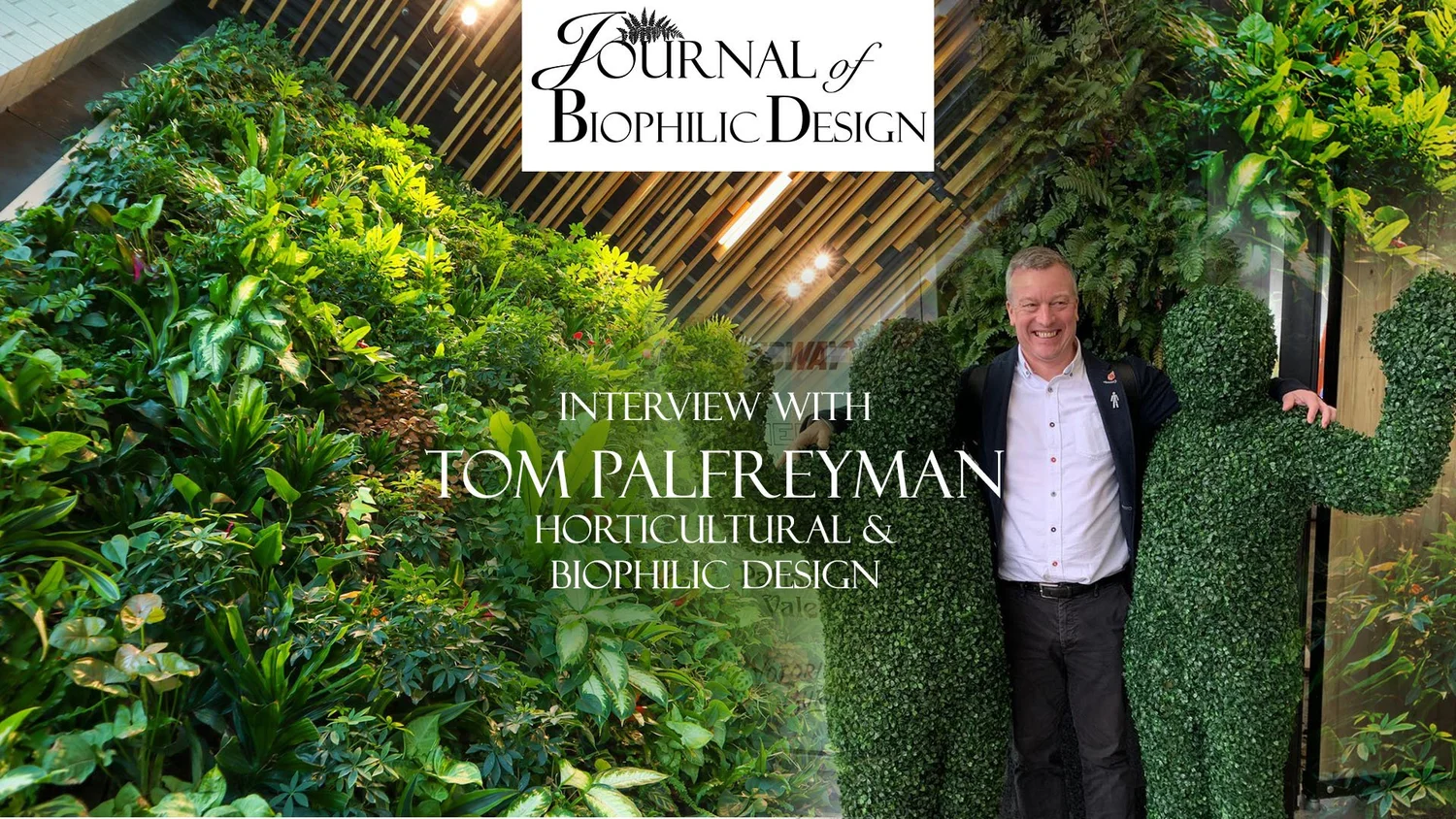
| 5/18/26 | ![]() Why we need nature inside our buildings - The Future of Healthy Buildings with Biophilic Design | In this episode of the Journal of Biophilic Design podcast, we speak with landscape specialist Tom Palfreyman, whose work across commercial, hospitality, retail and workplace environments has focused on the principle that plants fundamentally change how people experience space. With more than twenty years’ involvement in interior and exterior landscaping, Tom has spent his career exploring how nature can improve the places where we work, rest and play, and why maintenance, care and long-term thinking are just as important as the initial design itself. As Tom reflects during the conversation, “Plants have transitioned from a nice-to-have decoration in the corner of the building to being an intrinsic essential part of any building.” It is a shift many designers are now recognising. The conversation around biophilic design has matured significantly over the past decade. What was once dismissed as aesthetic enhancement is increasingly understood as part of a much wider discussion around health, wellbeing, productivity, ecology and human resilience. The heart of biophilic design beats out that human beings are not separate from nature, we are an intrinsic part of it. “We evolved to live outside,” Tom says. “That connection with nature, sadly, I believe, has been lost.” Modern life has created increasingly artificial environments - sealed buildings, screen-based working, urban density and spaces designed more for efficiency than human experience. Yet our biology has not changed at the same pace as our architecture. Research across neuroscience, environmental psychology and workplace wellbeing continues to show that exposure to nature can reduce stress, restore attention, support cognitive performance and improve emotional wellbeing. What becomes clear in this discussion is that successful biophilic design is never simply about adding greenery into a room. It is about creating meaningful and lasting relationships between people and living systems. For Tom, this begins with understanding plants properly. “Putting the right plant in the right place so it’s happy, healthy, survives,” he explains. There is something important in that statement. Too often, planting schemes are treated as visual afterthoughts rather than living ecosystems requiring expertise, maintenance and long-term stewardship. The strongest biophilic projects understand that planting design is not decoration. It is infrastructure for wellbeing. Tom highlights his collaboration with Dr. Craig Knight, emphasising the benefits of biophilic ‘enrichment’, a word maybe more commonly associated with ecology or animal wellbeing than commercial interiors. “Enrichment is a very, very strong part of what we do, putting the right plants in the right place,” he says. “If we can have engaged enrichment, then that is far more powerful.” Tom shares an example of a project with a pharmaceutical company where biophilic enrichment was introduced, leading to significant improvements in the work environment and prompting the company to adopt a global biophilic strategy. This notion of engaged enrichment feels particularly relevant in workplaces today. Many office environments continue to struggle with issues of stress, disengagement and sensory fatigue. In contrast, spaces designed with visible natural systems, daylight, planting and moments of restoration often feel fundamentally different. They soften the intensity of modern working life and reintroduce cues of life, seasonality and care into daily experience. Even relatively small interventions can have measurable impact. “Just one plant per four square meters can make a difference,” Tom notes, pointing to research that demonstrates improvements in wellbeing and engagement through relatively modest levels of planting integration. Importantly, the placement of greenery matters as much as quantity. Tom speaks about focusing on “main areas of circulation, so entrance and exit points of the buildings, communal spaces, places wher | — | ||||||
| 4/24/26 | ![]() Is Colour the Missing Link in Nature-Centric Biophilic Spaces✨ | colour psychologybiophilic design+3 | Karen Haller | Journal of Biophilic Design | — | colourbiophilic spaces+5 | — | 57m 10s | |
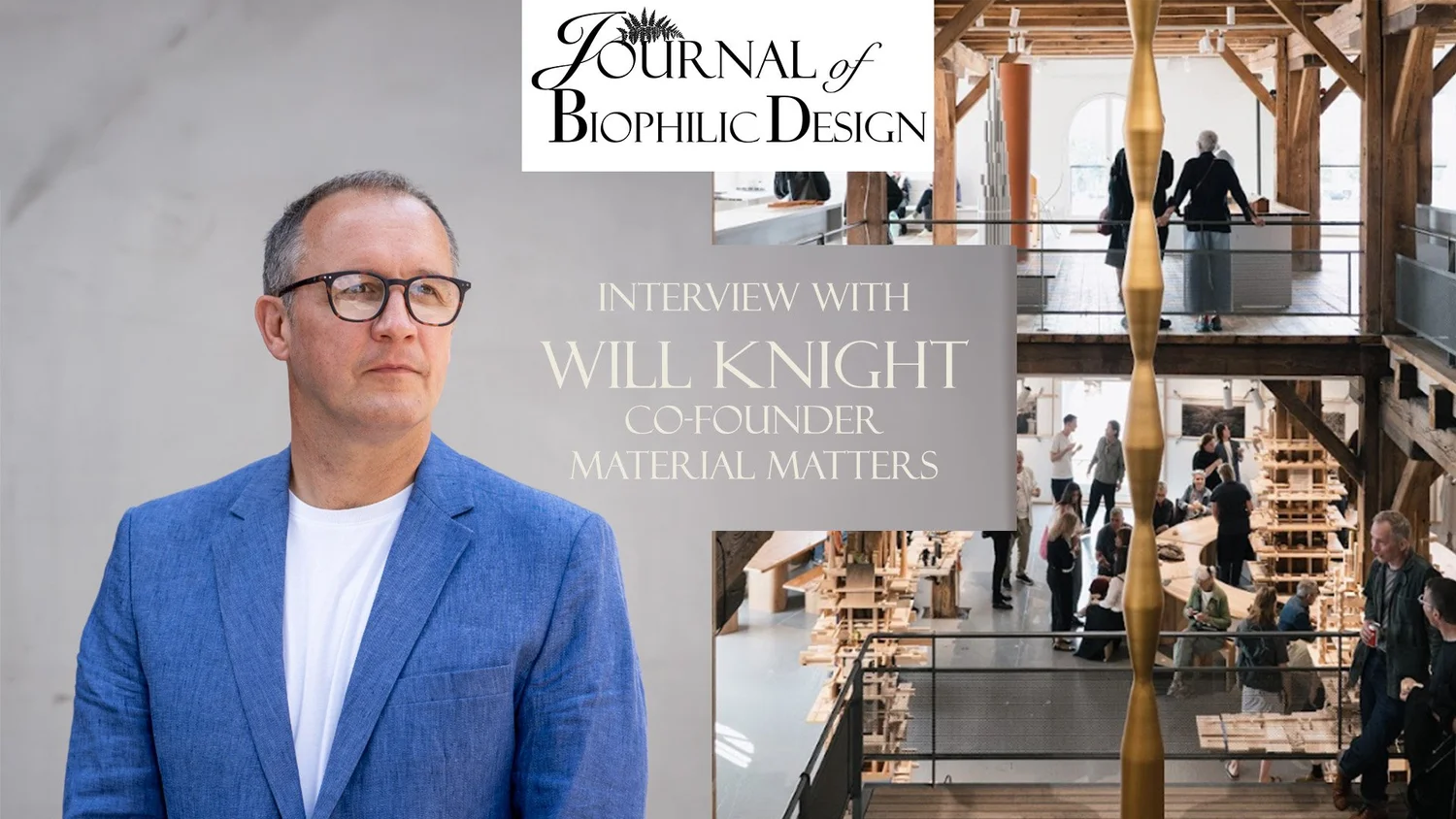
| 4/14/26 | ![]() The Future of Material Innovation and Biophilic Design✨ | material innovationbiophilic design+4 | William Knight | Material Matters | — | materialsbiophilic principles+4 | — | 39m 59s | |
| 4/10/26 | ![]() The Biophilic Imperative - From Sustainability to Regeneration✨ | biophilic designregenerative design+3 | Enrique Soler | AreaWillmott Dixon Interiors | — | biophilic designregenerative design+3 | — | 44m 02s | |
| 3/26/26 | ![]() The New Stone Age✨ | biophilic designsustainability+3 | Matt Robb | Stone Federation of Great Britain | — | biophilic designnatural stone+5 | — | 41m 12s | |
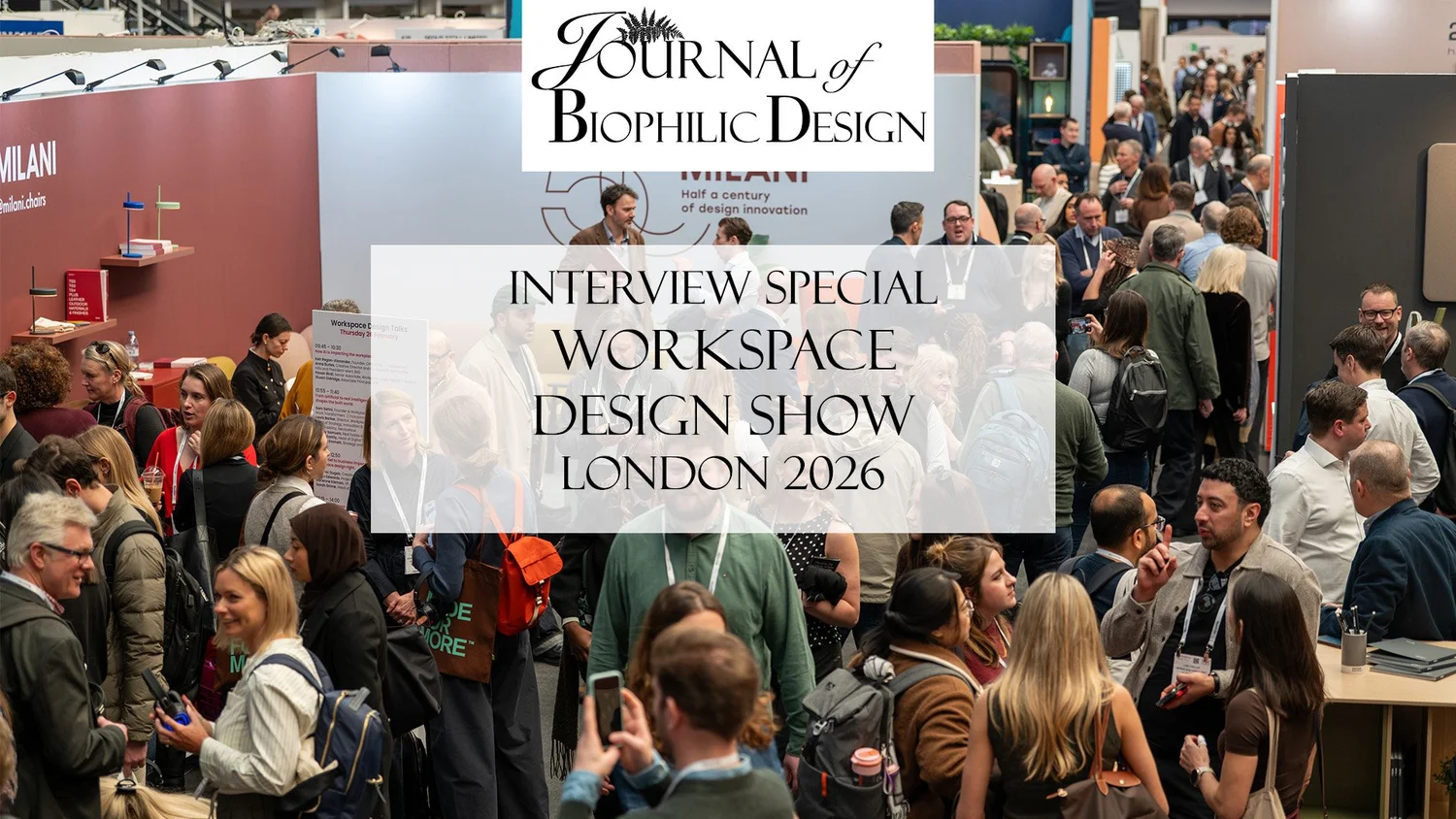
| 3/25/26 | ![]() Interview Special - Workspace Design Show 2026 London✨ | biophilic designworkspace design+4 | Nicola TomkinsLidia Johansen+1 | Overburychapmanbdsp+1 | London | biophiliaworkspace design+5 | — | 17m 25s | |
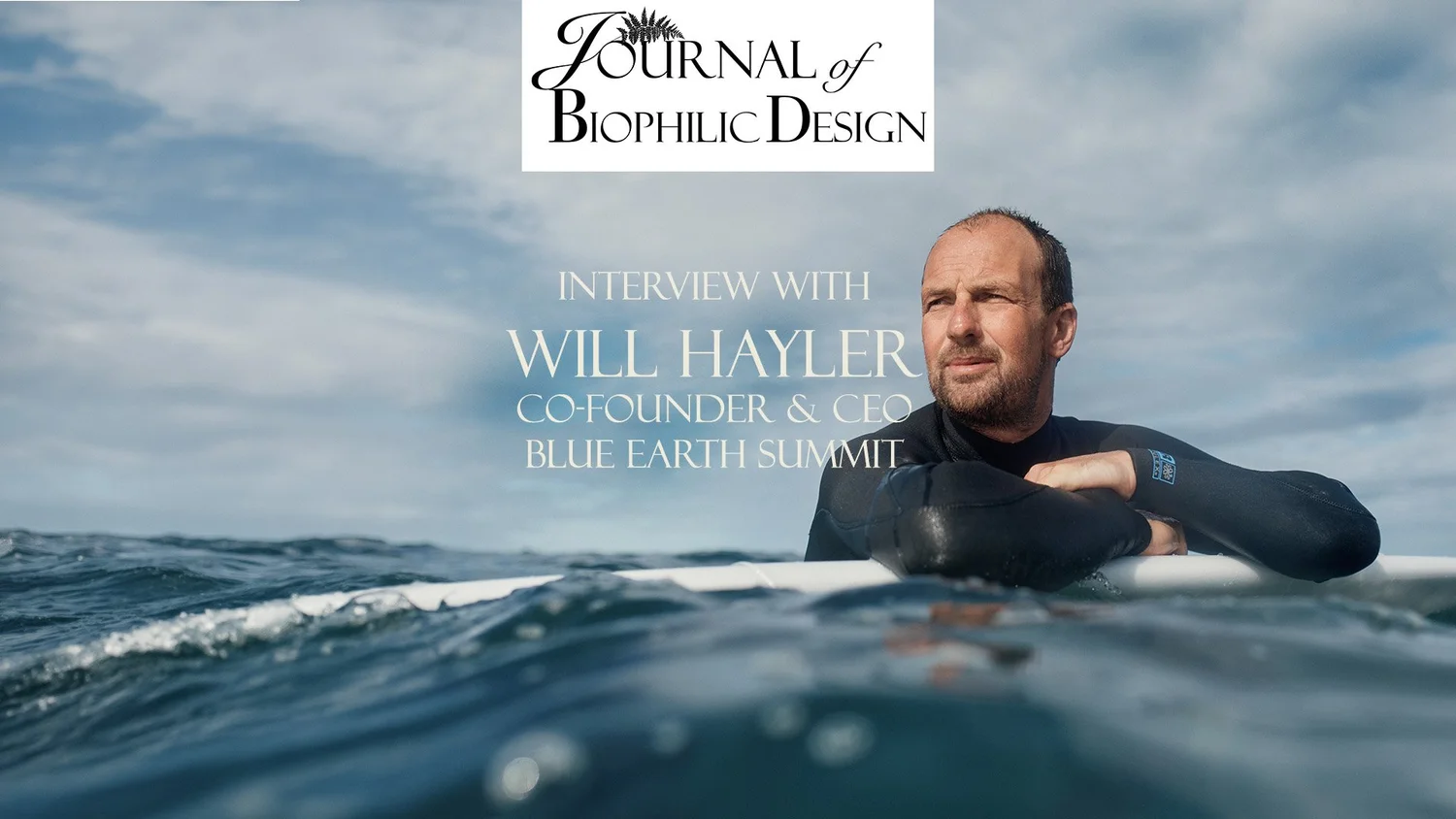
| 3/8/26 | ![]() How to Fast-track a Regenerative Future✨ | regenerative futurebiophilic design+4 | Will Hayler | The Blue Earth Summit | — | regenerative futurebiophilic design+4 | — | 40m 32s | |
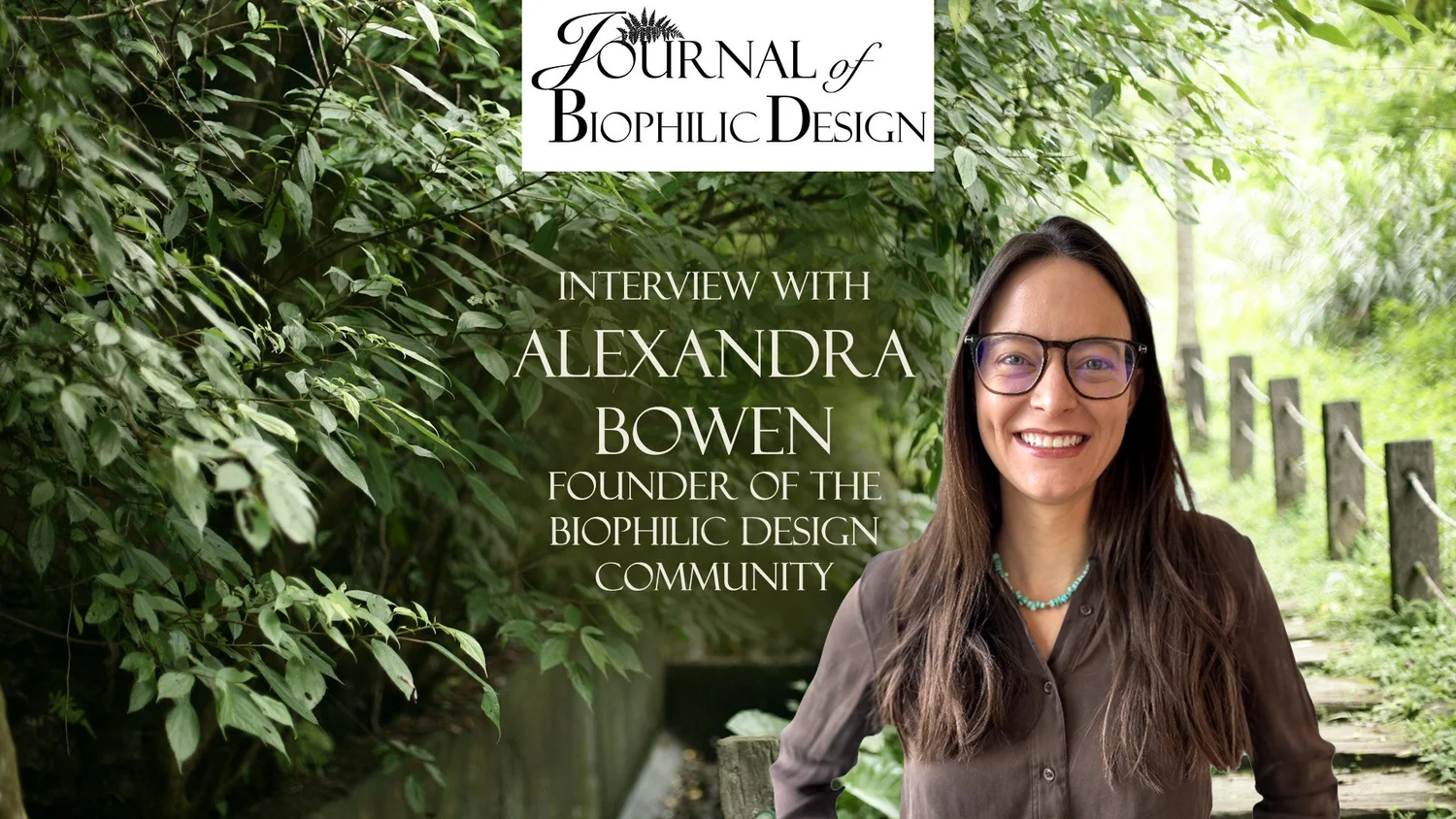
| 3/3/26 | ![]() We spend 90% of our time indoors. Here’s how Biophilic Design can make that healthier.✨ | Biophilic Designindoor living+3 | Alexandra Bowen | Biophilic Design Community | — | Biophilic Designindoor health+3 | — | 57m 52s | |
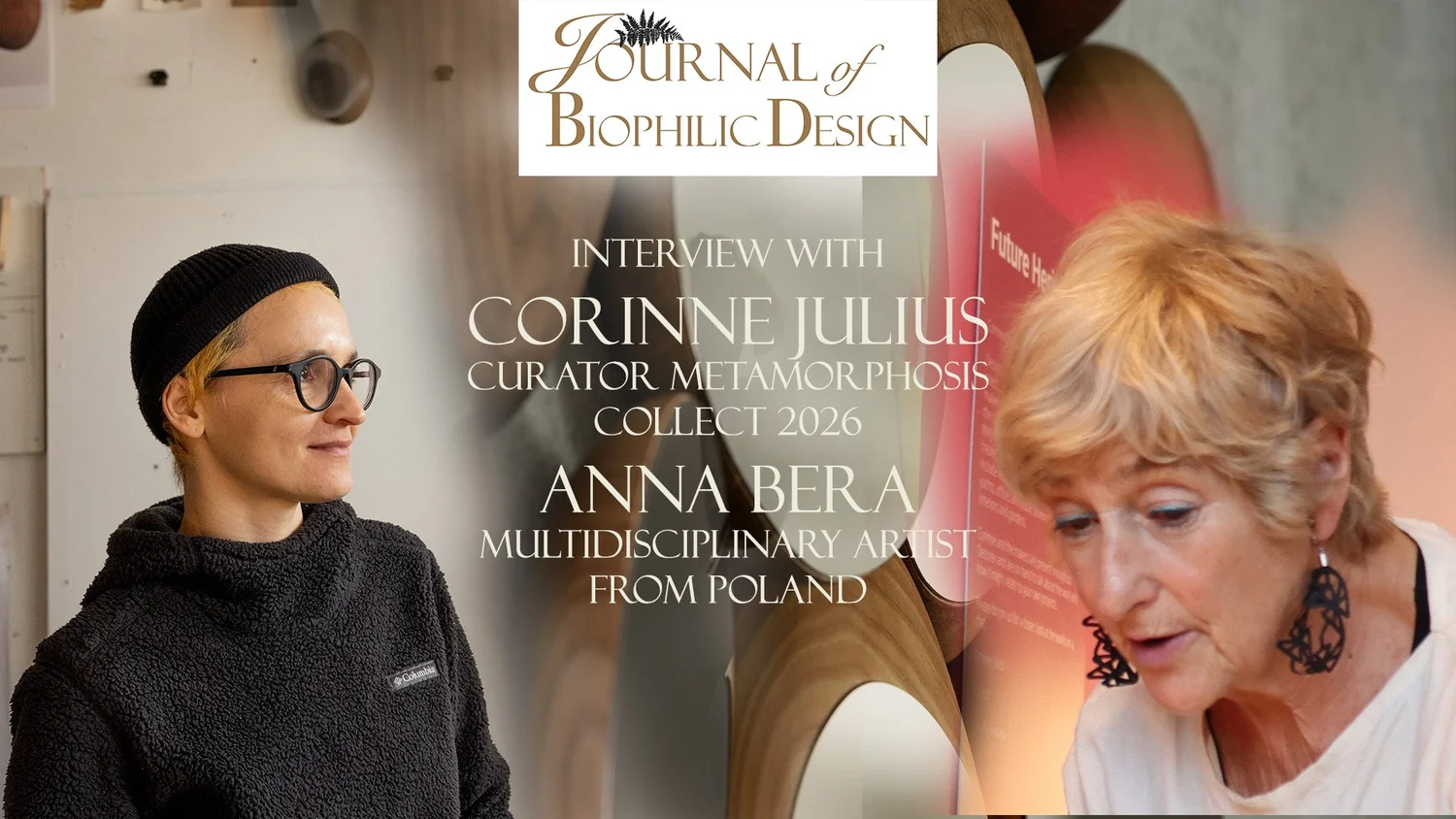
| 2/19/26 | ![]() Collect 2026: Metamorphosis and the Polish Design Connection✨ | biophilic designPolish craft+4 | Corinne Julius | — | Poland | biophilic designPolish craft+5 | — | 51m 30s | |
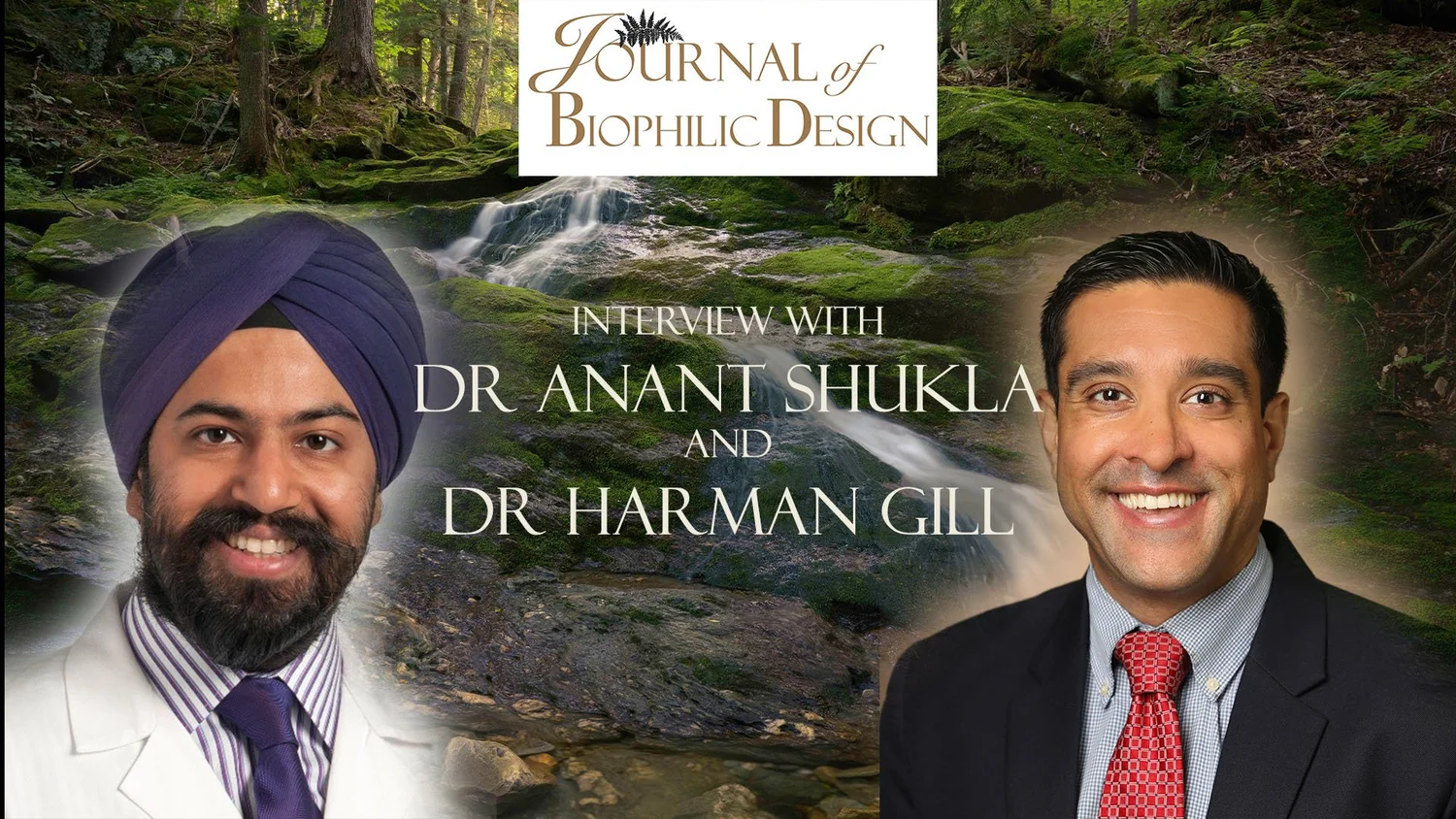
| 1/21/26 | ![]() One minute to breathe. How images of nature can help save our A&E staff✨ | healthcareemergency medicine+3 | Dr Anant ShuklaDr Harman Gill | Dartmouth-Hitchcock Medical CenterJournal of Biophilic Design | — | emergency departmentnature-based art+3 | — | 1h 13m 18s | |
Want analysis for the episodes below?Free for Pro Submit a request, we'll have your selected episodes analyzed within an hour. Free, at no cost to you, for Pro users. | |||||||||
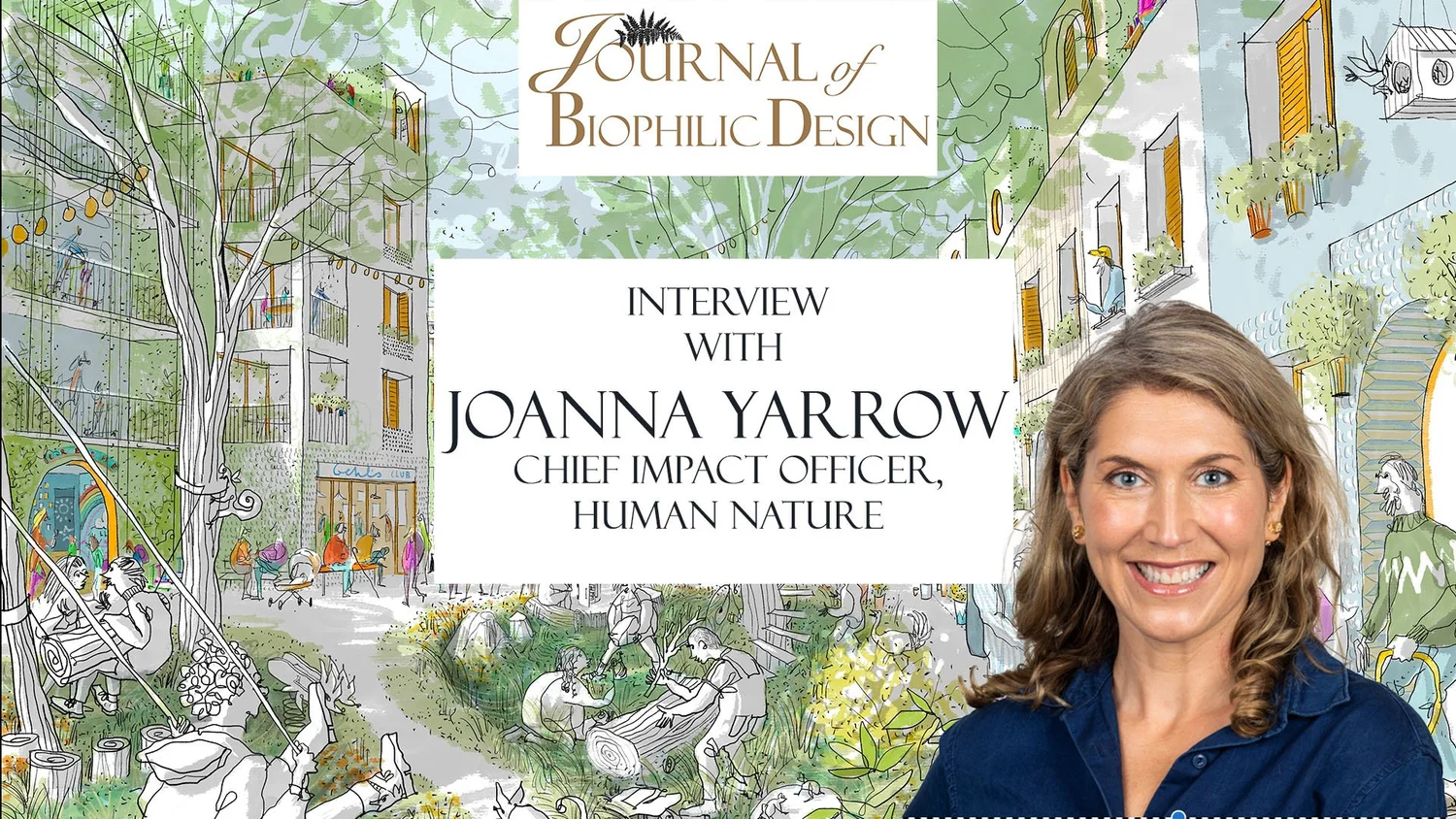
| 11/13/25 | ![]() Biophilic Design and Innovative Place Typologies for a new Generation of Developers✨ | biophilic designurban development+3 | Joanna Yarrow | Human NaturePhoenix | Lewes, East SussexUK | biophilic designurban neighborhoods+3 | — | 52m 56s | |

| 11/6/25 | ![]() Biophilic design: buzzword or big deal? A Workplace Geeks investigation™️ | Welcome to this special episode of the Journal of Biophilic Design podcast. We’re really excited to share this feature from our very first Biophilic Design Conference, which took place at the iconic Barbican Centre in London. It was a landmark moment — the UK’s first-ever conference dedicated entirely to biophilic design — and we were joined by an amazing lineup of experts, designers and researchers exploring how connecting people and nature through design can transform our buildings and cities. And now, we’re thrilled to announce that this year’s conference is back — bigger and better than ever — at Westminster Central Hall in London on Sunday, 17th November. https://journalofbiophilicdesign.com/biophilic-design-conference Join us for a day of inspiring talks, interactive sessions, and meaningful connections with the people who are shaping the future of design for wellbeing, sustainability and climate resilience. This special edition of the Journal of Biophilic Design podcast is a podcast recorded by our friends at Workplace Geeks, Ian Ellison and Chris Moriarty. Host Ian Ellison sets out to explore a big question: Is biophilic design simply good design, or something we need to intentionally spotlight because of its unique importance to people, place and planet? In this deep dive, Ian speaks with a host of experts and thought leaders — including Dr Nigel Oseland, Dr Sally Augustin, Oliver Heath, Prof Harriet Shortt, Mark Catchlove, Dr Vanessa Champion, Matthew Burgess, Chloe Bullock, and Prof Geoff Proffitt — to unpack the science, theory, and lived experience behind biophilic design. You’ll hear: • The psychological and evolutionary roots of our natural affinity for nature. • Insights from the UK’s first Biophilic Design Conference and what made the Barbican such a fascinating venue. • Real-world examples of biophilic design in action — from workplaces and clinics to urban spaces and beyond. Tune in to reflect, challenge assumptions, and join the ongoing conversation: is biophilic design just a feel-good concept, or is it the future of how we should be designing every environment? Book tickets to the 2nd Biophilic Design Conference - join us in PERSON and ONLINE https://journalofbiophilicdesign.com/biophilic-design-conference Session schedule : https://journalofbiophilicdesign.com/-2025-conference-sessions Connect with the Workplace Geeks community: Share your thoughts using #WorkplaceGeeks or email hello@workplacegeeks.org. Follow @WorkplaceGeeks on LinkedIn and subscribe for more thought-provoking insights on workplace and design. To listen to the original visit https://www.buzzsprout.com/1933353/episodes/16903582-biophilic-design-buzzword-or-big-deal-a-workplace-geeks-investigation They also have a listener survey live at the moment, with prizes, so do the survey too, that would be superb https://www.smartsurvey.co.uk/s/WGls2025sv/ Have you got a copy of the Journal? You can now subscribe as a member of the Journal of Biophilic Design or purchase a gorgeous coffee table reference copy or PDF download of the Journal journalofbiophilicdesign.comor Amazon and Kindle. Credits: with thanks to George Harvey Audio Production for the calming biophilic soundscape that backs all of our podcasts. Listen to our podcast on Audible, Amazon Music, Spotify, iTunes, YouTube and all the RSS feeds. https://www.facebook.com/journalofbiophilicdesign/ https://twitter.com/JofBiophilicDsn https://www.linkedin.com/company/journalofbiophilicdesign/ https://www.instagram.com/journalofbiophilicdesign If you like this,please subscribe! | — | ||||||
| 11/5/25 | ![]() Can a Biophilic Strategy redefine our Urban Future? | "The way we've conceived cities for the past 100 years has been far too extractive, far too one-dimensional. We need cities that are more productive, multi-dimensional, and adaptable." Ludo Pittie leads WSP’s 75-strong UK landscape and urban design team, guiding the company’s landscape strategy and design thinking, and is also driving a global WSP exploration of ‘the Future Ready Landscape’ which strives to anticipate future needs, and embed adaptable design practices to create sustainable places that are ready for today and tomorrow. Urban spaces should be biophilic interconnected systems that prioritise human and ecological wellbeing. This goes beyond traditional sustainability, we need regenerative design, an approach that doesn't just minimise harm, but actively restores and enhances natural systems. The 15-minute city concept reimagines urban living. "It's about providing essential social needs locally," Ludo explains. "Access to schools, food production, healthcare – all within a 15-minute radius. It's about creating communities that can truly thrive." Covid-19 unexpectedly accelerated this perspective. Locked down populations rediscovered local green spaces. At the same time our connection to nature has diminished by 60% over two centuries. The pandemic became an unexpected reset button, highlighting the critical importance of accessible, high-quality green environments. But transforming cities requires more than good intentions. We need for innovative financial frameworks that recognise nature's intrinsic value. Natural capital approaches are emerging, attempting to quantify ecosystem services previously taken for granted. "We haven't been putting a monetary sign on what nature provides," he says. "We've just extracted and taken nature for granted." Plus, the economic benefits of more nature and biophilic placemaking helps provide equal access to high-quality green spaces, which we know can improve public health, reduce NHS pressures, mitigate climate impacts, and create more resilient, socially cohesive communities. Practical examples are already emerging. Projects like Manchester's Greater Manchester Environment Fund and initiatives in Copenhagen and New York demonstrate how cities can integrate nature-based solutions. In New York, green infrastructure plans showed returns ten times higher than traditional engineering approaches, at a third of the cost. The future of urban design isn't about uniformity, but about "hyper-local solutions to global system change". Each city, each neighbourhood needs its own nuanced approach, respecting local ecology and cultural distinctiveness. In addition, we should be designing public spaces that balance people, planet, and place; continuing interdisciplinary collaborations, particularly with ecologists and water engineers; and maintaining a spirit of continuous innovation and learning. Community engagement is paramount. Successful urban restoration isn't imposed from above but co-created with local residents. Emerging stewardship models, like community interest companies managing green spaces, show promising alternatives to traditional top-down management. Looking towards 2050, we have cause to be optimistic. "We've never had so many mechanisms at our disposal," he says. Regenerative design could be the bridge connecting different disciplines, creating holistic solutions to complex urban challenges. Just imagine a world where everyone has a view of nature from where they live, with high-quality green spaces within a 10-minute walk. This would fundamentally reshape our relationship with urban environments. Ludo will be speaking at the Biophilic Design Conference on 17 November, Click here to find out more and book your online and in person tickets (plus watch on catch up!): https://journalofbiophilicdesign.com/biophilic-design-conference To find out more about some of the project that Ludo was speaking about in the podcast look at: https://www.wsp.com/en-gb/hubs/future-ready-landscapes https://www.wsp.com/en-gb/projects/islington-council-and-wsp-explore-pathways-to-finance-nature-in-cities https://www.wsp.com/-/media/insights/uk/documents/wsp-biodiversity-in-the-city.pdf https://www.tcpa.org.uk/areas-of-work/new-towns/long-term-stewardship/ https://barkingriverside.london/ https://commonland.com/4-returns-framework/ https://naturetownsandcities.org.uk/ https://mayfieldpark.com/ https://www.wsp.com/en-gb/projects/earls-court-development https://www.c40.org/case-studies/c40-good-practice-guides-copenhagen-cloudburst-management-plan/ https://www.nyc.gov/site/dep/environment/cloudburst.page https://www.nyc.gov/assets/dep/downloads/pdf/water/stormwater/green-infrastructure/nyc-green-infrastructure-plan-2010.pdf - key take away: “the overall cost of the Green Infrastructure Plan would be approximately $5.3 billion, $1.5 billion less than the $6.8 billion required for the Grey Strategy”. “After a 20-year period, DEP estimates that New Yorkers would receive between $139 million and $418 million in additional benefits through reduced energy bills, increased property values, and improved health” | — | ||||||
| 10/29/25 | ![]() Urban Biophilia - SUGi’s Pocket Forests Are Rewilding City Life | SUGi creates pocket forests that breathe life into urban spaces. Founded in London and now operating in over 50 cities worldwide, SUGi uses the innovative Miyawaki method to transform small urban areas into thriving, biodiverse ecosystems. In a space the size of a tennis court, they can plant approximately 600 trees that grow rapidly, creating a mature forest in just a fraction of the time nature would typically require. Adrian Wong, UK Forest Lead, explains, "If nature did it naturally, it usually takes 150 to 500 years for a forest to mature. We supercharge that process." At the heart of SUGi's success is soil restoration. "Without a living, healthy soil, we can't do what we're doing," Adrian emphasises. They meticulously prepare urban sites by aerating the ground, introducing beneficial organisms like mycelium and worms, and creating a nutrient-rich environment that supports rapid growth and biodiversity. For me, as Adrian was telling us this, I felt this emphasis on creating a healthy environment for life to thrive, is similar to what we are trying to do with Biophilic Design inside our homes, hospitals, workplaces, creating healthy environments that enable all life to flourish. The impact is remarkable. Even in seemingly inhospitable urban locations, these micro forests attract diverse wildlife. At their South Bank forest, they've recorded an incredible range of species, including blue tits, green finches, and surprisingly, even tawny owls and peregrine falcons. Research is increasingly demonstrating the mental health benefits of these urban forests. A study with Oxford University is exploring how the volatile organic compounds released by trees can reduce anxiety and improve overall well-being. As Adrian puts it, "We're learning how to quantify the benefits that we know exist." Contrary to expectations, these forests require minimal maintenance. After initial care in the first three to four years, the forests become self-sustaining ecosystems. "Beyond that point, the forest looks after itself," Adrian explains. Adrian himself looks after over 30 forests on his own, which just proves that the method of planting is self-sustaining, affordable and there is no economic downside to scaling these across cities too. Just benefits. SUGi's approach addresses urban inequity by bringing green spaces to areas traditionally lacking natural environments. Their forests provide access to nature in communities that have been concrete bound, offering mental health benefits, educational opportunities, and a sense of community ownership. Everything which the Biophilia hypothesis encourages, and Biophilic Designers are aiming to create. "I would love to see a city that's part of nature, a city that's in nature," Adrian says at the end. This means integrating green spaces seamlessly into urban landscapes – from moss-covered walls to green roofs that provide habitat and food-growing opportunities. SUGi is always seeking collaborators. "Finding land is our biggest challenge," Adrian notes. Architects, city planners, and community leaders are invited to explore how micro forests can transform urban spaces. In just six years, SUGi has planted over 200 forests worldwide, proving that small spaces can create significant environmental and social change. If you have land which is calling out for a mini forest, please reach out directly to SUGi to collaborate. These pocket forests are more than just trees they are essential in our healing and connection in our urban landscapes. https://www.instagram.com/sugiproject/ https://www.linkedin.com/company/sugiproject/posts/?feedView=all https://www.sugiproject.com/ https://cdn.sanity.io/files/oyzyxja8/v2/913f3ee130ed408e418cd2b76a3e7bddf562c550.pdf He will be speaking at the biophilic design conference on: . A passion developed from his time travelling and observing how society benefits most when nature and humanity can coexist. He will be speaking about: Biodiversity & Belonging: why wild urban spaces matter. Every citizen deserves access to thriving, biodiverse nature. SUGi is a model of urban renewal rooted in ownership, pride, and shared responsibility. We transform urban spaces through hyper-local pocket forests. From climate resilience to improving mental health, we’ll explore how wild urban spaces and nature connectedness can restore our sense of belonging — and how this, in turn, supports biodiversity and human well-being. To book your ticket visit www.biophilicdesignconference.com This is the factory in the forest Adrian mentioned: https://medium.com/@dinushi.urbanforests/factory-in-the-forest-adcdd18f7f9c Have you got a copy of the Journal? You can now subscribe as a member of the Journal of Biophilic Design or purchase a gorgeous coffee table reference copy or PDF download of the Journal journalofbiophilicdesign.comor Amazon and Kindle. • Book tickets and join us in PERSON and LIVE STREAMED Biophilic Design Conference www.biophilicdesignconference.com Credits: with thanks to George Harvey Audio Production for the calming biophilic soundscape that backs all of our podcasts. Listen to our podcast on Audible, Amazon Music, Spotify, iTunes, YouTube and all the RSS feeds. https://www.facebook.com/journalofbiophilicdesign/ https://twitter.com/JofBiophilicDsn | — | ||||||
| 10/20/25 | ![]() Blurring Boundaries, Biophilia and US Modernist Architecture | US Modernist architecture and Biophilic Design share a philosophical alignment, both fundamentally committed to creating human-centric spaces that celebrate our intrinsic connection to nature. By prioritising natural light, material authenticity, and design that responds to human behavioural patterns, these approaches transform buildings from mere shelters into living, breathing environments. Architects like Frank Lloyd Wright and Richard Neutra were pioneering biophilia decades before the term existed as a design principle, strategically integrating large windows, natural materials, and designs that blur indoor-outdoor boundaries. Their work demonstrates that truly great architecture isn't about imposing human structures on the landscape, but about creating harmonious spaces that enhance human well-being by maintaining a deep, sensory dialogue with the natural world. This shared vision sees buildings not as static objects, but as dynamic systems that support physical, psychological, and emotional health through thoughtful, nature-inspired design. What if your home could be more than just a container for living? What if it could enhance your wellbeing, sync with natural rhythms, and make you feel truly alive? Imagine a house that breathes with the landscape, where windows frame nature like living paintings and every design choice connects you to the world outside We speak with George Smart, founder of US Modernist the award-winning archive and podcast dedicated to preserving and celebrating Modernist design. We chat about Frank Lloyd Wright’s iconic Fallingwater house perched over a waterfall and how architect Richard Neutra would spend entire weekends with families, observing their daily routines to design homes that perfectly supported their lifestyle. We also explore how technological innovations like air conditioning and steel construction opened up radical new possibilities for design. Technology played a crucial role in the US Modernist movement. The advent of air conditioning, steel construction, and large glass panels allowed architects to create open, light-filled spaces that blurred indoor and outdoor boundaries. California, with its stunning landscapes and consistent climate, became a laboratory for these experimental designs. For anyone curious about design, architecture, or how our surroundings impact our wellbeing, this episode is a must-listen. Tune in, get inspired, and discover how great design can transform our connection to the world around us. Want to dive deeper? Visit US Modernist's website or check out their podcast for more architectural adventures. https://www.usmodernist.org Have you got a copy of the Journal? You can now subscribe as a member of the Journal of Biophilic Design or purchase a gorgeous coffee table reference copy or PDF download of the Journal journalofbiophilicdesign.comor Amazon and Kindle. Biophilic Design Conference www.biophilicdesignconference.com Credits: with thanks to George Harvey Audio Production for the calming biophilic soundscape that backs all of our podcasts. Listen to our podcast on Audible, Amazon Music, Spotify, iTunes, YouTube and all the RSS feeds. https://www.facebook.com/journalofbiophilicdesign/ https://twitter.com/JofBiophilicDsn https://www.linkedin.com/company/journalofbiophilicdesign/ https://www.instagram.com/journalofbiophilicdesign If you like this,please subscribe! | — | ||||||
| 10/15/25 | ![]() Digital Nature. Is your smartphone your Secret Weapon for Mental Health and Healing? | Did you know 10 million people watched the first episode of Planet Earth III – the same number who visit the Peak District annually? We're hungry for nature, even if we can't always access it directly. Imagine escaping the concrete jungle without leaving your desk. What if your smartphone could transport you to a misty bluebell woodland or the thundering heart of an Icelandic volcano? Welcome to the future of nature connection – where technology becomes your gateway to mental restoration. We speak with environmental psychologist Dr Alex Smalley about his research on virtual nature and Tim Daniels co-founder of Portal, both are names to watch in this beautiful revolution in how we experience the natural world. "We've always tried to bring nature indoors," explains Dr. Alex Smalley. From ancient cave paintings, ancient Roman wall paintings right through to modern digital experiences, humans have always craved a connection to the natural world. But this isn't about replacing real nature. It's about expanding our understanding of how we can experience it. For the stressed-out healthcare worker pulling a double shift, the burned-out student cramming for exams, or the city dweller trapped in a windowless office, digital nature offers a lifeline. Scientific research shows these experiences aren't just pretty pictures – they're powerful mental health tools. Alex’s research is proving that digital nature can actually change how our brains process pain and stress. In clinical studies, people experiencing virtual natural environments reported reduced pain perception and lower stress levels. It's like a mini-vacation for your brain, available at the touch of a button. Tim, Portal's co-founder, sees something even bigger. "We're not just creating an app," he says. "We're addressing major global crises – from mental health to climate change – by reconnecting people with nature." For younger generations, digital natives who've grown up with screens, these experiences are revolutionary. Instead of mindless scrolling, imagine using your phone to transport yourself to a dawn chorus, to feel the gentle awakening of a forest, to experience moments of pure wonder. "These digital experiences can stimulate small bumps of awe," Smalley explains. "They force you to reevaluate your mental frameworks, put your problems in perspective, and feel connected to something bigger." It's not about replacing real-world experiences. It's about creating bridges, about offering nature as an accessible resource for everyone. Imagine the possibilities: - Hospitals using nature sounds to support patient recovery - Schools using digital landscapes to calm and focus students - Workplaces offering nature breaks to reduce stress - Individuals finding moments of peace in their most challenging times Portal captures nature with breathtaking precision – 8K visuals, spatial audio that makes you feel like you're truly there. A thunderstorm isn't just a sound; it's an experience that can unlock feelings of wonder, reduce stress, and reconnect you with the natural world. "It's never too late to build a connection to nature," Alex emphasizes. And now, that connection is quite literally in your pocket. For Tim, it's deeply personal. The platform was inspired by his brother's transformative experience camping in New Zealand – discovering how nature could heal burnout, restore mental health, and provide a sense of wonder. What if technology could be a force for healing? What if our devices could remind us that we're part of something larger than our daily stress? It does seem that our world is becoming more urban, more digital, more disconnected, but technology doesn't have to isolate us – it can reconnect us. A dead hotel TV screen becomes a window to volcanic landscapes. A smartphone transforms into a portal to misty forests. Stress dissolves with the sound of a dawn chorus. Something that I really liked when I asked Alex how he would paint the world with a magic brush of Biophilia (the question I ask everyone who comes onto the podcast) he said: "I'd paint the world wild and unkempt, with oak saplings emerging from tangles of brambles.” For me, this seemed a perfect metaphor for how digital and natural worlds can coexist and enrich each other. Your next mental health solution might just be a click away. Are you ready to reconnect? https://portal.app/ https://experts.exeter.ac.uk/20047-dr-alex-smalley virtual-nature.com https://www.audible.co.uk/pd/Healing-Power-of-Nature-Podcast/B0CLVVLF7T Have you got a copy of the Journal? You can now subscribe as a member of the Journal of Biophilic Design or purchase a gorgeous coffee table reference copy or PDF download of the Journal journalofbiophilicdesign.comor Amazon and Kindle. Biophilic Design Conference www.biophilicdesignconference.com Credits: with thanks to George Harvey Audio Production for the calming biophilic soundscape that backs all of our podcasts. Listen to our podcast on Audible, Amazon Music, Spotify, iTunes, YouTube and all the RSS feeds. https://www.facebook.com/journalofbiophilicdesign/ https://twitter.com/JofBiophilicDsn https://www.linkedin.com/company/journalofbiophilicdesign/ https://www.instagram.com/journalofbiophilicdesign If you like this, please subscribe! | — | ||||||
| 10/7/25 | ![]() Beyond Carbon - Oliver Heath on Biophilic Regenerative Design | "We're facing enormous challenges - climate crisis, biodiversity loss, social and economic inequity. These are complex, interlinked issues that we cannot solve by simply focusing on embedded and operational carbon." In the urgent battle against climate change, the built environment stands at a critical crossroads. Oliver Heath, well known global biophilic design expert, explains how Biophilic Design offers a transformative approach that goes far beyond superficial sustainability efforts. Biophilic design represents a holistic solution, reimagining our built spaces as living, breathing ecosystems that support not just human health, but the wellbeing of all life. It's a radical departure from traditional sustainability approaches that narrowly target carbon reduction. Oliver argues that true sustainability requires a systemic approach. "We need to take a wider view, not just a carbon tunnel vision," he emphasises. This means considering interconnected challenges like resource scarcity, water crises, air pollution, and biodiversity loss. The key lies in understanding our fundamental connection to nature. Biophilic design recognises that humans have an evolutionary inheritance - a genetic predisposition to connect with natural environments. By integrating natural elements, patterns, and sensory experiences into our buildings, we can create spaces that simultaneously support human health and environmental sustainability. Addressing the greenwashing epidemic, Oliver suggests a multi-faceted approach. "It's not just about putting plants in a corner," he warns. Instead, organisations must consider the entire lifecycle of materials, from sourcing to disposal, and how each design decision impacts broader ecological systems. Practical implementation involves several critical strategies: 1. Pre- and Post-Occupancy Evaluations Companies can measure the real impact of design interventions. In one project with Knight Frank, targeted biophilic design interventions resulted in remarkable outcomes: an 18% increase in productivity, 22% improvement in meetings, and a 28% boost in overall wellbeing. 2. Diverse and Inclusive Design Recognising that people experience environments differently, biophilic design creates spaces that support various sensory needs. "Over 15% of the population is neurodivergent," Heath notes. "We must design environments that support everyone's comfort and potential." 3. Comprehensive Standards While current building regulations fall short, non-mandatory standards like the WELL Building Standard and Living Building Challenge provide frameworks for genuine sustainable practices. These standards look beyond carbon, examining air quality, materials, water usage, and community impact. The economic argument is compelling. Buildings designed with biophilic principles are more likely to retain value, attract talent, and reflect progressive organizational values. As Heath puts it, "Companies are recognising that nature connection isn't just aesthetic - it's a fundamental strategy for creating more successful, innovative environments." Case studies demonstrate the potential. A project with John Lewis transformed residential spaces by creating a "green thread of wellbeing" - integrating natural elements from external gardens through interior spaces, enhancing community connection and individual wellbeing. Education is crucial. Interior Design Declares, a movement Oliver helped establish, encourages professionals to commit to regenerative design principles. Their 12 pledges focus on raising awareness, sharing knowledge, and challenging traditional design approaches. "The biophilic future is already here," Heath argues, adapting a quote from author William Gibson. "It's just not very evenly distributed." For businesses, designers, and policymakers, sustainable design must be holistic, considering the intricate web of human and ecological interactions. Biophilic design offers a comprehensive framework that goes beyond carbon reduction, creating spaces that genuinely support life in all its complexity. As we face unprecedented environmental challenges, biophilic design isn't just an option - it's a necessity. It represents a profound reimagining of our relationship with the built environment, where every design decision becomes an opportunity to support, regenerate, and celebrate life. Oliver will be speaking at the Biophilic Design Conference London 2025 www.biophilicdesignconference.com https://www.oliverheathdesign.com Design a Healthy Home: https://www.oliverheathdesign.com/our-projects/book-design-a-healthy-home Biophilic Design in the Home course: https://oliverheathdesignschool.thinkific.com/ If you like this, please subscribe! Have you got a copy of the Journal? You can now subscribe as a member of the Journal of Biophilic Design or purchase a gorgeous coffee table reference copy or PDF download of the Journal journalofbiophilicdesign.comor Amazon and Kindle. Biophilic Design Conference www.biophilicdesignconference.com Credits: with thanks to George Harvey Audio Production for the calming biophilic soundscape that backs all of our podcasts. Listen to our podcast on Audible, Amazon Music, Spotify, iTunes, YouTube and all the RSS feeds. https://www.facebook.com/journalofbiophilicdesign/ https://twitter.com/JofBiophilicDsn https://www.linkedin.com/company/journalofbiophilicdesign/ https://www.instagram.com/journalofbiophilicdesign If you like this, please subscribe! | — | ||||||
| 9/18/25 | ![]() Playa Viva - where Biophilia meets Living Ecology | Nestled along Mexico's Pacific coast, David Leventhal's Playa Viva is redefining hospitality through a radical commitment to regenerative design. More than just a boutique hotel, it's a living ecosystem where architecture breathes, nature flows freely, and every material tells a story of sustainability. Imagine waking in a treehouse suspended among palm trees, with no doors or windows—just an uninterrupted connection to the landscape. This is Leventhal's vision: hospitality that doesn't just minimize environmental impact, but actively regenerates it. The resort's structures are poetry in natural materials. Bamboo "bones" form parabolic roofs, carefully woven and raised by hand. Shower floors become canvases of meticulously placed pebbles, each stone positioned with artisan precision. Wall pigments are sourced locally—rich oranges and browns extracted directly from mountain landscapes, mixed with unconventional ingredients like hay, horse manure, and even turtle eggshells. "We're not just building rooms," Leventhal explains, "we're creating experiences that transform how humans interact with environment." This transformation begins with radical design choices. Solar panels provide 100% off-grid electricity. Air conditioning is minimised, with innovative systems like the "Evening Breeze" technology cooling only specific areas. The goal isn't comfort through separation, but comfort through connection. The resort sits on 200 acres of regenerating landscape, including a critical turtle sanctuary. Local community members—many former poachers—now protect endangered turtle species, releasing hatchlings at dawn under careful supervision. The broader ReSiMar project demonstrates Leventhal's systemic approach to ecological restoration. Starting from mountain headwaters and extending to the coastline, this watershed regeneration initiative has already documented remarkable recoveries, including recent jaguar sightings in the Sierra Madre Mountains. What makes Playa Viva revolutionary isn't just its sustainable infrastructure, but its philosophical approach. Each design decision emerges from deep respect for place—understanding geological, anthropological, and ecological histories before a single structure is built. Guests aren't passive observers but active participants in this regenerative narrative. Yoga retreats, farm experiences, and community engagement transform vacationing from consumption to connection. The resort's B-Corp certification and recent Michelin keys underscore its commitment to excellence through ecological integrity. Leventhal's background in media and technology might seem an unlikely pathway to ecological design. Yet his journey reveals how personal transformation drives systemic change. "Change happens little by little," he reflects, "until it happens all at once." This philosophy permeates every aspect of Playa Viva. The manta ray-inspired treehouses, the infinity casita with its locally sourced manufactured wood, the organic farm—each element represents a deliberate choice to work with, not against, natural systems. For travellers seeking more than a temporary escape, Playa Viva offers a glimpse of possible futures. Here, luxury isn't about isolation and excess, but about deep, meaningful engagement with living landscapes. As climate challenges intensify, Leventhal's model provides a compelling blueprint. Regenerative design isn't a luxury—it's a necessity. By reimagining hospitality as a collaborative dance with ecological systems, Playa Viva demonstrates that sustainable travel can be both profoundly beautiful and transformative. The resort whispers an essential truth: humans aren't separate from nature, but integral participants in complex, interconnected living systems. And in that understanding lies our most profound opportunity for healing—one treehouse, one turtle, one thoughtfully placed pebble at a time. https://www.playaviva.com https://oceanfdn.org/projects/la-tortuga-viva/ Have a listen to the podcast we did with Louis Thompson, partner of Nomadic Resorts mentioned by David. Louis and his partner designed rooms at Playa Viva https://journalofbiophilicdesign.com/podcast-journal-of-biophilic-design/nomadic-resorts-biophilic-design-hotels If you like this, please subscribe! Have you got a copy of the Journal? You can now subscribe as a member of the Journal of Biophilic Design or purchase a gorgeous coffee table reference copy or PDF download of the Journal journalofbiophilicdesign.comor Amazon and Kindle. Biophilic Design Conference www.biophilicdesignconference.com Credits: with thanks to George Harvey Audio Production for the calming biophilic soundscape that backs all of our podcasts. Listen to our podcast on Audible, Amazon Music, Spotify, iTunes, YouTube and all the RSS feeds. https://www.facebook.com/journalofbiophilicdesign/ https://twitter.com/JofBiophilicDsn https://www.linkedin.com/company/journalofbiophilicdesign/ https://www.instagram.com/journalofbiophilicdesign | — | ||||||
| 9/1/25 | ![]() Landscape and Play with Biophilic Design | If two people could combat our growing urban disconnection, it is Adam White and Andrée Davies of Davies White Limited. I met them at our first Biophilic Design Conference at the Barbican, and immediately warmed to their infectious passion for better landscape design. Design which helps reimagine spaces from playgrounds to hospitals through a beautiful and playful biophilic lens, pulling on our emotional responses to nature. They construct, if you will, beautiful narratives of human-nature coexistence. Instead of viewing landscapes as static backdrops, they help encourage us to understand them as dynamic, living systems that actively shape human experience and ecological health. I think it’s the creativity I love most about their work. The balance of science, planning and artistry. Their approach is rooted in a deep understanding of ecological systems and human psychology. With projects ranging from micro-forest playgrounds to hospital gardens, each is designed to restore our biophilic fundamental relationship with the natural world. Take their recent West London micro-forest playground project. By densely planting trees and creating intricate ecological landscapes, they're not merely designing a play area, but constructing a living classroom. The project embodies their core belief: that understanding nature begins with immersive, tactile experiences. Those of us who live and breathe biophilic design, this philosophy aligns with scientific research. Studies consistently demonstrate that exposure to natural environments reduces stress, enhances cognitive function, and promotes emotional well-being. Adam himself references Florence Williams' "The Nature Fix", which explores how nature can make us "happier, healthier, and more creative". Also, their approach supports the positive economic argument for biophilic design. Their pocket park project in London demonstrated that nature-rich spaces can increase property values and biodiversity simultaneously. Plus, a collaboration with Anglian Water explored how housing developments could integrate resilient, nature-focused landscapes, and they are advocating a new “Resilient Garden” rating, which like the EPC rating on a house, could add value to a property if reported along with a house sale. I think this is a brilliant idea. It will get real estate developers and property owners totally thinking differently about their homes and land. This "resilient garden and landscape accreditation scheme" would be an ecological equivalent to energy ratings for buildings. This could revolutionise how we value and integrate natural systems into our built environment Policy is slowly catching up. The introduction of a Natural History GCSE this September (which they both, along with others, including Mary Colwell I interviewed a couple of years back) represents a significant milestone. "If children don't understand nature, they won't appreciate it, and if they don't appreciate it, they won't protect it," Adam recalls Sir David Attenborough telling him – a statement that has become a guiding principle for their work. "We don't stop playing because we grow old. We grow old because we stop playing," Adam reminds us, and their hospital design interventions are creative, beautiful and indeed playful. By creating gardens with living elements like water pumps, rabbits, and carefully selected native plants, they transform clinical spaces into healing ecosystems. These actively support patient recovery. As climate change accelerates, landscape architecture becomes a critical tool for resilience. Their designs are also adaptive systems that can mitigate environmental challenges while supporting human and ecological well-being. What I love about their work is that they challenge the notion that sustainable design is prohibitively expensive. By using creative, low-cost interventions like raised planting containers and willow pods, they demonstrate that ecological design can be accessible and scalable. I have to call out one specific example of climate resilience from their work, and that is at Nene Park Trust in Cambridgeshire. They used swales to manage water collection during heavy rainfall. These swales are designed to be both functional and interactive, with bridges and stepping stones that children can use to cross them. Their conscious approach to help with water management through strategically designed swales, planting of resilient vegetation that can thrive in changing conditions and creating a playful landscape that serves both ecological and recreational purposes really deserves visiting and using as an exemplar of best practice. They've been working with the park trust for 15 years, and when they revisited the site recently, they were impressed by how the planting had thrived in conditions that might typically challenge other landscapes. Andrée shared that we need a better understanding "nature's time" - recognising that landscapes develop and improve over years, with plants establishing and becoming more robust over time. This approach is inherently climate-resilient, as it focuses on creating adaptable, living systems rather than static, rigid designs. As the next generation of designers emerges – armed with natural history education and a deep ecological consciousness – we hope we can anticipate even more transformative approaches to landscape design. The message is clear. Design is not about creating spaces for humans but creating spaces with humans as PART of a complex, interconnected ecological system. Biophilic landscape architecture is a powerful tool for healing our disconnection from the natural world. RHS Back to Nature - Design Engagement - https://www.davieswhite.co.uk/nature-play-workshop Davies White Ltd Landscape Architects - https://www.davieswhite.co.uk/ If you like this, please subscribe! Have you got a copy of the Journal? You can now subscribe as a member of the Journal of Biophilic Design or purchase a gorgeous coffee table reference copy or PDF download of the Journal journalofbiophilicdesign.comor Amazon and Kindle. Biophilic Design Conference www.biophilicdesignconference.com Credits: with thanks to George Harvey Audio Production for the calming biophilic soundscape that backs all of our podcasts. Listen to our podcast on Audible, Amazon Music, Spotify, iTunes, YouTube and all the RSS feeds. https://www.facebook.com/journalofbiophilicdesign/ https://twitter.com/JofBiophilicDsn https://www.linkedin.com/company/journalofbiophilicdesign/ https://www.instagram.com/journalofbiophilicdesign | — | ||||||
| 8/21/25 | ![]() The Urgent Need for Urban Trees | Cities face unprecedented environmental challenges, and it’s no secret that trees offer multiple solutions: reducing urban temperatures, mitigating noise pollution, improving air quality, and supporting mental and physical health. So why then aren’t we planting trees wherever there’s opportunity? As Biophilic Design practitioners, we can help hold this door open to help explain why we need them and how to do it. Sue James is the Convenor for the Trees and Design Action Group (TDAG), which brings together individuals, professionals, academics and organisations from wide ranging disciplines in both the public and private sectors to improve knowledge and good practice to support the role of urban trees through better collaboration in the planning, design, construction and management and maintenance of our urban places. We chat through the challenges, the opportunities and also how Biophilic Designers can get involved and help transform society, health and ultimately our planet. One of the primary obstacles to widespread urban tree planting, according to Sue, is the perceived maintenance burden. Councils and developers often view trees as costly and complicated. However, TDAG research demonstrates that with strategic planning, tree maintenance can be minimal and cost-effective. "If you plant the right tree in the right place, with proper initial care, maintenance becomes remarkably simple.” Do have a look at the practical guides TDAG have developed to help communities and professionals navigate tree planting challenges. If you are wanting to share the benefits of urban trees, which extend far beyond environmental considerations, learn a bit more about how tree-lined streets can benefit society. For instance they increase property values, reduce urban temperatures by up to 4 degrees, potentially save the NHS money through improved public health and of course the obvious one, create more attractive, liveable and desirable urban spaces. Grassroots Tree Planting Initiatives Let’s also not forget the power of local people. There are many examples of community involvement, and you can find out about local tree planting groups across the UK who are already making significant impacts and get involved with, or support from them. These groups often achieve more successful plantings than official programmes because of their hands-on, passionate approach. So what if you’re thinking about taking practical steps to support community action? Did you know that you are likely to have a local tree officer? Find out who your nearest one is. Explore community forest networks, engage with school parent-teacher associations, connect with organisations like Trees for Cities and of course use the online resources on TDAG and join their seminars which are free. A crucial aspect of Sue and TDAG’s work involves education. Through her involvement with Teach the Future, she advocates integrating climate and nature studies across all school subjects, believing that informed younger generations can drive meaningful change. Sue is also calling for comprehensive land use frameworks that integrate trees and green infrastructure into urban planning. She suggests local authorities should develop clear tree strategies that provide developers with consistent, achievable green space requirements. As Sue says, “We need to bring people and nature together as partners, rather than antagonists.” Wouldn’t it be amazing if everyone of us reading this or listening to the interview, did something to change our local street, village or town. We planted a tree, got involved in the local tree planting groups or even better when we specified, we advocated for tree-lined boulevards and amazing arboreal environments. They don’t need to be perfect, manicured spaces but living, breathing urban environments where humans and nature coexist and mutually benefit. Every individual, community group, and organisation has a role to play in creating greener, more resilient cities. Resources like the Trees and Design Action Group's website offer free guides and inspiration. By sharing knowledge, challenging outdated perceptions, and taking practical steps, we can transform our urban landscapes. To find out more visit TDAG (Tree Design Action Group) website: https://www.tdag.org.u *Book your ticket to see Sue and TDAG at The Biophilic Design Conference www.biophilicdesignconference.com The Biophilic Quality Matric (for building design) , University of Sydney - https://www.sciencedirect.com/science/article/pii/S266679162500003XEdge Debate - debates and papers are here: www.edgedebate.com Teach the Future is here - https://www.teachthefuture.uk/ Rockstrom and Tim Lenten - global tipping points 2025 -https://global-tipping-points.org/?team=johan-rockstrom )https://global-tipping-points.org/conference-2025/conference-statement/ The second guide in their two-part series on Canopy Cover is now available and free to download here. This guide outlines how canopy cover can be measured at a site scale and approaches that can be taken to project canopy spread over decades, which is useful in the planning context. http://epapers.bham.ac.uk/4397/ | — | ||||||
| 8/20/25 | ![]() Biophilic Eudaimonia | The concept of eudaimonia, rooted in Aristotelian philosophy, is more than just happiness. Eudaimonia represents a state of good spirit and the realisation of one's full potential. It's about creating environments that support individuals in becoming their best selves across different life stages and circumstances. I sat down with Jenna Mikus to explore the concept and find out how we can weave this into Biophilic Design. Jenna is founder of the Eudae Group and an Honorary Fellow at the University of Melbourne, and focuses on this concept, bridging engineering, philosophy, and design to create spaces that truly support human flourishing. Eudaimonia manifests itself in Jenna's recent projects across healthcare and educational settings. In hospitals, she challenges traditional design creating spaces that support all users of the space, staff, patients and families. Imagine healing environments with dedicated family zones, access to natural views, and carefully curated sensory experiences that help process difficult emotions. All of this will resonate with Biophilic Designers. Jenna’s own professional journey is anything but conventional. With a background in mechanical engineering, art history, and business, she represents the antithesis of traditional siloed thinking. Her career trajectory—from government consulting to architectural design—reflects a deep commitment to understanding how environments can profoundly impact human experience. In educational spaces, Jenna advocates for neuro-inclusive design. We need classrooms with varied lighting zones, comfortable materials, and flexible spaces that accommodate different learning styles. The goal is to create environments that inspire learning by understanding how space can activate creativity and engagement. All these things are also woven into Biophilic Design. In our conversation she shares that we can all bring these large-scale learnings into small-scale real-world situations. When her father experienced a serious health crisis, Jenna applied her design principles directly. By carefully controlling environmental factors—ensuring good air quality, playing classical music he loved, and creating visual references to positive memories—she supported his cognitive recovery. Just like the Journal of Biophilic Design, crucially, Jenna emphasises breaking down disciplinary barriers. She sees innovation happening in the "messy middle" between traditional fields, advocating for a more holistic, collaborative approach to design. This means bringing together engineers, architects, psychologists, and other professionals to create truly comprehensive solutions. Biophilic design plays a central role in this approach. Drawing inspiration from indigenous philosophies that emphasize human connection with place, Jenna believes our environments should reflect our fundamental need to connect with nature. It's not just about adding plants or windows but creating meaningful interactions between human spaces and natural systems. Her vision extends beyond individual buildings to broader societal transformation. By designing with empathy, inclusivity, and a deep understanding of human needs, we can create spaces that support individual and collective well-being. This approach recognizes that our built environments are not just physical structures, but active participants in human experience. When asked to paint the world with a "magic brush of biophilia," Jenna envisions a landscape of open-mindedness, beautiful light, and empowering interactions. She sees design as a tool for uplifting individuals, societies, and planetary health—achieving a symbiotic relationship that allows humans to truly flourish. Her upcoming presentation at the Biophilic Design Conference promises to further explore these ideas, offering insights into how we can reimagine design as a holistic practice that supports human potential. For architects, designers, and anyone interested in creating more supportive environments, Jenna offers a compelling message: Design is not just about creating spaces, but about nurturing human potential. By understanding the deep psychological and philosophical dimensions of our built environment, we can create spaces that don't just shelter us, but actively support our growth, creativity, and well-being. I was so happy to interview Jenna, as I love her interdisciplinary approach. It’s important to remind ourselves that thoughtful, empathetic design can be a powerful catalyst for individual and collective transformation. Biophilic Design helps us articulate this into the real world. To find out more about Jenna and Eudaimonia, connect with her on LinkedIn, her Google Scholar page and visit the Harvard FxD page. Also check out Conscious Centre for Design, and the International WELL Building Institute, Also she would like to extend the opportunity to submit a chapter for an upcoming book she is editing visit this link. Book tickets to see Jenna at Biophilic Design Conference www.biophilicdesignconference.com If you like this, please subscribe! Have you got a copy of the Journal? You can now subscribe as a member of the Journal of Biophilic Design or purchase a gorgeous coffee table reference copy or PDF download of the Journal journalofbiophilicdesign.comor Amazon and Kindle. Biophilic Design Conference www.biophilicdesignconference.com | — | ||||||
| 8/11/25 | ![]() How to Design a Biophilic Community | Nestled in the Chattahoochee Hills, Georgia, is Serenbe, the biophilic community leading the wellness real estate and agrihood movements. It is a neighbourhood focused on wellbeing, full of fresh food and fresh air. This community is set among acres of preserved forests and meadows with miles of nature trails that connect homes and restaurants with arts and businesses. Importantly it is a real-world example of Biophilic Design in a community development that can help us reimagine urban and town planning. We speak with Steve Nygren, Founder and CEO who shares with us his love of biophilia and how this is woven through Serenbe, a beautiful and practical reimagining of how we can live in harmony with nature. More than just a development, Serenbe is a living, breathing testament to Biophilic Design and the profound connection between human well-being and the natural world. When Steve purchased a farm near Atlanta with his family, they discovered that this close connection to nature fundamentally changed their lives. "I saw how we all responded when we connected back to nature," he reflects. With 1,200 residents, Serenbe demonstrates that sustainable, nature-integrated communities aren't just possible—they're desirable, and this goes beyond architecture, it's about creating living systems that nurture human potential. Serenbe continues to evolve, with plans for an expanded educational campus. Plus, and watch out for updates in the press, an aging-in-place community promoting intergenerational living. Steve bridges scientific understanding with emotional experience. While research increasingly validates biophilic design's benefits, he emphasises that the heart understands what science is only beginning to measure. "We are innately connected to nature," he says, and highlights how our intuitive feelings are confirmed by rigorous scientific research. Start in your own backyard. Steve's upcoming book, "Start in Your Own Backyard," extends this philosophy, encouraging individuals to create change in their immediate environments. For those wanting to apply Serenbe's principles globally, Steve offers simple advice. Start where you have influence. Whether it's redesigning a neighbourhood, creating community gardens, or advocating for nature-integrated urban planning, every action matters. His book is out in October. https://stevenygren.com As Paul Hawken (author of Carbon) said of the book: “This is an extraordinary true-life story of transformation with worldwide implications.” And designing communities with Biophilic Design on a global scale… Intentional design with carefully planned communities can transform neighbourhoods, communities, cities and dare I say it, even countries. If you are a designer, planner, real estate owner, influencer of any of these, by following the Serenbe pattern some of the things you will be looking at incorporating will be integrating nature within 450 feet of every home, create walkable, interconnected spaces, promote multi-generational living and support local agriculture and food systems. All of this will create Holistic Well-being. The Serenbe Biophilic community proves that design can naturally improve health. Residents report losing weight, feeling more connected, and experiencing enhanced mental well-being—simply by living in a nature-integrated environment. Plus, there’s the Community Connection. The simple design elements like communal mailboxes create spontaneous social interactions, demonstrating how physical spaces can foster human connections. When asked to paint the world with a biophilic brush, Steve envisions a landscape that embraces nature—not separate from civilisation but woven into human experience. Serenbe isn't just a community, it's a living blueprint for how humans can reimagine their relationship with the natural world. It proves that when we design with nature, we design for human flourishing. Steve will be speaking at our Biophilic Design Conference 17 November 2025 Westminster London www.biophilicdesignconference.com please come! https://www.serenbe.com To find our more and pre-order the book visit https://stevenygren.com If you like this, please subscribe! Have you got a copy of the Journal? You can now subscribe as a member of the Journal of Biophilic Design or purchase a gorgeous coffee table reference copy or PDF download of the Journal journalofbiophilicdesign.comor Amazon and Kindle. Biophilic Design Conference www.biophilicdesignconference.com Credits: with thanks to George Harvey Audio Production for the calming biophilic soundscape that backs all of our podcasts. Listen to our podcast on Audible, Amazon Music, Spotify, iTunes, YouTube and all the RSS feeds. https://www.facebook.com/journalofbiophilicdesign/ https://twitter.com/JofBiophilicDsn https://www.linkedin.com/company/journalofbiophilicdesign/ https://www.instagram.com/journalofbiophilicdesign | — | ||||||
| 8/5/25 | ![]() Architecture, Epigenetics, Biophilia and Human Health | Architects are increasingly recognising that our built environments do more than shelter us—they fundamentally shape our physical and mental wellbeing. Dr Tuwanda Green, a leading expert in biophilic design, an architect, and who sits on the board of the Biophilic Institute, has over 32 years of architectural experience including working for government design projects, and holds a doctorate in architecture from Virginia Tech. She argues that thoughtfully designed spaces using the principles of Biophilia can actually alter our genetic expression and improve generational health. Tuwanda is an expert on Epigenetics—a field of genetic research. In our conversation she explains how environmental factors can switch genes on and off without changing DNA sequences. Think of epigenetic markers like "gumballs" stuck to our genetic code, potentially influencing everything from stress responses to disease susceptibility. "These markers can be passed down through generations," explains Tuwanda. "A stressful, nature-deprived environment could potentially transmit negative genetic expressions to our children, while nurturing, nature-connected spaces might help reverse these markers." Recent scientific studies support this perspective. Research has consistently demonstrated that exposure to green spaces correlates with significant health improvements: - Reduced cardiovascular disease risks - Lower blood pressure - Decreased stress hormone levels - Improved cognitive function - Enhanced mental health and emotional regulation In our Journal of Biophilic Design podcast and the articles in the Journal itself, we often talk about how green spaces aren't just aesthetic additions—they're critical health interventions. Tuwanda here, shares that by incorporating natural elements like water features, organic shapes, natural lighting, and plant life, architects can create environments that actively support human physiological and psychological functioning. The principles of biophilic design extend beyond mere decoration. They're rooted in understanding human evolutionary biology. Our bodies are fundamentally designed for natural environments, with sensory systems finely tuned to detect subtle environmental cues. Modern buildings often disconnect us from these innate biological rhythms. "We've existed as homo sapiens for millennia in natural settings," Tuwanda emphasises. "Our brains are still processing environmental information subconsciously, seeking safety, resources, and connection." Practical biophilic design strategies include: - Maximising natural light exposure - Creating visual connections with nature - Incorporating water features and natural sounds - Using organic, textured materials - Designing spaces that encourage movement and social interaction Tuwanda's own community at Serenbe (where the Biophilic Institute is based) exemplifies these principles. Curved streets, clustered housing, centralized communal spaces, and abundant green trails naturally encourage neighbourly interactions and physical activity. The potential societal implications are profound. By redesigning our environments with human biology in mind, we could potentially: - Reduce chronic stress - Improve community cohesion - Support mental health - Mitigate intergenerational trauma - Create more resilient, adaptive human populations As climate change and urbanisation accelerate, biophilic design offers a holistic approach to human-centred architecture. It's not just about creating beautiful spaces, but about understanding and supporting our fundamental biological needs. "Design creates communities. Well-designed environments can foster connection, support health, and potentially even contribute to world peace." Our built environments are powerful determinants of human health. By embracing biophilic design principles, we can create spaces that don't just house us, but actively heal and nurture us. If you like this, please subscribe! Have you got a copy of the Journal? You can now subscribe as a member of the Journal of Biophilic Design or purchase a gorgeous coffee table reference copy or PDF download of the Journal journalofbiophilicdesign.comor Amazon and Kindle. Biophilic Design Conference www.biophilicdesignconference.com Credits: with thanks to George Harvey Audio Production for the calming biophilic soundscape that backs all of our podcasts. Listen to our podcast on Audible, Amazon Music, Spotify, iTunes, YouTube and all the RSS feeds. https://www.facebook.com/journalofbiophilicdesign/ https://twitter.com/JofBiophilicDsn https://www.linkedin.com/company/journalofbiophilicdesign/ https://www.instagram.com/journalofbiophilicdesign | — | ||||||
| 8/4/25 | ![]() The Biophilic approach to Learning Spaces | Garden designer Lisa Norton has been pushing forward a beautiful biophilic approach to learning spaces that puts nature at the heart of education. For her, biophilic design is proving that our built environments can profoundly impact children's well-being and learning potential. Her journey from corporate sales to garden design was driven by a deep-rooted connection to nature, inspired by childhood days spent in her father's vegetable garden. Now, she's transforming schools into living, breathing environments that support children's mental and physical health. "We are doing our children a disservice right now," Lisa says passionately. We need a change in the way we design schools. In a recent project at a Special Educational Needs (SEN) school, Lisa demonstrated the transformative power of biophilic design. By incorporating natural materials, organic shapes, and abundant greenery, she created spaces that fundamentally changed how children experience learning. The results were remarkable. "Some children came off medication," she reveals. "One child told me, 'I can think more clearly and breathe more deeply.'" The design went far beyond aesthetic considerations. A massive tree trunk became a focal point in a "nature immersive space", creating what Lisa describes as a moment of "awe and wonder". Local timber, tree screens, and carefully considered acoustics transformed a standard classroom into a nurturing environment. Lisa's approach recognizes that children are increasingly disconnected from nature. "They're fighting technology addictions," she explains. "We're allowing them to be addicted to devices without giving them tools to connect with what they innately need." Her vision extends beyond individual schools. She advocates for creating green community spaces where multi-generational families can reconnect with nature and each other. "We need to encourage society to step out of busyness and just sit on a bench with some nice planting and have basic, lovely conversations," she says. The scientific principles behind her work are compelling. Biophilic design isn't just about making spaces look pretty – it's about creating environments that fundamentally support human well-being. Water features, natural light, organic shapes, and locally sourced materials all play crucial roles in designing spaces that help people feel calm, focused, and connected. For Lisa, sustainability is intrinsically linked to design. She sources materials locally, encourages composting, and creates gardens that function as mini-ecosystems. "It's about creating spaces where we're living from the land, rather than relying on artificial, man-made solutions," she explains. Her most powerful motivation comes from personal experience. With a son who has ADHD and struggled in traditional educational environments, Lisa understands firsthand how critical supportive spaces are for children's development. "If we can make a difference to children who are struggling with anxiety or learning challenges, then we really owe it to our kids to do that," she says. As technology continues to dominate our lives, Lisa Norton's work offers a compelling alternative – a reminder that our fundamental connection to nature is not a luxury, but a necessity. Her biophilic designs are more than just beautiful spaces; they are a blueprint for a more holistic, compassionate approach to education and human development. In a world that often feels disconnected and overwhelming, her work offers hope – one garden, one classroom at a time. Do check the Neurodiversity issue, where Lisa has written a beautiful article on Biophilic SEN schools https://journalofbiophilicdesign.com/shop/journal-of-biophilic-design-issue-9-neurodiversity-ebook-version If you like this, please subscribe! Have you got a copy of the Journal? You can now subscribe as a member of the Journal of Biophilic Design or purchase a gorgeous coffee table reference copy or PDF download of the Journal journalofbiophilicdesign.comor Amazon and Kindle. Biophilic Design Conference www.biophilicdesignconference.com Credits: with thanks to George Harvey Audio Production for the calming biophilic soundscape that backs all of our podcasts. Listen to our podcast on Audible, Amazon Music, Spotify, iTunes, YouTube and all the RSS feeds. https://www.facebook.com/journalofbiophilicdesign/ https://twitter.com/JofBiophilicDsn https://www.linkedin.com/company/journalofbiophilicdesign/ https://www.instagram.com/journalofbiophilicdesign | — | ||||||
| 7/29/25 | ![]() Unworking - A Biophilic Reinvention of the Modern Office? | Biophilic design is not just an aesthetic choice, but a critical evolution in workplace design. As work becomes increasingly digital and flexible, the traditional office is transforming into a dynamic, nature-integrated environment. We speak with Jeremy Myerson, design writer and Professor Emeritus in the Helen Hamlyn Centre for Design at the Royal College of Art, who argues that the future workplace must move beyond sterile, industrial spaces to create settings that support human well-being, align with natural rhythms, and enhance productivity. This means incorporating elements like natural light, green spaces, vertical gardens, and designs that connect workers with the natural world. The post-pandemic workplace is no longer about containing workers, but about creating flexible, health-affirming spaces that recognize humans as part of a living ecosystem. Biophilic design, in Jeremy's vision, is the key to reimagining work as an holistic experience that nurtures both human potential and ecological connection. He shares with us highlights from his recent book "Unworking," and traces the fascinating evolution of workplace design and champions biophilic principles as a critical solution to our modern work challenges. The journey begins with agrarian societies, where work was intimately connected to nature - tasks performed on kitchen tables, in fields, and closely aligned with natural rhythms. The industrial revolution dramatically changed this relationship, creating artificial, efficiency-driven environments that systematically separated workers from the natural world. “We created an artificial internal environment in which to work, and the idea of technology, process and industrialisation was very much about conquering nature and resisting nature and separating nature from how we work. We pushed nature back at the end of the 19th century. We kept it at bay during the 20th century. And now we're beginning to think, well, actually, more natural ways of working, outdoor space, access to natural light and clean air, closeness to plants and greenery. All of this helps working life, but we're having to kind of put in a superhuman effort to try and bring back something that was naturally part of our existence. There's a certain irony in that there.” Workplaces became sterile containers designed to maximize productivity, with little consideration for human well-being or natural connections. Jeremy identifies three distinct phases of workplace evolution: the age of efficiency, the age of community, and the age of network. Each phase represents a gradual recognition that workers are not machines, but complex beings who thrive in more holistic environments. Today, we're entering a transformative fourth phase where biophilic design isn't just a nice-to-have, but a fundamental requirement. Digital technologies have liberated work from fixed locations, allowing for more flexible, nature-integrated approaches. For Jeremy, biophilic design extends beyond mere aesthetics. It's about creating environments that support human health, productivity, and well-being. His work with the Healthy City Design Congress emphasizes reconnecting public health with urban planning - a relationship that was intrinsic during the Victorian era but was lost during industrialization. We discuss innovative workplaces like GSK's London headquarters, which features a vertical farm, sit-stand desks, and carefully managed work environments. Booking.com's Amsterdam office demonstrates how biophilic principles can create socially permeable spaces that connect with broader community needs. Biophilia in society extends beyond individual workspaces and places to entire urban landscapes. Jeremy advocates for the "15-minute city" concept, where essential services are accessible within a short walk or cycle, for example Paris design. This approach integrates nature, reduces car dependency, and creates more human-centric urban environments. "We're trying to reconnect something that industrialisation broke," Jeremy says. His magic brush of biophilia would paint cities with more vegetation, slower traffic, and spaces that prioritize human and ecological well-being. The future of work, according to Jeremy, is not about returning to traditional office models but creating diverse, flexible strategies that blend work and life. Hybrid working, technological integration, and biophilic design are key components of this transformation. For Jeremy, biophilic design represents more than an architectural trend. It's a fundamental reimagining of how we interact with our environments, recognising that human productivity and well-being are intrinsically linked to our connection with nature. If we embrace biophilic principles, we can create environments that support human potential, ecological sustainability, and a more holistic approach to work and urban living. Find out more about the Health City Awards 2025, which aim to celebrate and recognise professional and research excellence in the design and planning of healthy and sustainable cities and communities around the world, with entries being accepted until 4 September 2025. https://www.healthycitydesign.global/images/uploads/docs/HCD2025_Awards_Call_for_Entries.pdf To enter visit: https://www.healthycitydesign.global/awards/submission-process To learn more about the Worktech academy: https://www.worktechacademy.com If you like this, please subscribe! Have you got a copy of the Journal? You can now subscribe as a member of the Journal of Biophilic Design or purchase a gorgeous coffee table reference copy or PDF download of the Journal journalofbiophilicdesign.comor Amazon and Kindle. Biophilic Design Conference www.biophilicdesignconference.com Credits: with thanks to George Harvey Audio Production for the calming biophilic soundscape that backs all of our podcasts. Listen to our podcast on Audible, Amazon Music, Spotify, iTunes, YouTube and all the RSS feeds. https://www.facebook.com/journalofbiophilicdesign/ https://twitter.com/JofBiophilicDsn https://www.linkedin.com/company/journalofbiophilicdesign/ https://www.instagram.com/journalofbiophilicdesign | — | ||||||
Showing 25 of 98
Sponsor Intelligence
Sign in to see which brands sponsor this podcast, their ad offers, and promo codes.
Chart Positions
3 placements across 3 markets.
Chart Positions
3 placements across 3 markets.