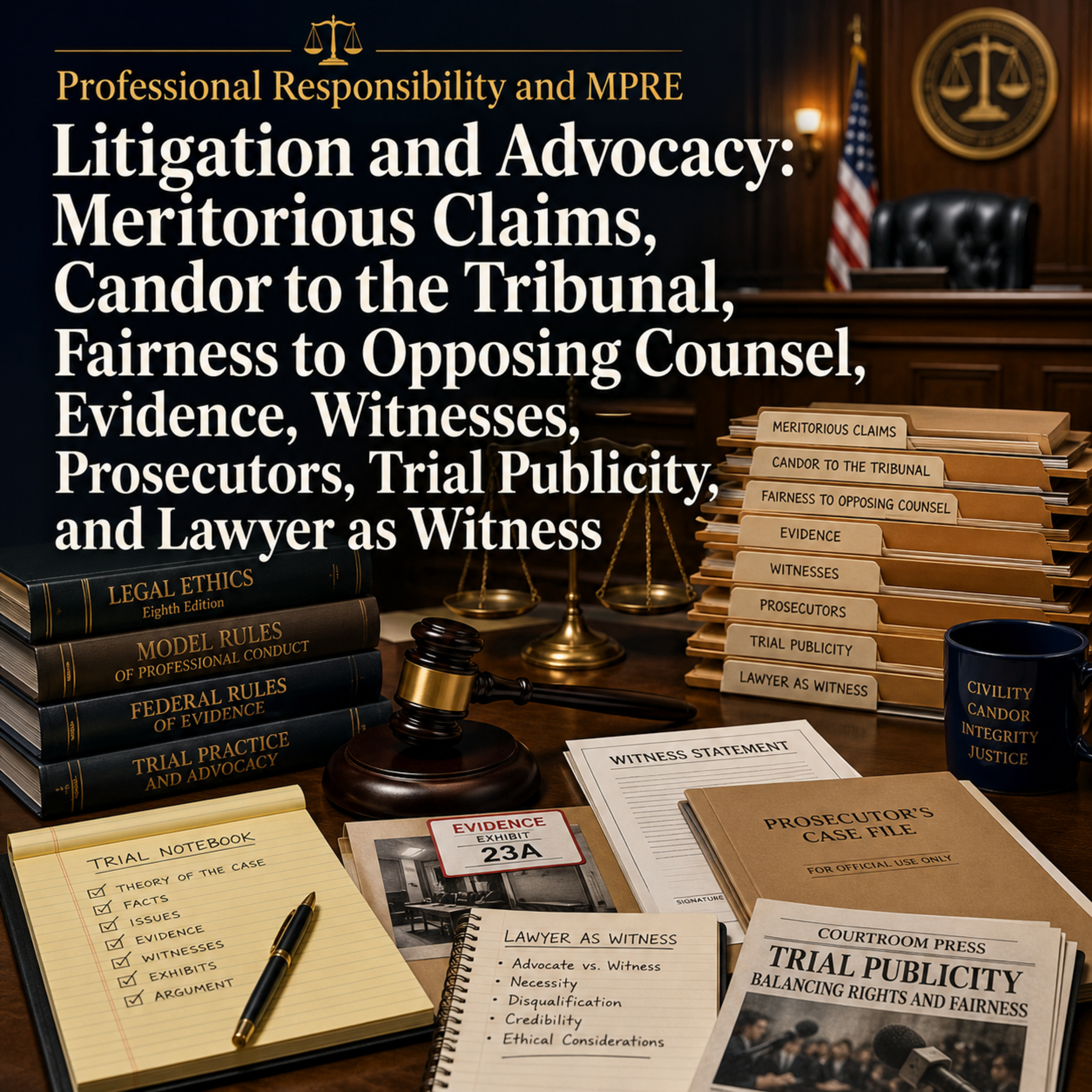
Professional Responsibility & MPRE: Litigation & Advocacy - Meritorious Claims, Candor to the Tribunal, Fairness to Opposing Counsel, Evidence, Witnesses, Prosecutors, Trial Publicity & Lawyer as Witn
About this episode
The episode discusses the ethical boundaries of advocacy in law, focusing on professional responsibility and the importance of candor and fairness in legal proceedings.
» 📘VIEW THE COMPANION STUDY GUIDE📘[💡FREE💡] « ▬▬▬▬▬▬▬▬▬▬ EPISODE SUMMARY Advocacy has boundaries. A lawyer may represent a client forcefully, but must not file frivolous claims, mislead courts, falsify evidence, obstruct discovery, coach witnesses to lie, improperly contact represented persons, or prejudice proceedings through public statements. A lawyer must not bring or defend a proceeding or assert an issue without a nonfrivolous basis in law and fact. Good-faith arguments for changing the law are allowed. Criminal defense lawyers may require the prosecution to prove every element. Candor to the tribunal requires truthful statements of fact and law, correction of prior material false statements, disclosure of controlling adverse legal authority not disclosed by the opponent, and refusal to offer evidence known to be false. If material false evidence has been offered, the lawyer must take reasonable remedial measures, which may include disclosure to the tribunal if necessary. Ex parte proceedings require heightened candor because the opposing party is absent. The lawyer must disclose material facts needed for an informed decision, even if adverse. Fairness to…
Topics covered
- Professional Responsibility
- Litigation
- Advocacy
- Candor to the Tribunal
- Fairness to Opposing Counsel
- Witness Preparation
Keywords
- lawyer ethics
- frivolous claims
- truthful statements
- witness coaching
- trial publicity
- legal authority
- material false evidence
Mentioned in this episode
Organizations: The Law School of America
More episodes of Law School
- July Bar Sprint: MBE Sprint Part One — Civil Procedure, Contracts, Torts, and the Multiple-Choice Method
- July Bar Sprint: The Final Bar Map Score Strategy, Subject Triage, Timing, Rule Compression, and the Last-Week Study System
- Professional Responsibility: Complete MPRE Strategy- Must, May, Must Not; Conflicts Flowcharts; Confidentiality Traps; Litigation Ethics; Judicial Conduct; & Full Professional Responsibility Framework
- Professional Responsibility and MPRE: Money, Property, Advertising, Solicitation, Transactions with Nonclients, Lawyer Roles, Public Duties, and Judicial Conduct
- Professional Responsibility & MPRE: Conflicts of Interest - Current, Former & Prospective Clients, Consent, Business Transactions, Gifts, 3rd-Party Payment, Aggregate Settlements, Imputation, & Screen
- Professional Responsibility and MPRE: Confidentiality, Attorney-Client Privilege, Work Product, Exceptions, Prospective Clients, Former Clients, and Disclosure Judgment
Explore listener stats, chart rankings, contacts and more on the Law School podcast page.