Spatial Transcriptomics Is Changing How We Do Biology: Fei Chen, The Broad Institute
About this episode
Fei Chen discusses how spatial transcriptomics is revolutionizing biology by integrating gene expression with cellular structure.
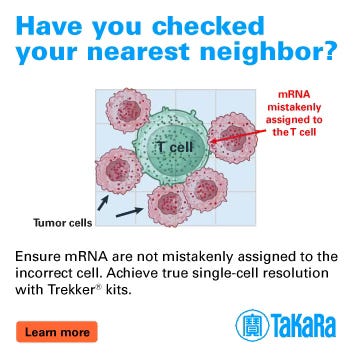
Fei Chen of the Broad Institute describes the original problem simply: genomics gave us powerful inventories of gene expression, while microscopy gave us structure—yet the two lived in separate worlds. “You could either have your structure or you could have gene expression, but you couldn’t have both.” In this conversation, Fei walks us through how Slide-tags—now commercialized as Takara Bio Trekker technology—set out to close that gap. Instead of mapping gene expression onto a grid, his team flipped the problem: barcoding the cells in place, then reading them out with single-cell sequencing. The result is something closer to a GPS system for cells. What this unlocks is not just better maps, but better biology. Better questions. In cancer, Fei describes the discovery of local immune “circuits” that determine whether tumors respond to immunotherapy. And more broadly, spatial data turns tissue itself into a kind of experiment itself. Is this the biology of the future? “The spatial context is a natural experiment that has happened.” Chapters: 0:00 The problem: structure vs gene expression1:36 A GPS for cells8:59 Immune circuits and cancer response20:04 Tissue as experiment26:24 New…
More episodes of Mendelspod Podcast
- Solexa Co-Inventor Shankar Balasubramanian on Six-Base Sequencing and What's Next in Genomics
- The Next Frontier in Biology: Physics? Erdinc Sezgin of the Karolinska Institute
- The Eligible But Under-Tested: Genomic Medicine in 2026 with Damon Hostin, Illumina
- Beyond GLP-1: Why Peptides Are Back at the Center of Drug Discovery with Charlie Johannes and Tomi Sawyer
- From the Archives: Inventor Mark Kokoris Debuts Roche’s New SBX Sequencer
- Why Do Some Animals Live Ten Times Longer? Pursuing the Science of Aging with Steve Austad
Explore listener stats, chart rankings, contacts and more on the Mendelspod Podcast podcast page.