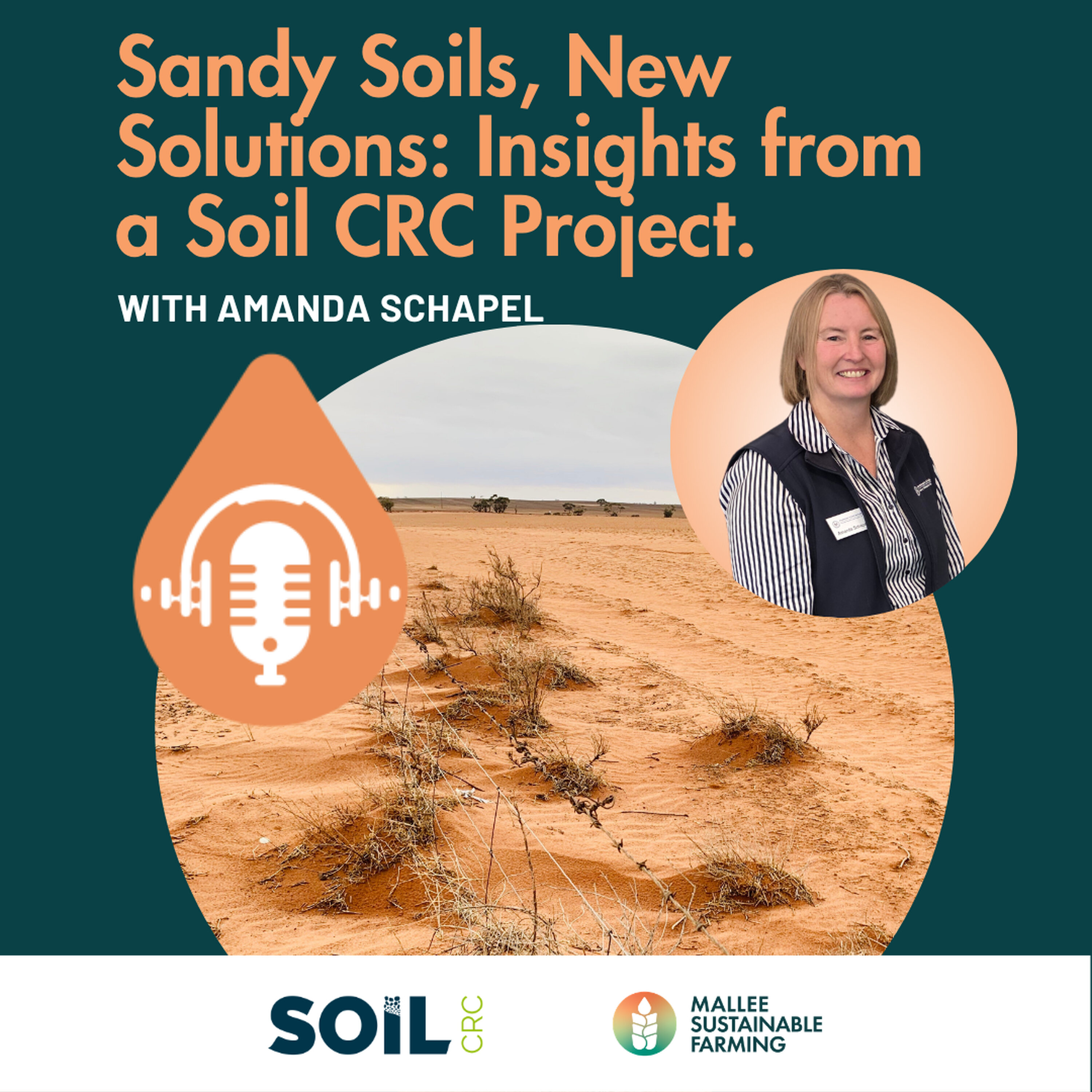
Sandy Soils, New Solutions: Insights from Soil CRC Project
About this episode
Amanda Schapel discusses the Soil CRC Sandy Soil Project and the impact of various amendments on sandy soil productivity.
In this episode of the MSF Farm Talk podcast, PIRSA’s Amanda Schapel shares insights from the long-running, collaborative, Soil CRC Sandy Soil Project. The project is investigating how clay and organic amendments can improve the productivity and resilience of sandy soils through literature reviews, pot trials and long-term multi-site field research. Amanda explains why sandy soils can behave so differently depending on factors such as depth to clay, grain size and rainfall environment, while also outlining the multiple constraints often present in sandy systems, including compaction, acidity, water repellence, and poor nutrient and water-holding capacity. Drawing on a review of 89 projects and 270 treatments, the episode explores how organic amendments can rapidly improve deep sandy soils, although benefits may decline after several years, while subsoil clay provides a slower but more persistent productivity response. Amanda also discusses the performance of novel amendments including bentonite, zeolite and compost products, highlighting the importance of matching amendments to specific soil constraints and balancing long-term benefits with cost-effectiveness. Project page…
People in this episode
Guest: Amanda Schapel
Topics covered
- sandy soils
- soil amendments
- agricultural productivity
- soil research
- environmental resilience
Mentioned in this episode
Organizations: PIRSA, Soil CRC, Cooperative Research Centre for High Performance Soils
Places: Australia
More episodes of MSF Farm Talk Podcast
- From Trial Strips to N Decisions: VRT Forum Insights
- Exploring Crop Rotation and Legume Integration: Year 1 Insights from the Millewa - with Louise Brok
Explore listener stats, chart rankings, contacts and more on the MSF Farm Talk Podcast podcast page.