110. Revisiting The ‘Enola Gay Fiasco’ Today
About this episode
The episode discusses the controversy surrounding the Smithsonian's planned exhibit of the Enola Gay and the pressures that led to its altered presentation.
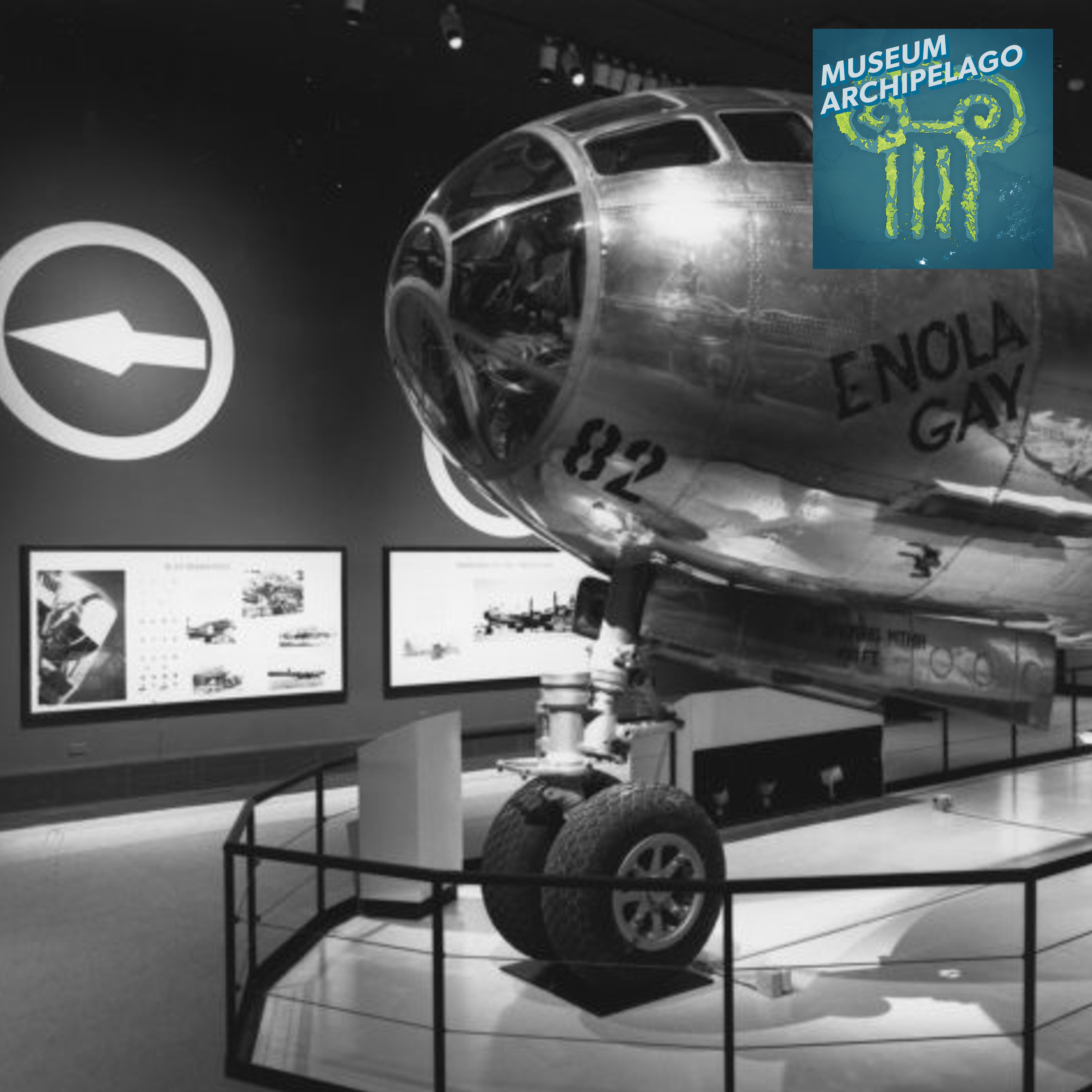
For the 50th anniversary of the end of World War II, the Smithsonian National Air and Space Museum planned to display the Enola Gay , the Boeing B-29 that dropped the atomic bomb on Hiroshima. The plane was restored to be part of a full exhibit, presented alongside context about the atomic bombing's mass civilian casualties. But that exhibit never opened. Instead, after years of script revisions and intense pressure from veterans' groups and Congress, the museum displayed the restored bomber's fuselage with minimal interpretation. The exhibit was primarily dedicated to the technical process of restoring the aircraft; as one visitor noted, "I learned a lot about how to polish aluminum, but I did not learn very much about the decision to drop the atomic bomb." In this episode, historian Gregg Herken, who served as Chairman of the museum's Space History Division during the controversy, recounts how the exhibit went from reckoning with the bomb's full impact to re-enforcing a patriotic narrative. He recalls the specific moments that led up to one of the museum industry's cautionary tales, like when the director agreed to remove evocative artifacts like a schoolgirl's carbonized…
People in this episode
Host: Ian Elsner
Guest: Gregg Herken
Topics covered
- museum exhibit
- World War II
- atomic bomb
- historical narrative
- censorship
- cultural memory
Keywords
- Enola Gay
- atomic bomb
- Smithsonian
- exhibit controversy
- Gregg Herken
- Hiroshima
- censorship
- World War II
Mentioned in this episode
Organizations: Smithsonian National Air and Space Museum, Air Force Association
Books & works: Enola Gay
Places: Hiroshima
More episodes of Museum Archipelago
- 113. World Trade Center Steel in Your Area
- 111. Why Software Hasn't Eaten Museums (Yet)
- 109. The Rise and Fall of Enterprise Square, USA
- 108. The Museum of Utopia and Daily Life
- 107. Crypto and Museums Part 1
- 106. Last Call on 'The Streets of Old Milwaukee'
Explore listener stats, chart rankings, contacts and more on the Museum Archipelago podcast page.