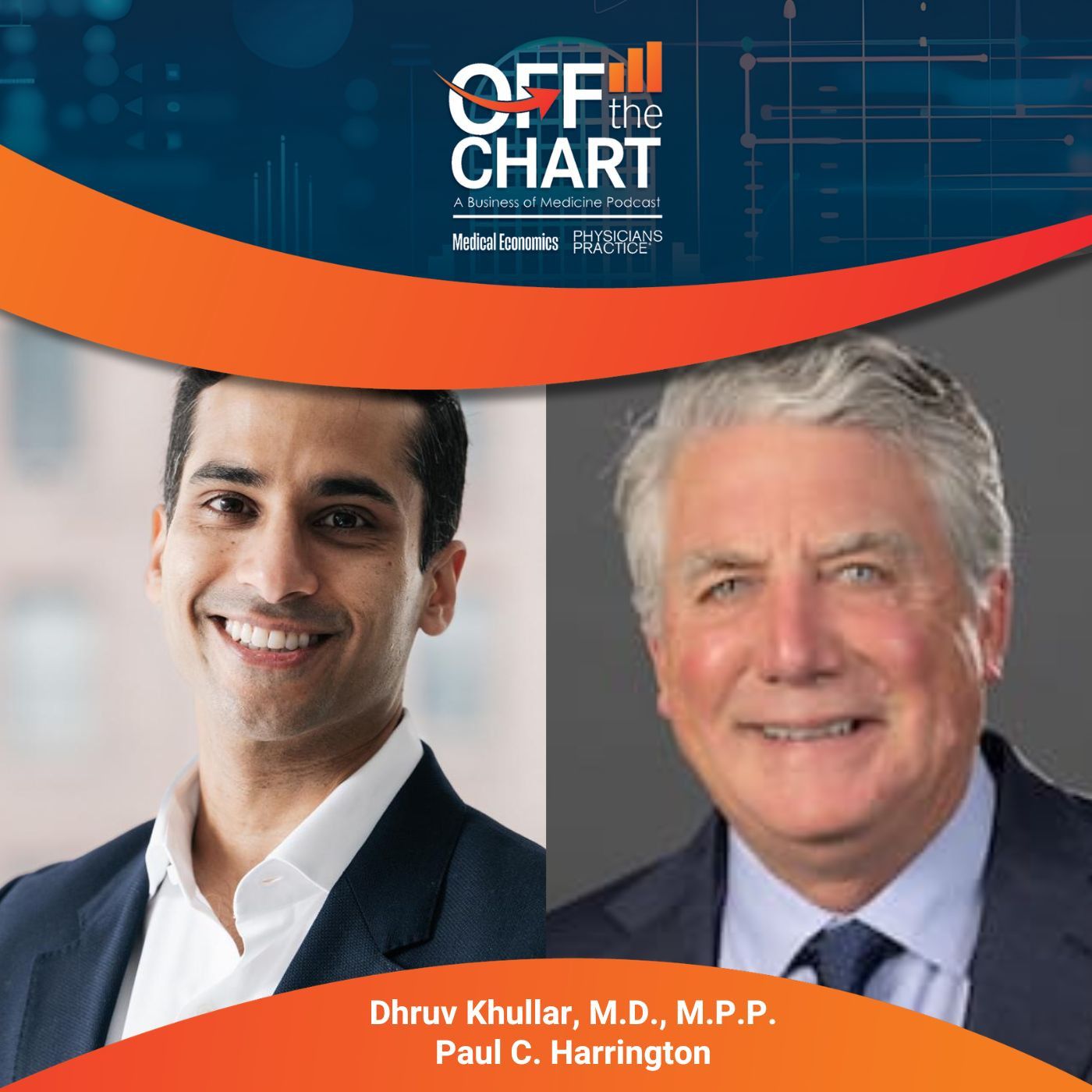
S1 Ep156: Why where you live may matter more than how you're treated, with experts from the Physicians Foundation
About this episode
The episode discusses the impact of social drivers of health on patient outcomes and the challenges faced by clinicians in addressing these needs.
Social drivers of health (SDOH) — food security, housing stability, transportation, utilities access and interpersonal safety — account for roughly 80% of what determines whether a patient stays healthy or gets sick. Yet most of the health care system is still organized around the 20%: treating illness after it arrives. Medical Economics Senior Editor Richard Payerchin speaks with Dhruv Khullar, M.D., M.P.P., a practicing physician and associate professor of health policy and economics at Weill Cornell Medical College who directs the Physicians Foundation Center for the Study of Physician Practice and Leadership, and Paul C. Harrington, former executive vice president of the Vermont Medical Society and a board member of the Physicians Foundation. They discuss why a patient's zip code can predict life expectancy more reliably than the care they receive, why SDOH screening falls short when the community resources to act on it aren't there, and the moral injury clinicians feel when they identify a need they cannot meet. Music Credits: Morning Coffee by Keyframe Audio - stock.adobe.com A Textbook Example by Skip Peck - stock.adobe.com Editor's note: Episode timestamps and transcript…
Sponsors
Copic medical liability insurance
More episodes of Off the Chart: A Business of Medicine Podcast
- S1 Ep158: Cash-only practice, with John C. Cianca, M.D., FAAPMR, president of the American Academy of Physical Medicine and Rehabilitation
- S1 Ep157: From spreadsheets to strategy, with Melinda Mastel, MBA, MS, of the Medical College of Wisconsin
Explore listener stats, chart rankings, contacts and more on the Off the Chart: A Business of Medicine Podcast podcast page.