Off the Chart: A Business of Medicine Podcast
by Medical Economics
Is this your podcast?Insights from recent episode analysis
Audience Interest
Podcast Focus
Publishing Consistency
Platform Reach
Insights are generated by CastFox AI using publicly available data, episode content, and proprietary models.
Most discussed topics
Brands & references
Total monthly reach
Estimated from 1 chart position in 1 market.
By chart position
- 🇰🇪KE · Business#164500 to 3K
- Per-Episode Audience
Est. listeners per new episode within ~30 days
150 to 900🎙 Daily cadence·182 episodes·Last published yesterday - Monthly Reach
Unique listeners across all episodes (30 days)
500 to 3K🇰🇪100% - Active Followers
Loyal subscribers who consistently listen
150 to 900
Market Insights
Platform Distribution
Reach across major podcast platforms, updated hourly
Total Followers
—
Total Plays
—
Total Reviews
—
* Data sourced directly from platform APIs and aggregated hourly across all major podcast directories.
On the show
From 30 epsHosts
Recent guests
Recent episodes
S1 Ep182: The interchangeable physician, with Lawrence Casalino, M.D.
Sep 3, 2026
25m 45s
S1 Ep181: Why physicians are getting sued less and paying more, with The Doctors Company President Robert White
Aug 31, 2026
24m 16s
S1 Ep180: Why private equity can own a hospital and a physician can't, with Gary Price, M.D., of The Physicians Foundation
Aug 27, 2026
35m 01s
S1 Ep179: Vaccine schedules, stocking costs and the back-to-school visit, with AAFP President Sarah Nosal, M.D.
Aug 24, 2026
17m 04s
S1 Ep178: A year after the prior authorization pledge, what changed? with Colin Banas, M.D., of DrFirst
Aug 20, 2026
25m 06s
Social Links & Contact
Official channels & resources
Official Website
Login
RSS Feed
Login
| Date | Episode | Topics | Guests | Brands | Places | Keywords | Sponsor | Length | |
|---|---|---|---|---|---|---|---|---|---|
| 9/3/26 | 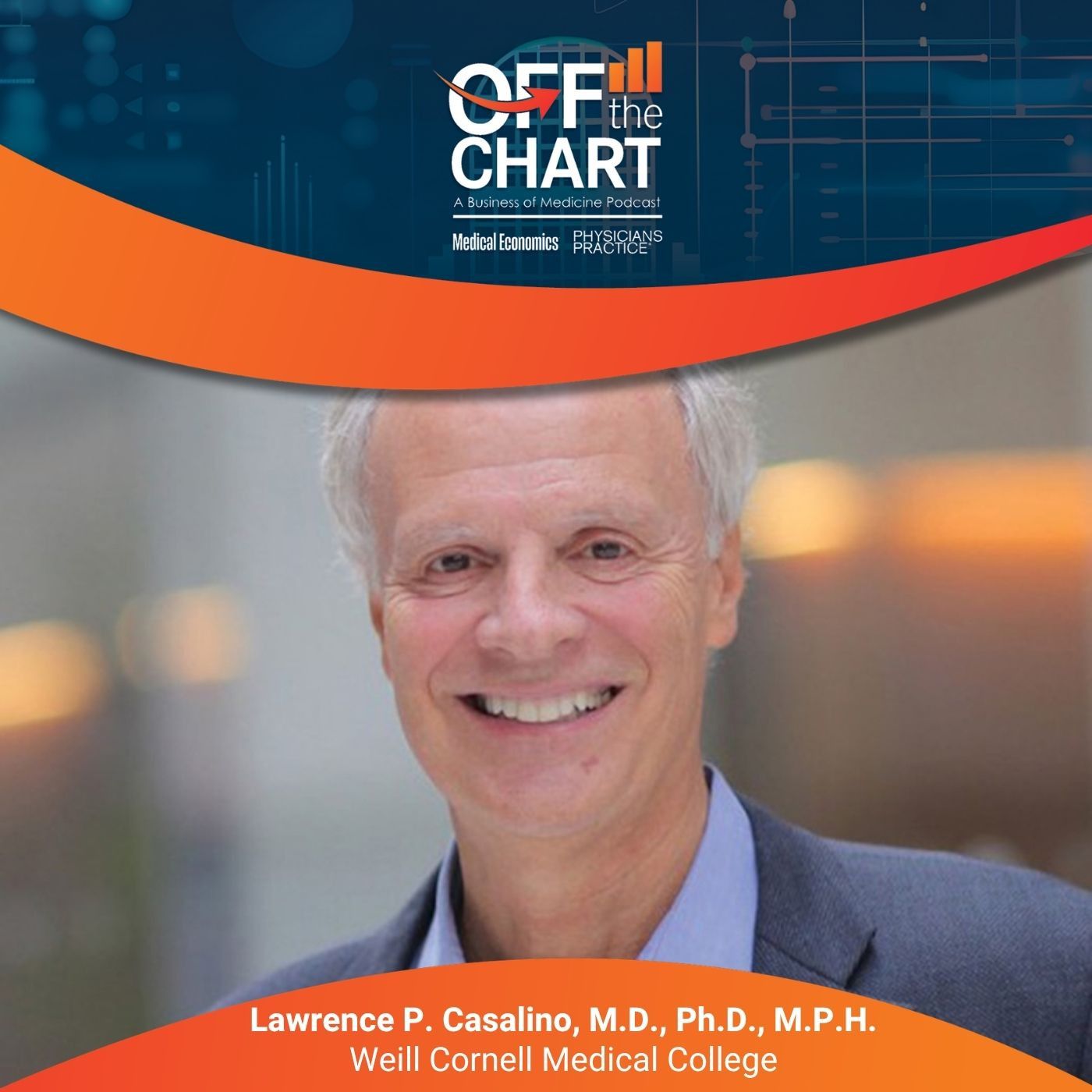 S1 Ep182: The interchangeable physician, with Lawrence Casalino, M.D. | Lawrence Casalino, M.D., Ph.D., M.P.H., practiced primary care for 20 years before spending six on the Medicare Payment Advisory Commission. In his recent New England Journal of Medicine essay, "Physicians, Corporatization, and the Unmeasured Quality of Care," he makes an argument most physicians will recognize from the inside: the accuracy and timeliness of a diagnosis, the trust built over years with a patient, the judgment behind sending someone to exactly the right specialist. None of it can be measured at scale, so none of it gets rewarded. Casalino talks with Medical Economics Senior Editor Richard Payerchin about the five forces he sees pushing physicians out of independent practice, what Medicare could realistically do for primary care, and his research finding that physicians score measurably higher on altruism than the general population. He also explains why he believes large organizations can't help but treat the people inside them as interchangeable, and the one question he thinks every policymaker should ask before signing off on a change.Read Dr. Casalino's essay in NEJM: https://www.nejm.org/doi/full/10.1056/NEJMp2415488Music Credits:Rooftops by Buurd - stock.adobe.comA Textbook Example by Skip Peck - stock.adobe.comEditor's note: Episode timestamps and transcript produced using artificial intelligence (AI) tools.0:00 – 0:27 | Cold open Casalino on what happens when physicians start to feel interchangeable. 0:27 – 1:41 | Introduction Austin Littrell introduces the episode and the guest. 1:41 – 1:59 | From the United Farm Workers to medicine Payerchin opens with Casalino's years as a community organizer before medical school. 1:59 – 3:29 | Why he chose medicine Wanting to help people directly and see the result, and why he still calls 20 years in practice an honor. 3:29 – 7:30 | Five forces squeezing independent practice No negotiating leverage with payers, an administrative burden that barely existed in 1980, EHR purchasing and support, policy uncertainty, and what physicians coming out of training now expect from their lives. 7:30 – 12:29 | What would actually help primary care Casalino on administrative relief and higher payment rates, and why he doubts independent practices will ever have the leverage to get them. 12:29 – 13:03 | The referral you can trust A car mechanic analogy for what patients lose as practices consolidate. 13:03 – 13:55 | P2 Management Minute Keith Reynolds 13:55 – 14:49 | The measurement problem Payerchin raises Casalino's New England Journal of Medicine essay and the dimensions of quality that can't be captured at scale. 14:49 – 17:00 | Inside MedPAC Casalino on the commission's bipartisan standing and how long it can take Congress to act on what it recommends. 17:00 – 17:48 | Timely and accurate diagnosis Payerchin returns to the question: how should unmeasurable quality factor into physician performance and pay? 17:48 – 22:35 | Professionalism, altruism and widgets Casalino's research finding physicians more altruistic on average than the general population, and what corporatization does to the professionalism the system quietly depends on. 22:35 – 24:11 | A test for policymakers Will this policy make physicians and staff feel more like widgets, or less? 24:11 – End | Outro | 25m 45s | ||||||
| 8/31/26 | 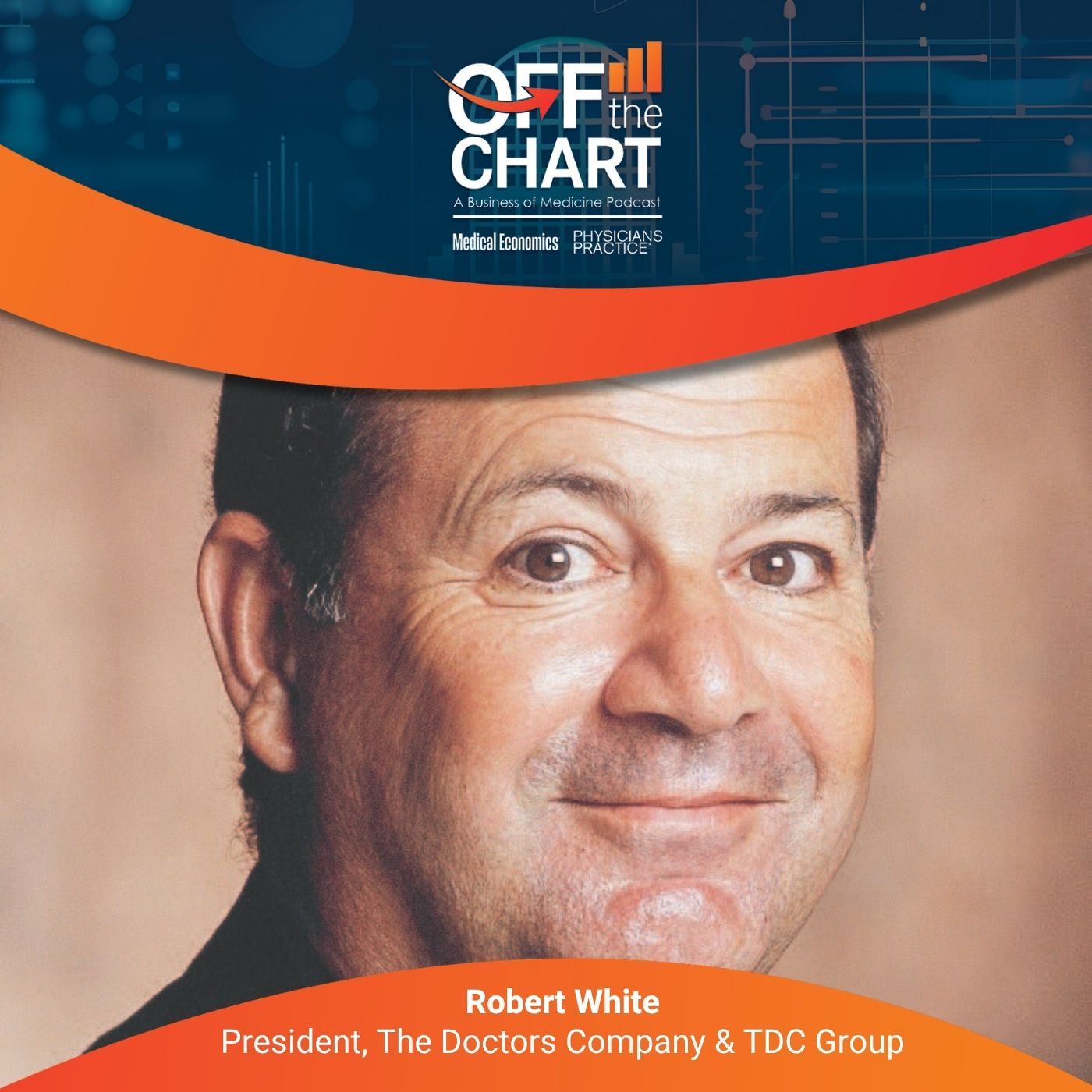 S1 Ep181: Why physicians are getting sued less and paying more, with The Doctors Company President Robert White | One in 21 physicians was sued last year, the lowest rate since 1973. The average payment made on behalf of a physician and reported to the National Practitioner Data Bank was $514,000, the highest on record. Both numbers describe the same malpractice market.Medical Economics Managing Editor Todd Shryock sat down with Robert White, president of The Doctors Company and TDC Group.White explains why falling claims frequency has quietly absorbed years of pressure from rising severity, and why that cushion is running out. He walks through the arithmetic of nuclear verdicts, awards above $10 million that now land somewhere in the country roughly once a week, and how a single plaintiff's verdict resets the settlement value of every comparable case that never reaches a courtroom. He also makes the case that artificial intelligence in diagnosis and treatment is the emerging exposure worth watching, and offers a blunt piece of advice about how physicians should be choosing a carrier.Music Credits:Healing Breeze by Cephas - stock.adobe.comA Textbook Example by Skip Peck - stock.adobe.comEditor's note: Episode timestamps and transcript produced using artificial intelligence (AI) tools.0:00 – 0:29 | Cold open. White on the two malpractice numbers moving in opposite directions.0:29 – 1:33 | Introduction. Austin Littrell introduces the episode and the guest.1:33 – 1:52 | Meet Robert White. Shryock opens on current trends in malpractice.1:52 – 3:11 | Claims frequency at a 53-year low. One in 21 physicians was sued in 2025, down from one in five in 1999. White credits the patient safety push and tort reform.3:11 – 4:29 | Severity has never been higher. The average payment reported on behalf of physicians reached $514,000 per closed report in 2025, up about 20% since 2022, and carriers won't know whether today's rate is correct for three to five years.4:29 – 5:17 | Early warning signs. Severity trending up roughly 5% a year, and bellwether states showing increased claims frequency in 2026.5:17 – 6:35 | What a nuclear verdict is. Any award above $10 million, and the 2009 book that gave rise to reptile theory.6:35 – 8:24 | Why one loss sets the price of every settlement. Only 7% of malpractice cases reach trial and the defense wins six of every seven, but the seventh becomes the yardstick.8:24 – 9:49 | Where nuclear verdicts are landing. Georgia recorded 11 in 2025 and 33 across four years. Illinois leads since 2015 with 58, followed by Georgia, New York, Florida, Pennsylvania and California.9:49 – 11:10 | The consent policy. Why carriers think twice about trying any case, and why physicians rarely withhold permission to settle once they have seen the verdicts.11:10 – 12:44 | Thermonuclear verdicts. Awards above $100 million, three already by April 2026, and the largest medical liability award on record: $963 million in Utah, decided by a judge rather than a jury.12:44 – 16:47 | What it all means for rates. Falling frequency masked the pressure from severity for years. With frequency flat, White expects increases of 1% to 3% nationally and warns that plaintiffs' lawyers are not spending this effort for nothing.16:47 – 17:39 | P2 Management Minute. Keith Reynolds shares practice management tips and invites listeners to submit their own workflow ideas.17:39 – 18:43 | The specialties carrying the most risk. Cardiovascular, orthopedic and general surgery, plus obstetrics.18:43 – 20:31 | Artificial intelligence as the next liability frontier. AI is already embedded in diagnostic imaging, and White explains why the legal system's lag is the real exposure.20:31 – 22:48 | The question to ask before choosing a carrier. The carrier's name never reaches the data bank. The physician's does.22:48 – End | Closing thoughts and outro. Shryock thanks White and Littrell wraps the episode. | 24m 16s | ||||||
| 8/27/26 | 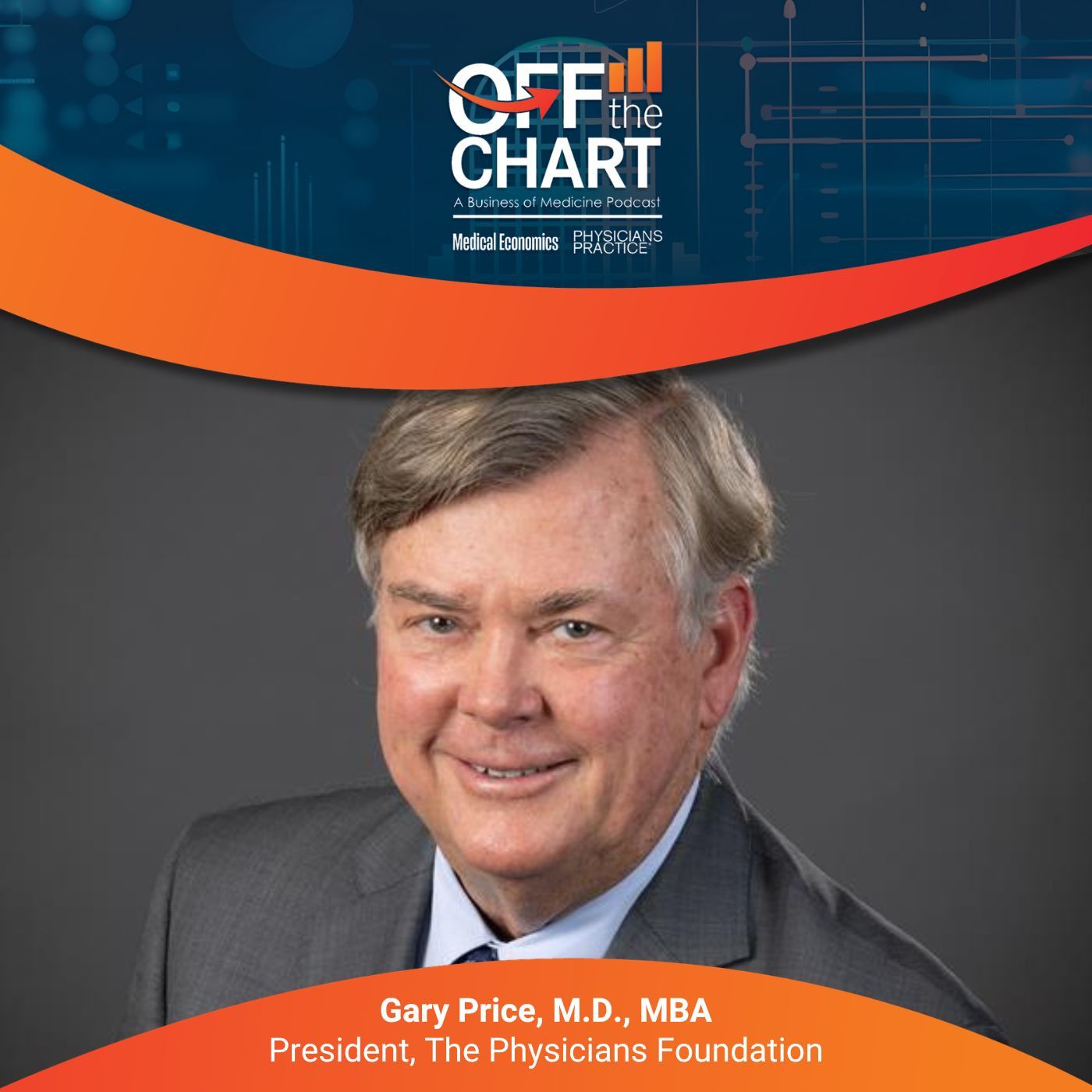 S1 Ep180: Why private equity can own a hospital and a physician can't, with Gary Price, M.D., of The Physicians Foundation | Physicians have been effectively barred from owning hospitals since 2010, when a provision of the Affordable Care Act finished what the Stark law started. Gary Price, M.D., MBA, president of The Physicians Foundation, argues the restriction was a mistake from the beginning, built on a reading of the Dartmouth Atlas that researchers corrected 25 years ago and policymakers never revisited. He talks with Medical Economics Senior Editor Richard Payerchin about what the research actually shows on cost and quality at physician-owned hospitals, why markets that have them consolidated less than the rest of the country, and how much of the burnout physicians describe comes down to being held responsible for care they no longer control. Price also walks through the opening CMS left this spring, when the agency asked whether physician-owned hospitals should be allowed to opt into its Transforming Episode Accountability Model.Music Credits:Warm Hands by Cephas - stock.adobe.comA Textbook Example by Skip Peck - stock.adobe.comEditor's note: Episode timestamps and transcript produced using artificial intelligence (AI) tools.0:00 – 0:16 | Cold open. Price on why the Mayo brothers could not have founded the Mayo Clinic under current law. 0:16 – 1:35 | Introduction. Austin Littrell introduces the episode and the guest. 1:35 – 2:34 | Meet Gary Price, M.D., MBA. Payerchin asks what the Affordable Care Act did to physician ownership of hospitals. 2:34 – 4:24 | What the law actually does. The Stark law came first, the ACA finished the job, and existing physician-owned hospitals were grandfathered in but barred from adding beds or services. 4:24 – 5:52 | The CMS request for information. Price explains the question about letting existing physician-owned hospitals opt into a value-based model built on episodes of care, and puts their share at 5% to 6% of hospitals. 5:52 – 6:56 | What policymakers feared in 2010. Cherry picking, lemon dropping and the assumption that physician-owned hospitals would take only the healthiest, cheapest patients. 6:56 – 8:22 | What the research found instead. A 2023 study co-funded by The Physicians Foundation and the Physician Advocacy Institute found almost no difference in patient acuity or social status, and Medicare costs 7% to 15% lower. 8:22 – 9:05 | "The most expensive piece of equipment in the hospital". How the policy world came to treat the physician's pen as the source of cost variation. 9:05 – 10:45 | Where that idea came from. Price traces it to a reading of the Dartmouth Atlas around 2000, and to a researcher whose zip code analysis found income, not physician behavior, tracked with cost. 10:45 – 11:57 | A clarification on cost. Payerchin asks what the income finding implied about billing. Price says the figures were Medicare costs, not out-of-pocket. 11:57 – 14:11 | Consolidation, and the burnout it feeds. Markets with physician-owned hospitals consolidated less. Price connects the loss of physician control to the frustration doctors describe daily. 14:11 – 15:02 | P2 Management Minute. Keith Reynolds shares practice management tips and invites listeners to submit their own workflow ideas. 15:02 – 16:34 | Does the request for information signal a real shift? Price calls it the first opening in 15 years, but notes the same 2010-era assumptions are written into the questions. 16:34 – 17:42 | The practical problems. Participating hospitals might need to add beds they are legally barred from adding, and the model ends in 2030. 17:42 – 19:23 | Legislation, and the case for physician-led management. Several bills sit on Capitol Hill with no action, and physician-owned hospitals charge cash-paying patients 47% less. 19:23 – 21:22 | Who is supposed to own the hospitals? Certificate-of-need laws, the corporate practice of medicine, and Price's observation that private equity investors face no equivalent bar. 21:22 – 23:46 | What ownership looks like at the bedside. The test a physician orders, the administrator who says it is not on the approved list, and where the core frustration begins. 23:46 – 24:41 | A lesson from the 1970s. The question Price asked residents before approving a test. 24:41 – 26:14 | Does overutilization still happen? Price says yes, driven by financial incentives, and argues the real fraud is large-scale rather than bedside. 26:14 – 29:07 | Connecticut as a case study. Two systems control most of the care in the state. Price describes being told an insurer would negotiate only with hospitals. 29:07 – 31:14 | Why bigger is not cheaper. Price argues health care has no economies of scale and points to administrator growth far outpacing clinicians. 31:14 – 32:57 | "It mystifies me". Why physician participation is treated as intrinsically bad in health care and nowhere else in the economy. 32:57 – 33:38 | Closing thoughts. 33:38 – End | Outro. | 35m 01s | ||||||
| 8/24/26 | 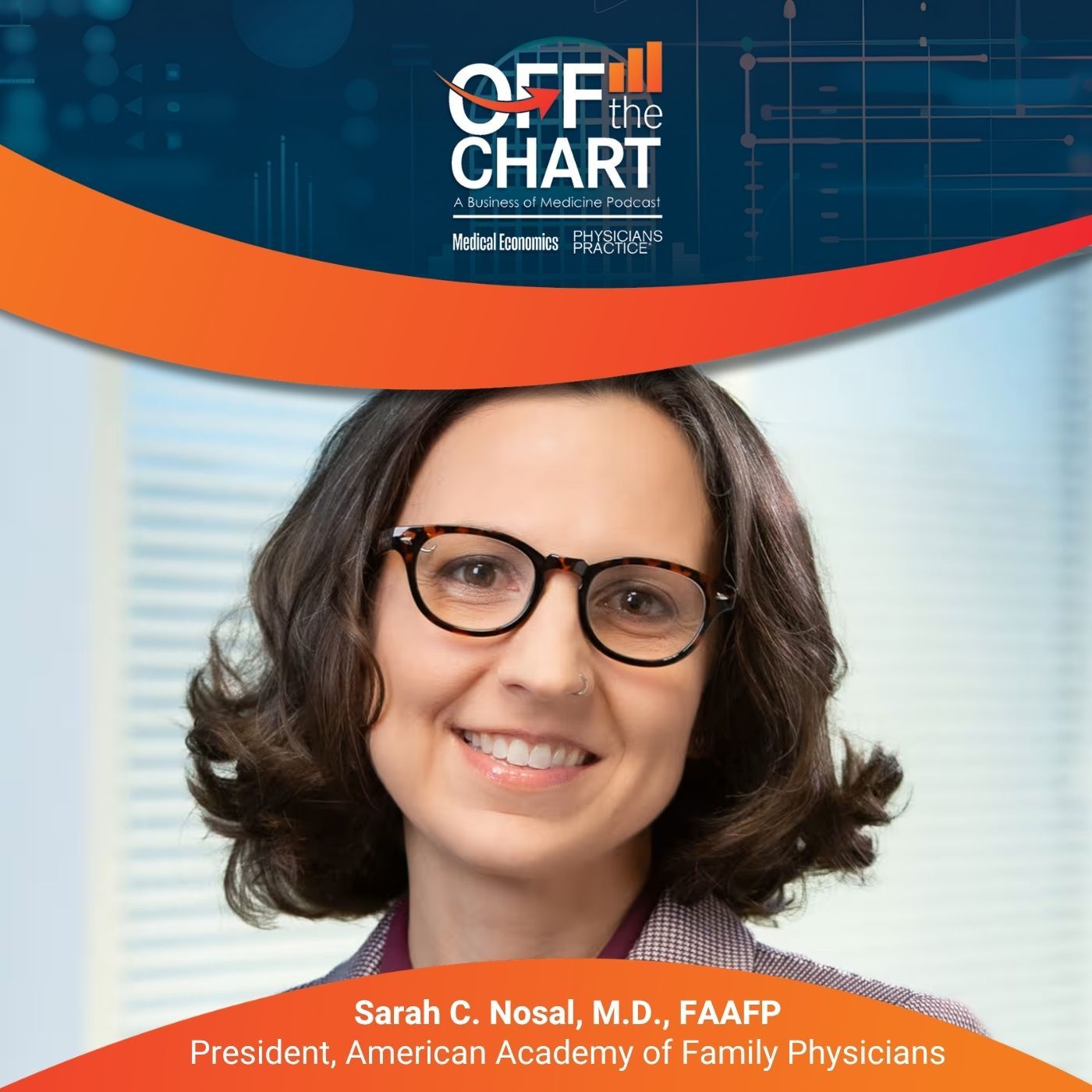 S1 Ep179: Vaccine schedules, stocking costs and the back-to-school visit, with AAFP President Sarah Nosal, M.D. | Three Current Procedural Terminology codes for immunization counseling on days when no vaccine is administered, 90482 through 90484, took effect Jan. 1, 2026. They were built to capture the time a physician spends on a conversation that ends without a shot. CMS does not pay for them, and most private payers do not either.Medical Economics Associate Editor Austin Littrell sat down with Sarah C. Nosal, M.D., FAAFP, president of the American Academy of Family Physicians and a family physician who has practiced in the South Bronx for nearly two decades.Nosal points family physicians to the AAFP's 2026 immunization schedules, developed with input from other medical organizations and the Vaccine Integrity Project. In this episode, she explains why most childhood doses are still given in a primary care office, what a practice gives up when it stops stocking and starts sending patients to a pharmacy, and how she handles a visit that opens with exemption paperwork instead of a question. Read the full written Q&A with Nosal.This conversation was recorded before the Aug. 10 executive order calling for universal childhood vaccine recommendations to cover 11 diseases rather than 18. Nosal does not address the order here.Music Credits:Coffee Shop Sketches by Buurd - stock.adobe.comA Textbook Example by Skip Peck - stock.adobe.comEditor's note: Episode timestamps and transcript produced using artificial intelligence (AI) tools.0:00 – 0:20 | Cold open. Nosal on the one thing every parent walking into the exam room has in common, whether they came for a shot or an exemption.0:20 – 1:49 | Introduction. Austin Littrell introduces the episode and the guest.1:49 – 2:23 | Which schedule to work from. Nosal points family physicians to the AAFP's recommendations, developed with other major medical organizations and the Vaccine Integrity Project.2:23 – 3:25 | What shared decision-making actually means. More vaccines sit in that category than a year ago. Nosal argues it describes what family physicians already do at every visit: answer the questions, offer the information the patient did not know to ask for, and let them decide.3:25 – 5:15 | Does stocking vaccines still pencil out. Vaccines are expensive and reimbursement is the common complaint, but most childhood doses are still given in a family physician's office. Large networks with capital and in-house pharmacies have squeezed the smaller practices.5:15 – 6:11 | The counseling codes nobody pays for. Practices can document the work and use the codes. CMS does not reimburse them, most private payers do not either, and the AAFP is still advocating.6:11 – 7:30 | When a family brings exemption paperwork. Nosal's approach: acknowledge the form, ask what they are thinking, and partner instead of argue.7:30 – 9:13 | Where the AAFP lands on staggered schedules. The full regimen at each scheduled appointment. Nosal will not turn a family away for declining, but says most parents choose the traditional schedule once they have had the conversation.9:13 – 10:04 | P2 Management Minute. Keith Reynolds shares practice management tips and invites listeners to submit their own workflow ideas.10:04 – 11:52 | What actually moves a parent. Setting the expectation months ahead rather than at the visit, then walking a family through the specific worry until they talk themselves out of it.11:52 – 13:18 | Longitudinal relationships under pressure. Consolidation, panel size and short visits are eroding the model. Nosal describes working around it in an under-resourced community by treating the whole family as the unit of care.13:18 – 14:49 | What a practice loses at the pharmacy counter. Pharmacies often will not vaccinate infants or children, registry reporting is inconsistent from state to state, and patients end up with records nobody can reconcile.14:49 – 15:56 | Why she does not say "hesitancy". Nosal closes on parents who are not hesitant so much as working from information that does not line up.15:56 – 17:04 | Closing thoughts and outro. Littrell thanks Nosal and wraps the episode. | 17m 04s | ||||||
| 8/20/26 | 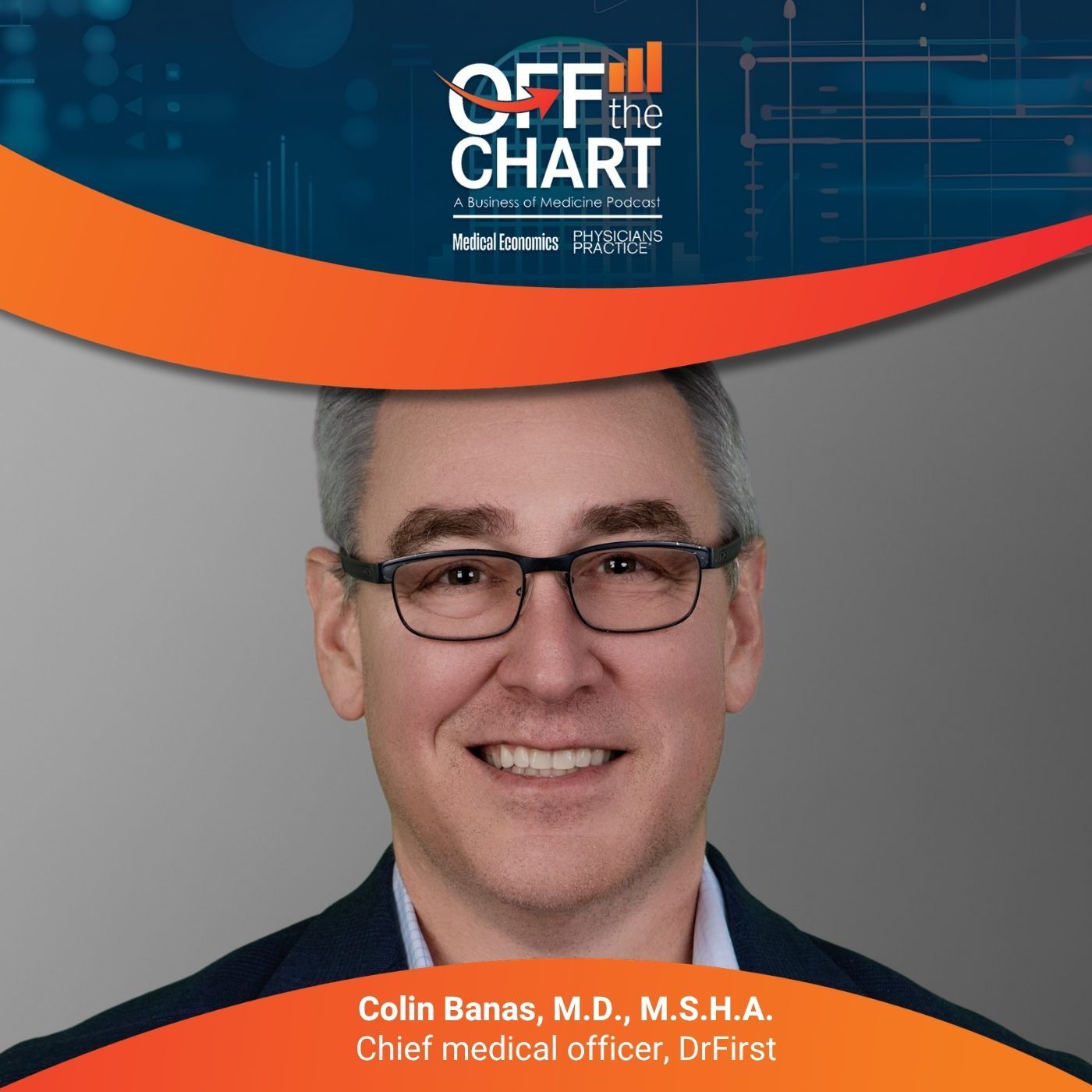 S1 Ep178: A year after the prior authorization pledge, what changed? with Colin Banas, M.D., of DrFirst | In June 2025, dozens of health insurers pledged six fixes to prior authorization. A year later, the AMA found that just 24% of physicians say denials are consistently reviewed by an appropriately qualified clinician, and Colin Banas, M.D., M.S.H.A., chief medical officer of DrFirst, says the process is as bad as ever.Physicians Practice Managing Editor Keith Reynolds sat down with Banas to go through the pledge commitment by commitment and to look ahead to Jan. 1, 2027, when the CMS Interoperability and Prior Authorization final rule stops asking payers to cooperate and starts requiring it. Banas explains what has to be built by then, where he expects the deadline to break down and the two things a practice can do this month to be ready.Music Credits:Sky Drifter by Cephas - stock.adobe.comA Textbook Example by Skip Peck - stock.adobe.comEditor's note: Episode timestamps and transcript produced using artificial intelligence (AI) tools.0:00 – 0:10 | Cold open. Banas previews the episode's central worry: that digitizing prior authorization may not fix a process that was broken by design.0:10 – 1:14 | Introduction. Austin Littrell introduces the episode and the guest.1:14 – 1:32 | Meet Colin Banas. Keith Reynolds introduces DrFirst's chief medical officer and returns to his skepticism from a year ago.1:32 – 2:56 | Who's watching the watchmen? Banas says he feels vindicated, and explains why: almost all the evidence that the pledge is working comes from the insurers who made it, with no external validation.2:56 – 4:57 | The six pillars. What insurers actually committed to, from qualified clinical review of appeals to standardized electronic prior authorization and real-time approvals.4:57 – 8:50 | What actually got delivered. Banas goes pillar by pillar. Only 24% of physicians report seeing specialty-matched review, the reduction claims are self-reported, and two of the six commitments were federal mandates already in motion. "It feels like taking credit for something that you were going to have to do anyway."8:50 – 11:24 | "It's as bad as ever." Prior authorization friction has passed EHR friction as physicians' leading administrative complaint. Rooms with fax machines, clinical teams running six browsers for six payers, and what Banas calls a non-unified, wasteful experience.11:24 – 13:32 | What has to be built by 2027. The four APIs every player in the ecosystem needs, and why the medical benefit and the prescription benefit are on separate tracks.13:32 – 14:37 | P2 Management Minute. Keith Reynolds shares practice management tips and invites listeners to submit their own workflow ideas.14:37 – 16:56 | The retrospective prior authorization. Why finding out at the pharmacy counter is "almost insanity," why the best prior authorization is the one that never happens, and why Banas wants the process as transparent as a pizza tracker.16:56 – 18:41 | Where the deadline breaks down. Banas points at payers and vendors first and enforcement second, drawing the parallel to the early years of the information blocking rule.18:41 – 19:33 | If the pipes get built and nothing changes. What persistent delays would prove about how the whole system is incentivized.19:33 – 21:48 | Credit where it's due. Activated patients, payers expanding gold carding, and why taking 80% of the work off a practice's plate still counts as meaningful progress.21:48 – 23:15 | Two things to do this month. Get a straight compliance answer from your EHR or e-prescribing vendor, and start tracking approvals, denials and reversals now so you have a baseline to measure against.23:15 – 24:46 | Closing thoughts and outro. Banas asks to do it again in six months and ends on a positive note. Littrell wraps the episode. | 25m 06s | ||||||
| 8/17/26 | 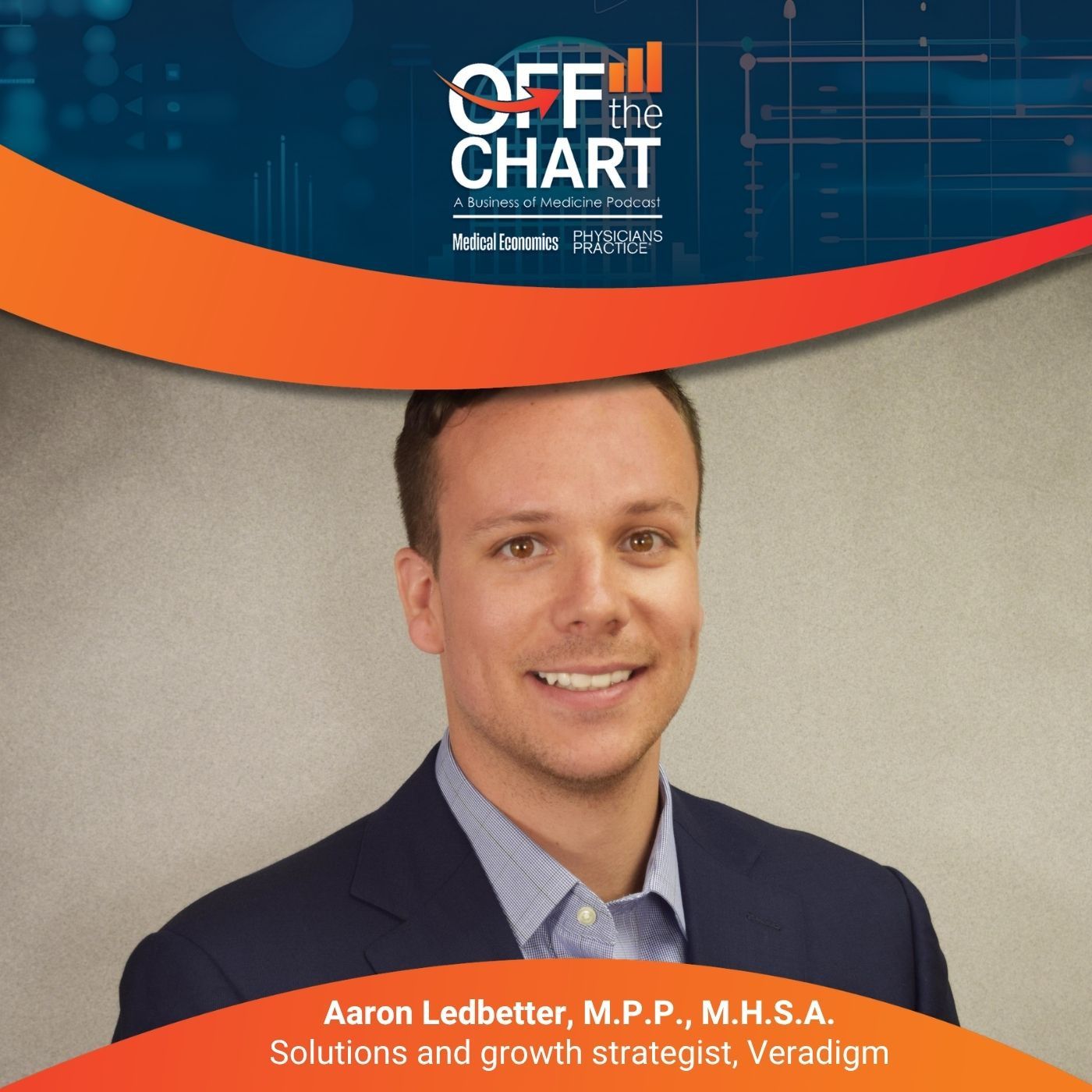 S1 Ep177: What's really keeping practices independent, with Aaron Ledbetter of Veradigm | Independent practices know technology is what keeps them independent. They just don't trust the technology they have. Veradigm surveyed 360 leaders at independent ambulatory practices, including 210 physicians, and found 79% call technology essential to staying independent while only 64% are confident their current tools can deliver. Aaron Ledbetter, solutions and growth strategist at Veradigm, joins the show to explain what sits inside that gap: denied claims that take one to two weeks to surface, payer contracts multiplying faster than the staff to manage them and a labor market where physicians are the hardest position to both recruit and retain. He also makes the case that the electronic health record is about to stop being a system of record and start being a system of work.Medical Economics and Veradigm are hosting a live virtual event on the same subject, "The State of the Independent Practice in 2026," on Wednesday, Aug. 26 at 2 p.m. EDT: https://globalmeet.webcasts.com/starthere.jsp?ei=1770655&tp_key=bf8dd29613&sti=mjhpopup&utm_source=mkt_layer&utm_medium=popup&utm_campaign=ME+State+of+Independent+Practice+8.26&utm_content=news%7Ctopics%2Ftechnology%7Ctopics%2Findustry-trends%7Ctopics%2Fvalue-based-care%7Ctopics%2Fpractice-managementMusic Credits:Sky Drifter by Cephas - stock.adobe.comA Textbook Example by Skip Peck - stock.adobe.comEditor's note: Episode timestamps and transcript produced using artificial intelligence (AI) tools.0:00 – 0:32 | Cold open. Ledbetter previews the episode's central claim: the electronic health record is about to stop recording what happened and start doing the work.0:32 – 1:33 | Introduction. Austin Littrell introduces the episode, the guest and the Aug. 26 Medical Economics and Veradigm virtual event.1:33 – 2:27 | Meet Aaron Ledbetter. Ledbetter describes Veradigm's clinical and revenue cycle work with independent practices, and his own path through value-based care consulting in Washington, D.C., direct work with CMS and CMMI on model design and payer contract negotiation for roughly 1,600 clinicians at a New England ACO.2:27 – 4:16 | The confidence gap. Seventy-nine percent of practice leaders call technology essential to staying independent; 64% trust the tools they have. Ledbetter attributes the gap to tools aging out mid-adoption, an arms race with payer technology and the administrative weight of a growing book of payer contracts.4:16 – 5:52 | Why practices walk away from acquisition talks. Twenty-six percent of practices surveyed reached serious acquisition negotiations before deciding to stay independent. Ledbetter says strain gets them to the table, whether administrative, operational or financial, and what pulls them back is the belief they can still solve it with better tools.5:52 – 7:06 | Why a denial takes two weeks to surface. Ledbetter calls it a symptom of a lagging operating model, with detection, root cause analysis and resolution scattered across different people and different systems. Fifty-eight percent of practices run a hybrid revenue cycle split between internal staff and outside vendors.7:06 – 8:17 | Denial drivers across the whole revenue cycle. Eligibility errors, missing data and coding mismatches all trace back to information that wasn't captured, was captured incorrectly or didn't surface early enough. Ledbetter argues against fixing one stage in isolation.8:17 – 9:08 | P2 Management Minute. Keith Reynolds shares practice management tactics and invites listeners to submit their own.9:08 – 10:56 | Scale doesn't insulate. Eighty-two percent of practices reported increased financial pressure and 60% called that increase significant. Larger practices feel it as volatility driven by payer complexity, solo practices feel it as a staffing problem, and Ledbetter argues both are expressions of a shrinking margin for error.10:56 – 12:31 | What's different about AI this time. Ledbetter grants that physicians are right to be skeptical and names app fatigue as a real problem, then makes the case that ambient documentation and background automation of prior authorization, reporting and denial follow-up move the electronic health record from a system of record to a system of work.12:31 – 14:03 | The administrative barrier to value-based care. Nearly half of respondents named administrative requirements the top barrier to value-based care participation, ahead of clinical complexity and financial risk. Drawing on his ACO contracting experience, Ledbetter describes tracking the differences between arrangements as work that takes a small army, and argues technology should automate quality measure tracking and surface care gaps before the visit.14:03 – 15:34 | Automation as a recruiting advantage. Physicians ranked hardest to both recruit and retain. Independent practices can't match a guaranteed employed paycheck, but Ledbetter argues automating documentation, denials and prior authorization buys the work-life balance that decides where a physician lands.15:34 – 17:30 | Running independence as an operating model. For practices with little or no administrative staff, Ledbetter says the answer isn't hiring but choosing technology that surfaces the right signals in days instead of months. He also expects more independent practice associations banding together for leverage with vendors and payers.17:30 – 19:02 | The inflection point. Health care has spent years throwing people at manual problems and adding complexity in the process. Ledbetter's closing case is that this is the first moment technology can look at the entire system of work at once.19:02 – [runtime] | Closing thoughts and outro. Littrell thanks Ledbetter, points listeners to the full Q&A and the report, and reminds the audience about the Aug. 26 virtual event. | 20m 45s | ||||||
| 8/13/26 | 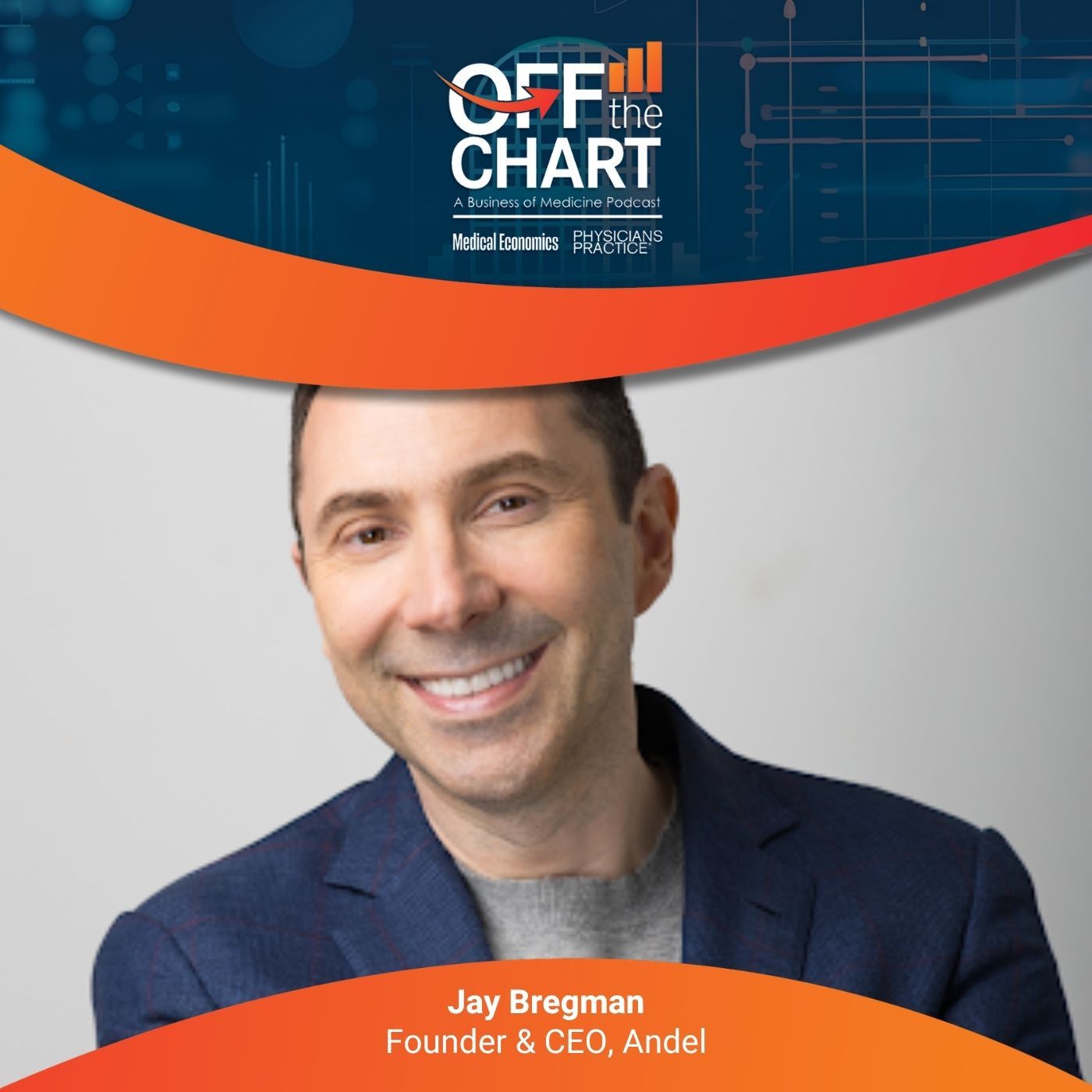 S1 Ep176: Cutting the PBM out of your patient's GLP-1, with Jay Bregman of Andel | GLP-1s broke the traditional pharmacy benefit, and a growing number of employers are responding by buying brand drugs straight from the manufacturer and cutting the insurer and pharmacy benefit manager out of the transaction entirely. Jay Bregman, founder and CEO of Andel, joins Medical Economics Associate Editor Austin Littrell to explain how the model works from the prescriber's side: the script still starts with the patient's own physician, still travels over Surescripts and still reports back into the chart. What changes is everything after that, including a fixed employer contribution in place of a prior authorization. Bregman also addresses the part that matters clinically, which is what happens to a patient's negotiated price when they leave the job or the employer stops contributing, and where a benefit built on employment leaves the patients it doesn't cover.Music Credits:Soft Morning by Cephas - stock.adobe.comA Textbook Example by Skip Peck - stock.adobe.comEditor's note: Episode timestamps and transcript produced using artificial intelligence (AI) tools.0:00 – 0:31 | Cold open Bregman on why coverage on paper rarely means access in practice, and why even an approval may not survive the next plan year.0:31 – 1:40 | Introduction Austin Littrell introduces the episode and Jay Bregman, and frames direct-to-employer purchasing as one of several channels now routing around the pharmacy benefit.1:40 – 2:06 | Meet Jay Bregman Bregman describes Andel as a cooperative marketplace connecting plans, drug manufacturers and members on a single network.2:06 – 3:37 | What direct-to-employer purchasing actually is Andel acquires rights to brand drugs from the manufacturer at a discount, which Bregman says it earns by removing utilization management, prior authorization, formularies and rebates. Employers pay a cash contribution, from $100 per fill up to the full cost, and carve the drug out of the traditional plan.3:37 – 5:06 | Why GLP-1s became the entry point Bregman argues utilization broke conventional coverage for this class, calling GLP-1s the wildfires and hurricanes of pharmacy, and says the carve-outs being built for them are scaffolding for other drugs.5:06 – 6:15 | From prescription to doorstep Patients keep their own physician, the script goes to Andel's non-dispensing pharmacy over Surescripts, and eligibility, payment and shipping run automatically. No telehealth requirement, no limited network.6:15 – 7:26 | Where the treating physician fits Bregman's case that the model re-empowers the prescriber, and his argument that the administrative layer it removes was never adding clinical value.7:26 – 8:16 | Does anything change at the point of prescribing Andel built its own pharmacy, NPI and Surescripts integration so it appears in any EMR. By Bregman's account, a physician sends the script exactly as they would to any retail pharmacy.8:16 – 9:07 | P2 Management Minute Keith Reynolds shares practice management tips and invites listeners to submit their own workflow ideas.9:07 – 10:06 | Does the fill land in the chart Because the order travels through Surescripts, it reports back like any other prescription. Bregman says a free data exchange API also lets plans reconcile out-of-pocket spending and accumulators, which he frames as the dividing line from direct-to-consumer channels.10:06 – 11:20 | Cost and experience versus the pharmacy benefit Bregman claims fewer than 2% of members get access even when a plan covers GLP-1s, and argues a predictable monthly out-of-pocket beats an approval that may not hold next year.11:20 – 12:49 | What happens when the job ends The access cliff. Bregman says COBRA may let some plans continue the benefit and that portability between employers is on the roadmap, but acknowledges that for certain drugs the negotiated price disappears once the employer contribution stops.12:49 – 13:42 | Where Medicare fits None of Andel's products are designed for Medicare. Bregman points to the commercial market as the company's focus and to the patients government programs don't reach.13:42 – 14:37 | What Bregman wants physicians to know His pitch to prescribers: the platform treats the prescriber's decision as final and doesn't challenge it with prior authorization or utilization management.14:37 – 15:19 | Beyond GLP-1s Bregman says the first non-GLP-1 agreement is signed and more drugs are expected on the platform within six months, and asks prescribers for direct feedback.15:19 – 16:47 | Closing thoughts and outro Littrell thanks Bregman and wraps the episode. | 16m 53s | ||||||
| 8/10/26 | 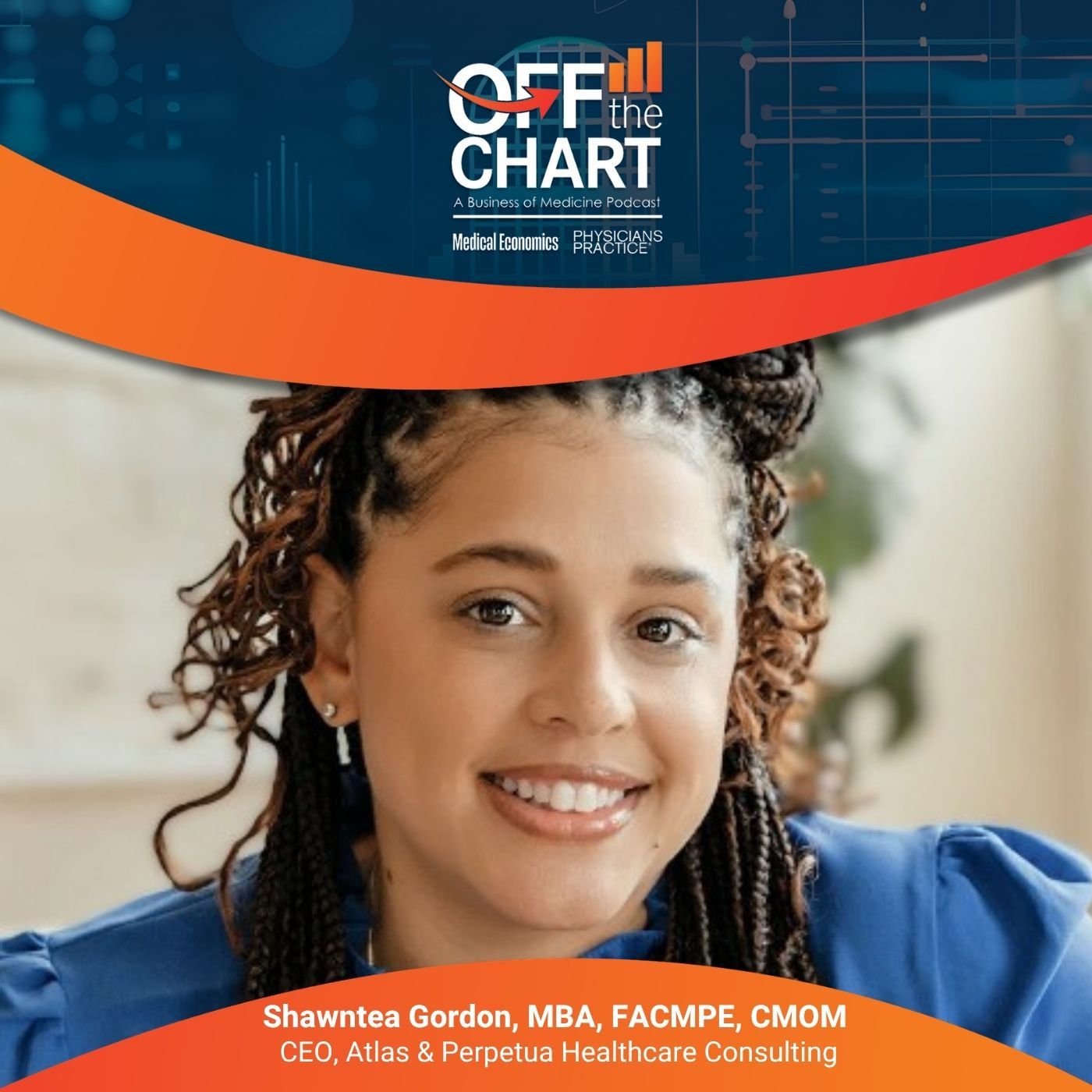 S1 Ep175: Most practices cut the wrong thing first, with Shawntea Gordon of Atlas & Perpetua Healthcare Consulting | Practice costs are climbing on every line at once: staffing, medical supplies and a technology stack that has grown at some organizations from two or three main systems to as many as 15. Reimbursement has not moved with any of it, and when the math gets that tight the reflex is to start cutting. Physicians Practice Managing Editor Keith Reynolds sat down with Shawntea Gordon, CEO of Atlas & Perpetua Healthcare Consulting, to explain why that reflex is where most practices go wrong. A cut made without data behind it is a guess, Gordon argues, and the wrong guess costs more than it saves. She and Reynolds get into the leaks she finds most often, how to tell which benchmarks are actually worth trusting, why staffing reductions so frequently backfire and the recurring expense that has been quietly billing practices since the paper era.Music Credits:Groovy 90s Hip Hop Acid Jazz by Musinova - stock.adobe.comA Textbook Example by Skip Peck - stock.adobe.comEditor's note: Episode timestamps and transcript produced using artificial intelligence (AI) tools.0:00 – 0:23 | Cold open. Gordon on the practices that call staffing their biggest cost and then find out they were understaffed all along.0:23 – 1:30 | Introduction. Austin Littrell introduces the episode, the guest and the gap between what practices spend and what they collect.1:30 – 2:22 | Why the pressure feels different now. Gordon points to the widening spread between costs and reimbursement, plus staff shortages and a technology stack that has grown at some organizations from two or three main systems to as many as 15.2:22 – 3:19 | Where the money leaks. Front desk data entry, coordination of benefits, uncaptured patient responsibility, undocumented in-office services, unappealed denials and downcoding. The one she sees most: unmanaged denials and claims sitting in accounts receivable.3:19 – 4:01 | The first step if you have never benchmarked. Start with your own history. Pull 12 months of invoices, check what you ordered against what you paid, then look at alternatives and group purchasing contracts.4:01 – 5:12 | Which benchmarks are worth trusting. Gordon on separating established associations from organizations that only claim to be validated, and why an apples-to-apples comparison starts with an honest read of your own size, location, service mix and payer mix.5:12 – 6:16 | The right-sizing test before any staffing cut. Pull your administrative and clinical support ratios against validated benchmarks first. Groups convinced staffing is their biggest cost are often already understaffed, with burnout capping what they can collect.6:16 – 7:20 | P2 Management Minute. Keith Reynolds shares practice management tips and invites listeners to submit their own workflow ideas.7:20 – 7:58 | The contract nobody rereads. Practices that moved from paper to electronic and left shredding services on the same rotation, paying monthly minimums against bins that never fill.7:58 – 9:35 | Cutting costs without creating new risk. The four questions Gordon runs before any systemic change, and the practice that switched medical supply vendors and lost access to a surgical item that was chronically backordered.9:35 – 10:59 | Building a framework that holds. A holistic review, a 90-day improvement plan, then the same monthly block of time converted into continuous improvement. Gordon makes the case for 1% a month over an annual look back.10:59 – 11:32 | One thing to do Monday morning. Run a monthly report comparing the CPT codes billed against the codes reimbursed. Every variance is a possible downcode.11:32 – [END] | Closing thoughts and outro. Reynolds thanks Gordon, and Littrell wraps the episode. | 13m 01s | ||||||
| 8/6/26 | 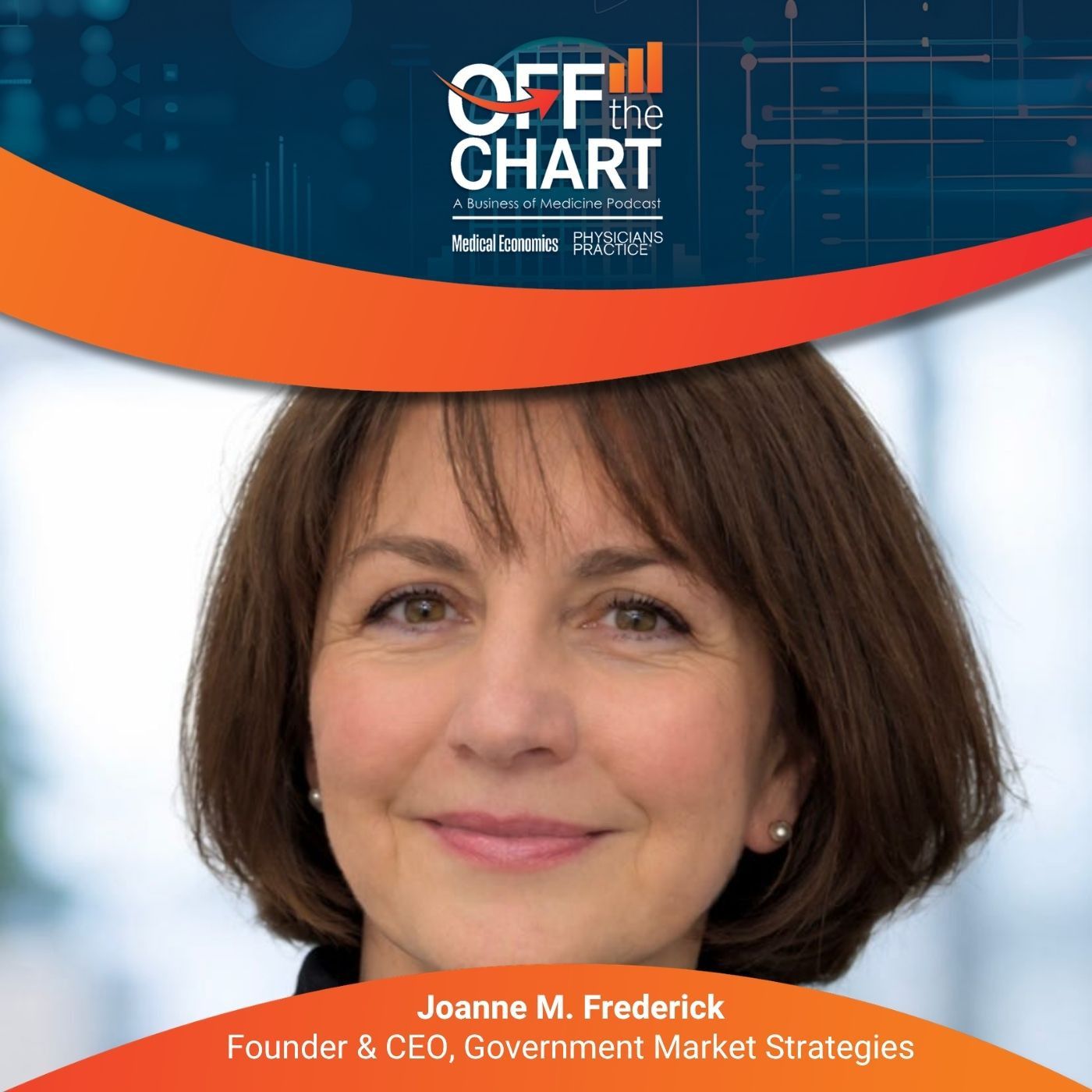 S1 Ep174: Insurance was never meant to be a first-dollar payer, with Joanne Frederick | Joanne Frederick, CEO of Government Market Strategies, has spent more than 30 years working inside Medicare, Medicaid, Tricare and VA health programs, and she opens with the one most physicians know least. Tricare covers 9.4 million service members, families and retirees, and pays at a discount off Medicare rates that plenty of practices already say don't cover their costs. From there Frederick makes a broader argument: that insurance was never designed to sit between a patient and a physician for routine care, and that the administrative layer built around that arrangement now consumes an estimated 15% to 30% of every health care dollar. She and Medical Economics senior editor Richard Payerchin work through what a cash-based system would look like at the practice level, where artificial intelligence genuinely helps, and the one piece she thinks direct primary care is still missing.Music Credits:Her Name by Cephas - stock.adobe.comA Textbook Example by Skip Peck - stock.adobe.comEditor's note: Episode timestamps and transcript produced using artificial intelligence (AI) tools.0:00 – 0:25 | Cold open. Frederick on a system built around fixing a problem that may have been smaller than the fix.0:25 – 1:44 | Introduction. Austin Littrell introduces the episode, the guest and the Tricare reimbursement problem at the center of it.1:44 – 3:00 | Meet Joanne Frederick. Richard Payerchin introduces the guest, who has worked in public sector health programs since the late 1980s and founded her first firm in 1992.3:00 – 4:46 | What Tricare is. The program covers roughly 9.4 million service members, families and retirees, about 400,000 of them overseas, and picks up the care military treatment facilities cannot deliver.4:46 – 6:29 | Where beneficiaries are, and the readiness mission. Frederick on the density around large installations and the twin goals of a ready medical force and a medically ready force.6:29 – 7:45 | Paid below Medicare rates. Tricare reimburses at a discount off Medicare, sometimes a steep one, in a market where physicians already say Medicare does not cover their costs.7:45 – 10:36 | What the rest of health care could borrow. Frederick argues readiness is the idea worth exporting, and calls the physician the most valuable player on the field of our lives.10:36 – 13:53 | Defining a cash-based system. Insurance was never intended to be a first-dollar payer, Frederick says, and administrative costs run an estimated 15% to 30% of health care spending.13:53 – 14:45 | P2 Management Minute. Keith Reynolds shares practice management tips and invites listeners to submit their own workflow ideas.14:45 – 18:00 | Prior authorization and the case insurers make. Payerchin puts the industry's value argument to Frederick, who questions what is gained when a request cycles back and forth two or three times and gets approved anyway.18:00 – 22:18 | Where artificial intelligence actually helps. Frederick calls today's note-taking applications the tip of the iceberg and makes the case for navigation tools, with the caveat that nothing replaces the physician-patient relationship.22:18 – 25:18 | Direct primary care and the missing piece. Frederick, a direct primary care member herself, asks whether physicians have the panel time to serve as health coaches, and floats an annual health improvement plan as the wraparound.25:18 – 26:50 | A message to primary care physicians. Frederick on the administrative burden the system places on primary care, and an open invitation for ideas on how to reduce it.26:50 – 27:40 | Outro. Littrell thanks the guest and wraps the episode. | 27m 38s | ||||||
| 8/3/26 | 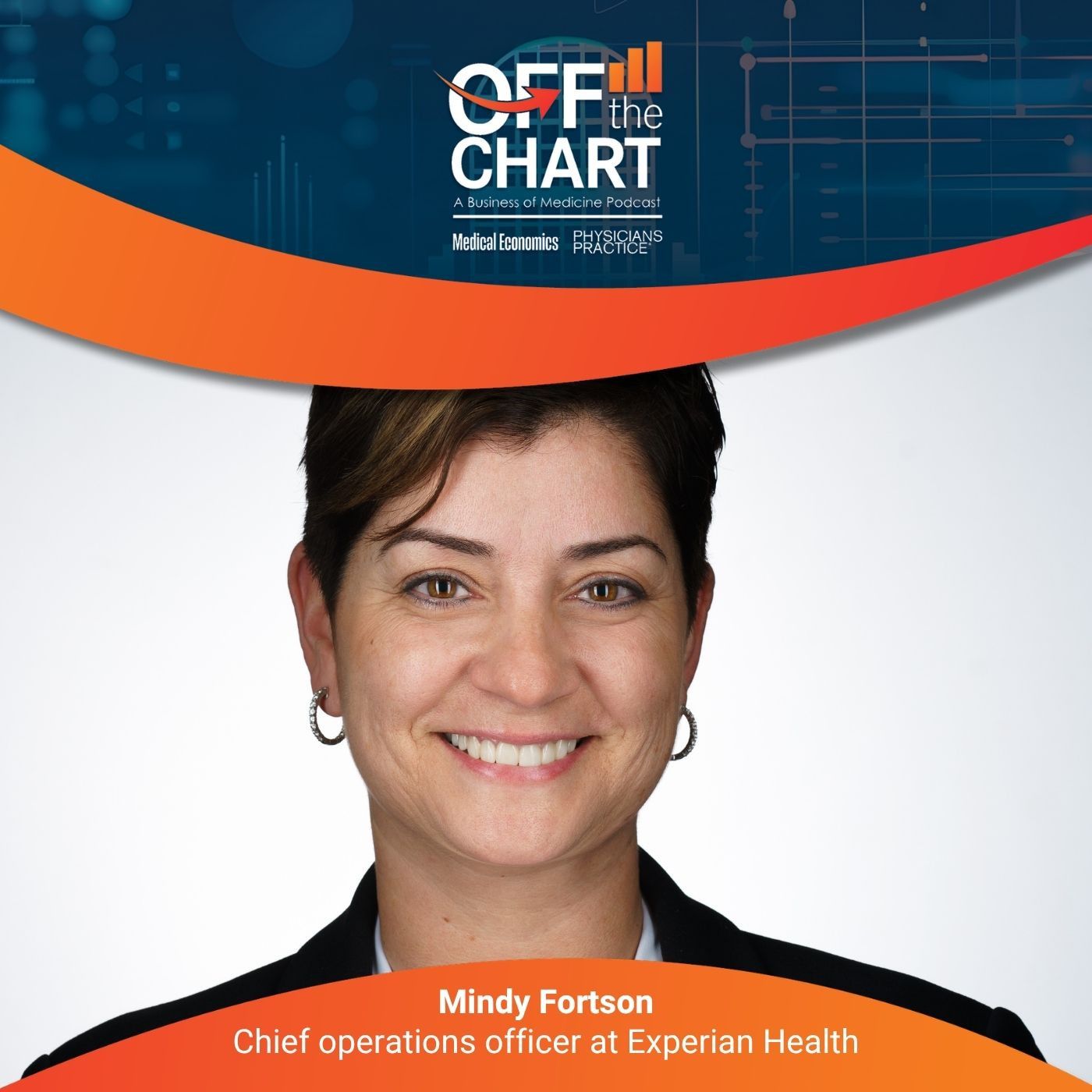 S1 Ep173: The patient access blind spot, with Mindy Fortson of Experian Health | Nearly half of the health care organizations in Experian Health's 2026 State of Patient Access Survey say patient access improved over the past year. Among patients, fewer than one in five agree. Medical Economics Managing Editor Todd Shryock sat down with Mindy Fortson, chief operating officer of Experian Health, to work out what's behind that split, why 73% of respondents on the practice side say patients delay or forfeit care when they can't get a cost estimate up front, and how much of the prior authorization burden a practice can realistically fix on its own. Fortson also gets into the survey's most counterintuitive finding: after years of pushing patients toward portals and mobile billing, paper is coming back.Read Experian Health's 2026 State of Patient Access Survey here.Music Credits: Sleepy Sunday by Buurd - stock.adobe.com A Textbook Example by Skip Peck - stock.adobe.comEditor's note: Episode timestamps and transcript produced using AI tools.0:00 – 0:26 | Cold open. Fortson names the survey finding that unsettled her most and explains why she reads it as a public health problem rather than a billing one.0:26 – 1:39 | Introduction. Austin Littrell introduces the episode, the guest and the perception gap at the center of the survey.1:39 – 1:53 | Meet Mindy Fortson. Todd Shryock introduces the guest and the 2026 State of Patient Access Survey.1:53 – 3:04 | Why practices and patients score access differently. Forty-six percent of organizations say access improved. Eighteen percent of patients agree. Fortson traces the split to two groups measuring different outcomes: staffing and digital adoption on one side, affordability and speed on the other.3:04 – 4:07 | Prior authorization and what a practice can actually fix. Thirty-six percent of patients reported authorization difficulties. Fortson puts most of the burden on payer and policy reform, since requirements are plan specific and carry heavy clinical review.4:07 – 5:43 | Insurance verification delays. Nearly three in 10 patients hit one. Fortson frames these as administrative rather than clinical problems and points to front-end coverage discovery, eligibility checks and MBI lookups as the automation targets.5:43 – 7:42 | The cost estimate problem. Seventy-three percent on the practice side say patients delay or forfeit care without an up-front estimate. The bright spot: surprise billing complaints have fallen considerably where estimate tools are in place.7:42 – 8:55 | Why training deficits keep surfacing. Thirty-nine percent cite training gaps. Every payer is different and every encounter is different, which makes front-end registration a heavy manual lift.8:55 – 9:46 | P2 Management Minute. Keith Reynolds shares practice management tips and invites listeners to submit their own workflow ideas.9:46 – 11:28 | Where automation and AI pay off first. Twenty-eight percent report adopting AI, a figure the survey didn't measure at all last year. Fortson expects AI to move out of pilots and into general infrastructure within one to two years.11:28 – 12:46 | Ninety-three percent say patients struggle to pay. Fortson on Medicaid uncertainty, regulatory ambiguity and employers shifting costs onto employees.12:46 – 14:33 | Access to practitioners, four years running. Still the top patient-reported challenge. Scheduling and portal tools help, but a meaningful share of patients either lack a smartphone or won't navigate a portal.14:33 – 15:41 | The paper billing surprise. Snail mail metrics jumped this year against the mobile trend. Fortson points to regulatory and HIPAA notices that default to mail, plus cybercrime anxiety about entering personal information online.15:41 – 17:17 | The metric to watch next year. Speed to access shows up as both a top frustration and a top success, depending entirely on whether the practice has adopted the tools.17:17 – 18:35 | Closing thoughts and outro. Littrell points listeners to the survey in the show notes and wraps the episode. | 18m 19s | ||||||
Want analysis for the episodes below?Free for Pro Submit a request, we'll have your selected episodes analyzed within an hour. Free, at no cost to you, for Pro users. | |||||||||
| 7/30/26 | 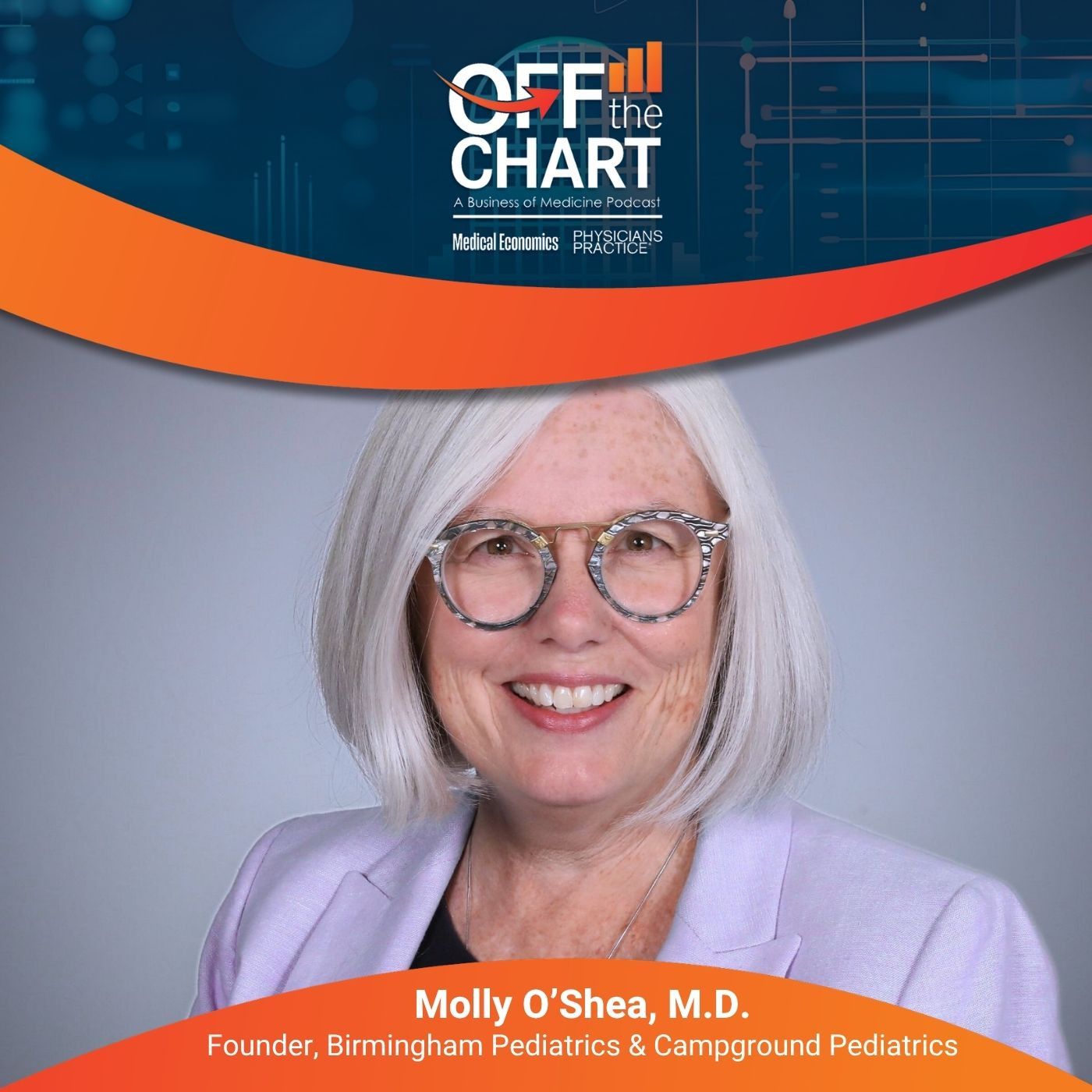 S1 Ep172: A primary care physician's guide to cyclosporiasis, with Molly O'Shea, M.D. | Cyclosporiasis presents like a lot of other summer illnesses, but it runs six weeks untreated and the routine ova and parasite panel will not find it unless you ask your lab specifically. Molly O'Shea, M.D., has owned an independent pediatric practice in Michigan for more than 30 years, putting her at the center of the largest cyclospora outbreak on record in the United States. She talks with Medical Economics Senior Editor Richard Payerchin about how the infection presents, what to order and how to have that conversation with the lab, when to treat on symptoms alone, and what to tell patients arriving with questions about ivermectin and cleanses. She also explains why she believes reported case counts substantially understate what is happening in the community.CDC tracking: https://www.cdc.gov/cyclosporiasis/index.htmlFDA recall: https://www.fda.gov/safety/recalls-market-withdrawals-safety-alerts/taylor-fresh-foods-recalls-iceberg-lettuce-central-mexico-because-possible-health-riskMusic Credits:Palm Trees in Cyan Glow by KBH Production - stock.adobe.comA Textbook Example by Skip Peck - stock.adobe.comEditor's note: Episode timestamps and transcript produced using AI tools.0:00 – 0:12 | Cold open O'Shea previews the episode's central premise: the reported case counts are almost certainly an undercount.0:12 – 1:36 | Introduction Austin Littrell introduces the episode, the guest and the scale of the outbreak.1:36 – 2:00 | Meet Molly O'Shea, M.D. Richard Payerchin introduces the guest and opens at the beginning.2:00 – 5:11 | What cyclospora is, and how to make produce safer A parasitic infection contracted from contaminated fresh produce, not spread person to person. O'Shea walks through washing technique, a vinegar solution for raspberries and cilantro, and why she still wants patients eating fruits and vegetables.5:11 – 6:26 | Does buying local help? Not automatically. You still don't know the irrigation system or the equipment that brought it to market.6:26 – 8:20 | What it looks like in the office Bloating, cramping and long duration. How to separate it from Giardia, enteroviruses and norovirus, and why her practice tells families to wait three or four days before coming in.8:20 – 9:21 | Why the routine stool panel misses it Detection requires a special stain, and it will not be run unless it is ordered. Talk to your lab about what to send and in what container.9:21 – 11:43 | The two-week incubation problem Why the exposure history is nearly impossible to reconstruct, why dose matters, and why she tells parents to stop trying to trace it.11:43 – 13:40 | Treatment Bactrim for about a week. False negatives after long symptom duration, and when to treat on symptoms alone.13:40 – 15:20 | Hospitalization, and how badly cases are undercounted Who gets sick enough to be admitted, and why dehydration is the complication to watch.15:20 – 16:11 | P2 Management Minute Keith Reynolds shares practice management tips and invites listeners to submit their own workflow ideas.16:11 – 17:04 | What to say about ivermectin The best available evidence supports Bactrim. Ivermectin has not been studied well enough to place in either the treatment or prevention category.17:04 – 19:29 | Cleanses and other things patients found online The body is already doing what a cleanse claims to do, and the added physiologic stress isn't warranted.19:29 – 22:00 | Reassuring worried patients without ordering the test Listen, acknowledge the worry, then give a plan and say exactly where the test fits in it.22:00 – 24:55 | The federal surveillance gap What changed in July 2025, what states still require, and why O'Shea says the national response has been disjointed.24:55 – 26:05 | This isn't only a Michigan problem Why Michigan's counts are high and other states' may not be.26:05 – 28:07 | What a fast federal response would look like An HHS proclamation, a coordinated information effort and an emergency response team.28:07 – 32:13 | Fragmented care, Medicaid and who never gets diagnosed Coverage losses, high deductibles and a shift away from prevention.32:13 – 34:00 | Closing thoughts and outro Littrell points listeners to current case counts and the recall notice, and wraps the episode. | 33m 39s | ||||||
| 7/27/26 |  S1 Ep171: Another year of Medicare cuts, with Anders Gilberg of MGMA | CMS has released its proposed 2027 Medicare Physician Fee Schedule, and once again it carries a conversion factor cut: 1.68% for physicians outside an alternative payment model and 1.19% for those inside one, as the 2.5% congressional patch expires. Physicians Practice Managing Editor Keith Reynolds sits down with Anders Gilberg, senior vice president of government affairs at the Medical Group Management Association, to sort out what the rule actually does. They dig into the budget neutrality rules that force CMS to cut one specialty to pay another, the agency's push to move away from the AMA's valuation process without new data to justify it, the sunset of traditional MIPS into MIPS Value Pathways and what that reporting burden means for multispecialty groups, and a sleeper change to modifier 25 that could hit same-day billing hard. Public comments on the proposed rule are due Sept. 14.Music Credits:Swinging Lounge Bar by NC MUSIC - stock.adobe.comA Textbook Example by Skip Peck - stock.adobe.comEditor's note: Episode timestamps and transcript produced using AI tools.0:00 Cold open: Anders Gilberg on why these are real cuts, not cuts to the growth rate 0:17 Introduction 1:39 Keith Reynolds welcomes Anders Gilberg 2:11 The recurring themes in the proposed 2027 fee schedule 3:56 Five years of cuts, and what MGMA members are feeling 5:38 Congress's game of chicken and the new Patients First Act 6:58 Budget neutrality and robbing Peter to pay Paul 8:09 CMS's 20-year-old cost data and the move away from the AMA process 10:34 The end of traditional MIPS, and why MVPs are "MIPS on steroids" 13:20 P2 Management Minute 14:35 What small and rural practices should do now 16:13 The sleeper provision: modifier 25 and same-day billing 18:13 Comments are due Sept. 14, but will CMS budge? 20:20 The next fiscal cliff and the year-end lame duck session 22:29 Outro | 23m 31s | ||||||
| 7/23/26 | 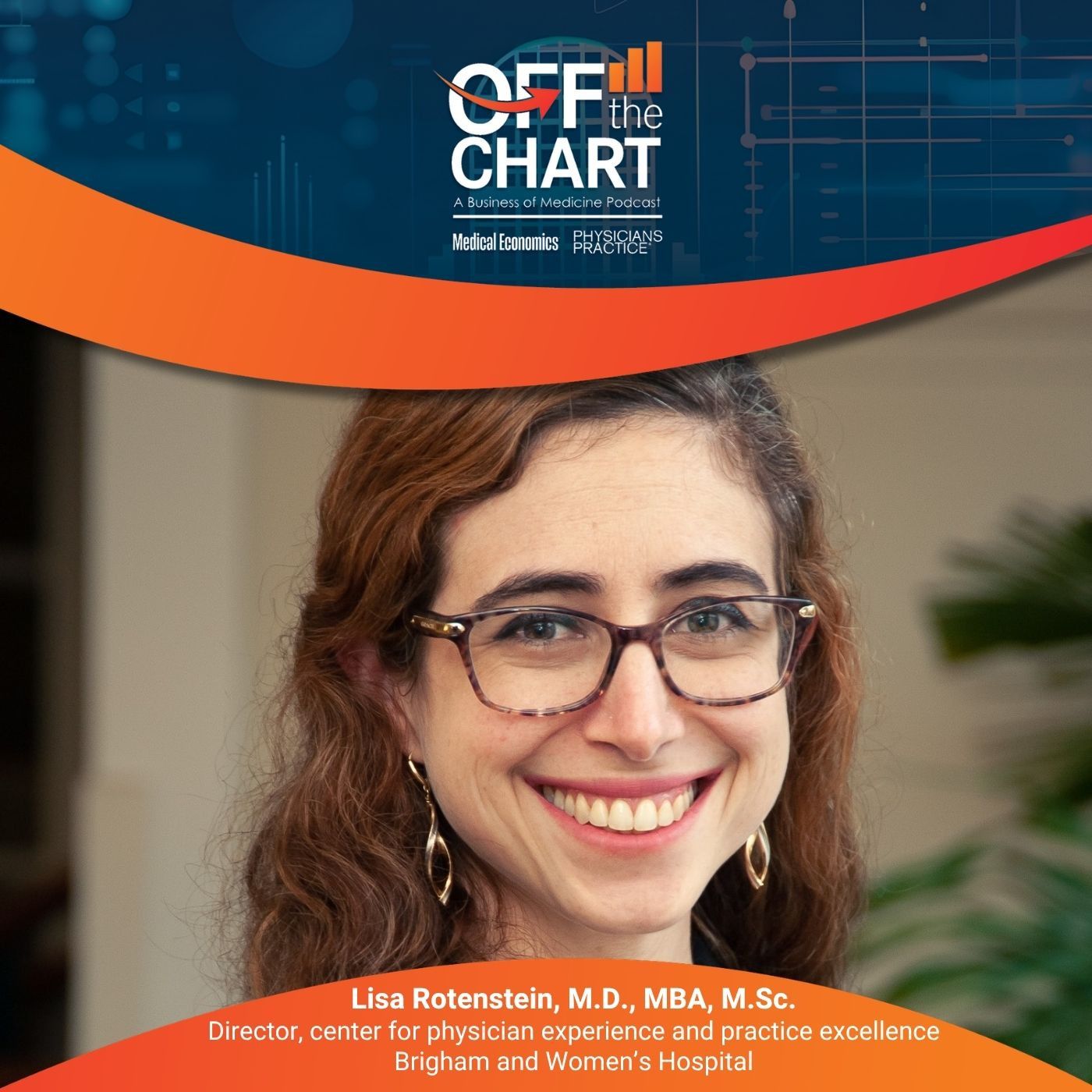 S1 Ep170: Better care, shorter careers for women physicians, with Lisa Rotenstein, M.D., MBA, M.Sc. | Female physicians spend more time with patients, write longer notes and field more messages, and research suggests their patients do better for it. They also leave clinical practice at a median age of 49, compared with 64 for male physicians. Lisa Rotenstein, M.D., MBA, M.Sc., a primary care physician at the University of California, San Francisco and director of the Center for Physician Experience and Practice Excellence, is the corresponding author of a new study in the Journal of General Internal Medicine examining physician attrition by sex, age and specialty. She joins Medical Economics Senior Editor Richard Payerchin to explain what's behind that 15-year gap, why it holds in rural and urban settings alike, and which fixes could actually keep women physicians at the bedside, from time-based billing to ambient documentation to giving physicians back control over their own workflow.Music Credits:Ocean Calm by Cephas - stock.adobe.comA Textbook Example by Skip Peck - stock.adobe.comEditor's note: Episode timestamps and transcript produced using AI tools.0:00 Cold open. Rotenstein previews the episode's central paradox: the practice patterns that serve patients well may be making the job unsustainable.0:17 Introduction. Austin Littrell introduces the episode, the guest and the study's headline finding.1:32 Meet Lisa Rotenstein. Rotenstein introduces her work directing the Center for Physician Experience and Practice Excellence and outlines what the study set out to measure.2:58 What a 1.55 hazard ratio actually means. Female primary care physicians are among the likeliest to leave, and Rotenstein explains how the study defined leaving: no Medicare billing for three consecutive years.5:17 The 15-year gap. Median attrition age is 49 for women and 64 for men. Rotenstein describes the bimodal pattern in the data and why the first decade and a half of practice is the critical window.7:53 Rural and urban alike. The sex-based attrition gap holds regardless of setting, with particular consequences for access in rural communities.9:02 What the payment model rewards. Female physicians generate 80 cents of revenue for every dollar earned by male primary care physicians, even while spending more time with patients. Rotenstein makes the case for time-based billing and value-based payment.11:22 P2 Management Minute. Keith Reynolds shares practice management tips and invites listeners to submit their own workflow ideas.12:13 The math health systems are missing. Physician turnover runs $500,000 to $1 million per physician, but Rotenstein says the near-term cost of retention is what keeps the conversation from happening.14:35 What to tell medical students. More than half of matriculating medical students are women, and Rotenstein argues the profession has to show them clinical medicine is a sustainable path.16:17 Can AI keep women physicians in practice? A Physicians Foundation-funded study found burnout reductions tied to AI scribes across two health systems. Rotenstein says prior authorization and paperwork are the next frontier.18:35 Control, not ownership. Clinician-owned practices show lower burnout, but Rotenstein says the real variable is agency, and systems can give some of it back.21:03 What she wants physicians to take away. The profession is losing decades of expertise from a highly trained workforce.21:55 Closing thoughts and outro. | 23m 27s | ||||||
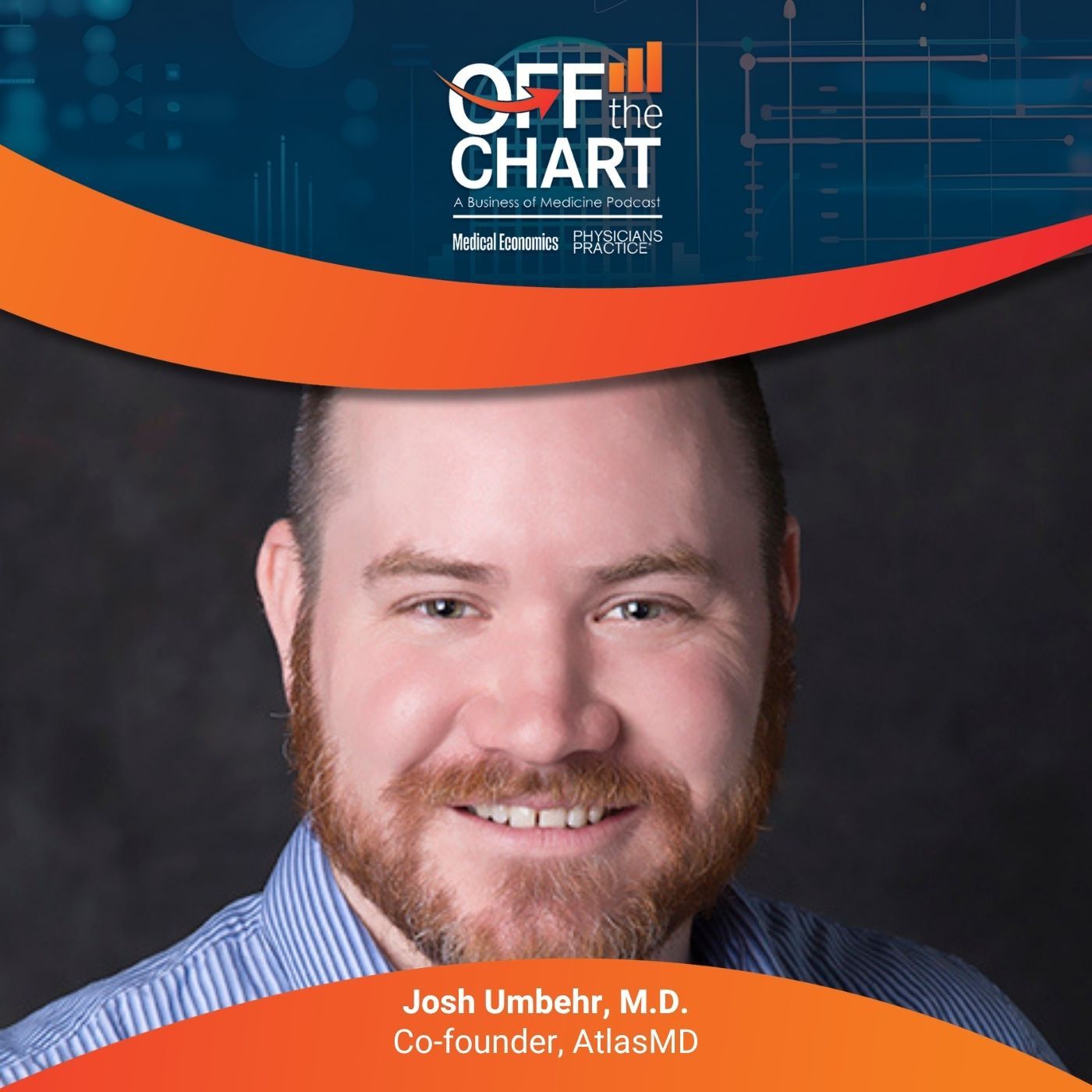
| 7/20/26 | direct primary carephysician economics+3 | Josh Umbehr, M.D. | Atlas MD | Wichita, Kansas | direct primary careDPC+3 | — | 37m 03s | ||
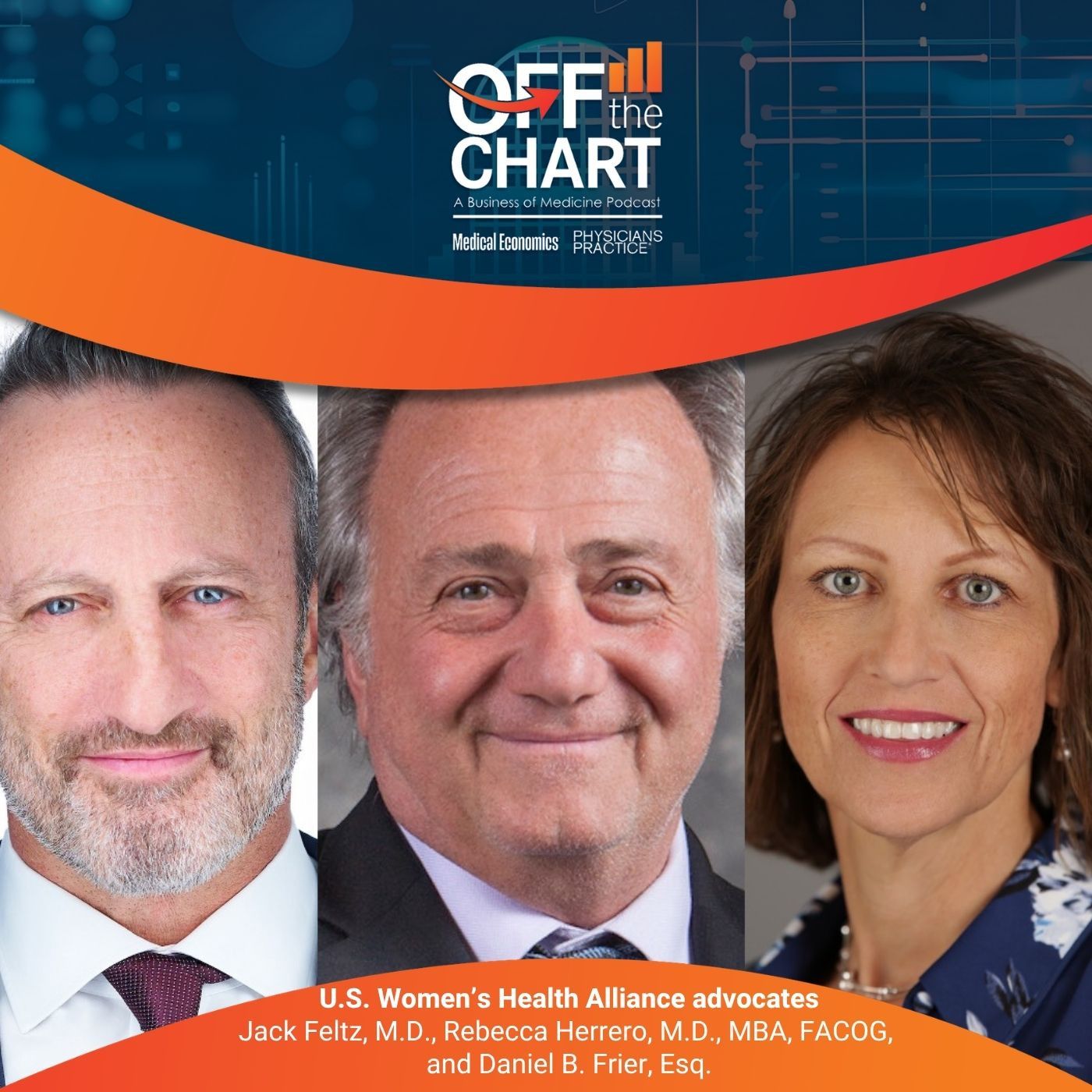
| 7/16/26 | healthcare costsindependent practice+4 | Jack Feltz, M.D.Rebecca Herrero, M.D., MBA, FACOG+1 | U.S. Women's Health AllianceWomen's Health Associates of Southern Nevada+1 | — | healthcarecost disparity+4 | — | 29m 10s | ||
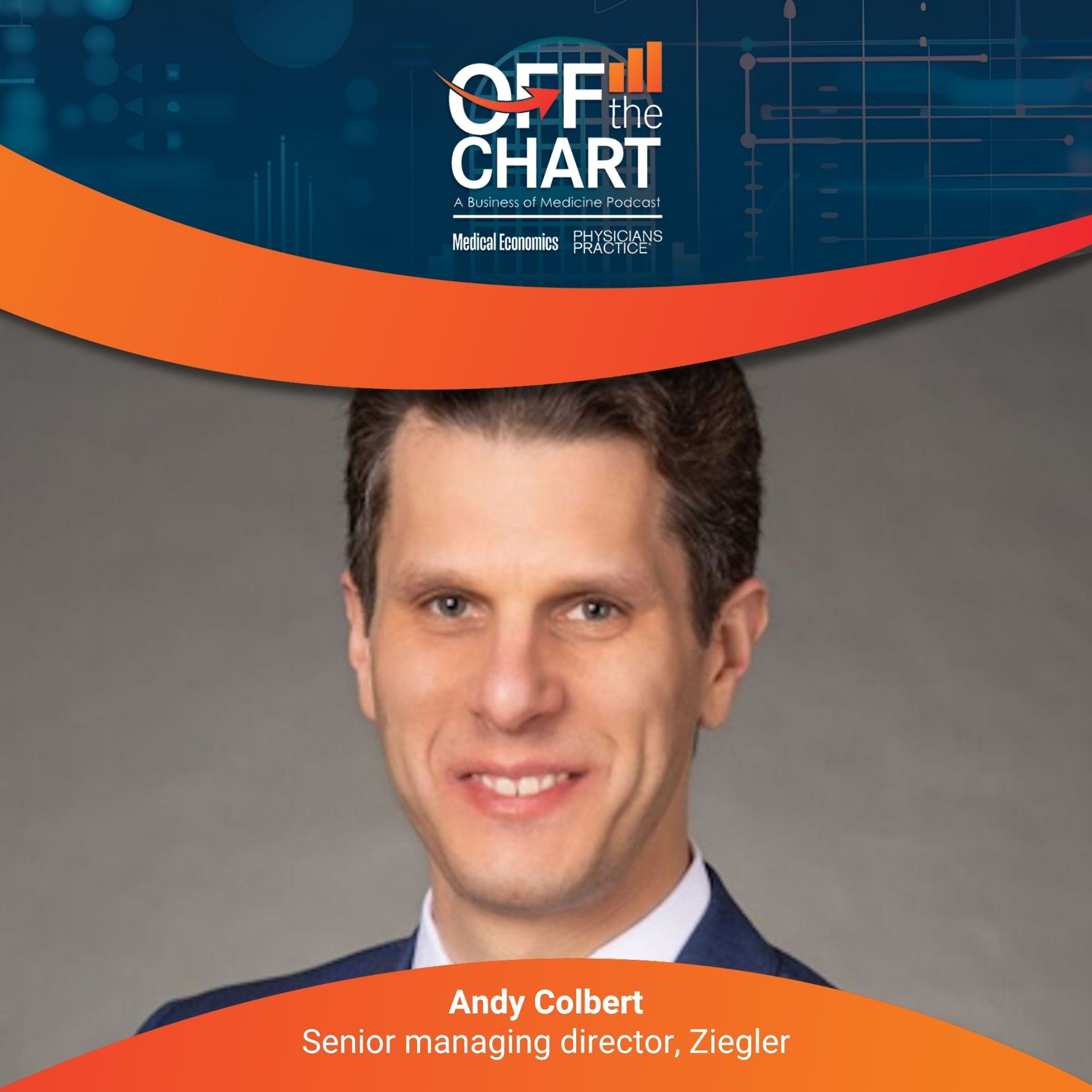
| 7/13/26 | independent practicesphysician advisory+3 | Andy Colbert | ZieglerMedical Economics | — | practice valueindependence+3 | — | 39m 06s | ||
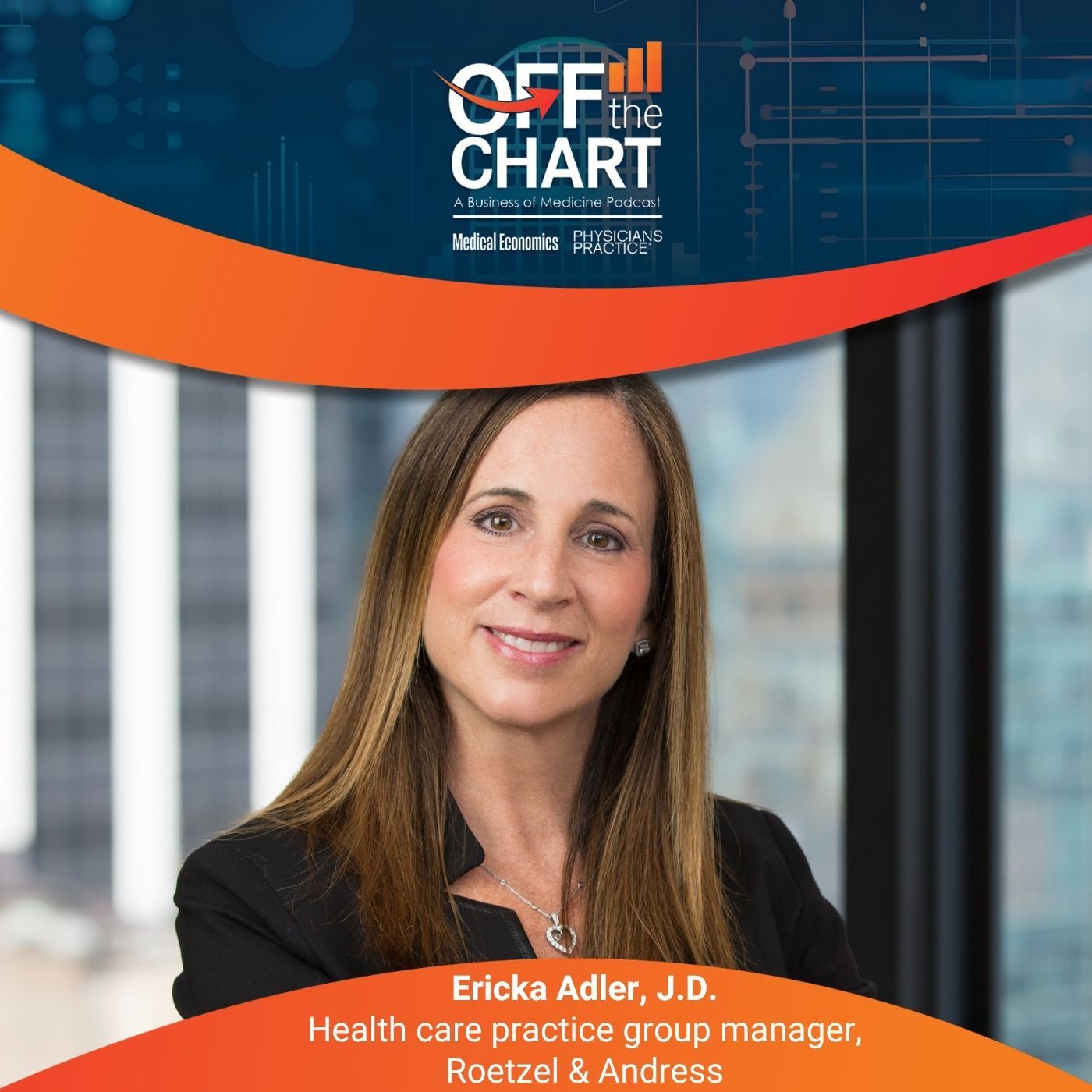
| 7/9/26 | concierge medicinelegal considerations+4 | Ericka Adler, J.D.Ericka Adler | Roetzel & AndressMedical Economics | — | concierge medicinelegal traps+5 | — | 29m 58s | ||
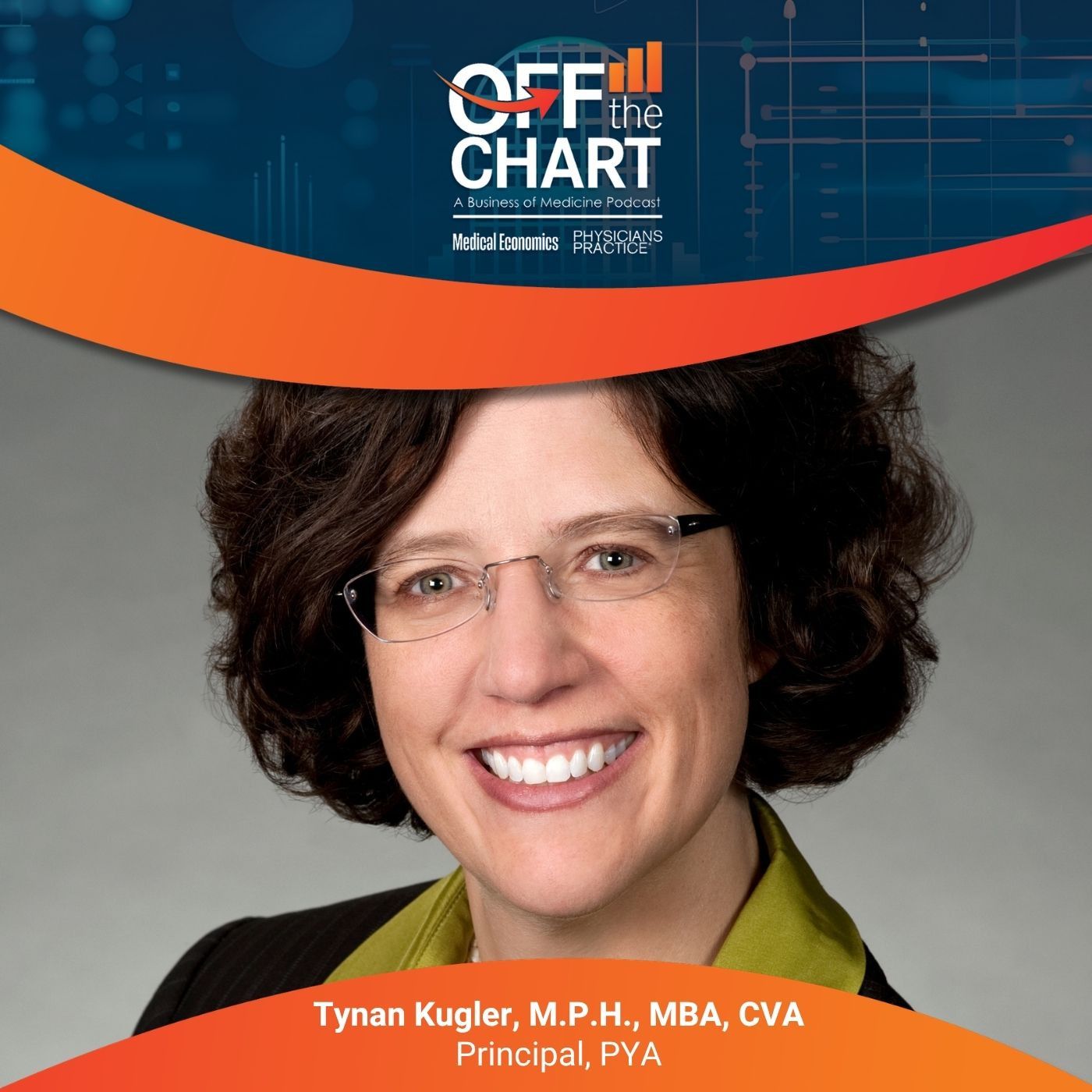
| 7/6/26 | physician compensationhealthcare workforce+4 | Tynan Kugler | PYAMedical Economics | — | physician paycompensation+6 | — | 30m 10s | ||
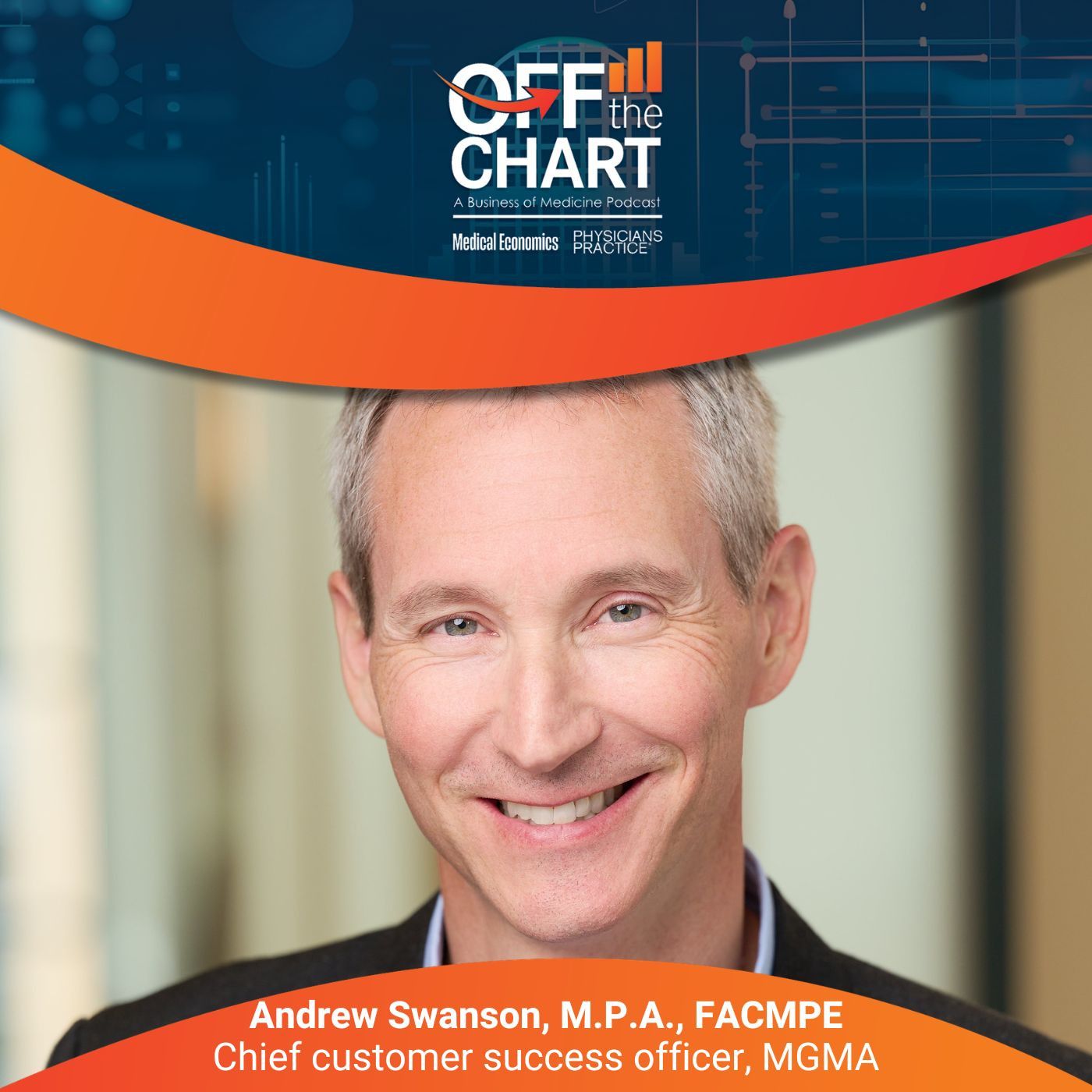
| 7/2/26 | physician compensationproductivity+3 | Andy Swanson | Medical Group Management AssociationMGMA+1 | — | physician payproductivity decline+3 | — | 19m 37s | ||
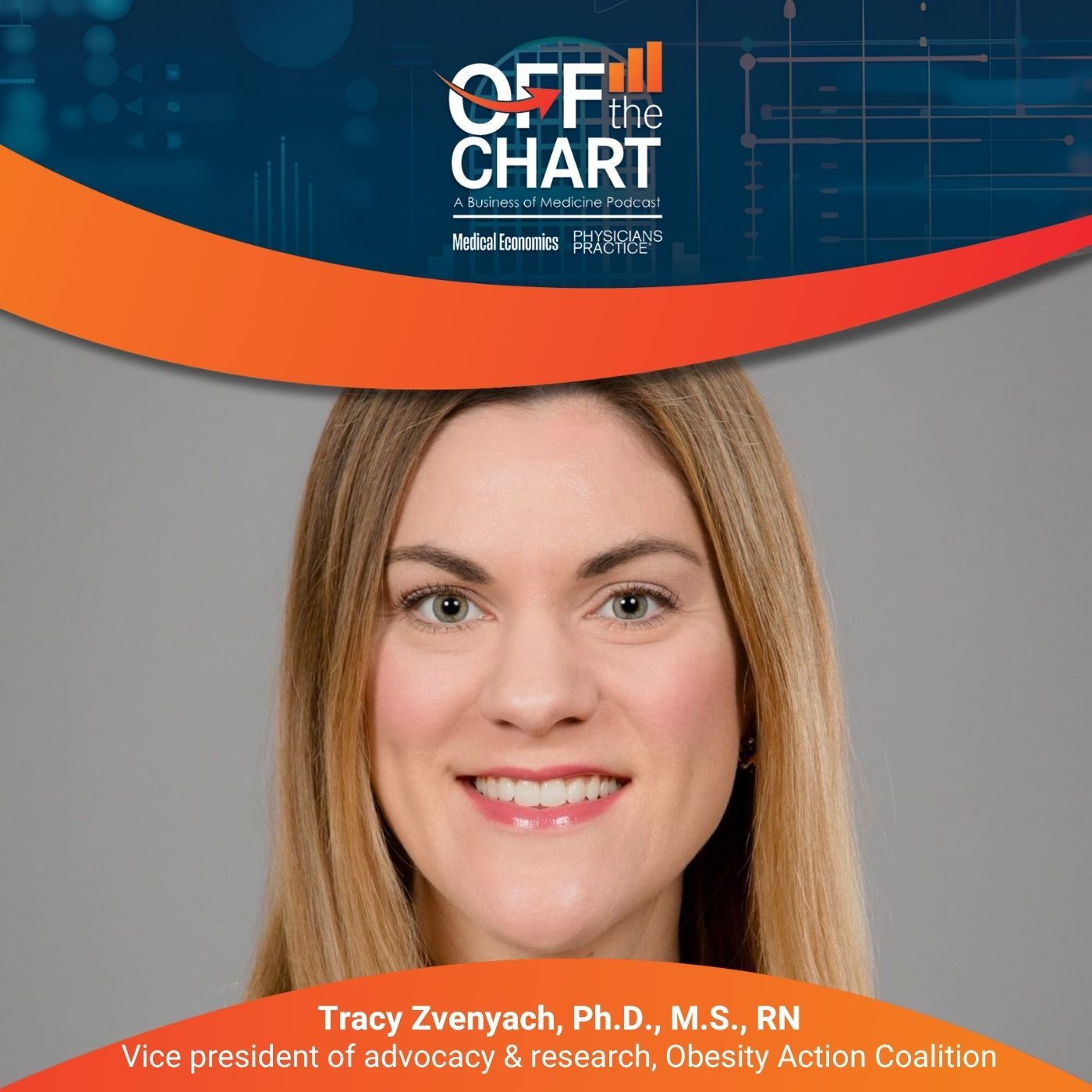
| 6/29/26 | Medicare coverageobesity treatment+4 | Tracy Zvenyach, Ph.D., M.S., RNTracy Zvenyach | GLP-1 drugsObesity Action Coalition+4 | — | Medicareobesity+7 | Copic medical liability insurance | 27m 35s | ||
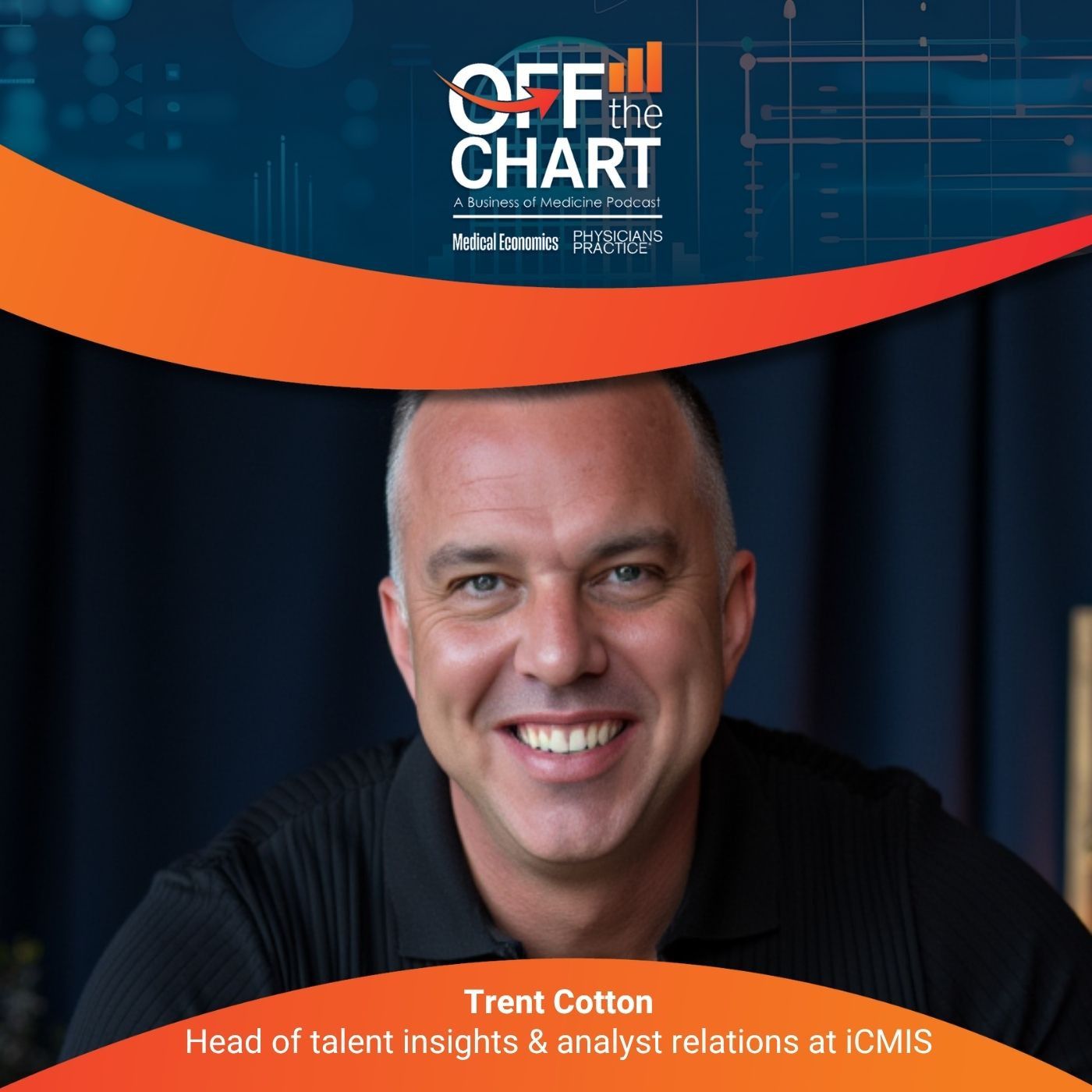
| 6/25/26 | health care hiringcandidate experience+3 | Trent Cotton | iCIMS | — | health carehiring+5 | Copic medical liability insurance | 19m 57s | ||
| 6/22/26 | No Surprises Actpayment dispute+3 | Anders Gilberg | MGMA | — | No Surprises Actpayment dispute+5 | Copic medical liability insurance | 17m 39s | ||
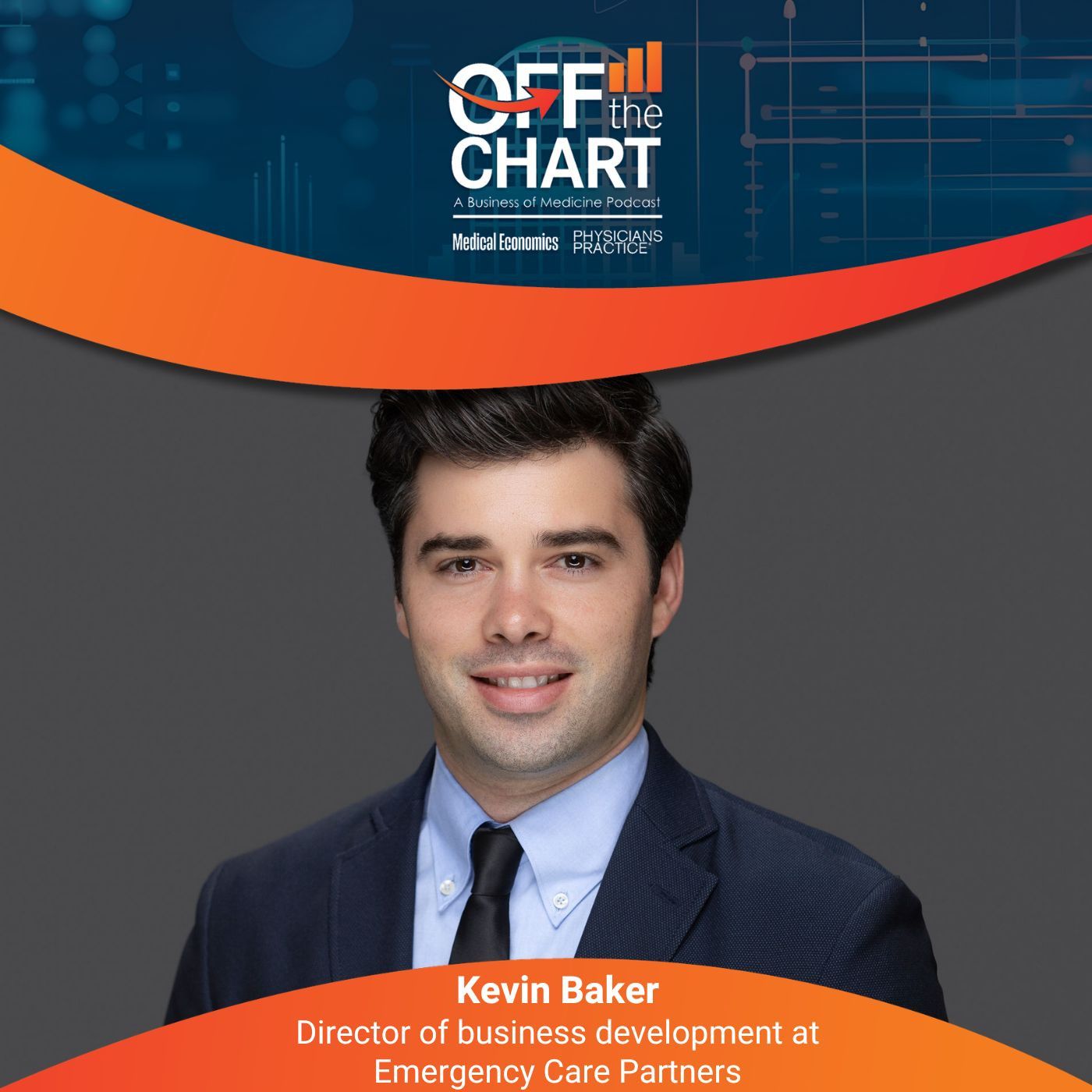
| 6/18/26 | selling medical practicepractice valuation+4 | Kevin Baker | Emergency Care Partners | — | medical practice salepractice owners+5 | Copic medical liability insurance | 26m 33s | ||
| 6/15/26 | 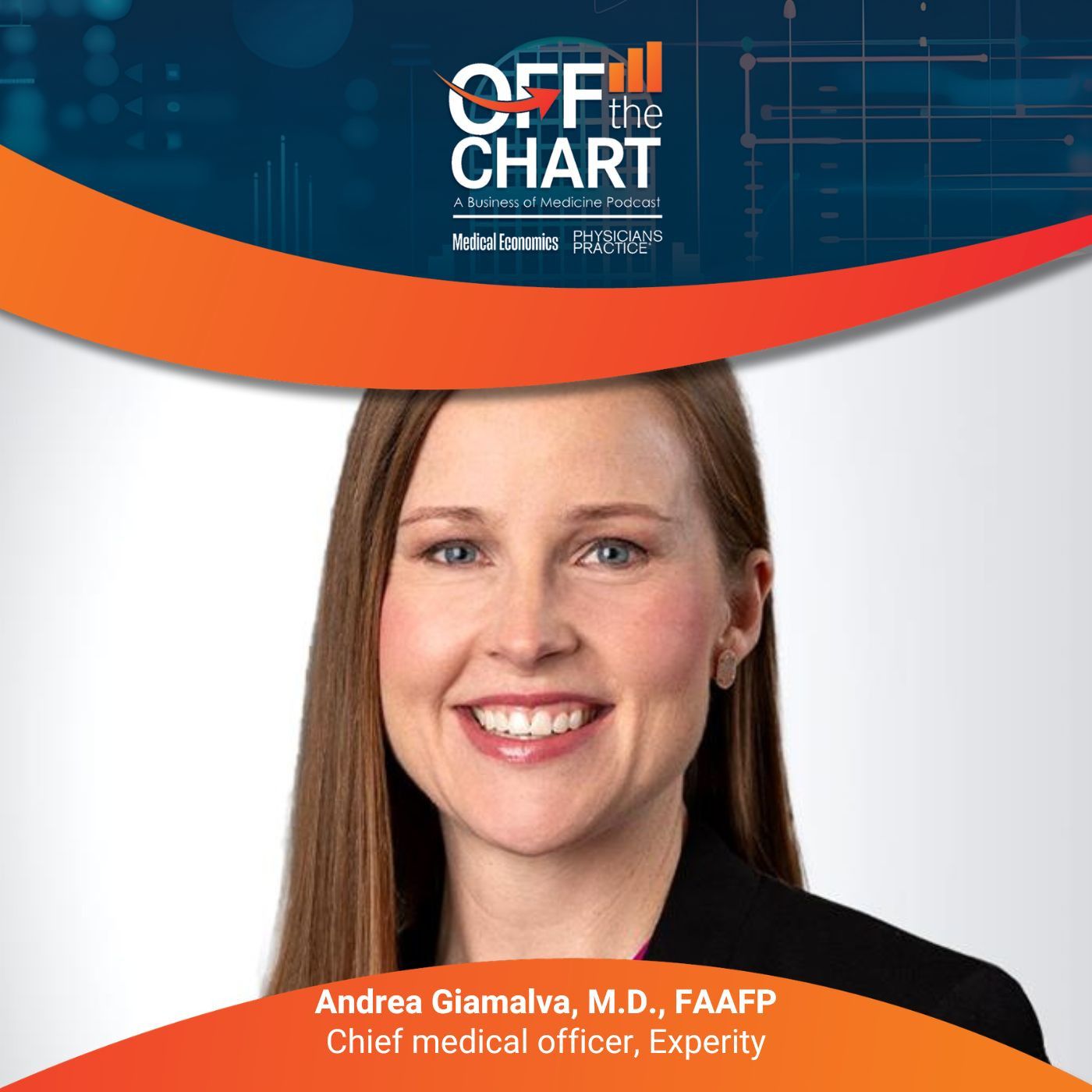 S1 Ep159: The new front door to health care, with Andrea Giamalva, M.D., FAAFP, of Experity | Urgent care was never designed to be the front door to American health care, but that's increasingly what it has become. As the country faces a projected shortage of as many as 80,000 primary care physicians by 2037 and nearly 40% of Gen Z patients go without a primary care physician at all, more Americans are turning to urgent care as their first and often only point of contact with the health care system. Medical Economics Associate Editor Austin Littrell speaks with Andrea Giamalva, M.D., FAAFP, chief medical officer at Experity, about what urgent care is actually handling today, where its relationship with primary care breaks down and why she believes AI-enabled technology may finally help clinicians get the right patient to the right place at the right time. The conversation covers the generational shift away from primary care, the payer and cultural barriers that complicate care-gap closure, the growing role of advanced practice providers and how tools like AI scribes could bring humanity back to the exam room.Music Credits:Coffee Shop Sketches by Buurd - stock.adobe.comA Textbook Example by Skip Peck - stock.adobe.comEditor's note: Episode timestamps and transcript produced using AI tools.0:00 – 0:24 | Sponsor message Copic medical liability insurance.0:24 – 0:51 | Cold open Giamalva previews the episode's central theme: the national shortage of primary care has turned urgent care into the front door to health care for many Americans.0:51 – 1:44 | Introduction Austin Littrell introduces the episode and guest, previewing the data behind the primary care shortage and the case for using technology to get the right patient to the right place at the right time.1:44 – 2:20 | Meet Andrea Giamalva Giamalva introduces herself as a family medicine physician and chief medical officer at Experity, the leading platform for on-demand health.2:20 – 4:28 | How urgent care became the front door From its 1970s origins to today, urgent care has grown from a cough-and-cold clinic into a multichannel digital front door offering employer-paid services, weight loss therapy, hormone therapy and mental health care.4:28 – 7:15 | Choice or access? The generational data Roughly 10% of baby boomers lack a primary care physician, rising to nearly 40% of Gen Z. Giamalva ties the generational shift, projected shortages of up to 80,000 primary care physicians by 2037 and health care deserts to the "Amazon-Uber-DoorDash" expectations now shaping patient behavior.7:15 – 9:49 | Right patient, right place, right time Giamalva argues the hardest problem in health care is matching patients to the appropriate setting, and that technology could let urgent care safely handle straightforward cases while primary care focuses on complex, time-intensive ones.9:49 – 11:28 | Reducing burden without adding fragmentation With one study finding it would take 27 hours a day for a primary care physician to manage their full panel, Giamalva says clear communication across the patient journey and better tools at the point of care are what let urgent care act as a partner rather than a competitor.11:28 – 14:02 | Treating patients like customers Giamalva makes the case that patient experience directly affects outcomes, and describes tools like Care Agent and AI scribes that aim to keep patients informed and bring human interaction back to the visit.14:02 – 14:53 | P2 Management Minute Keith Reynolds shares practice management tips and invites listeners to submit their own workflow ideas.14:53 – 17:55 | What primary care can learn from urgent care Urgent care's scheduling flexibility and retail DNA give it a head start on on-demand care. Giamalva says primary care could adopt a more hybrid, risk-stratified approach that routes patients to telehealth, urgent care or a full primary care visit based on need.17:55 – 19:43 | The expanding role of advanced practice providers As APPs take on larger roles in both settings, Giamalva calls for team-based models, clear expectations and proper training so urgent care teams can manage common chronic conditions like diabetes, hypertension and thyroid disease.19:43 – 22:01 | Closing the primary care gap Giamalva walks through what it takes for urgent care to help patients without an established primary care relationship, including patient willingness, payer contracts that can prohibit preventive care and the cultural shift required of clinical teams.22:01 – 22:53 | The case for AI-enabled technology In her closing thoughts, Giamalva argues AI-enabled technology is more than a fad and could finally reverse the administrative burden that has chipped away at the patient-provider relationship.22:53 – End | Outro Littrell thanks Giamalva and wraps the episode. | 23m 54s | ||||||
| 6/11/26 | cash-only practiceoutpatient medicine+4 | John C. Cianca, M.D., FAAPMR | American Academy of Physical Medicine and RehabilitationBaylor | Houston, Texas | cash-only practiceoutpatient medicine+5 | Copic medical liability insurance | 35m 11s | ||
Showing 25 of 222
Pitch Fit is a Pro feature
See how bookable this show is for guests, which brands already advertise, the per-episode ad value, and the best-fit guest and sponsor profile. The numbers are blurred on the free plan.
How readily this show books outside guests like you.
How proven this show is for host-read sponsorships.
For Guests
ProFor Advertisers
ProUpgrade to Pro to unlock guest cadence, sponsor categories, fit scores, and per-episode ad value for this show.
Chart history for Off the Chart: A Business of Medicine Podcast
Peaked at #164 in KE, currently #164 in KE.
| Market | Genre | Peak | Current | Trend |
|---|---|---|---|---|
| KE | — | #164 | #164 | — |
Chart Positions
1 placement across 1 market.
Chart Positions
1 placement across 1 market.