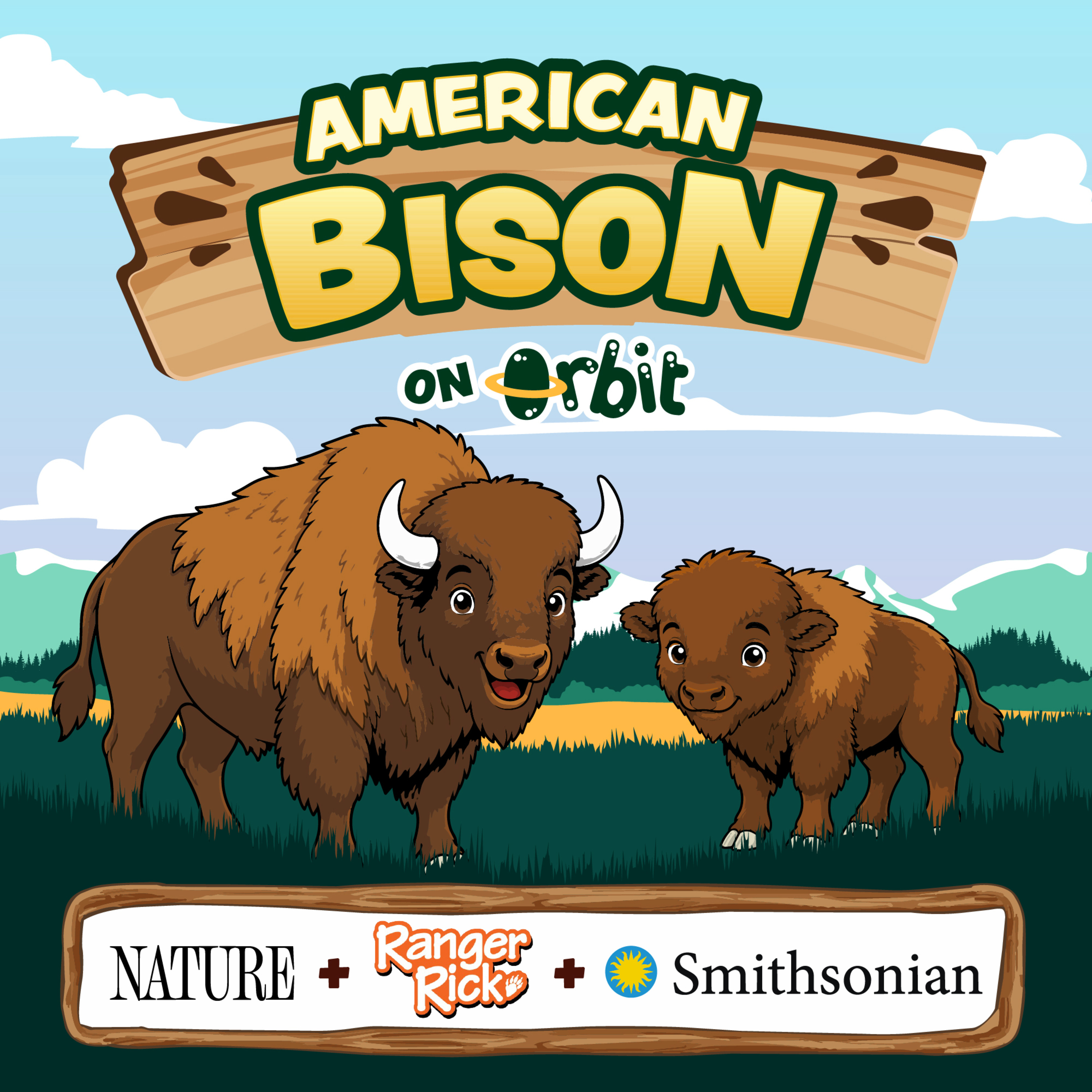
The giant, fluffy guardians of American grasslands
About this episode
This episode explores the role of American bison in grassland ecosystems with Dr. Andy Boyce.
Did you know that American bison help prevent grasslands from turning into forests by body-slamming young trees? And that they once lived in herds so enormous they stretched all the way to the horizon? This week, we travel to the grasslands of Montana with Dr. Andy Boyce, a research ecologist at the Smithsonian's National Zoo and Conservation Biology Institute. Discover why bison live in herds, how they defend themselves from predators, and why scientists call them a keystone species. Along the way, you'll learn how these giant mammals help shape entire grassland ecosystems simply by grazing, digging, dust bathing, and being itchy! ➡️ Part of the Wild Critters USA series, created with PBS Nature and the National Wildlife Federation https://linktr.ee/wildcritters ➡️ Learn more about American bison from the Smithsonian National Zoo: https://nationalzoo.si.edu/animals/american-bison 🖍️ Free Wild Critters USA coloring pages: https://www.cumbrekids.org/color-along 💬 Submit your kids' questions! https://www.cumbrekids.org/questions 💛 Support this podcast by joining The Curious Club: https://www.cumbrekids.org/curious-club Orbit Family Conversation Starters! If you could have one…
People in this episode
Guest: Dr. Andy Boyce
Topics covered
- American bison
- grassland ecosystems
- keystone species
- animal behavior
- conservation
Keywords
- bison
- grasslands
- ecosystem
- predators
- herds
- conservation
- Montana
Mentioned in this episode
Organizations: Smithsonian's National Zoo and Conservation Biology Institute, PBS Nature, National Wildlife Federation
Places: Montana, American grasslands
More episodes of Orbit: Science for kids on the move!
- Why does welding create sparks? ⚡
- How do tiny mussels clean our rivers?
- Why are alligator moms so awesome?
- The tortoise that saved the rabbit!
- Get ready for Wild Critters USA!
- How does AC lower the temperature?
Explore listener stats, chart rankings, contacts and more on the Orbit: Science for kids on the move! podcast page.