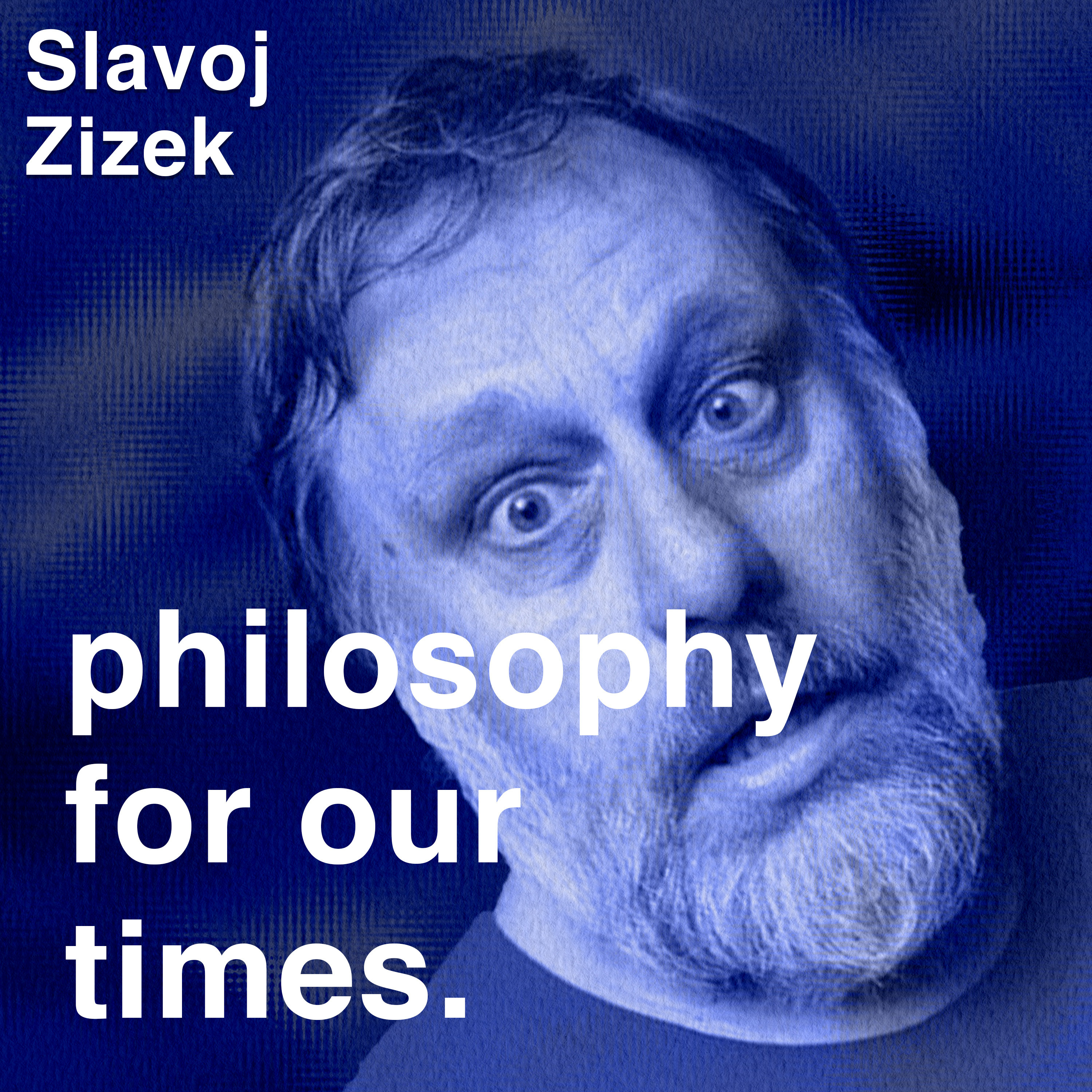
Slavoj Žižek on quantum history and the end of the past
About this episode
Slavoj Žižek discusses the implications of quantum mechanics on history and politics, arguing for a new understanding of reality and political action.
Does the past even exist anymore? Quantum mechanics has long unsettled our understanding of matter and measurement. But what if its implications reach further — into history, politics, and the very structure of reality itself? If the present can retroactively reshape the past it emerged from, what does that mean for how we act, how we remember, and how we govern? These are not merely theoretical puzzles. In a world where liberal democracy appears to be fracturing, where AI and climate change defy traditional political categories, and where new authoritarian currents are emerging from thinkers like Curtis Yarvin in the West and Wang Huning in the East, the question of whether reality offers any coherent ground for political action has never felt more urgent. Few thinkers are willing to hold all of this together at once — to move from Niels Bohr to Stalinism, from Lacanian psychoanalysis to the collapse of the political centre, without flinching. Slavoj Žižek does precisely that. In his new book Quantum History: A New Materialist Philosophy (Bloomsbury, 2025), Žižek argues that incompleteness is not a failure of knowledge but a feature of existence itself — and that this demands an…
People in this episode
Host: Omari Edwards
Guest: Slavoj Žižek
Topics covered
- quantum mechanics
- history
- politics
- liberal democracy
- authoritarianism
- philosophy
Keywords
- quantum history
- political action
- Lacanian psychoanalysis
- Hegelian philosophy
- liberal democracy
- authoritarianism
- climate change
- AI
Mentioned in this episode
Organizations: IAI
Books & works: Quantum History: A New Materialist Philosophy
More episodes of Philosophy For Our Times
- How they ruined philosophy | Babette Babich, Genia Schönbaumsfeld, and Christoph Schuringa
- A new theory of ethics | Martha Nussbaum
- Crisis in the academy | Yaron Brook, Eric Kaufmann, Catherine Liu
- Why the neoclassical philosophy of economics is fundamentally flawed | Abby Innes
- On the nature of reality | Rowan Williams and Iain McGilchrist
- Neighbours before strangers | Alain de Botton, Seyla Benhabib and Tommy Curry
Explore listener stats, chart rankings, contacts and more on the Philosophy For Our Times podcast page.