Philosophy For Our Times
by IAI
Is this your podcast?Insights from recent episode analysis
Audience Interest
Podcast Focus
Publishing Consistency
Platform Reach
Insights are generated by CastFox AI using publicly available data, episode content, and proprietary models.
Most discussed topics
Brands & references
Total monthly reach
Estimated from 47 chart positions in 47 markets.
By chart position
- 🇬🇧GB · Philosophy#11300K to 1M
- 🇦🇺AU · Philosophy#28100K to 300K
- 🇺🇸US · Philosophy#44100K to 300K
- 🇨🇦CA · Philosophy#45100K to 300K
- 🇩🇪DE · Philosophy#5430K to 100K
- Per-Episode Audience
Est. listeners per new episode within ~30 days
407K to 1.3M🎙 Daily cadence·566 episodes·Last published 4d ago - Monthly Reach
Unique listeners across all episodes (30 days)
1.4M to 4.3M🇬🇧23%🇦🇺7%🇺🇸7%+44 more - Active Followers
Loyal subscribers who consistently listen
746K to 2.4M
Market Insights
Platform Distribution
Reach across major podcast platforms, updated hourly
Total Followers
—
Total Plays
—
Total Reviews
—
* Data sourced directly from platform APIs and aggregated hourly across all major podcast directories.
On the show
From 23 epsHosts
Recent guests
Recent episodes
Taking down the cultural elite | Catherine Liu
Sep 8, 2026
Unknown duration
The chains of freedom | Daniel Markovits, Elizabeth Anderson, Yaron Brook
Sep 1, 2026
Unknown duration
The secret history of cool | Joel Dinerstein
Aug 25, 2026
Unknown duration
Rebalancing the global order | Kishore Mahbubani
Aug 18, 2026
Unknown duration
The future of the right | Sohrab Ahmari, Gawain Towler, Rachel Maclean, Mark Littlewood
Aug 11, 2026
Unknown duration
Social Links & Contact
Official channels & resources
Official Website
Login
RSS Feed
Login
| Date | Episode | Topics | Guests | Brands | Places | Keywords | Sponsor | Length | |
|---|---|---|---|---|---|---|---|---|---|
| 9/8/26 |  Taking down the cultural elite | Catherine Liu | What is managerialism? Why is the meritocracy sliding into technocracy? Does suffering make us seem more pure?We tend to think that today’s progressive politics advances equality through moral awareness and identity. But Catherine Liu argues that it has been captured by the professional managerial class, which replaces material redistribution with virtue signalling and cultural status. In this interview, Liu examines how universities, identity politics and trauma culture can obscure class struggle and what a renewed working-class politics might look like.Catherine Liu is an American cultural theorist, critic, and professor of Film and Media Studies at the University of California, Irvine. A sharp public intellectual, Liu is best known for her incisive critiques of elite liberalism, academic hypocrisy, and the commodification of virtue. She brings together Marxist cultural analysis with polemic flair, offering a compelling—and at times confrontational—challenge to the moral self-image of the contemporary professional class.Don't hesitate to email us at [email protected] with your thoughts or questions on the episode!To witness such talks live buy tickets for our upcoming festival: https://howthelightgetsin.org/festivals/And visit our website for many more articles, videos, and podcasts like this one: https://iai.tv/You can find everything we referenced here: https://linktr.ee/philosophyforourtimesSee Privacy Policy at https://art19.com/privacy and California Privacy Notice at https://art19.com/privacy#do-not-sell-my-info. | — | ||||||
| 9/1/26 |  The chains of freedom | Daniel Markovits, Elizabeth Anderson, Yaron Brook | Is freedom always an absolute good? For freedom to be beneficial and practical, does it need constraining? Are attacks on freedom really the first step to tyranny?From freedom from tyranny and poverty to the right to free speech, we assume freedom is always desirable. But critics argue the consequences of freedom are less obviously desirable than we imagine and frequently unknown. Kafka wrote, "It is often better to be in chains than to be free," and Sartre that, "we're condemned to be free" since we are responsible for everything we do. And in wealthier countries where citizens are freer from the hunt for basic necessities like food, water, and housing, studies show depression and anxiety are more prevalent, not less.Daniel Markovits is Professor of Law at Yale Law School and the Founding Director of the Center for the Study of Private Law. He is the author of the bestselling book The Meritocracy TrapElizabeth Anderson is Professor of Public Philosophy, Politics and Economics at the University of Michigan. She specialises in moral, social and political philosophy, as well as feminist theory and the philosophy of economics and the social sciences.Yaron Brook is an entrepreneur, writer, activist, and political scientist. He is currently chairman of the board of the Ayn Rand Institute and host of the Yaron Brook Show.Isabel Hilton hosts.Don't hesitate to email us at [email protected] with your thoughts or questions on the episode!To witness such talks live buy tickets for our upcoming festival: https://howthelightgetsin.org/festivals/And visit our website for many more articles, videos, and podcasts like this one: https://iai.tv/You can find everything we referenced here: https://linktr.ee/philosophyforourtimesSee Privacy Policy at https://art19.com/privacy and California Privacy Notice at https://art19.com/privacy#do-not-sell-my-info. | — | ||||||
| 8/25/26 | 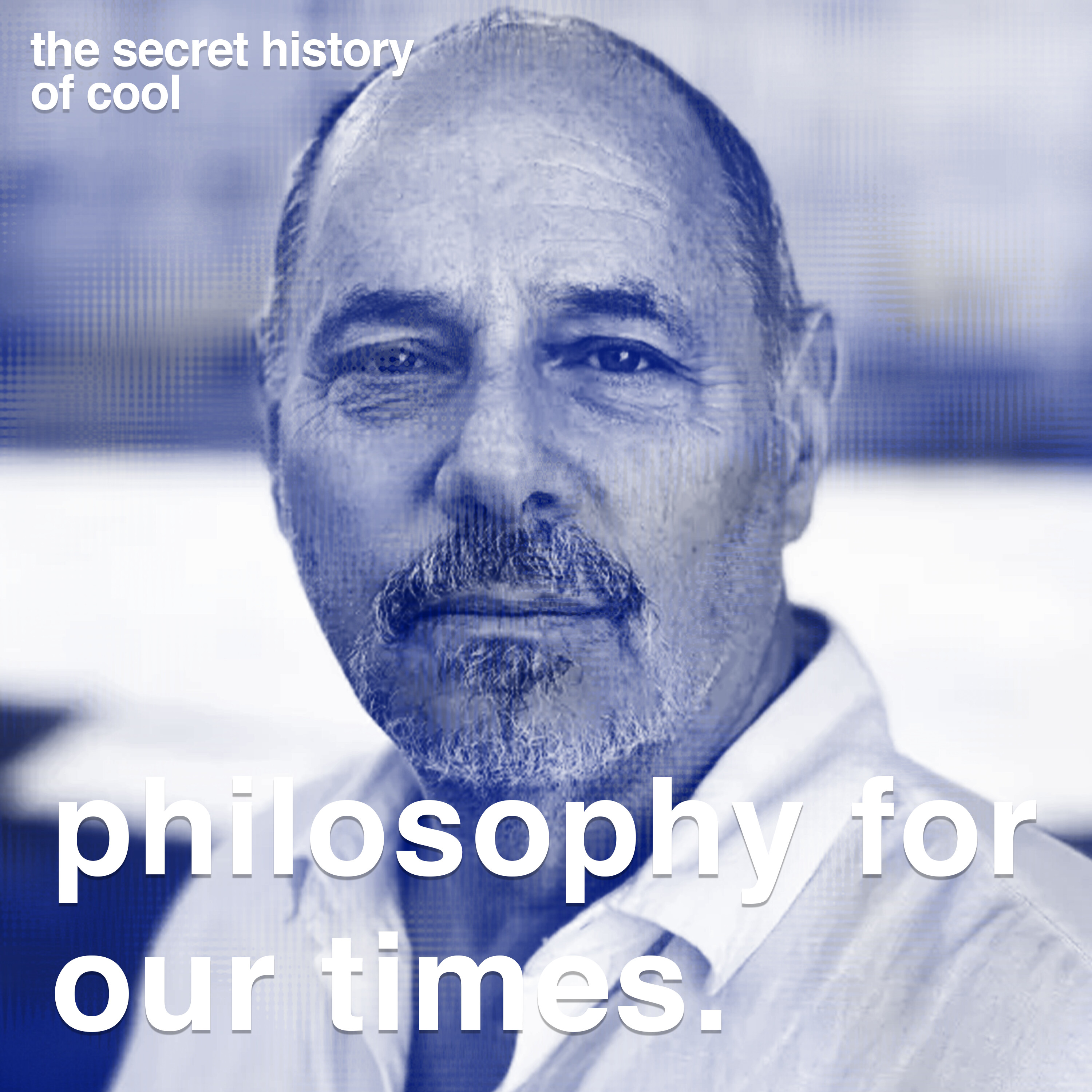 The secret history of cool | Joel Dinerstein | Who was the first person to be cool? What connects the civil rights movement and Albert Camus' 'The Rebel'? How has the coopting of black terminology impacted American society more broadly?From James Dean to Kate Moss, we know cool when we see it. But its history goes back to jazz music and the civil rights movement. Academic Joel Dinerstein reveals the forgotten history of this elusive concept. "Entertaining and insightful" - New York TimesJoel Dinerstein is the author of The Origins of Cool in Postwar America (University of Chicago, 2017) and Clark Chair of American Civilisation at Tulane University and writes about race, cool, and popular music. Don't hesitate to email us at [email protected] with your thoughts or questions on the episode!To witness such talks live buy tickets for our upcoming festival: https://howthelightgetsin.org/festivals/And visit our website for many more articles, videos, and podcasts like this one: https://iai.tv/You can find everything we referenced here: https://linktr.ee/philosophyforourtimesSee Privacy Policy at https://art19.com/privacy and California Privacy Notice at https://art19.com/privacy#do-not-sell-my-info. | — | ||||||
| 8/18/26 | 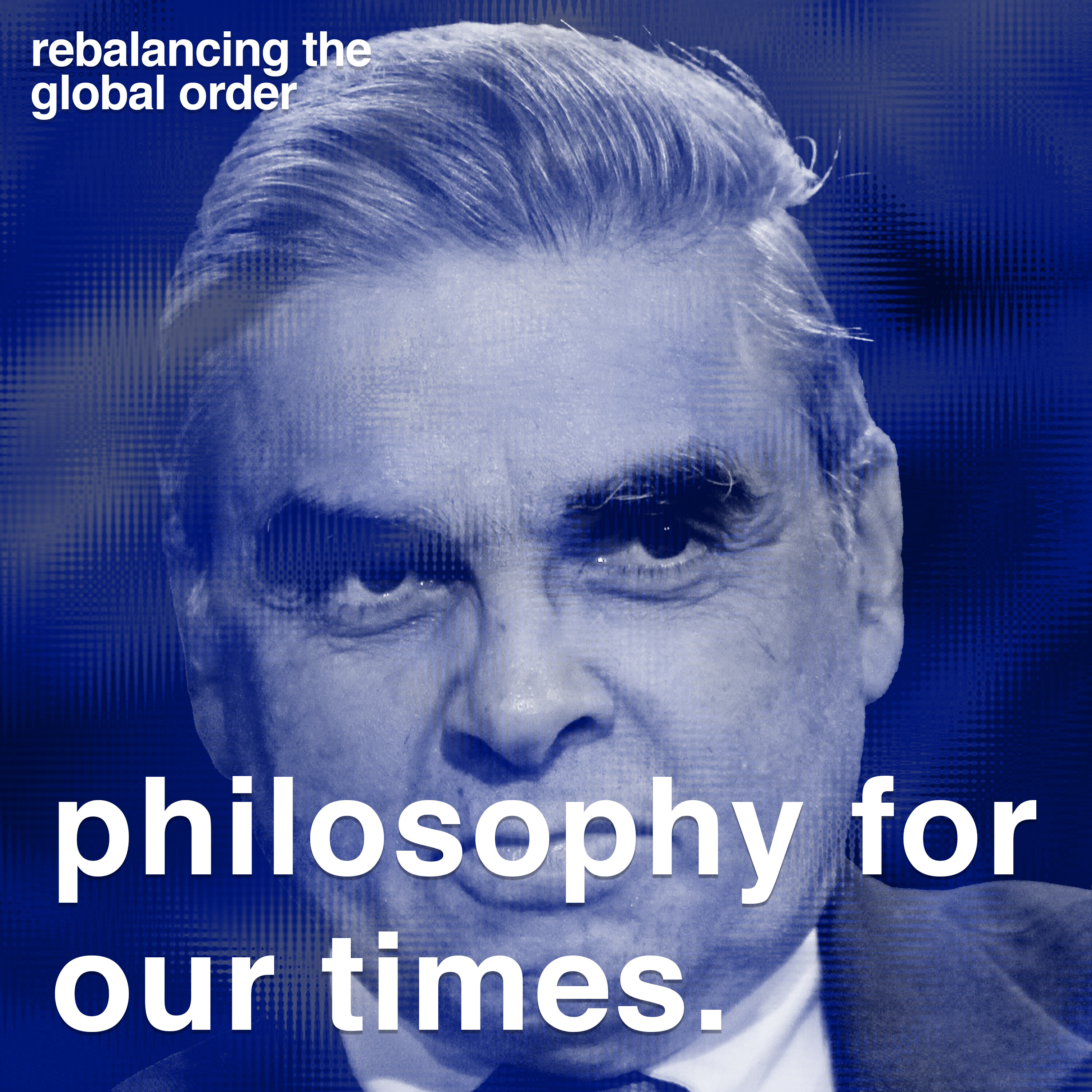 Rebalancing the global order | Kishore Mahbubani | Is it truly the beginning of the end of Western dominance? Where did it all go wrong? And is this more than just an upheaval of the status quo?For centuries, Western powers dominated the global order and mistook that moment for permanence. Join Former President of the UN Security Council. Kishore Mahbubani, who argues the shift now underway is not upheaval but historical rebalancing. Asian and other non-Western societies are not “rising” but returning to their natural weight in world affairs. The danger lies in Western refusal to accept this reality. The West's clinging to primacy is distorting policy and fueling conflict."Arguably Asia's most influential thinker." - Martin WolfKishore Mahbubani is a Singaporean diplomat and scholar. A former President of the UN Security Council, his work examines the geopolitics of Asia's return to the global centre stage.Don't hesitate to email us at [email protected] with your thoughts or questions on the episode!To witness such talks live buy tickets for our upcoming festival: https://howthelightgetsin.org/festivals/And visit our website for many more articles, videos, and podcasts like this one: https://iai.tv/You can find everything we referenced here: https://linktr.ee/philosophyforourtimesSee Privacy Policy at https://art19.com/privacy and California Privacy Notice at https://art19.com/privacy#do-not-sell-my-info. | — | ||||||
| 8/11/26 |  The future of the right | Sohrab Ahmari, Gawain Towler, Rachel Maclean, Mark Littlewood | Is the populist right opposed to liberalism and the free market? Does this mark a change in what it is to be right-wing, or was it a mistake to see populism as far right in the first place? Or is there an unavoidable conflict on the right between maintaining the status quo and being conservative, and enabling change through the free market?At the outset of the use of the term, to be on the right was to back the aristocracy, authority and the status quo. In contrast, the liberals, known as Whigs in 18th century Britain, backed change, freedom and the rights of the individual. But in recent decades to be in favour of the free market and against the state itself came to be seen as right-wing. Now there's a further twist. The new populist right, often described as far right by its critics, has become critical of some aspects of the free market. Trump's tariffs are in support of current jobs and against the market. Le Pen is against big corporations. Reform in favour of state ownership of key services.Sohrab Ahmari is a celebrated journalist and cultural critic and co-founder of Compact magazine and author of Tyranny, Inc.Gawain Towler is a British political strategist, journalist, and long-standing figure in the Eurosceptic movement. Best known for his work in party communications and media strategy, he currently serves on the governing board of Reform UK.Rachel Maclean is a former UK minister, Conservative peer, and is Director of Strategy to the Leader of the Opposition.Mark Littlewood is a libertarian economist and media commentator known for his provocative advocacy on free markets, regulation, and public policy. He’s currently director of the think tank Popular Conservatism.Hosted by Roger Hearing.Don't hesitate to email us at [email protected] with your thoughts or questions on the episode!To witness such talks live buy tickets for our upcoming festival: https://howthelightgetsin.org/festivals/And visit our website for many more articles, videos, and podcasts like this one: https://iai.tv/You can find everything we referenced here: https://linktr.ee/philosophyforourtimesSee Privacy Policy at https://art19.com/privacy and California Privacy Notice at https://art19.com/privacy#do-not-sell-my-info. | — | ||||||
| 8/4/26 | 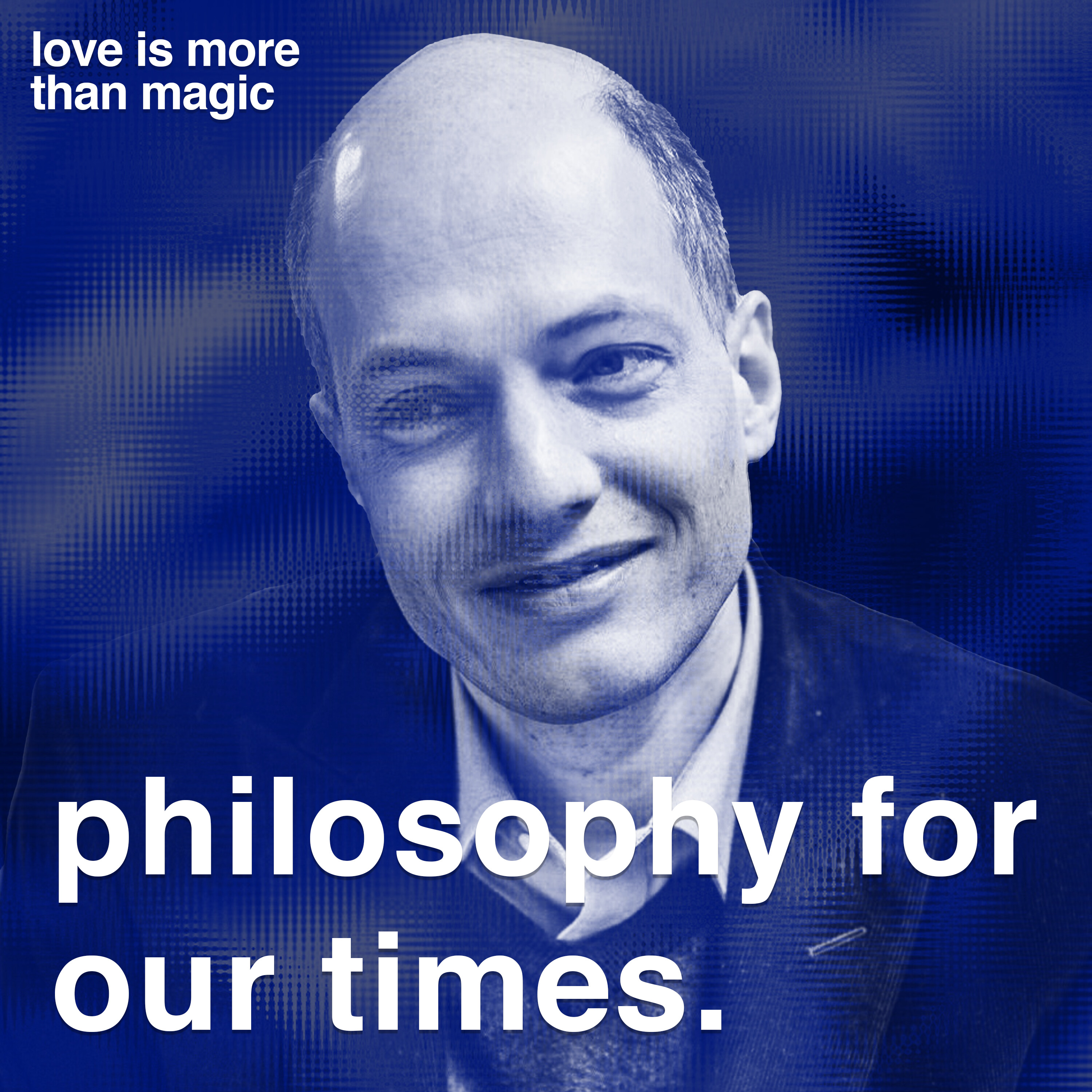 Love is more than magic | Alain de Botton | What do voyeurs want? What can the Greeks teach us about love? Why do we pursue those who we now are going to hurt us?Despite our longing for lasting connection, love often falters on the rocks of misunderstanding and unmet expectations. Philosopher and founder of The School of Life, Alain de Botton, explores how romantic ideals mislead us and why emotional maturity, not chemistry, holds the key to enduring intimacy. Drawing on philosophy and psychology, he examines how our childhood shapes desire and how love, far from being a mystical or ethereal force, is a demanding skill we must patiently and consciously learn."One of our most consistently illuminating writers on contemporary culture." — John GrayAlain de Botton is the bestselling philosopher redefining how we understand love, work, and meaning in the modern world. He first rose to prominence with Essays in Love, a novel-philosophy hybrid that became an international bestseller. He has since authored several bestselling works that blend literary elegance, psychological insight, and philosophical depth.Don't hesitate to email us at [email protected] with your thoughts or questions on the episode!To witness such talks live buy tickets for our upcoming festival: https://howthelightgetsin.org/festivals/And visit our website for many more articles, videos, and podcasts like this one: https://iai.tv/You can find everything we referenced here: https://linktr.ee/philosophyforourtimesSee Privacy Policy at https://art19.com/privacy and California Privacy Notice at https://art19.com/privacy#do-not-sell-my-info. | — | ||||||
| 7/28/26 |  In the name of reason | Steve Fuller, Miriam Schoenfield, Dan Sperber | Is the future one where we accept tribalism and conflict as inherent in the human condition, where moral and scientific beliefs based on reason are badges, shaped by class, nation, ethnicity and culture? Or is reason more important than ever, not as a route to truth, but as a means to test the effectiveness and consequences of a given outlook? And can we reclaim reason as a method for resisting the crowd rather than following it?Reason was supposedly the great liberator – an Enlightenment gift that freed us from blind adherence to tradition and the authority of church and state. But today, many now contend this is a comforting myth. For as Benjamin Franklin put it, reason merely helps us “make a reason for everything one already has a mind to do.” Furthermore, studies confirm people with more developed reasoning skills are more susceptible to groupthink and polarization, not less. For the more rational we are, the better we are at justifying what we already believe – especially when it aligns with our social circle. Dan Sperber is a distinguished anthropologist and philosopher who is the author of several critically-acclaimed books, including The Enigma of Reason. Steve Fuller is a professor of sociology at the University of Warwick. He is the author of dozens of books, including Post-truth: Knowledge as a Power Game. Miriam Schoenfield is a leading epistemologist, Associate Professor of Philosophy at the University of Texas at Austin, and award-winning essayist. Jack Symes is a public philosopher and writer. He is the producer of The Panpsycast Philosophy Podcast and editor of the Bloomsbury series Talking about Philosophy. He is currently Teacher and Researcher at Durham University, UK.Don't hesitate to email us at [email protected] with your thoughts or questions on the episode!To witness such talks live buy tickets for our upcoming festival: https://howthelightgetsin.org/festivals/And visit our website for many more articles, videos, and podcasts like this one: https://iai.tv/You can find everything we referenced here: https://linktr.ee/philosophyforourtimesSee Privacy Policy at https://art19.com/privacy and California Privacy Notice at https://art19.com/privacy#do-not-sell-my-info. | — | ||||||
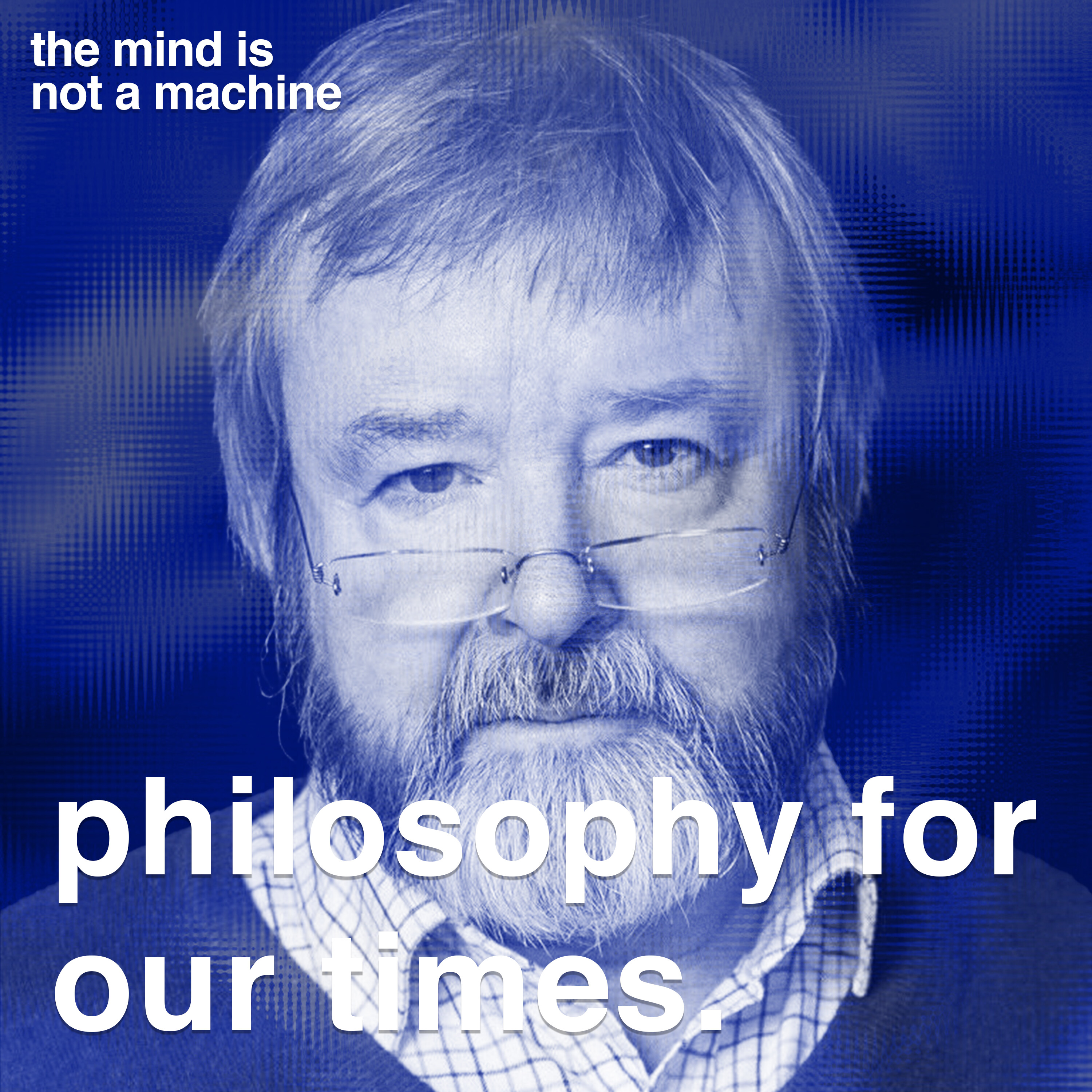
| 7/21/26 | mindAI+5 | Iain McGilchrist | Institute of Art and IdeasIAI+1 | — | mindmachine+6 | — | 21m 45s | ||
| 7/14/26 | anxietysoul's itch+5 | Sarah Wilson | IAICosmopolitan Australia+2 | — | anxietysoul's itch+5 | — | 26m 25s | ||
| 7/7/26 | scientific truthbeauty+3 | Lisa Randall | Harvard UniversityNew York Times+2 | — | beautyscientific truth+3 | — | 22m 54s | ||
| 6/30/26 | liberalismpolitics+4 | Maurice GlasmanSohrab Amari | IAITyranny Inc. | — | liberalismpolitics+6 | — | 32m 46s | ||
| 6/23/26 | AIart+4 | Jaron Lanier | IAI | — | AIart+5 | — | 30m 25s | ||
| 6/16/26 | mind uploadingconsciousness+3 | Anders Sandberg | IAI | — | mind uploadingconsciousness+3 | — | 37m 00s | ||
| 6/9/26 | idealismmaterialism+3 | James Tartaglia | IAI | — | idealismmaterialism+5 | — | 28m 24s | ||
| 6/2/26 | politicsright-wing thinking+4 | Richard Tice | Reform UK | BritainUS+5 | Reform UKpopulism+4 | — | 29m 44s | ||
| 5/26/26 | philosophyeducation+3 | Mary Midgley | IAI | — | philosophyrelevance+5 | — | 27m 37s | ||
| 5/19/26 | gender identitypolitics+4 | Judith Butler | University of California, BerkeleyWho's Afraid of Gender?+1 | — | gender identityJudith Butler+5 | — | 40m 42s | ||
| 5/12/26 | imaginationperception+4 | Nadine Dijkstra | Institute of Neurology at UCLUCL+3 | — | human perceptionimagination+5 | — | 14m 22s | ||
| 5/5/26 | consciousnessneuroscience+4 | Àlex Gómez-Marín | IAIScience 2.0 | — | brainconsciousness+5 | — | 30m 16s | ||
| 4/28/26 | evolutionary psychologyhuman behavior+4 | Subrina E. SmithKeith Frankish+1 | IAI | — | evolutionary psychologyhuman behavior+5 | — | 45m 23s | ||
| 4/21/26 | quantum mechanicshistory+4 | Slavoj Žižek | IAIQuantum History: A New Materialist Philosophy | — | quantum historypolitical action+6 | — | 1h 26m 10s | ||
| 4/14/26 | analytic philosophycontinental philosophy+3 | Babette BabichGenia Schönbaumsfeld+1 | Northeastern University LondonHegel Bulletin | — | analytic philosophycontinental philosophy+3 | — | 48m 36s | ||
| 4/6/26 | animal ethicsmoral reawakening+4 | Martha Nussbaum | IAIUS Navy+1 | factory meat industryhowthelightgetsin.org+2 | animal sufferingethics+5 | — | 27m 28s | ||
| 3/31/26 | educationuniversities+4 | Yaron BrookCatherine Liu+1 | Ayn Rand InstituteUniversity of California, Irvine | — | academic freedomuniversity crisis+3 | — | 46m 43s | ||
| 3/24/26 | neoclassical economicspolitical economy+4 | Abby Innes | LSEIAI | Soviet UnionBritish | neoclassical economicspolitical economy+6 | — | 25m 56s | ||



Showing 25 of 567
Pitch Fit is a Pro feature
See how bookable this show is for guests, which brands already advertise, the per-episode ad value, and the best-fit guest and sponsor profile. The numbers are blurred on the free plan.
How readily this show books outside guests like you.
How proven this show is for host-read sponsorships.
For Guests
ProFor Advertisers
ProUpgrade to Pro to unlock guest cadence, sponsor categories, fit scores, and per-episode ad value for this show.
Similar Audience Demographics
Podcasts that attract a similar listener profile

Philosophy Bites
Edmonds and Warburton
The Partially Examined Life Philosophy Podcast
Mark Linsenmayer, Wes Alwan, Seth Paskin, Dylan Casey

Philosophize This!
Stephen West

Philosopher's Zone
ABC
In Our Time: Philosophy
BBC Radio 4
Theory & Philosophy
David Guignion

History of Philosophy Without Any Gaps
Peter Adamson
Chart history for Philosophy For Our Times
Peaked at #6 in SG, top 10 in 7 of 50 tracked markets, currently #6 in SG.
| Market | Genre | Peak | Current | Trend |
|---|---|---|---|---|
| SG | — | #6 | #6 | — |
| Ireland | — | #9 | #9 | — |
| GR | — | #9 | #9 | — |
| AR | — | #9 | #9 | — |
| South Africa | — | #9 | #9 | — |
| KE | — | #9 | #9 | — |
| PH | — | #10 | #10 | — |
| United Kingdom | — | #11 | #11 | — |
| NG | — | #11 | #11 | — |
| VN | — | #15 | #15 | — |
| PT | — | #17 | #17 | — |
| India | — | #17 | #17 | — |
| TH | — | #17 | #17 | — |
| ID | — | #17 | #17 | — |
| RO | — | #18 | #18 | — |
| Norway | — | #19 | #19 | — |
| CZ | — | #21 | #21 | — |
| PE | — | #22 | #22 | — |
| IS | — | #23 | #23 | — |
| PL | — | #25 | #25 | — |
Chart Positions
50 placements across 47 markets.
Chart Positions
50 placements across 47 markets.