Alzheimer's and Amyloid 3: The Mistake of the Invisible Friend
About this episode
The episode discusses the failures of the Amyloid Hypothesis in explaining Alzheimer's disease.
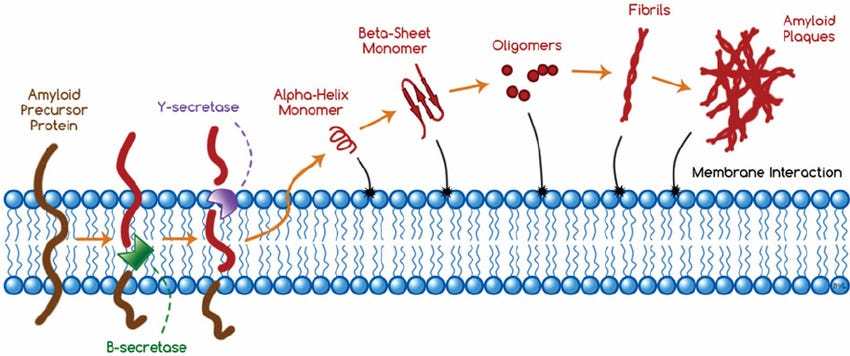
Neuroscientists are not famous for being dumb. So when the following timeline unfolded, they should have understood exactly what it meant: First, autopsy studies in 1991 and 1992 found that amyloid plaques—supposedly the cause of Alzheimer’s, as the centerpiece of the Amyloid Hypothesis—did not scale with the disease. Then, in 2001 and 2002 , researchers published data showing that an Alzheimer’s mouse model developed dementia—before ever developing plaques. Finally, in 2004 a vaccine successfully removed plaques from the brains of Alzheimer’s patients—yet their dementia continued to spiral, unabated. RT is fully reader-supported. For the price of a cup of coffee once a month from you, I can continue RT—please become a paid subscriber. It is hard to imagine a more obvious demise for the Amyloid Hypothesis. Some researchers, however, particularly those with funding and livelihoods tied to it, concentrated on the possibility that amyloid precursors might still be involved. If true, such a finding could preserve a role for amyloid researchers and their laboratories. But most precursors, detailed above, were well known, well studied, and stubbornly non-toxic. They could not explain…
People in this episode
Host: David Newman
Topics covered
- Alzheimer's disease
- Amyloid Hypothesis
- neuroscience
- dementia
- research findings
Keywords
- Alzheimer's
- Amyloid plaques
- dementia
- neuroscience
- research
- Soluble oligomers
Mentioned in this episode
Organizations: Alzheimer’s, Amyloid Hypothesis, Neuroscientists, Alzheimer’s mouse model, Alzheimer’s patients, Soluble oligomers
Explore listener stats, chart rankings, contacts and more on the Research Translation Podcast podcast page.