Kiro CLI Approval Bypass, Amazon Braket Pickle Risk, AWS Org Logging, KEDA Upgrades, and Automation’s Hidden Boundaries
About this episode
This episode discusses automation's hidden boundaries and various security vulnerabilities in cloud services.
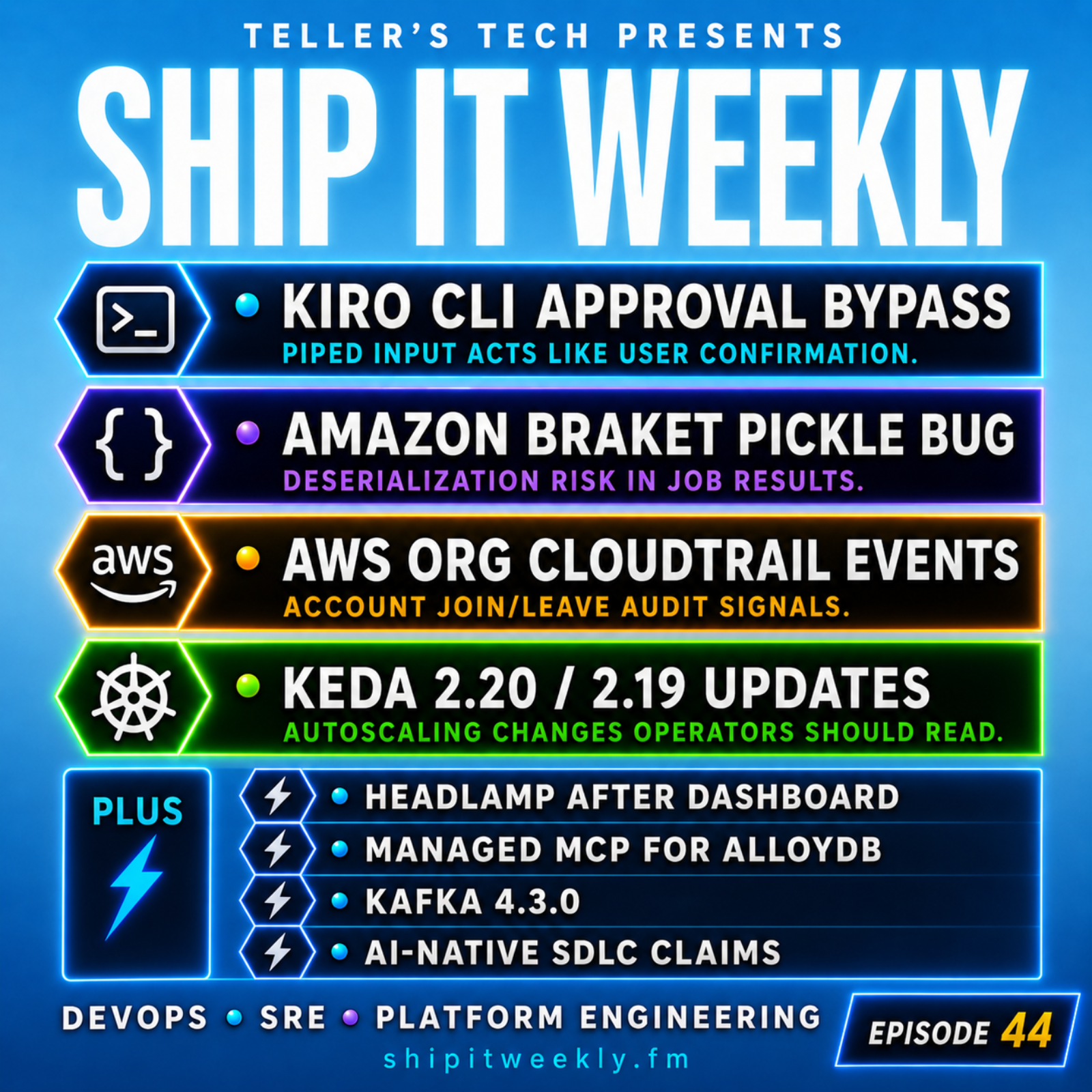
This episode of Ship It Weekly is about automation’s hidden boundaries. Brian covers Kiro CLI CVE-2026-9255, where piped stdin could act like user approval, Amazon Braket SDK CVE-2026-9291 and the very normal Python pickle risk hiding inside quantum job results, AWS Organizations finally emitting CloudTrail events when accounts join or leave an org, and KEDA updates that remind us autoscaling upgrades are production behavior changes. The bigger thread this week is that automation does not remove boundaries. It moves them. Approval paths, trusted data, account membership, scaling signals, platform access, and AI-generated output all need clear ownership and visibility. Brian also covers Kubernetes Dashboard being archived with Headlamp as the path forward, Google Cloud Remote MCP Server for AlloyDB, Apache Kafka 4.3.0, and Atlassian’s AI-native SDLC productivity claims. Sponsored by @Scale: Systems & Reliability, happening June 25 at the Meydenbauer Center in Bellevue, Washington. Register at https://bit.ly/4xd2FdG Links Kiro CLI CVE-2026-9255 https://aws.amazon.com/security/security-bulletins/2026-035-aws/ Amazon Braket SDK CVE-2026-9291…
People in this episode
Host: Brian
Topics covered
- automation
- security vulnerabilities
- cloud services
- Kubernetes
- scaling
- AI in software development
Keywords
- Kiro CLI
- Amazon Braket
- AWS Organizations
- KEDA
- Kubernetes Dashboard
- Google Cloud
- Apache Kafka
- Atlassian
- automation
- security
Sponsors
Scale: Systems & Reliability
Mentioned in this episode
Organizations: AWS, Kubernetes, Google Cloud, Atlassian
Products: Kiro CLI, Amazon Braket, KEDA, AlloyDB, Apache Kafka
Explore listener stats, chart rankings, contacts and more on the Ship It Weekly - DevOps, SRE, Platform and Cloud Engineering News podcast page.