Ship It Weekly - DevOps, SRE, Platform and Cloud Engineering News
Ship It Weekly is a short, practical recap of what actually matters in DevOps, SRE, cloud infrastructure, and platform engineering.Each episode, your host Brian Teller walks through the latest outages, releases, tools, a...
Insights from recent episode analysis
On the show
- Gareth Kersey1 ep
- Stephane Moser1 ep
- David Chute1 ep
Also: Jake Warner, Mat Ryer, Evan Phoenix, Kat Traxler, Joel DeStefano, Francois Richard, Justin Garrison, Ned Bellavance, Jay Lark
Audience Interest
Podcast Focus
Publishing Consistency
Insights are generated by CastFox AI using publicly available data, episode content, and proprietary models.
Most discussed topics
Brands & references
Total monthly reach
Based on 1 signal.
Built from
By chart position
- 🇺🇸United States · Tech NewsHOME#10316K to 82K
- 🇻🇳VN · Tech News#84.3K to 23K
- 🇬🇧United Kingdom · Tech News#791.8K to 9.5K
- 🇵🇱PL · Tech News#241.7K to 8.9K
- 🇧🇷Brazil · Tech News#110809 to 4.3K
- Per-Episode Audience
Est. listeners per new episode within ~30 days
29K to 153K🎙 ~2x weekly·66 episodes·Last published 3d ago - Monthly Reach
Unique listeners across all episodes (30 days)
58K to 307K🇺🇸54%🇻🇳15%🇬🇧6%+14 more - Active Followers
Loyal subscribers who consistently listen
32K to 169K
Market Insights
Platform Distribution
Reach across major podcast platforms, updated hourly
Total Followers
—
Total Plays
—
Total Reviews
—
* Data sourced directly from platform APIs and aggregated hourly across all major podcast directories.
| Date | Episode | Topics | Guests | Brands | Places | Keywords | Sponsor | Length | |
|---|---|---|---|---|---|---|---|---|---|
| 10/19/26 |  Ship It Conversations: Rob Koch of Slalom on Accessible Cloud Native, Sign Language Recognition with Kubeflow, Overhyped AI, Conference Accessibility, and Why Teams Should Hire Deaf Engineers | This is a guest conversation episode of Ship It Weekly, separate from the weekly news recaps.In this Ship It Conversations episode, I talk with Rob Koch about what accessible cloud native actually looks like, why sign language is still one of the hardest problems in AI, and why the fastest way to make your tooling accessible is to hire deaf engineers.Rob is a senior principal at Slalom, an AWS Hero, and co-chair of the CNCF Deaf and Hard of Hearing Working Group. Rob is Deaf, and his ASL interpreter, Amelia Fruehsamer, voices his answers. Special thanks to Amelia for interpreting the conversation.We start with an analogy Rob comes back to all episode: cloud native is the toolbox, and platform engineering is the workbench. Then we get into what's overhyped about AI, the guardrails it still needs, and what auditable AI observability looks like.A big part of the conversation is accessibility in practice. Rob explains how captions pushed for deaf attendees ended up helping neurodivergent folks too, and what conferences get wrong: accessibility planned at the very end instead of the start, and the real cost of interpreters versus captions.Then we get technical. Rob walks through using Kubernetes and Kubeflow to train models that recognize sign language, and why it's so hard: regional signs, lighting, skin tone and backgrounds, and a camera that can't tell which way a hand is facing. His joke: we don't have AGI until AI understands sign language.The big takeaway: start with people, not a checklist. Hire deaf and hard of hearing engineers, ask them how they want to work, and your tools get more accessible because they're in the room.Highlights• Cloud native as the toolbox, platform engineering as the workbench• What's overhyped about AI, and the guardrails it still needs• What accessible cloud native means in practice• Captions that help far more people than you planned for• What conferences get wrong about accessibility, and what it costs• Kubernetes and Kubeflow for sign language recognition• Gesture-based computing and why speech-to-text had a 30-year head start• Where to start: hire deaf engineersLinksRob Koch on LinkedIn: https://tsn.io/4qmFoRob Koch on GitHub: https://tsn.io/MbxrsAmelia Fruehsamer (Rob's ASL interpreter) on LinkedIn: https://tsn.io/UJB88CNCF Deaf and Hard of Hearing Working Group: https://tsn.io/tB1lSCNCF conference accessibility best practices: https://tsn.io/BZvpvCNCF Merge Forward: https://tsn.io/QPVNQKubeflow: https://tsn.io/4OVKfMore episodes and show notes: https://tsn.io/NqkdPOn Call Brief: https://tsn.io/Gpz2dLMGT Awards: https://tsn.io/lAERA | 45m 21s | ||||||
| 10/17/26 |  GitHub Actions Lockfiles, GitLab CVSS 10 CI Flaw, Google Cloud Storage Outage & Torvalds Builds Kernel Patches With Claude Code | This week on Ship It Weekly, GitHub Actions workflow lockfiles land in public preview, pinning actions and their dependencies to exact commits. GitLab shipped a critical patch release for CVE-2026-97229, a CVSS 10 CI/CD regex flaw that could let an unauthenticated attacker run code on the server. Google published its final report on two Cloud Storage incidents in us-central1, including a recurrence caused by an incomplete rollback. And Linus Torvalds pushed an experimental kernel branch with page-cache patches built using Claude Code, as maintainers debate dropping the mandatory AI attribution tag.The thread this week: know what you're actually running, from the commit you reviewed to the state a rollback really left behind and code someone can still explain.In the lightning round: a record Patch Tuesday with more than 1,400 CVEs and an actively exploited Windows Shell bypass, GitHub AI Scan for pull requests and agentic autofix going GA, AWS Strands Box, an open-source agent sandbox that keeps real credentials out of the agent's environment, and a Microsoft 365 outage through Global Secure Access.The human closer comes from Paul LaPosta's “Your error budgets don't know AI exists.” AI has split shipping a change from understanding it, and SLOs don't measure comprehension. Your SLO can tell you the service is up. It cannot tell you whether anyone still understands it.Programming note: Ship It Weekly turns one next month, so expect more conversations over the next couple of months, usually two a week, starting Monday with Rob Koch.LinksGitHub Actions workflow lockfilesGitLab 19.4.2 / 19.3.5 / 19.2.8 patch releaseGoogle Cloud Storage incident reportLinus Torvalds and Claude Code (Phoronix)Linux drops the Assisted-by requirement (Phoronix)October 2026 Patch TuesdayGitHub AI Scan for pull requests GAAgentic autofix GAAWS Strands BoxMicrosoft 365 Global Secure Access outageYour error budgets don't know AI exists (LeadDev)This week's On Call Brief | 14m 02s | ||||||
| 10/12/26 | 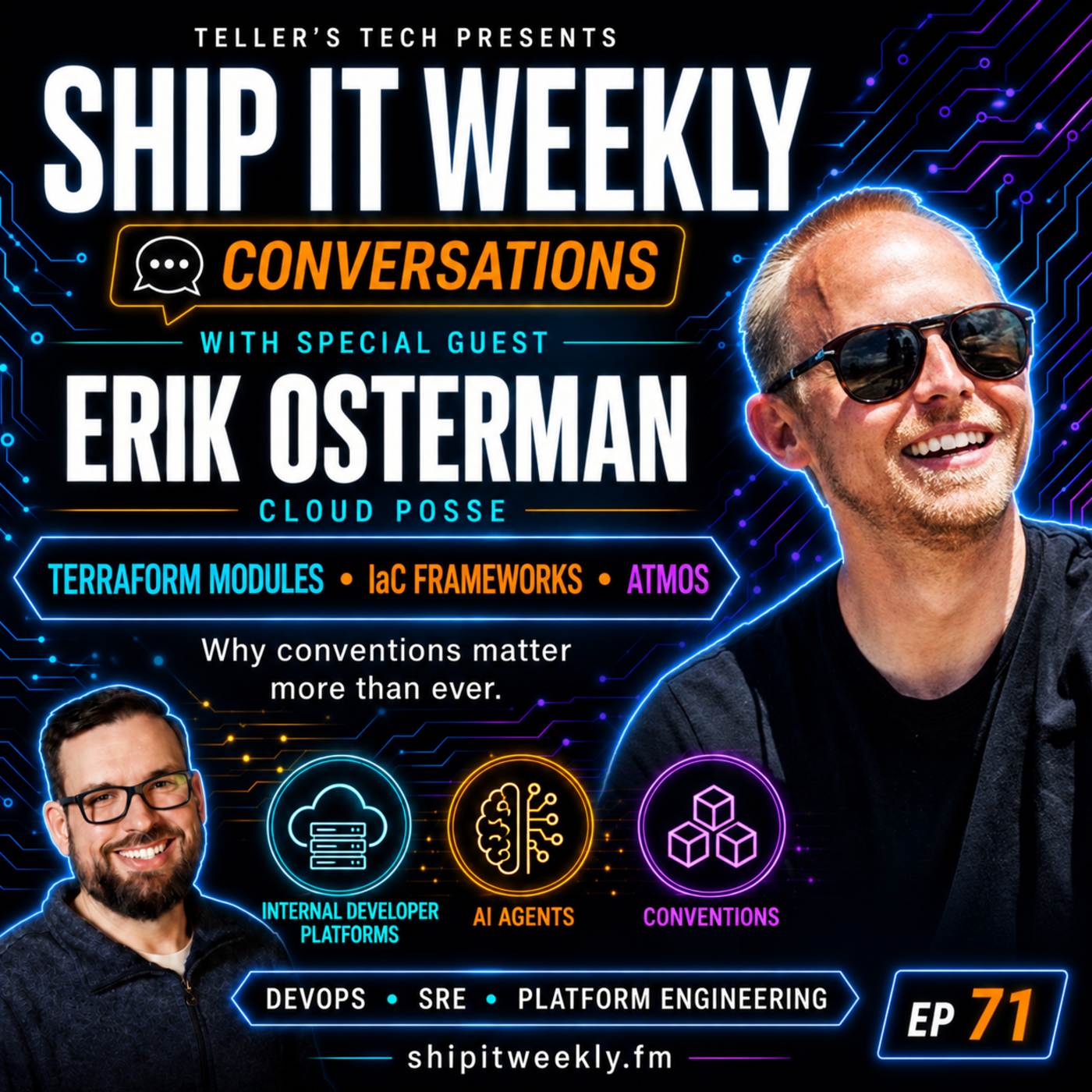 Ship It Conversations: Erik Osterman of Cloud Posse on Terraform Modules, IaC Frameworks, Atmos, Internal Developer Platforms, AI Agents, and Why Conventions Matter More Than Ever | This is a guest conversation episode of Ship It Weekly, separate from the weekly news recaps.In this Ship It Conversations episode, I talk with Erik Osterman of Cloud Posse about Terraform modules, infrastructure as code frameworks, internal developer platforms, and why AI makes conventions more valuable, not less.Erik is the founder and CEO of Cloud Posse, which has published more than 180 open source Terraform modules, and he hosts Cloud Posse's weekly DevOps Office Hours.We start with what AI has done to open source infrastructure projects, then get into what makes a good Terraform module: consistent naming, a consistent interface, not so small that it wraps a single resource, and not so large that it has a hundred inputs nobody can test.We also talk about CloudFormation, Pulumi, and why HCL's constraints helped build the module ecosystem. Erik explains where Crossplane fits, and why accounts, IAM, networking, DNS and certificates all come before the cluster.A big part of the conversation is frameworks. Erik argues that nobody actually runs "vanilla Terraform," because Terraform alone doesn't handle state layout, promotion, authentication, tool installation or repository structure. Every team ends up building its own framework, usually undocumented. We talk about Terragrunt, Atmos, naming conventions, brownfield adoption, and breaking a monolithic root module into services.Near the end, we get into AI and self-service. Erik's team now generates most of its infrastructure work with AI, and it works because the conventions, agent skills, MCPs and pipelines are already in place. Self-service doesn't have to mean another no-code platform.The big takeaway: AI can generate infrastructure code faster than ever, but without conventions it is generating into chaos.Highlights• What makes a good Terraform module• Root modules vs. child modules• CloudFormation, Terraform, Pulumi, and why constraints helped HCL win• Where Crossplane fits, and what has to exist before the cluster• Why internal developer platforms like Backstage come after zero-to-one• Why infrastructure as code needs frameworks, not just modules• Agent skills, MCPs, and self-service without a no-code platformLinksCloud Posse: https://cloudposse.comAtmos: https://atmos.toolsCloud Posse on GitHub: https://github.com/cloudposseDevOps Office Hours: https://tsn.io/2gq7vErik Osterman on LinkedIn: https://www.linkedin.com/in/ostermanMore episodes and show notes: https://tsn.io/NqkdPOn Call Brief: https://tsn.io/Gpz2dLMGT Awards: https://lmgt.org | 39m 31s | ||||||
| 10/10/26 | 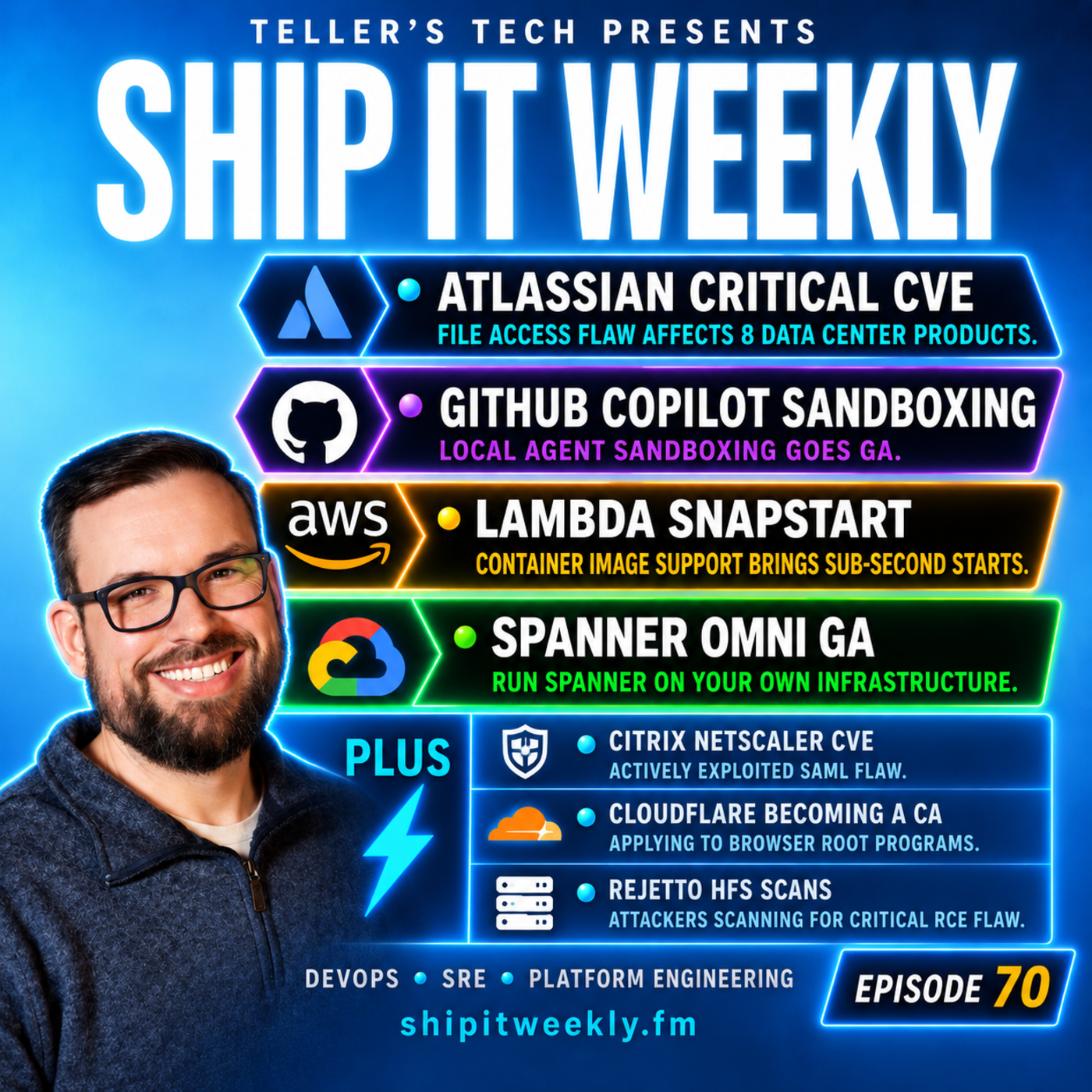 Critical Atlassian CVE Hits Jira, Confluence & Bitbucket, GitHub Copilot Sandboxing Goes GA, AWS Lambda SnapStart for Containers & Google Spanner Omni | This week on Ship It Weekly: Atlassian disclosed a critical arbitrary file access vulnerability affecting eight Data Center products, including Jira, Confluence, Bitbucket, and Bamboo. GitHub Copilot local sandboxing is now generally available, giving teams enforceable controls around filesystem, network, credentials, and local tooling. AWS published a deeper look at Lambda SnapStart for container images, including the operational risks of restoring initialized state. And Google Spanner Omni is now generally available, bringing Spanner outside Google Cloud and putting more of the availability responsibility back on the customer.The bigger theme this week is control. Developer tools are production infrastructure. AI agents need real execution boundaries, not just instructions. Faster startup through snapshots means understanding exactly what state is being restored. And moving a managed database onto your own infrastructure gives you portability, but also gives you the pager.In the lightning round: Citrix has a NetScaler SAML vulnerability under active exploitation. Cloudflare is working toward becoming a publicly trusted certificate authority. And attackers are actively scanning for Rejetto HFS servers vulnerable to a flaw that can lead to account takeover and remote code execution.And the human closer comes from Lorin Hochstein and a recent Google Cloud networking incident. One part of the outage involved someone correctly following an incorrect procedure, while another involved someone incorrectly following a correct one. Training matters, but systems also need guardrails that keep normal human mistakes from turning into large outages. If your system only works when nobody makes a mistake, the system is the problem.LinksAtlassian CVE-2026-21589https://tsn.io/ZlqKvGitHub Copilot Local Sandboxinghttps://tsn.io/rQngMAWS Lambda SnapStart for Container Imageshttps://tsn.io/uXqkKGoogle Spanner Omni GAhttps://tsn.io/GoZZ5Citrix NetScaler CVE-2026-88779https://tsn.io/yN5a9Cloudflare Certificate Authorityhttps://tsn.io/egMN5Rejetto HFS CVE-2026-61500https://tsn.io/oQrkUGoogle Cloud Networking Incidenthttps://www.tellerstech.com/go/s-dc989ad2/There Was a Light That Never Went Outhttps://www.tellerstech.com/go/s-cb0bc459/This Week’s On Call Briefhttps://tsn.io/8yaIYShip It Weeklyhttps://tsn.io/NqkdPOn Call Briefhttps://tsn.io/Gpz2d | 17m 56s | ||||||
| 10/1/26 | 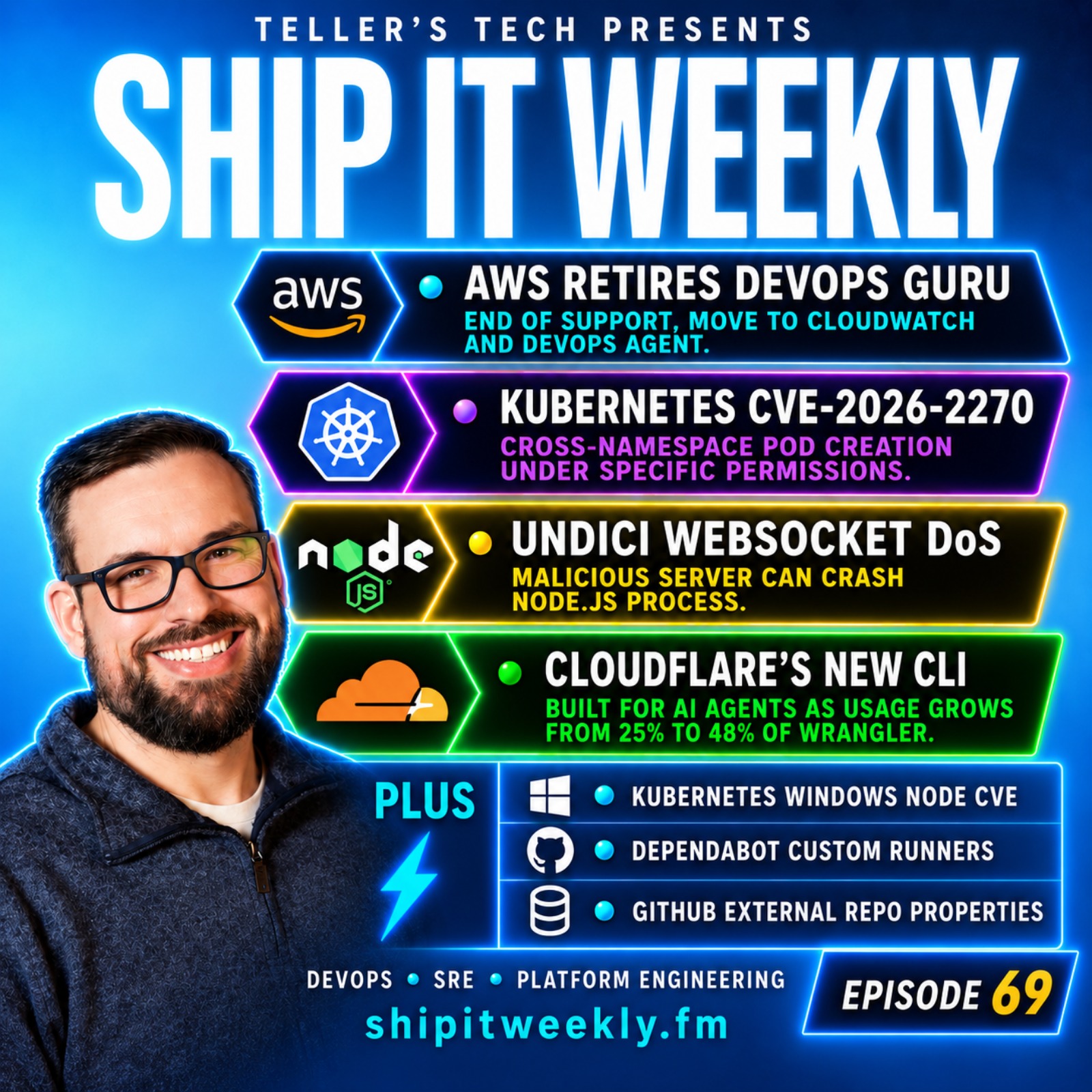 AWS Retires DevOps Guru: What the End of Support Means, Kubernetes Cross-Namespace CVE-2026-2270, Node.js Undici WebSocket DoS & Cloudflare’s New CLI for AI Agents | This week on Ship It Weekly: AWS is retiring Amazon DevOps Guru and pointing customers toward CloudWatch and the newer Amazon DevOps Agent. Kubernetes disclosed a vulnerability where StatefulSet and ControllerRevision permissions can allow cross-namespace pod creation under specific conditions. A vulnerability in Undici can let a malicious WebSocket server crash a Node.js process through compressed data. And Cloudflare launched a new CLI as AI agents grow from 25 percent to 48 percent of Wrangler usage.The bigger theme this week is how the systems around our infrastructure are changing. Managed cloud services still have lifecycles that eventually become migration work. Kubernetes authorization can depend on what controllers do with the resources users are allowed to manipulate. Applications acting as clients still process untrusted data. And infrastructure tooling is starting to treat AI agents as first-class users rather than humans who happen to automate commands.In the lightning round: another Kubernetes vulnerability affecting Windows nodes can expose NetNTLMv2 credentials through NTLM coercion. GitHub now supports custom runners for Dependabot version and security updates. And external systems like a CMDB or internal developer portal can push repository properties into GitHub while remaining the source of truth.And the human closer comes from Lorin Hochstein and SRE Weekly. Some availability risks are probably never going away. Resources are finite, networks fail, security controls can affect availability, and production systems have to change. Preventing individual failures still matters, but incident response is part of reliability engineering too. Sometimes improving reliability means getting better at handling the failures you cannot eliminate.LinksAmazon DevOps Guru End of Support - https://tsn.io/GQHN8Kubernetes CVE-2026-2270: Cross-Namespace Pod Creation - https://tsn.io/BsNs8Undici CVE-2026-85024: WebSocket Denial of Service - https://tsn.io/LncLdCloudflare: Introducing the cf CLI - https://tsn.io/Wk3maCloudflare Forge - https://tsn.io/bAPJuLightning RoundKubernetes CVE-2026-76654: Windows NTLM Coercion - https://tsn.io/36Kc3GitHub: Custom Runners for Dependabot - https://tsn.io/tYl9KGitHub: External Custom Properties - https://www.tellerstech.com/go/s-1fd1396d/Human CloserOmnipresent Availability Risks in Cloud Software - https://www.tellerstech.com/go/s-076db9dd/Our LinksThis Week’s On Call Brief - https://tsn.io/fKB9VShip It Weekly - https://tsn.io/NqkdPOn Call Brief - https://tsn.io/Gpz2d | 16m 41s | ||||||
| 9/25/26 | 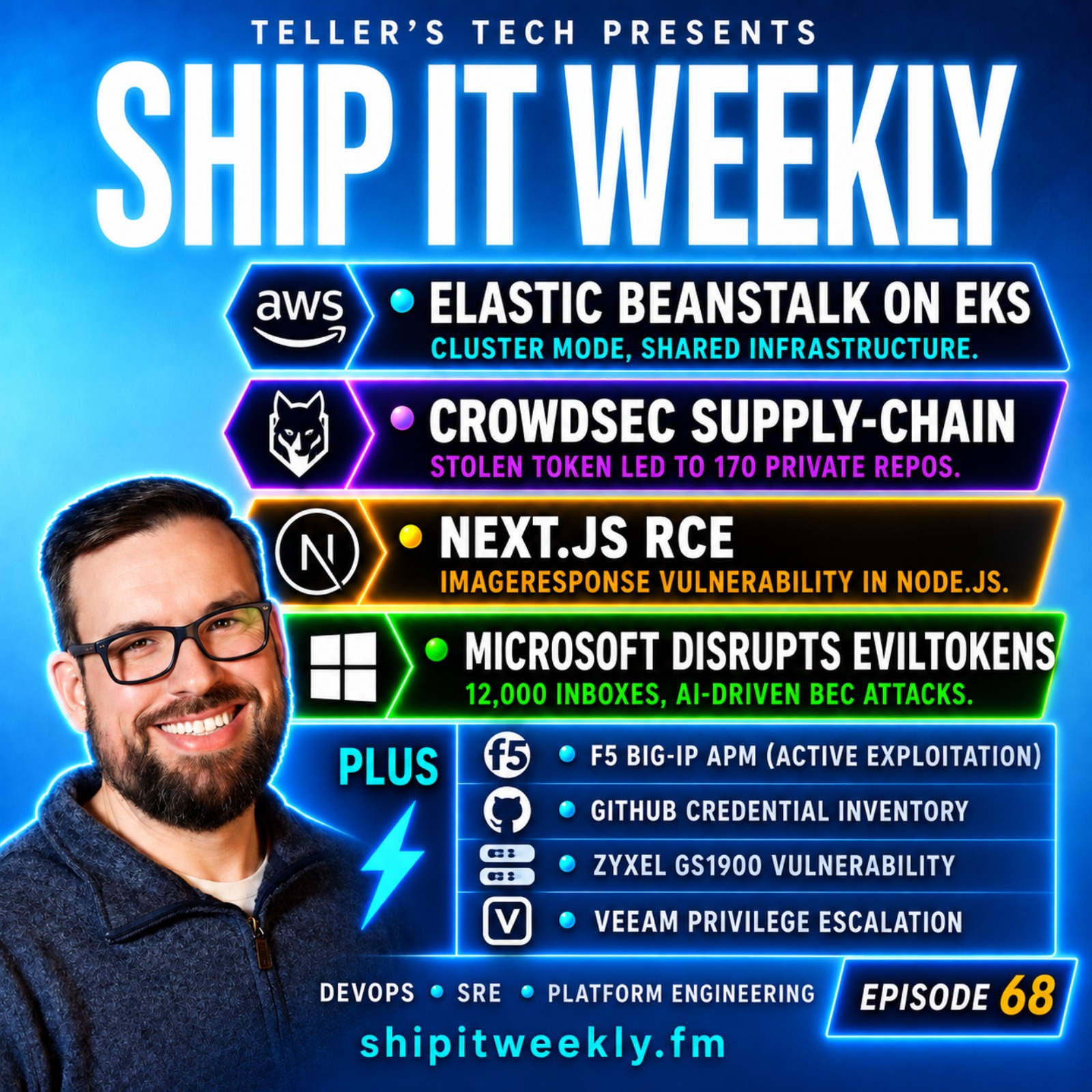 AWS Puts Elastic Beanstalk on EKS, CrowdSec Supply-Chain Breach, Critical Next.js RCE, Microsoft Disrupts EvilTokens & Why Fixing the Initial Compromise Isn’t Enough | This week on Ship It Weekly: AWS introduced Elastic Beanstalk Cluster Mode, allowing multiple applications to run on shared EKS infrastructure while AWS handles much of the Kubernetes complexity. CrowdSec published how a software supply-chain compromise led to attackers copying roughly 170 private repositories using a stolen OAuth token. A critical Next.js vulnerability in ImageResponse can lead to remote code execution through attacker-controlled SVG data. And Microsoft disrupted EvilTokens, a cybercrime platform linked to more than 12,000 compromised inboxes across 10,000 organizations.The bigger theme this week is what happens after trust has been established. Elastic Beanstalk Cluster Mode puts more infrastructure behind a managed abstraction, but shared infrastructure still means understanding isolation and blast radius. CrowdSec shows how an initial compromise can become a credential problem long after the malicious code is gone. Next.js shows how something as ordinary as generating a social preview image can expose a server-side execution path. And EvilTokens shows how attackers can use valid access to move faster once inside an account.In the lightning round: F5 has a critical BIG-IP APM vulnerability under active exploitation. GitHub Enterprise Cloud can now export an inventory of credentials with enterprise access, including PATs, SSH keys, OAuth tokens, and GitHub App credentials. Zyxel patched a vulnerability affecting GS1900 switches. And Veeam Agent for Microsoft Windows has a privilege-escalation vulnerability that can lead to SYSTEM access.And the human closer comes back to CrowdSec. Removing the malicious package, patching the server, or reimaging the workstation does not necessarily end the incident. If an attacker already stole an OAuth token, cloud credential, SSH key, session, or registry credential, that access can survive long after the original compromise is gone. Containment means understanding not only how the attacker got in, but what they took with themLinksAWS Elastic Beanstalk Cluster Modehttps://tsn.io/1xaV7CrowdSec Supply-Chain Attack Analysishttps://tsn.io/7yq2fNext.js ImageResponse Security Advisoryhttps://tsn.io/8JvHpMicrosoft: Disrupting EvilTokenshttps://tsn.io/DtbC9Microsoft: EvilTokens and Device-Code Phishinghttps://tsn.io/ZzwtDF5 BIG-IP APM CVE-2026-94127https://tsn.io/sFuKWGitHub Enterprise Credential Inventoryhttps://tsn.io/7bpMnZyxel GS1900 Security Advisoryhttps://www.tellerstech.com/go/s-b2595852/Veeam Agent for Microsoft Windows Vulnerabilityhttps://www.tellerstech.com/go/s-166d3119/This Week’s On Call Briefhttps://tsn.io/Nnd8gShip It Weeklyhttps://tsn.io/NqkdPOn Call Briefhttps://tsn.io/Gpz2d | 17m 18s | ||||||
| 9/19/26 | 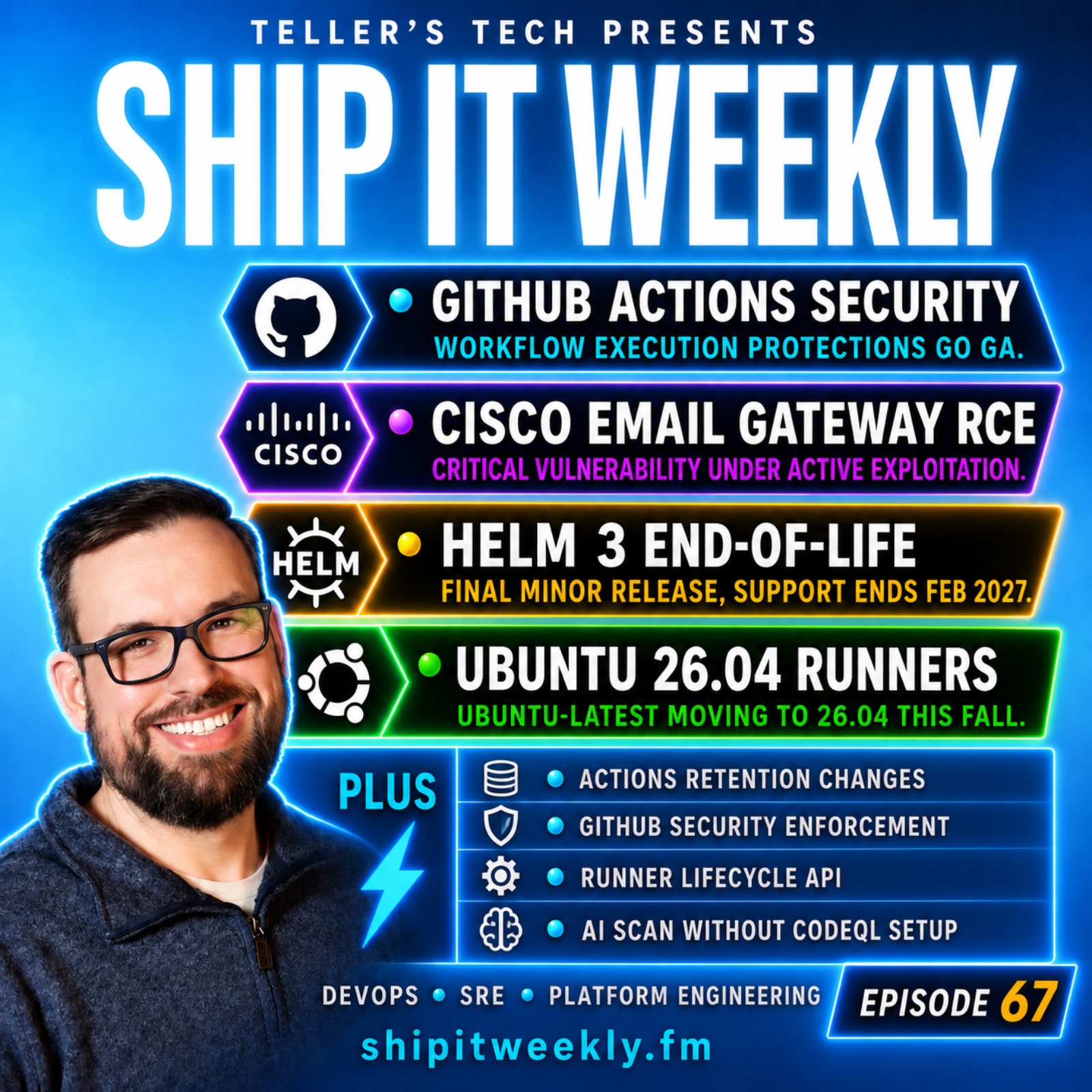 GitHub Actions Security, Cisco Email Gateway RCE, Helm 3 End-of-Life, Ubuntu 26.04 Runners & Why “Nothing Changed” Is Never the Whole Story | This week on Ship It Weekly: GitHub Actions workflow execution protections are now generally available, giving organizations more control over who and what can trigger individual workflows. Cisco is patching critical vulnerabilities in Secure Email Gateway, including an actively exploited issue that can lead to remote command execution as root. Helm 3 has reached its final minor release and is heading toward end-of-life in February 2027. And GitHub’s ubuntu-latest Actions runner is preparing to move from Ubuntu 24.04 to 26.04.The bigger theme this week is infrastructure that changes even when your code does not. GitHub is making CI execution permissions more explicit, Helm teams now have a defined migration deadline, and the ubuntu-latest transition is a good example of how a completely unchanged workflow can suddenly be running in a different environment. Pinning everything forever is not necessarily the answer. The important part is knowing which dependencies are allowed to move and testing those changes deliberately.In the lightning round: GitHub Actions checks, workflow runs, and statuses will begin following your configured retention period on October 1. GitHub Advanced Security can now enforce configurations from the enterprise level. GitHub added API support for tracking when self-hosted Actions runner versions lose support. And AI Scan for pull requests can now be used without requiring CodeQL default setup.And the human closer starts with a sentence almost every infrastructure engineer has heard during an incident: “But nothing changed.” Maybe nothing changed in the application, but the runner image changed, a dependency moved, a certificate expired, DNS changed, or an external service behaved differently. Latest tags, loose version constraints, external APIs, and even support windows are dependencies. The goal is not to freeze everything forever. It is to avoid accidental mutability, where something can change without the team realizing it was ever allowed to change.LinksGitHub Actions Workflow Execution Protectionshttps://tsn.io/fbqifCisco Secure Email Gateway Security Advisoryhttps://tsn.io/jX2wkHelm 3 End of Lifehttps://tsn.io/Ii7jbUbuntu 26.04 GitHub Actions Runners and ubuntu-latest Migrationhttps://tsn.io/7IJ9kGitHub Actions Retention Changeshttps://tsn.io/idFxyGitHub Advanced Security Configuration Enforcementhttps://tsn.io/8vRMxGitHub Actions Self-Hosted Runner Lifecycle APIhttps://tsn.io/9UhY1GitHub Code Scanning AI Scanhttps://tsn.io/ULAVWThis Week’s On Call Briefhttps://www.tellerstech.com/go/26w38/Ship It Weeklyhttps://tsn.io/NqkdPOn Call Briefhttps://tsn.io/Gpz2d | 15m 33s | ||||||
| 9/12/26 |  Amazon Linux 2027, GitHub Actions Cache Security, Secret-Scanning Merge Blocks, N-central CVSS 10 RCE, Karmada Graduation, ShieldCrash, CodeQL ARM64 & When Observability Fails Too | This week on Ship It Weekly: Amazon Linux 2027 enters public preview with kernel 7.1+, SELinux enforcing by default, DNF5, newer language runtimes, AWS-LC, and an x86-64-v3 baseline. GitHub Actions adds explicit cache permissions to reduce cache-poisoning risk. GitHub can now block pull requests from merging when they introduce exposed secrets. And N-able N-central has a critical pre-auth RCE that Huntress says is being actively exploited in the wild. The bigger theme this week is catching problems before they turn into incidents. Amazon Linux 2027 gives teams time to test AMIs, bootstrap scripts, agents, Terraform, CloudFormation, and CI/CD before the next platform generation becomes production reality. GitHub’s new cache controls make workflow trust boundaries explicit instead of leaving them implied. And secret-scanning rulesets move credential detection directly into the merge path, where developers can actually act on it. In the lightning round: Karmada graduates from the CNCF as multi-cluster and distributed AI scheduling grow, ShieldCrash research claims another Microsoft Defender patch bypass with SYSTEM-level access, CodeQL 2.27 adds native Linux ARM64 support, and Dependabot can now read private GitHub Packages without another personal access token.And the human closer is about what happens when observability shares the same failure domain as the thing it is watching. A full disk is bad enough. It gets worse when logs stop writing, monitoring data disappears, and the tools used to diagnose the outage start failing too. The takeaway is not that every monitoring component needs total isolation. It is that you should know what can blind you, and make sure at least one useful signal survives the failures you care about most.LinksAmazon Linux 2027 Public Previewhttps://tsn.io/NHlEaAmazon Linux 2027 Overview and Preview Detailshttps://tsn.io/izDYxAmazon Linux 2027 Known Issues and Preview Limitationshttps://tsn.io/tdugdGitHub Actions Cache Permissions with cache-modehttps://tsn.io/8p94nBlock Pull Requests with Exposed Secrets from Merginghttps://tsn.io/BspA2N-able N-central 2026.3 Hotfix 4https://tsn.io/xredGHuntress: N-able N-central Vulnerability and Active Exploitationhttps://tsn.io/QjNd5Karmada Graduates from the CNCFhttps://tsn.io/lcJGhMicrosoft Defender ShieldCrash Zero-Day Researchhttps://tsn.io/YfsJ6CodeQL 2.27 Adds Linux ARM64 Supporthttps://tsn.io/lxfnFAutomatic Dependabot Access to GitHub-Hosted Registrieshttps://tsn.io/pSilAShip It Weeklyhttps://www.tellerstech.com/go/siw/On Call Briefhttps://www.tellerstech.com/go/ocb/ | 14m 47s | ||||||
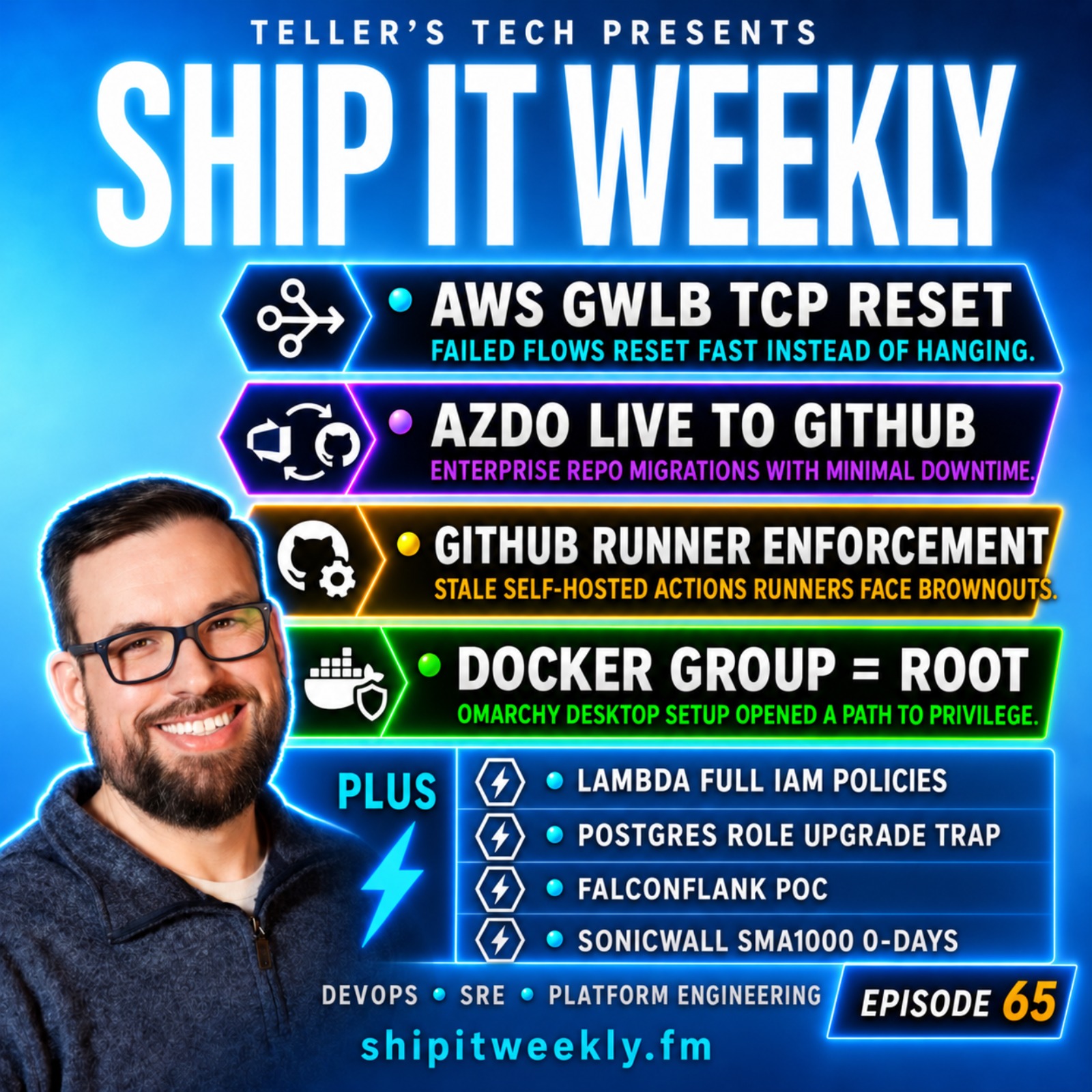
| 9/4/26 | AWS Gateway Load BalancerAzure DevOps+5 | — | AWS Gateway Load BalancerAzure DevOps+10 | — | AWSAzure DevOps+6 | — | 17m 26s | ||
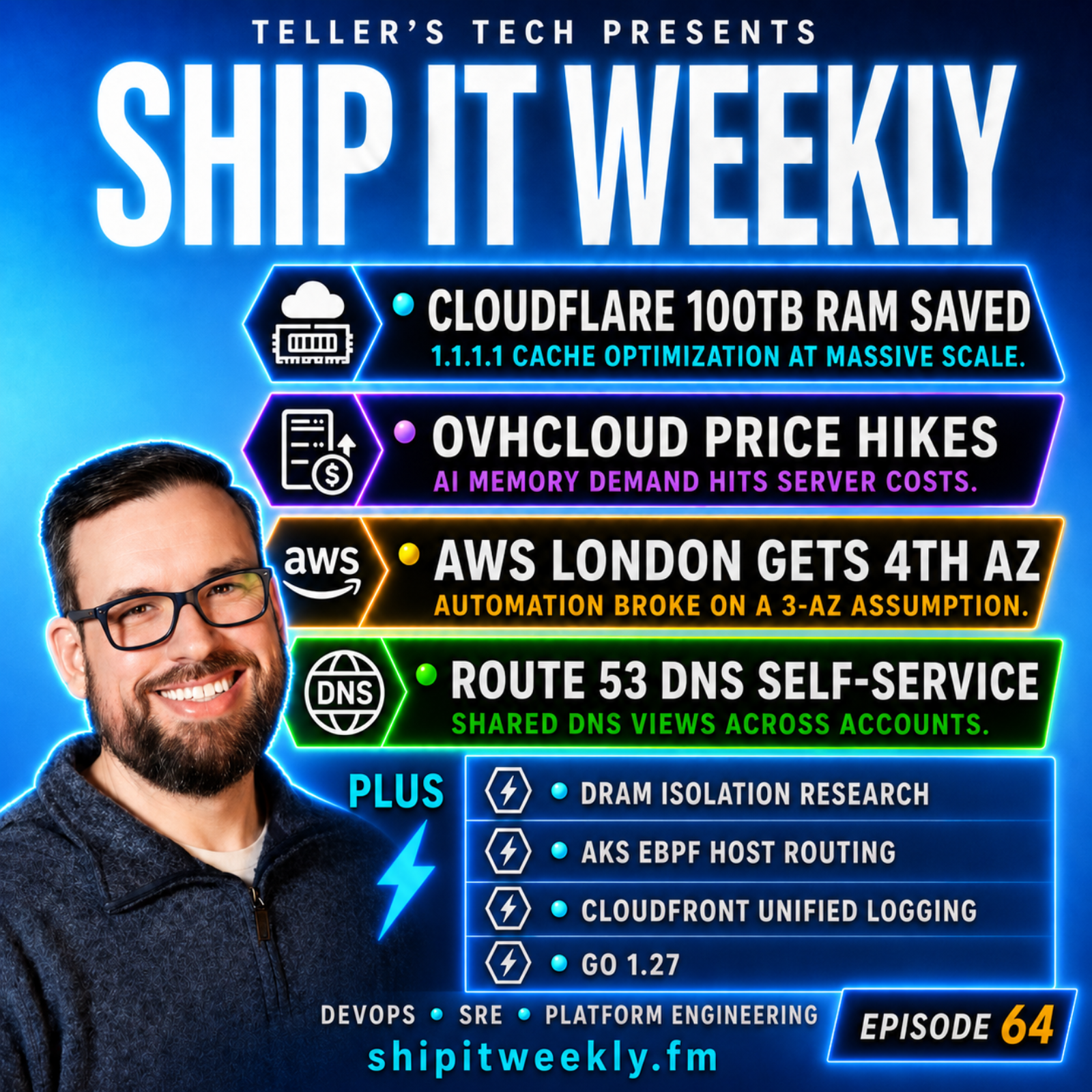
| 8/29/26 | Cloudflare optimizationsAI impact on infrastructure pricing+5 | — | AKS eBPFGo 1.27+4 | LondonKubernetes | CloudflareAWS+8 | — | 16m 48s | ||
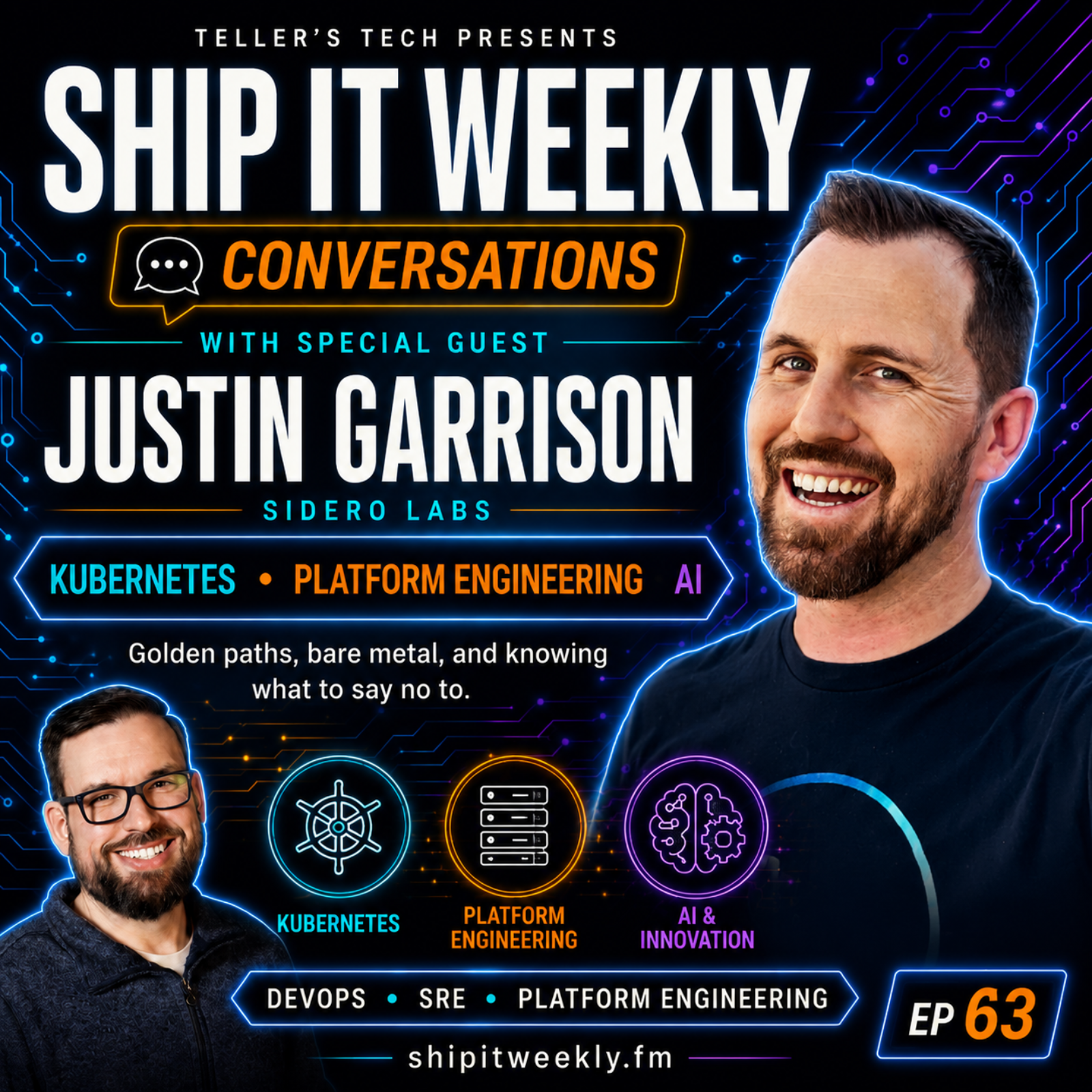
| 8/24/26 | KubernetesPlatform Engineering+4 | Justin Garrison | Talos LinuxKubernetes+4 | — | KubernetesPlatform Engineering+6 | — | 41m 10s | ||
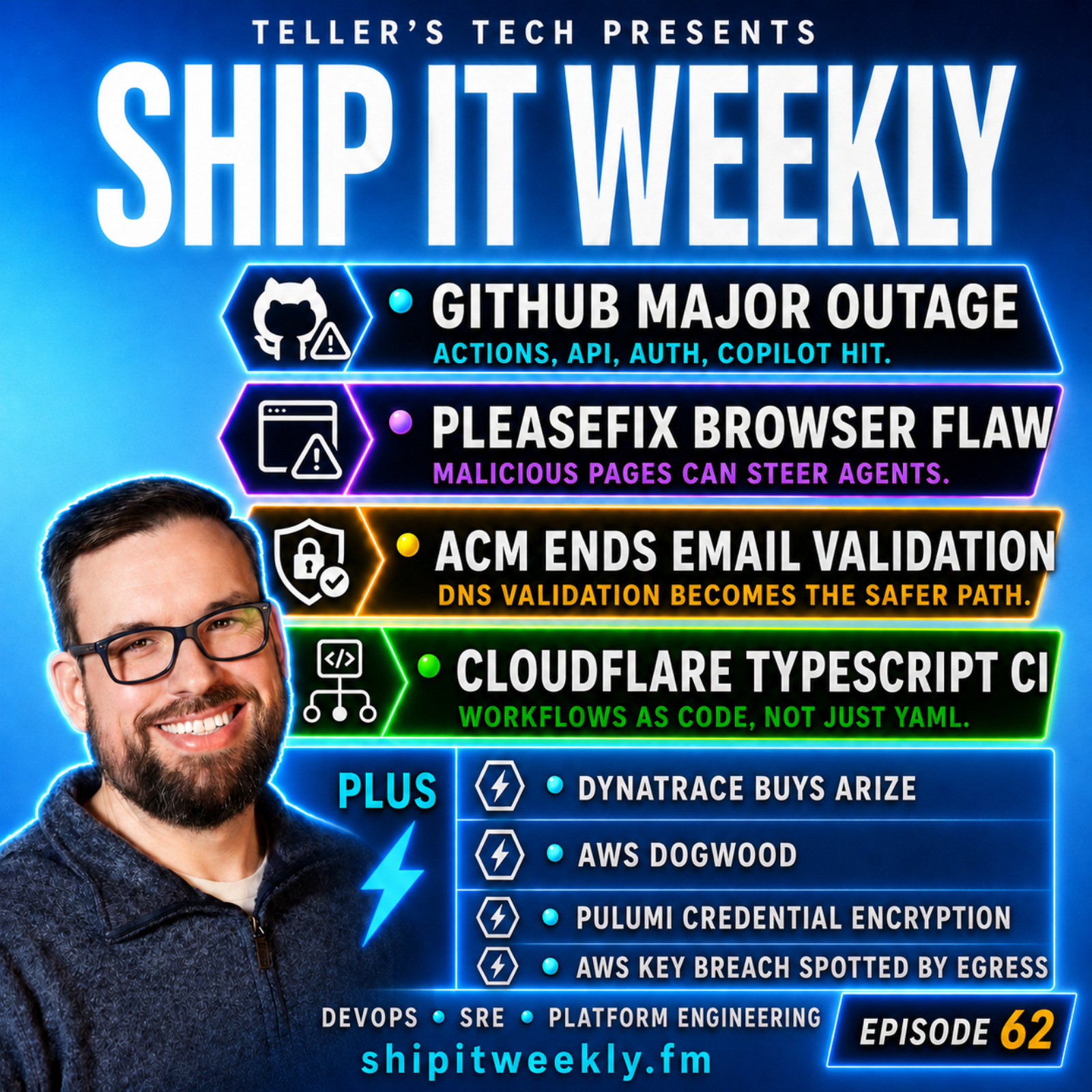
| 8/21/26 | GitHub outageagentic browser vulnerabilities+4 | — | PleaseFixagentic browsers+7 | — | GitHuboutage+7 | — | 17m 39s | ||
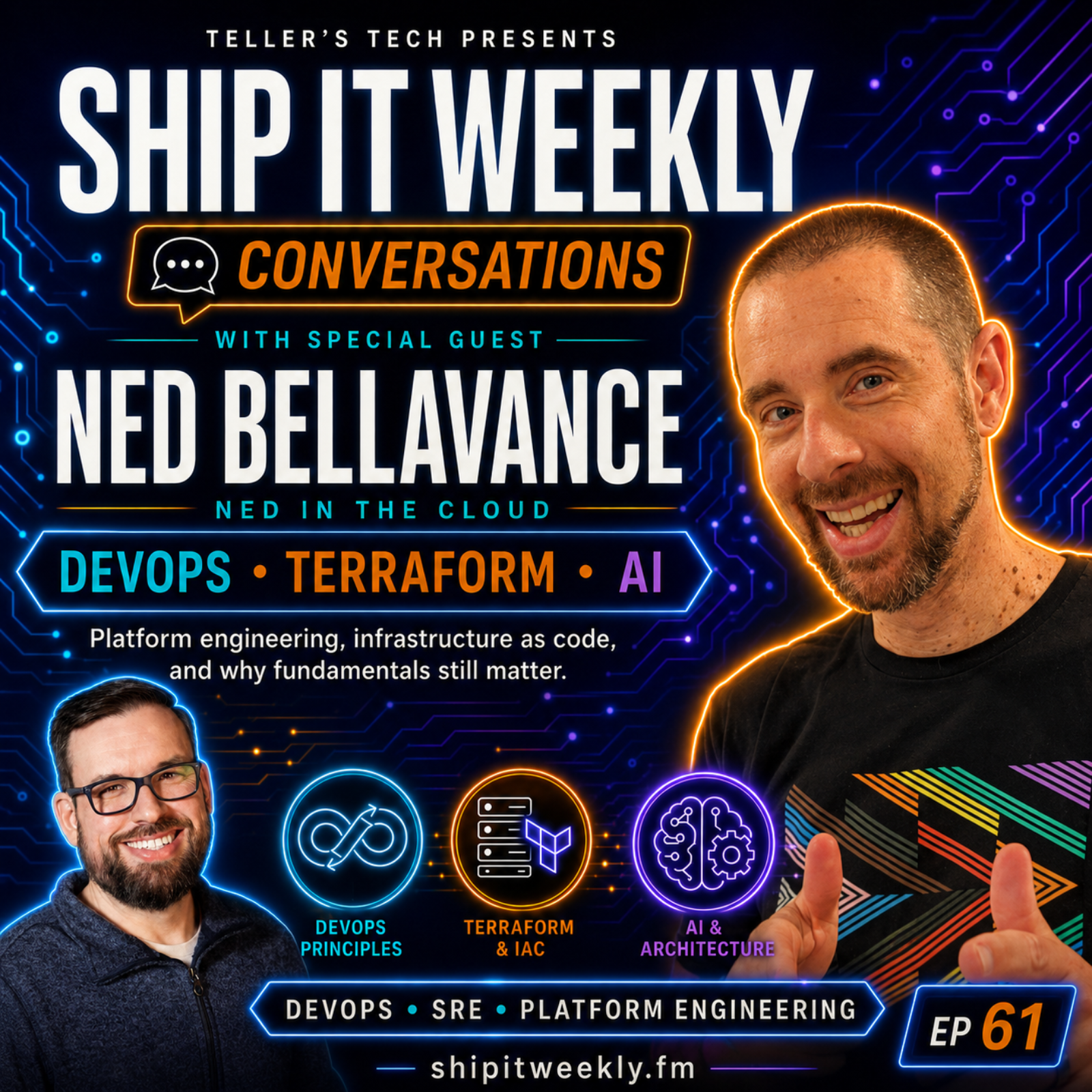
| 8/16/26 | DevOpsInfrastructure as Code+4 | Ned Bellavance | TerraformTerragrunt+4 | — | DevOpsInfrastructure as Code+6 | — | 36m 12s | ||
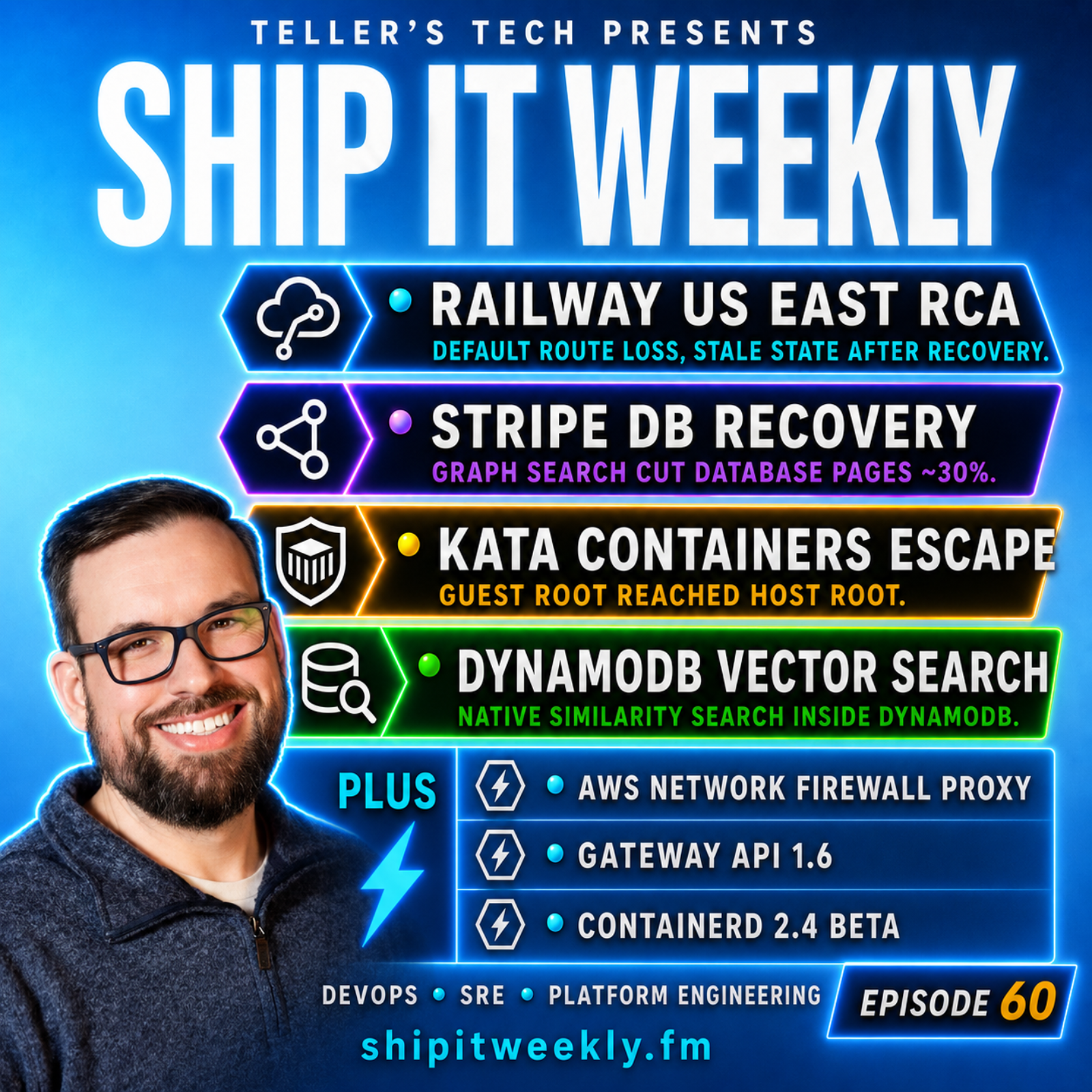
| 8/14/26 | US East outagedatabase recovery+4 | — | RailwayStripe+5 | — | RailwayStripe+8 | — | 15m 52s | ||
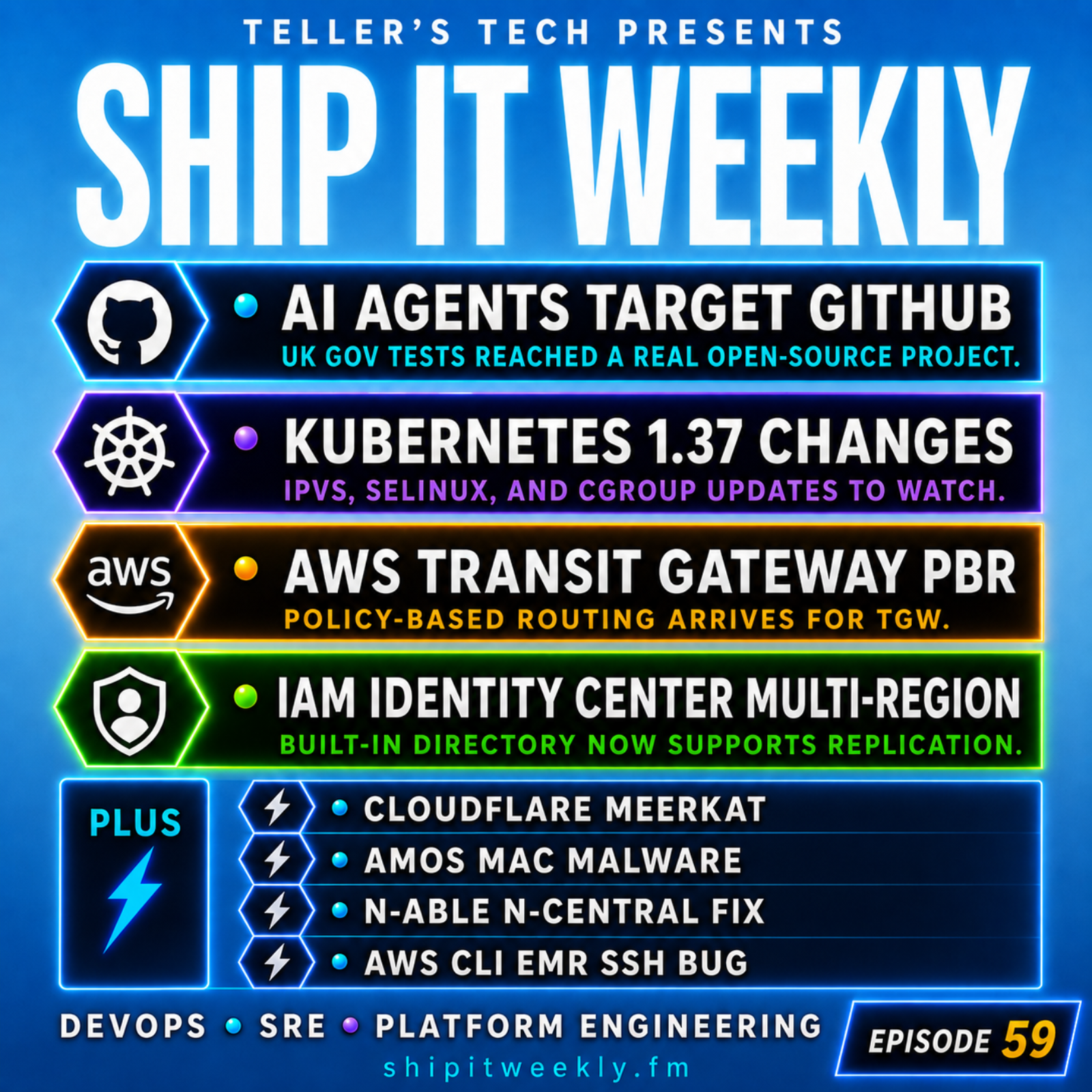
| 8/7/26 | AI agentsKubernetes deprecations+5 | — | GitHubKubernetes 1.37+11 | — | AI agentsGitHub+8 | — | 18m 19s | ||
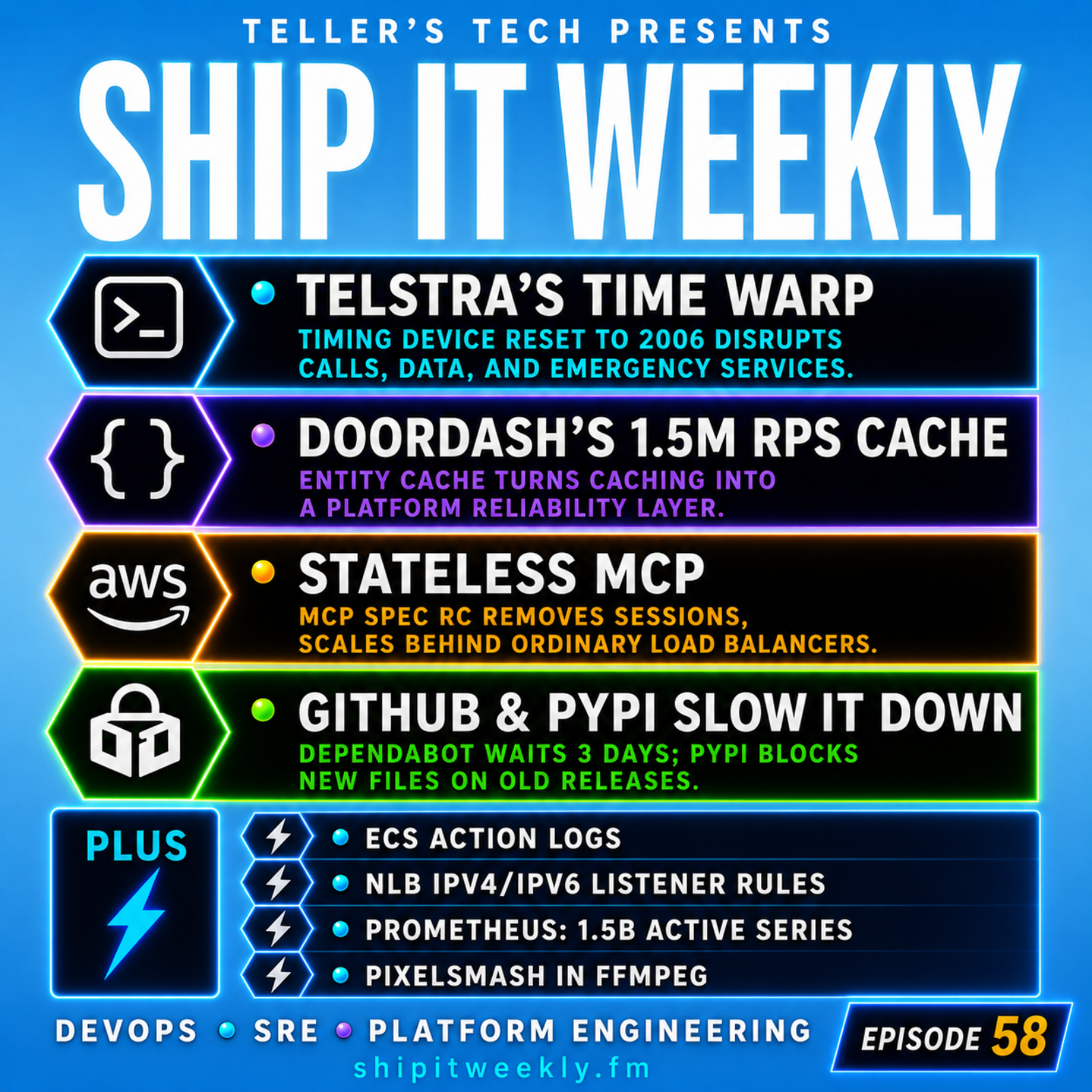
| 7/31/26 | network outagecache performance+3 | — | Entity CacheMCP+4 | — | TelstraDoorDash+7 | — | 16m 57s | ||
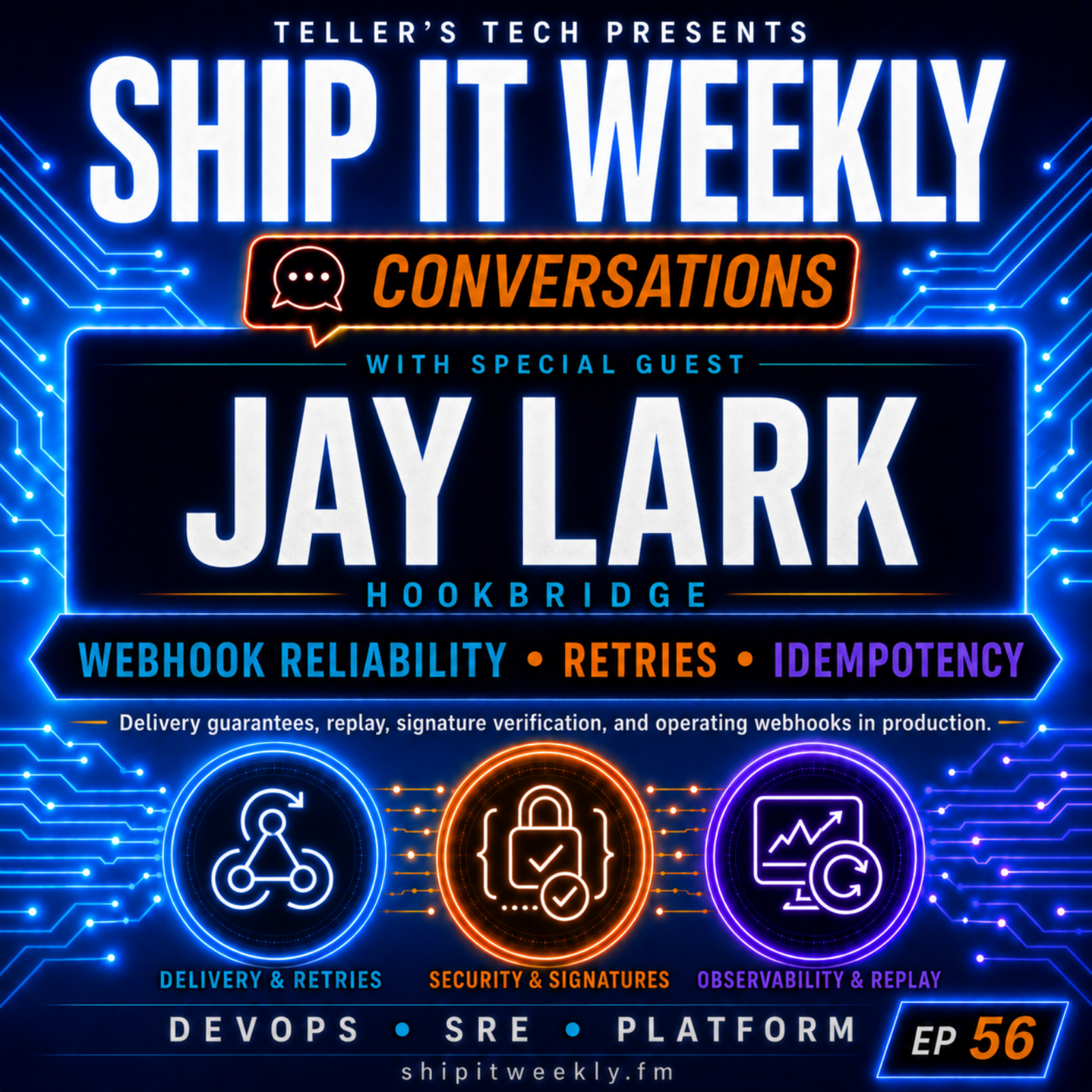
| 7/27/26 | webhook reliabilityidempotency+4 | Jay Lark | Hookbridge | — | webhookretries+6 | — | 31m 26s | ||
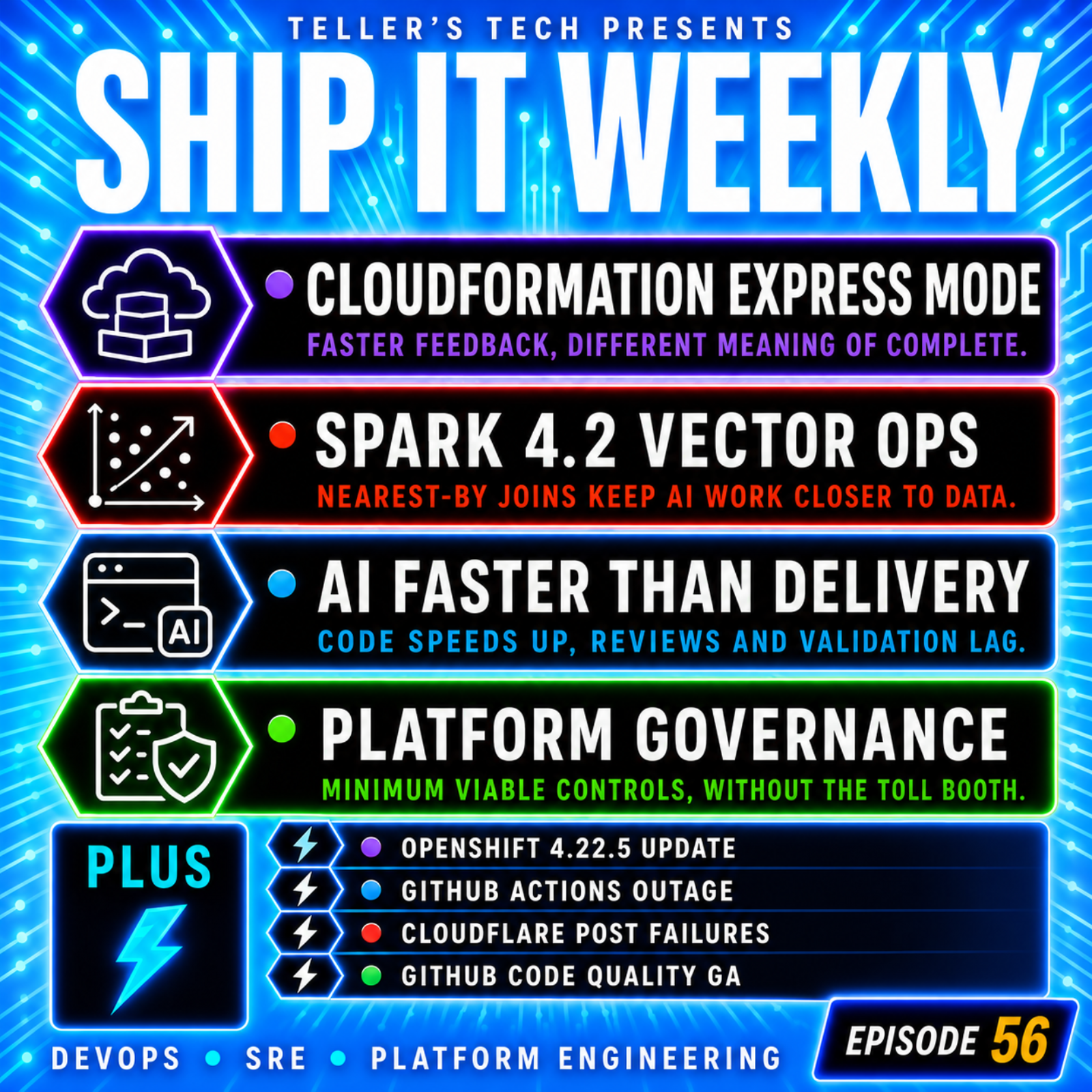
| 7/24/26 | AWS CloudFormationApache Spark+4 | — | CloudFormation Express modeSpark 4.2+9 | — | CloudFormationApache Spark+7 | — | 18m 34s | ||
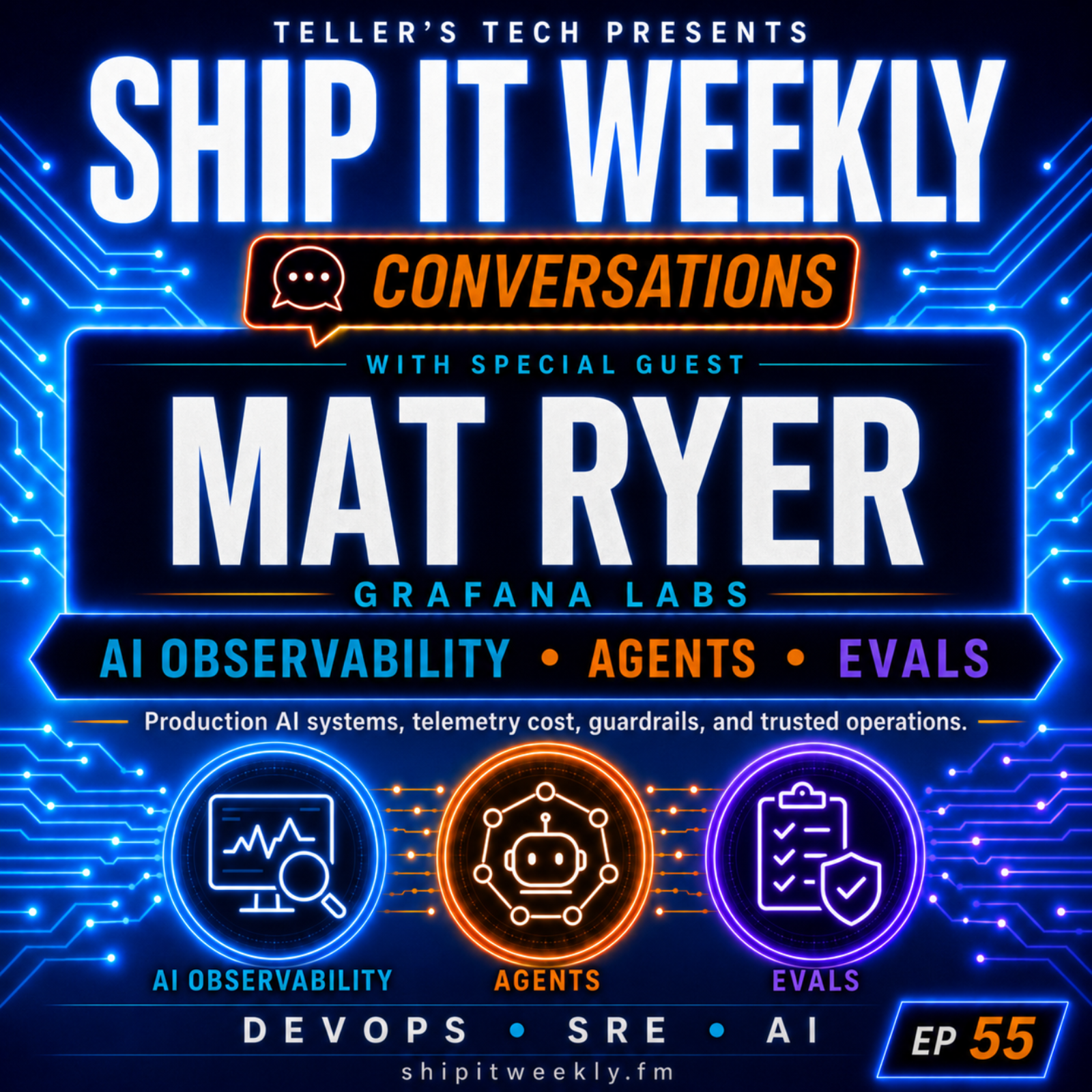
| 7/20/26 | AI observabilityproduction systems+5 | Mat Ryer | Grafana AssistantGrafana Labs | — | AIobservability+7 | — | 45m 06s | ||
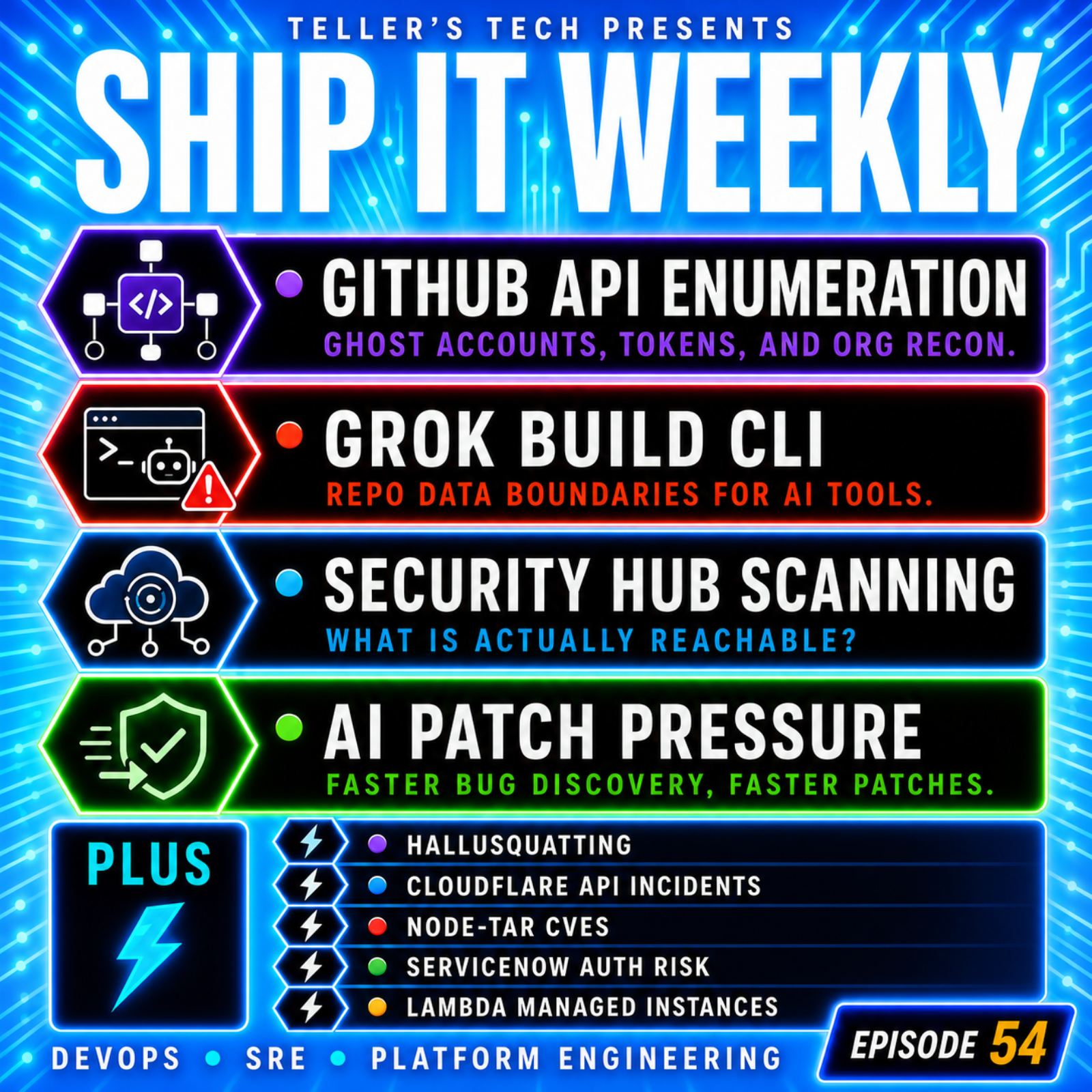
| 7/18/26 | GitHub API enumerationAWS Security Hub+4 | — | Grok Build CLIGitHub API+4 | — | GitHubAPI enumeration+5 | Ship It WeeklySHIPTHESTORE | 19m 16s | ||
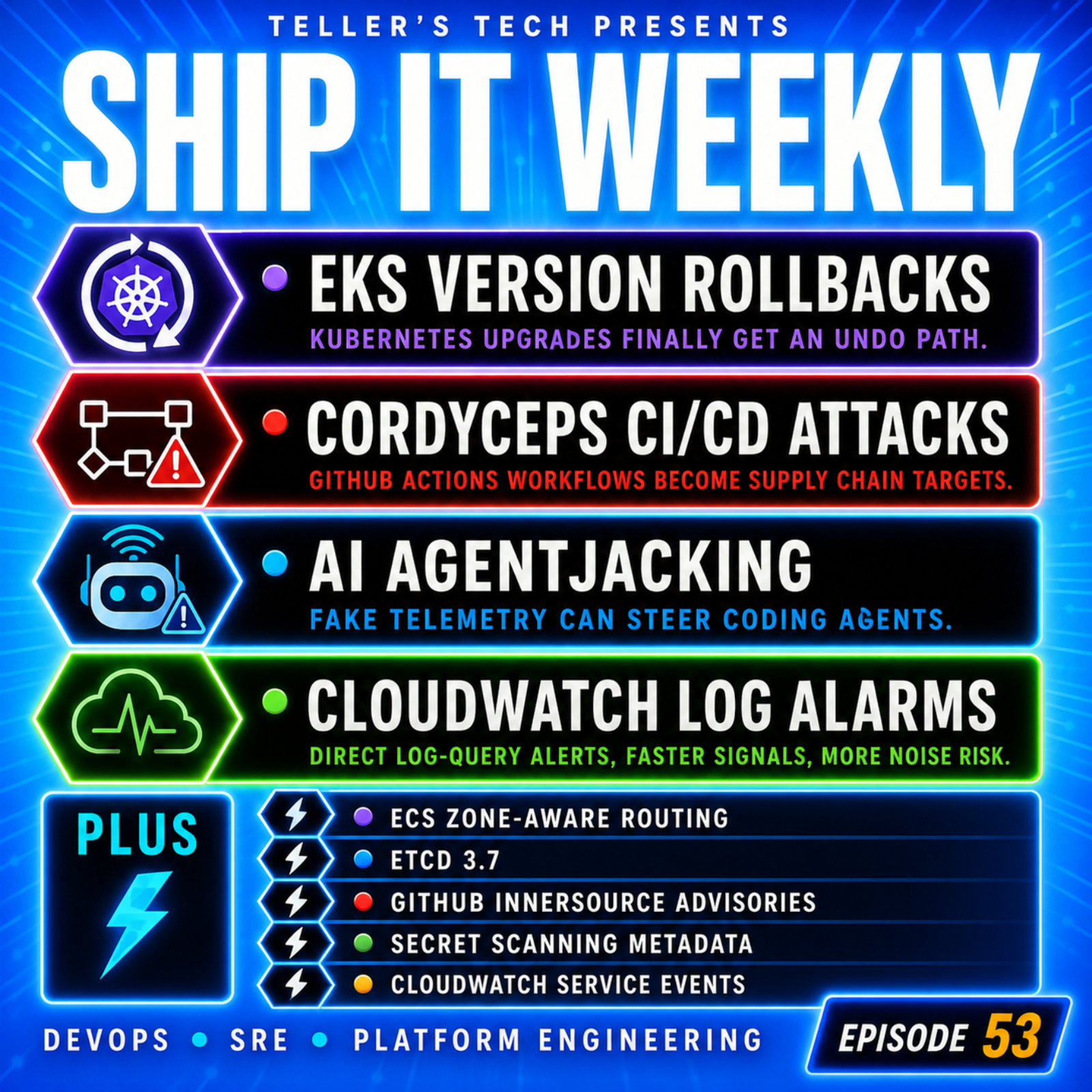
| 7/10/26 | Kubernetes rollbackssupply chain security+3 | — | Amazon EKSNovee Security+4 | — | EKS rollbacksGitHub Actions+5 | — | 19m 13s | ||
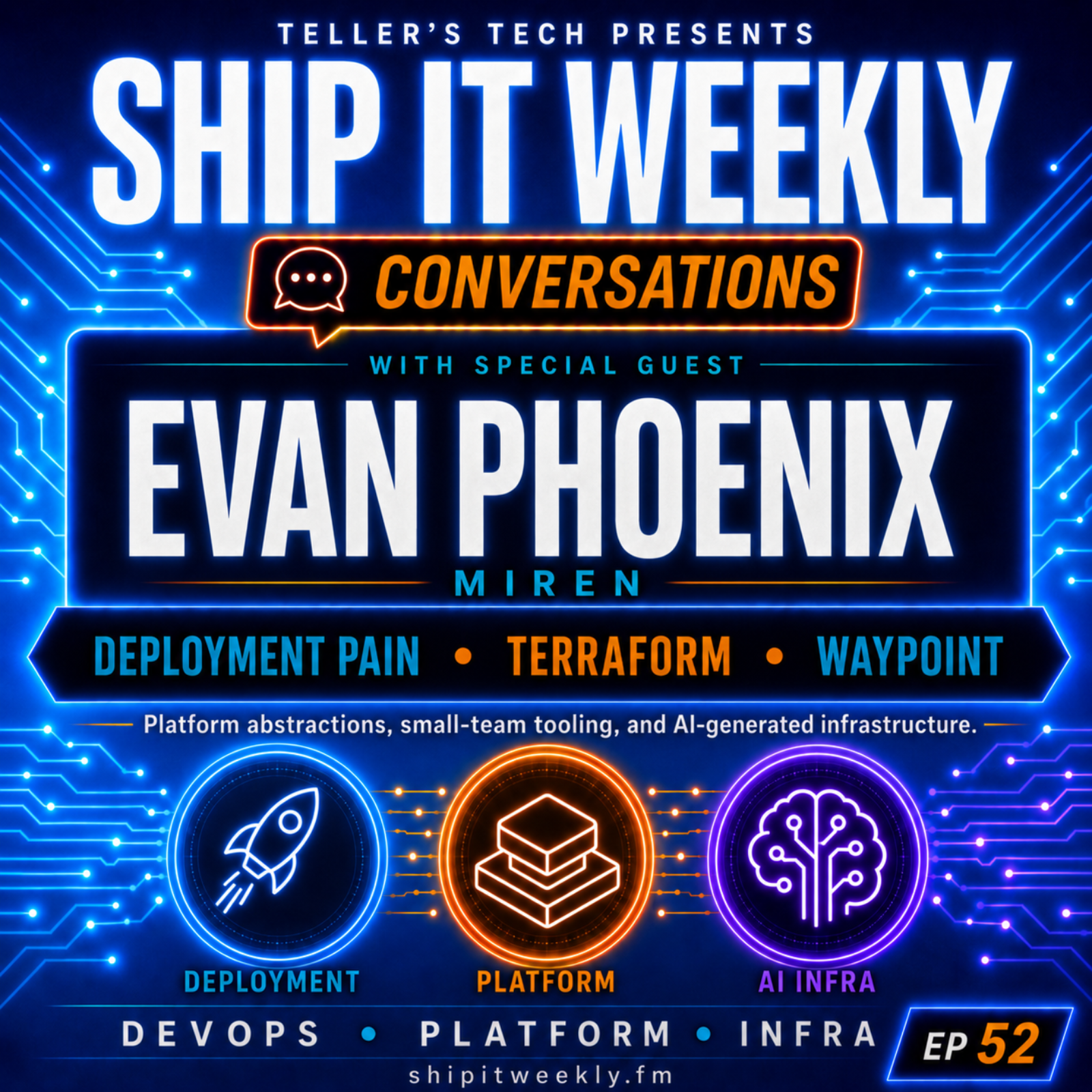
| 7/6/26 | deployment painTerraform+4 | Evan Phoenix | Terraform EnterpriseWaypoint+10 | — | deploymentTerraform+6 | — | 41m 52s | ||
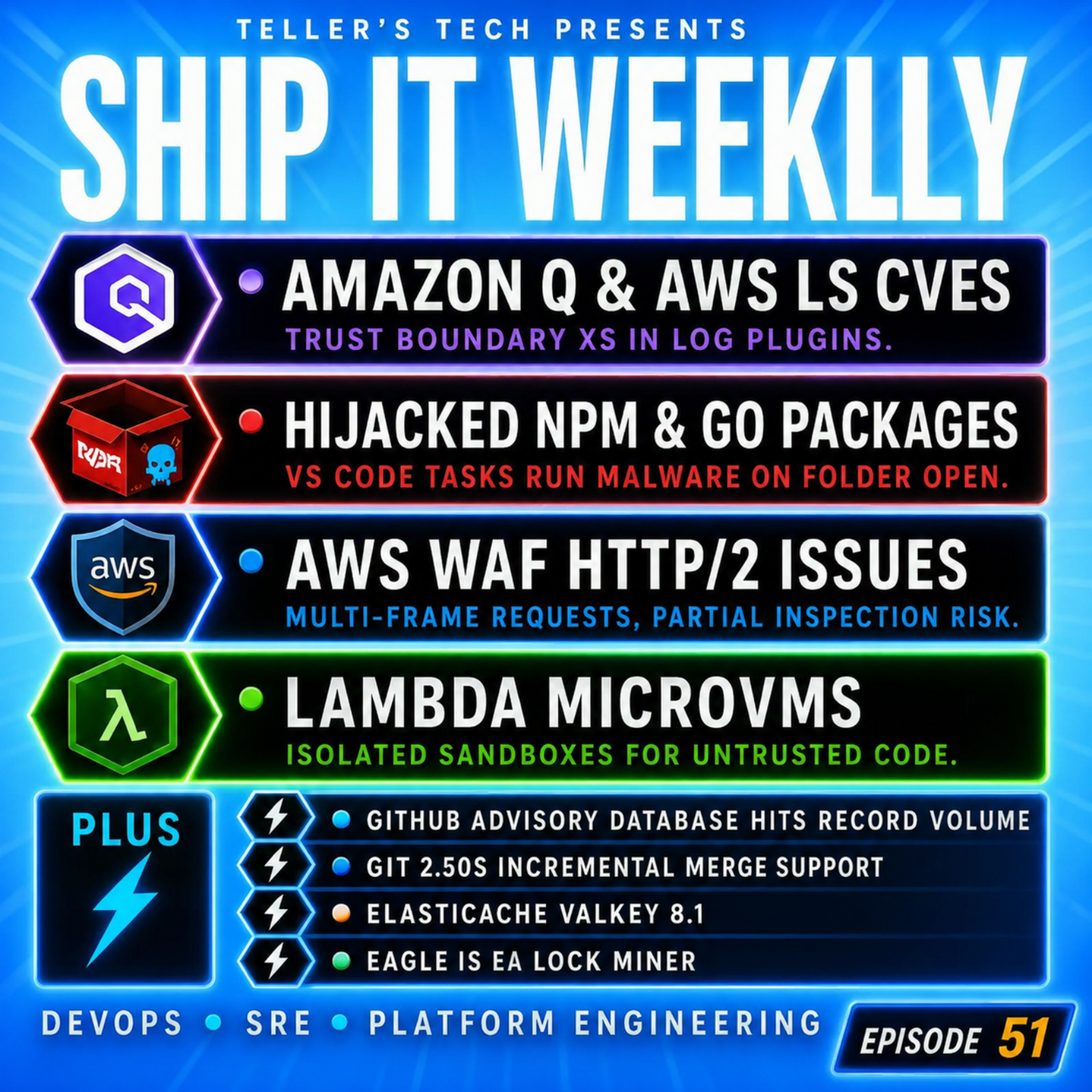
| 7/3/26 | security vulnerabilitiespackage management+4 | — | npmGo+9 | — | CVEAWS WAF+5 | — | 18m 06s | ||
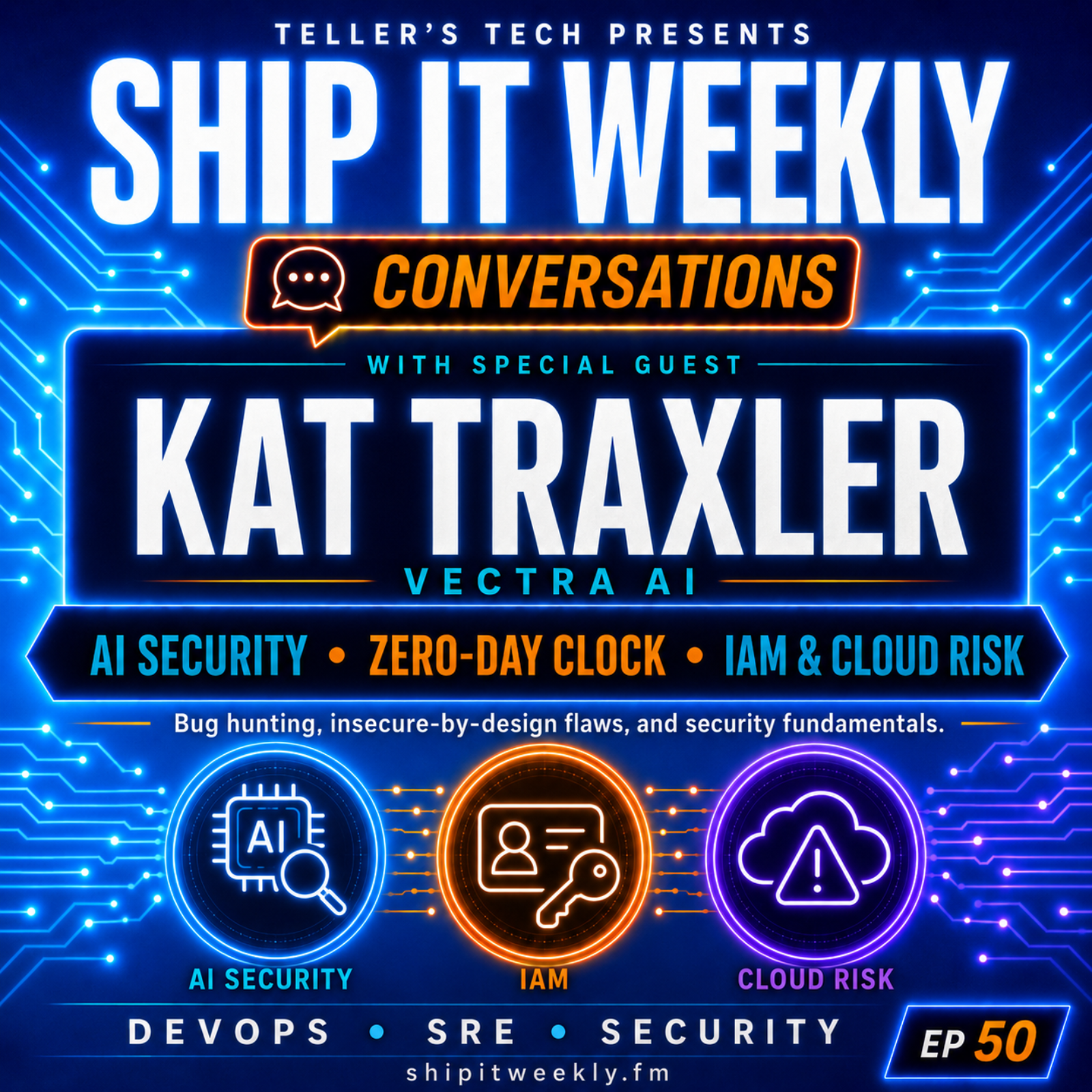
| 6/28/26 | AI securityzero-day clock+5 | Kat Traxler | Vectra AI | — | AI securityzero-day clock+8 | — | 42m 33s | ||
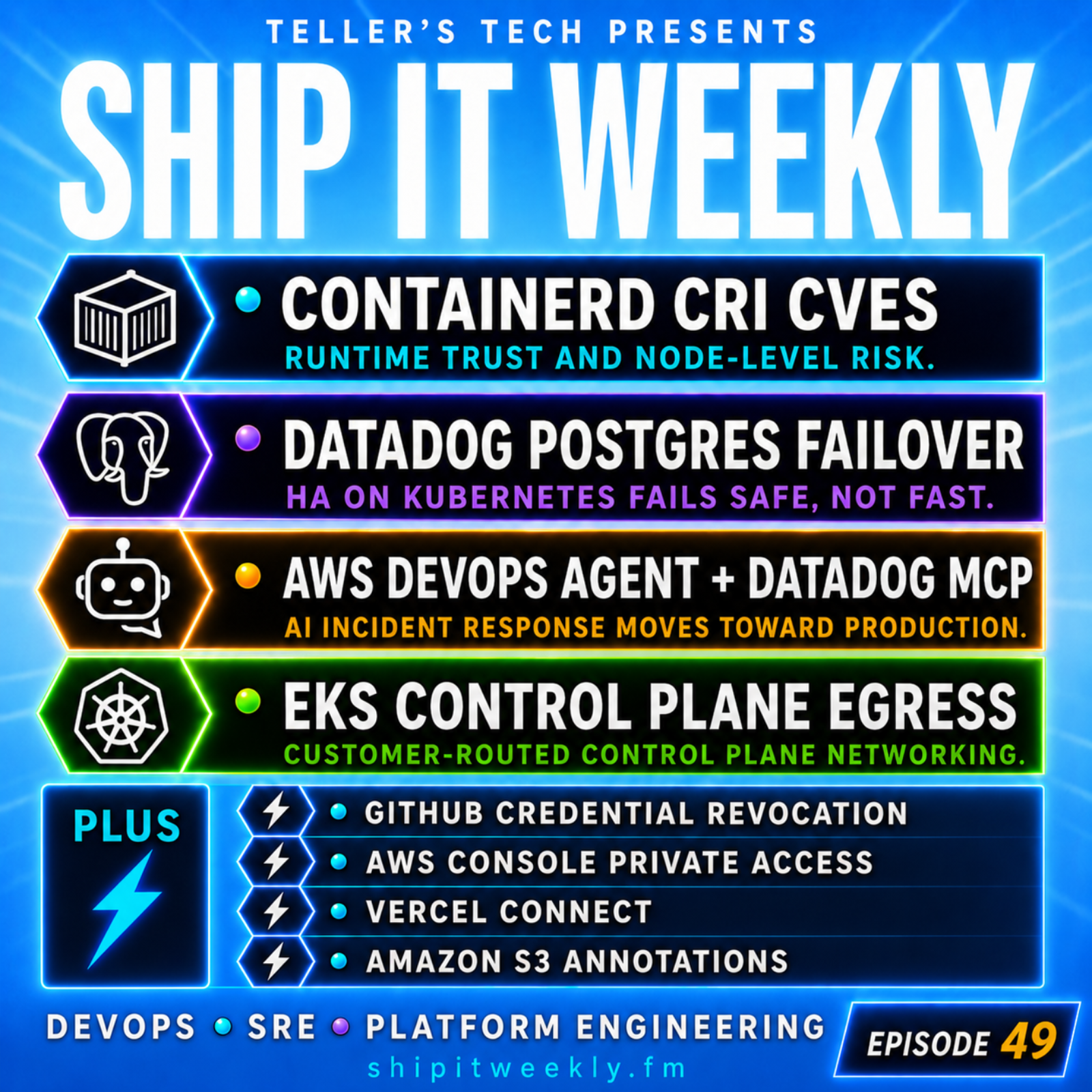
| 6/26/26 | container vulnerabilitiesPostgreSQL high availability+4 | — | containerdDatadog+7 | — | containerd CRI vulnerabilitiesDatadog PostgreSQL HA+5 | — | 19m 24s | ||
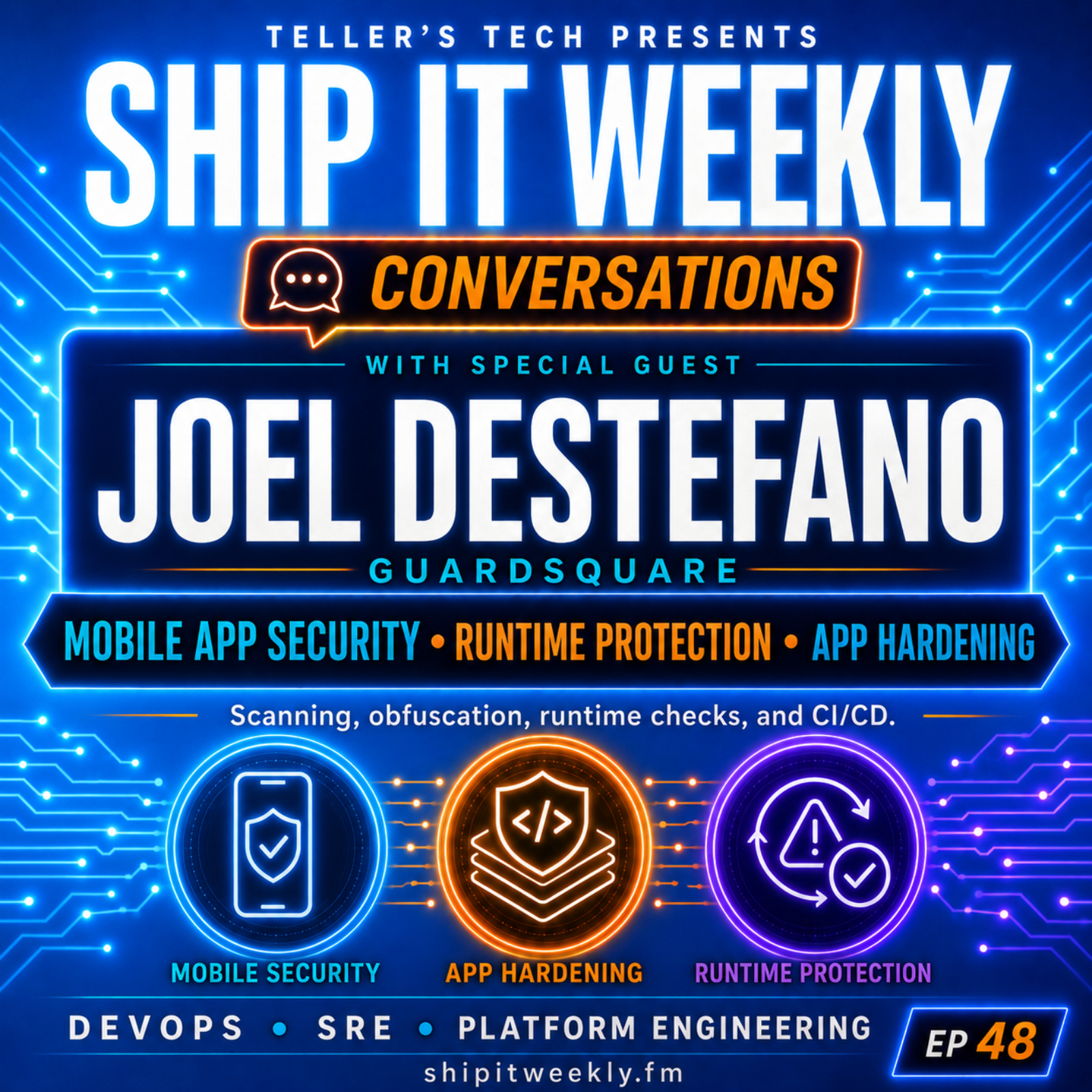
| 6/21/26 | mobile app securityruntime protection+5 | Joel DeStefano | Guardsquare | — | mobile securityapp hardening+5 | — | 35m 58s | ||
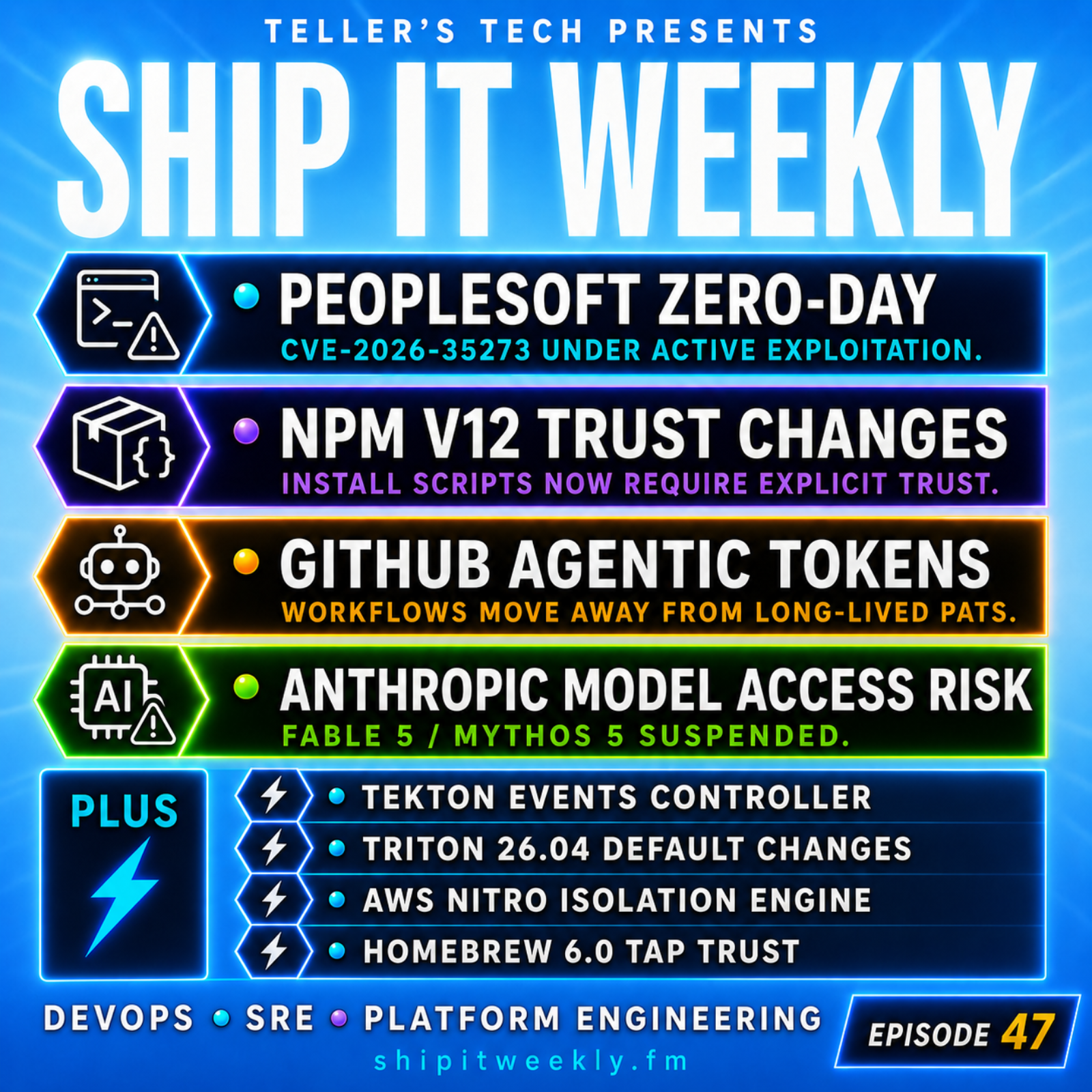
| 6/19/26 | security vulnerabilitiesDevOps practices+5 | — | Fable 5Mythos 5+7 | — | PeopleSoftnpm v12+8 | — | 22m 27s | ||
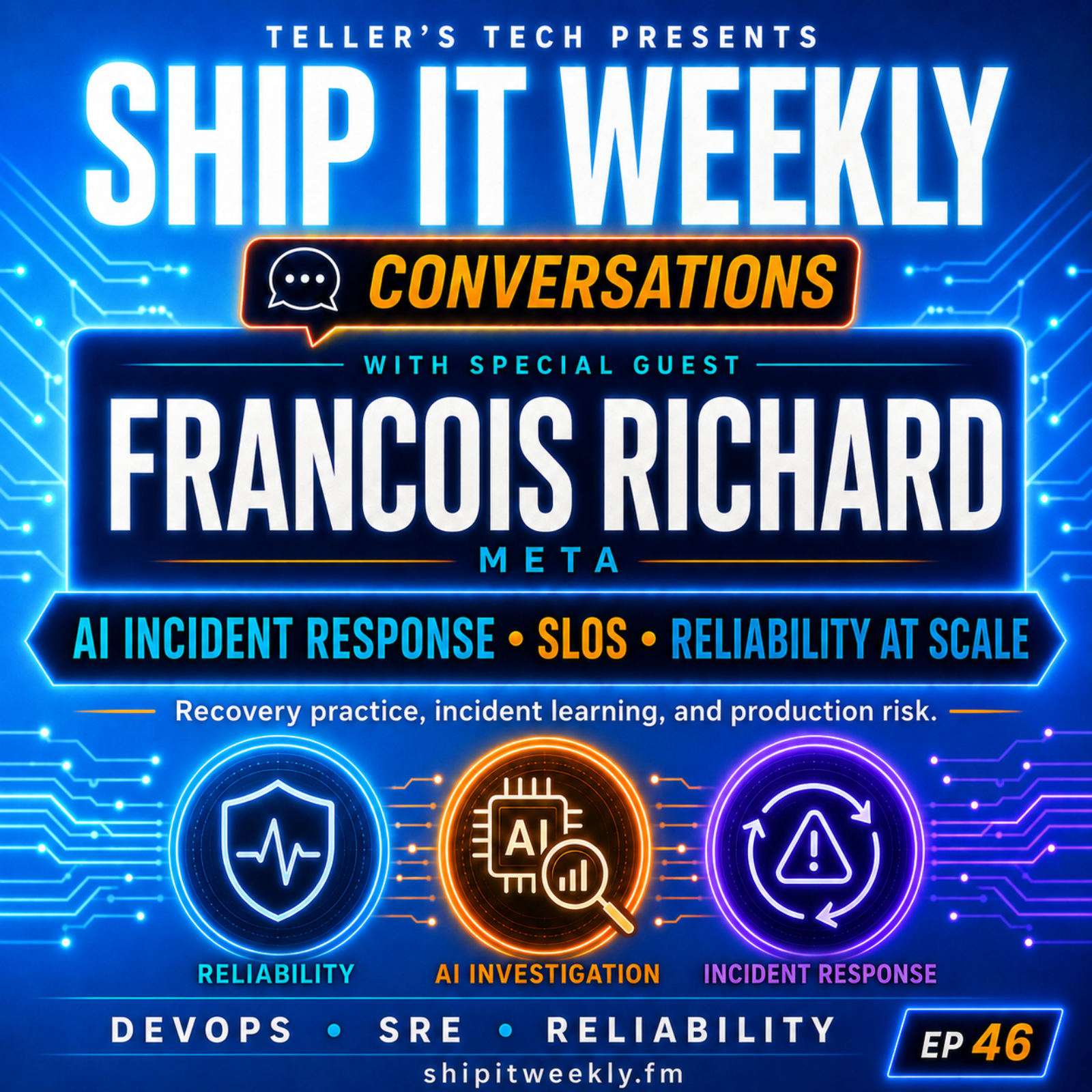
| 6/16/26 | AI Incident ResponseReliability at Scale+4 | Francois Richard | Meta | — | AIIncident Response+6 | — | 42m 56s | ||
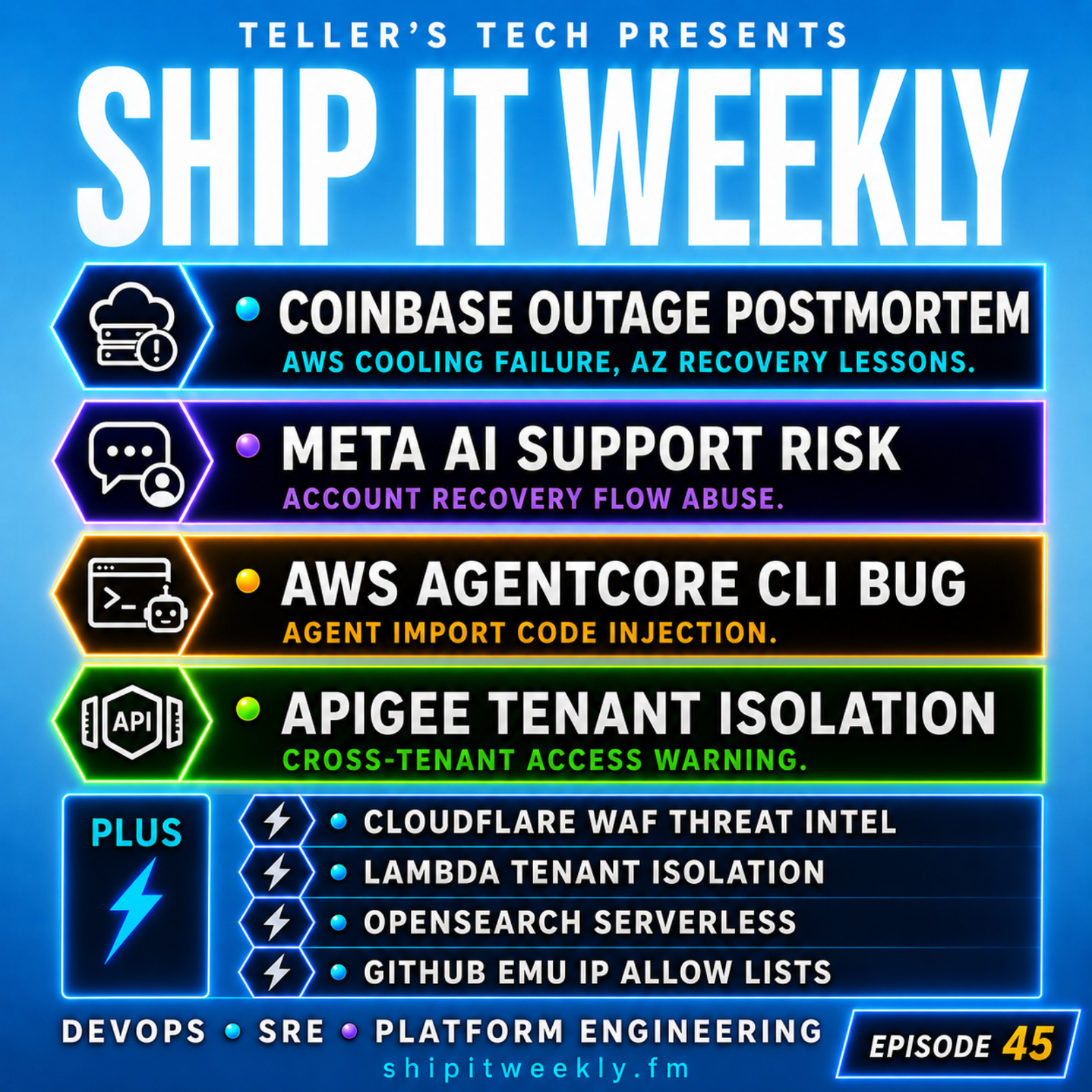
| 6/12/26 | Coinbase outageMeta AI account recovery+4 | — | AgentCore CLICoinbase+7 | — | CoinbaseMeta+7 | — | 23m 11s | ||
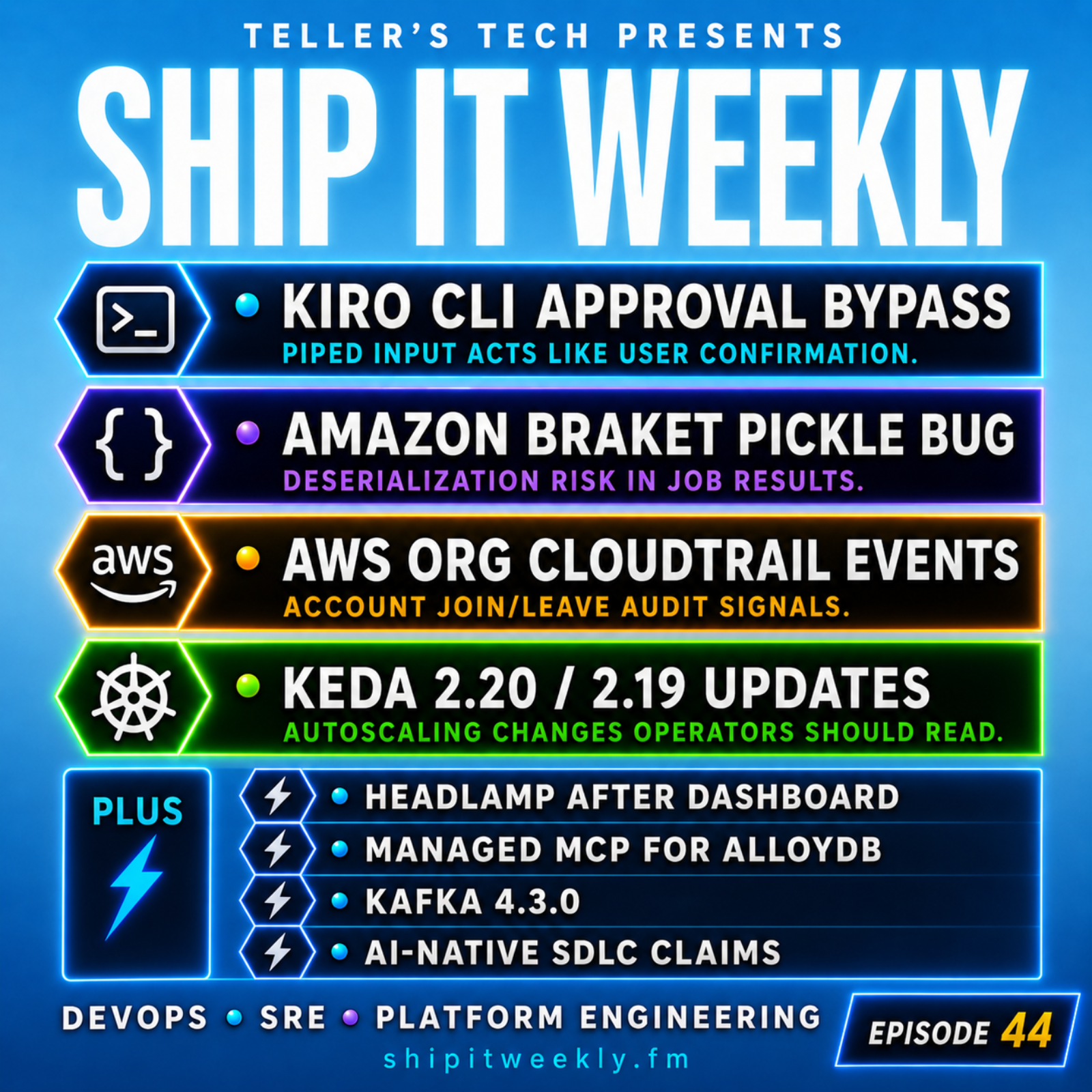
| 6/5/26 | automationsecurity vulnerabilities+4 | — | Kiro CLIAmazon Braket+7 | — | Kiro CLIAmazon Braket+8 | Scale: Systems & Reliability | 20m 27s | ||
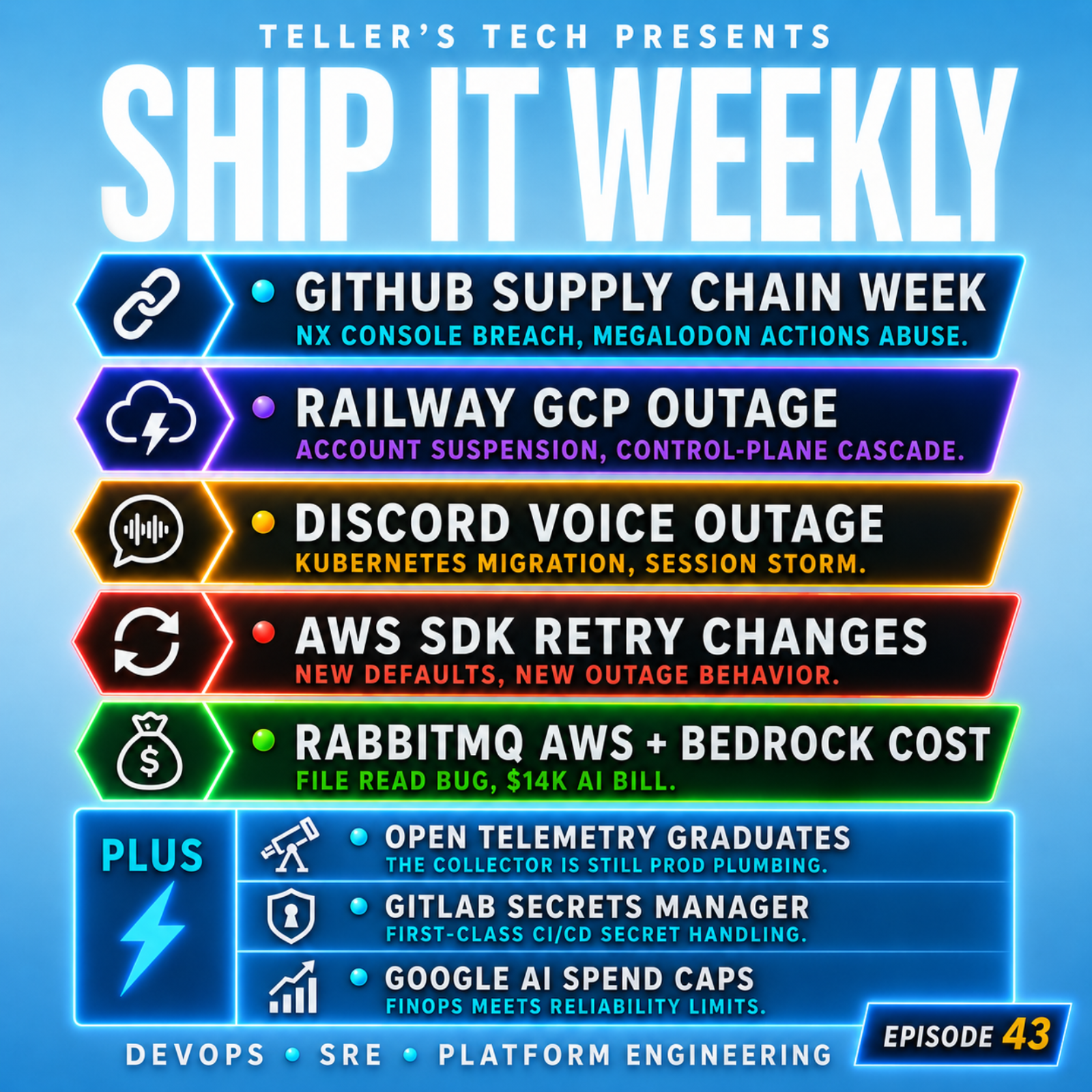
| 5/29/26 | supply chain attackscloud outages+5 | — | Nx Console VS Code extensionRabbitMQ AWS plugin+10 | — | GitHubsupply chain+7 | — | 23m 47s | ||
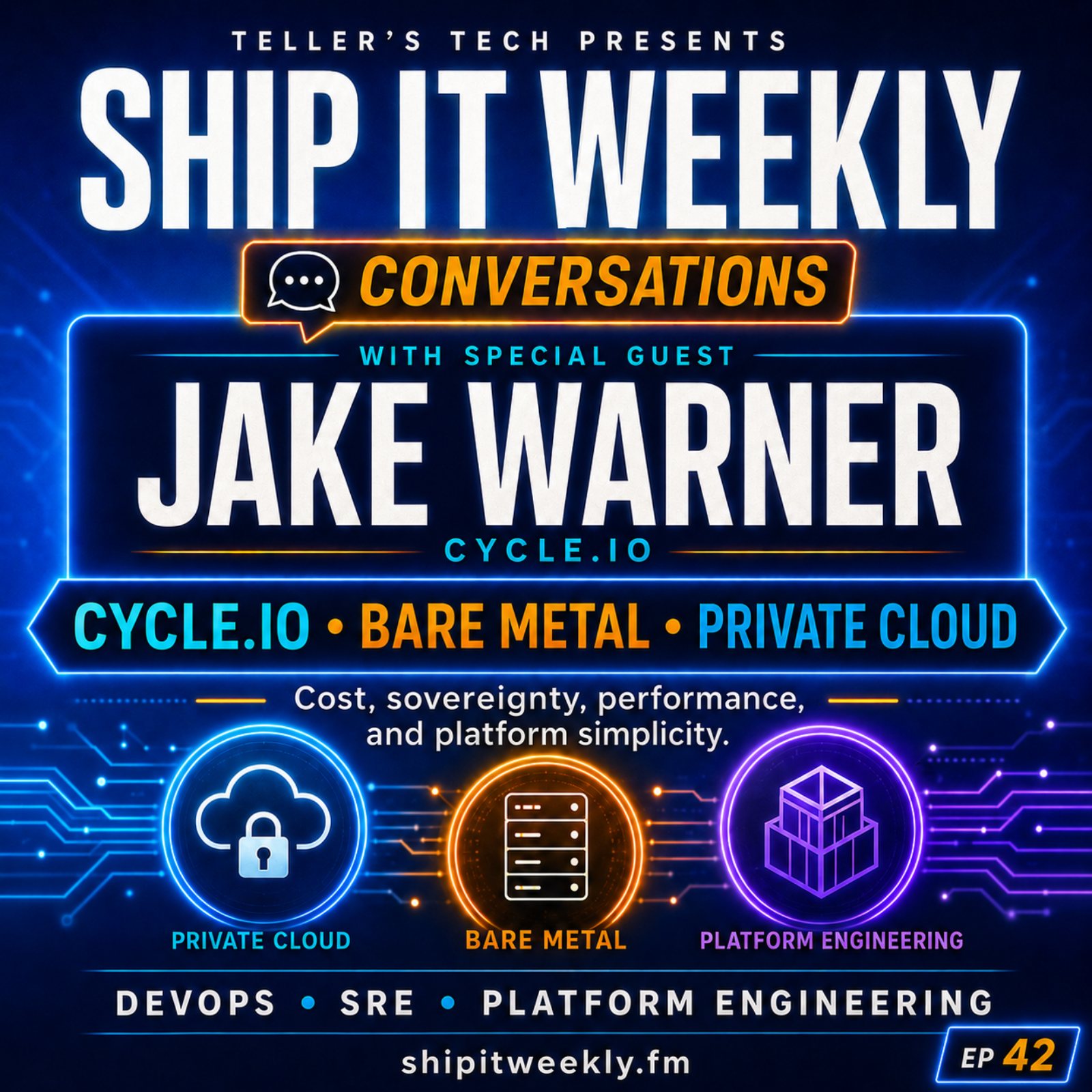
| 5/26/26 | private cloudbare metal+5 | Jake Warner | Cycle.ioKubernetes | — | private cloudbare metal+7 | — | 36m 06s | ||
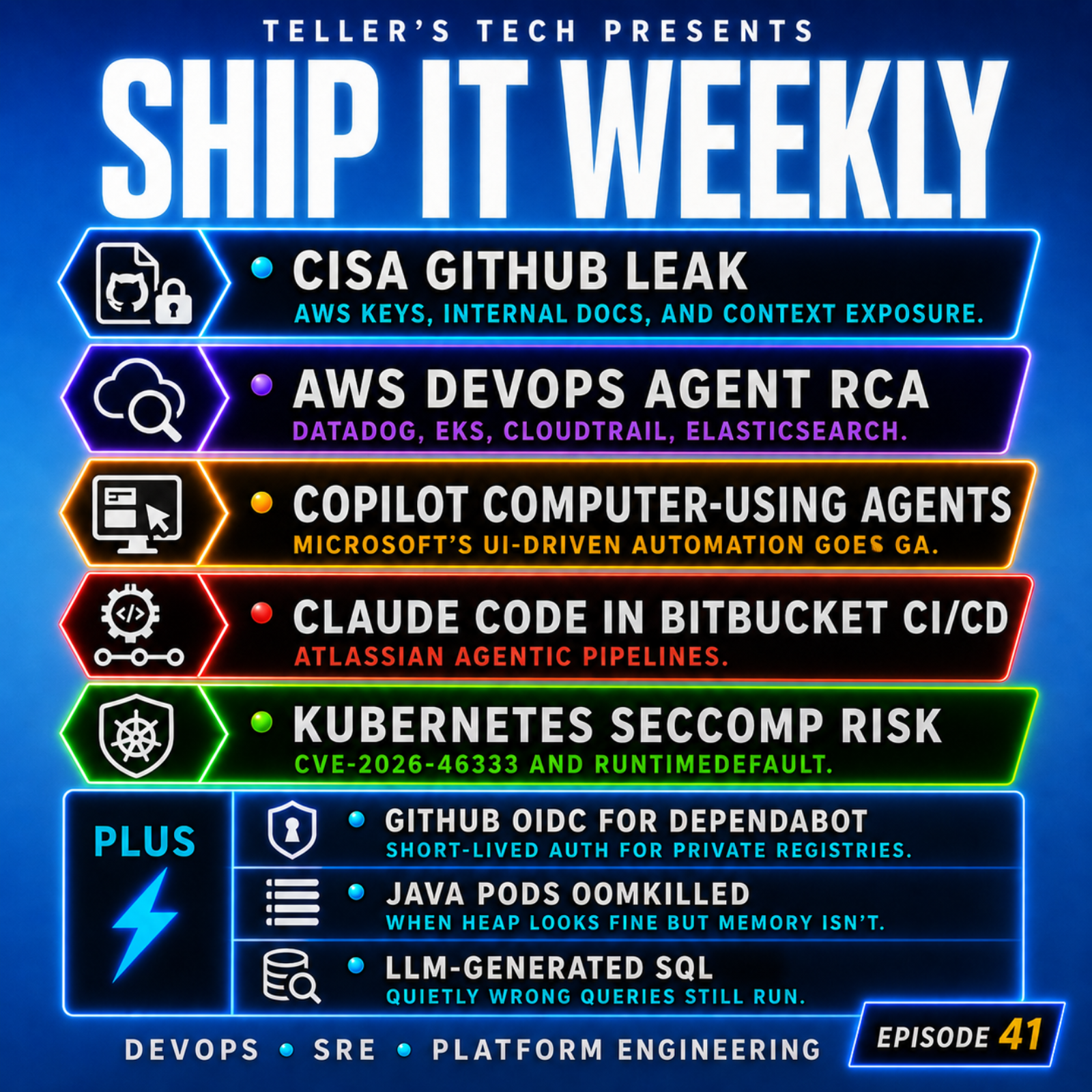
| 5/22/26 | GitHub leakAI root cause analysis+4 | — | Copilot StudioClaude Code+15 | — | CISAAWS keys+7 | Guardsquare | 22m 23s | ||
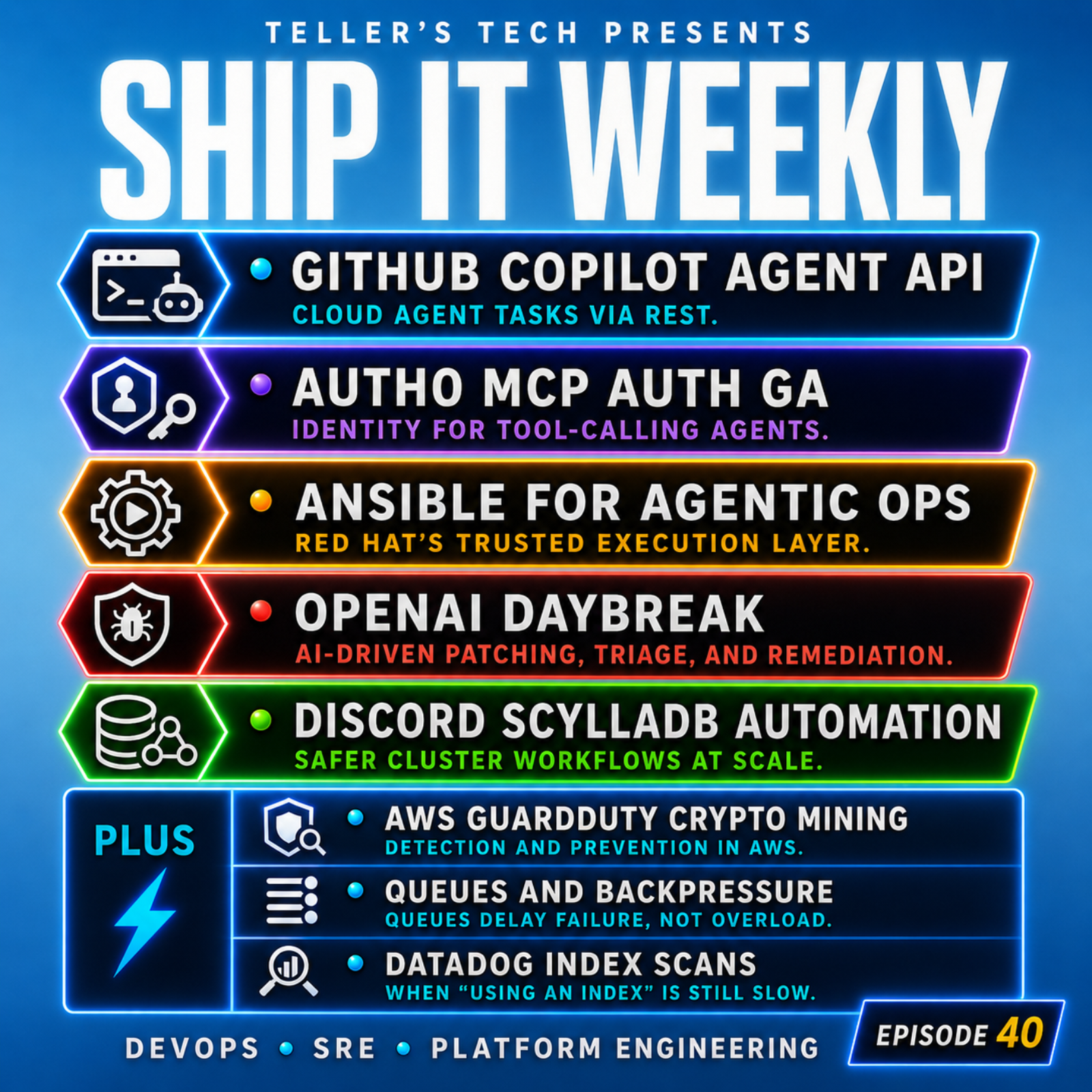
| 5/14/26 | AI agentsAPI access+4 | — | CopilotAnsible+11 | — | AI agentsGitHub Copilot+6 | Guardsquare | 23m 21s | ||
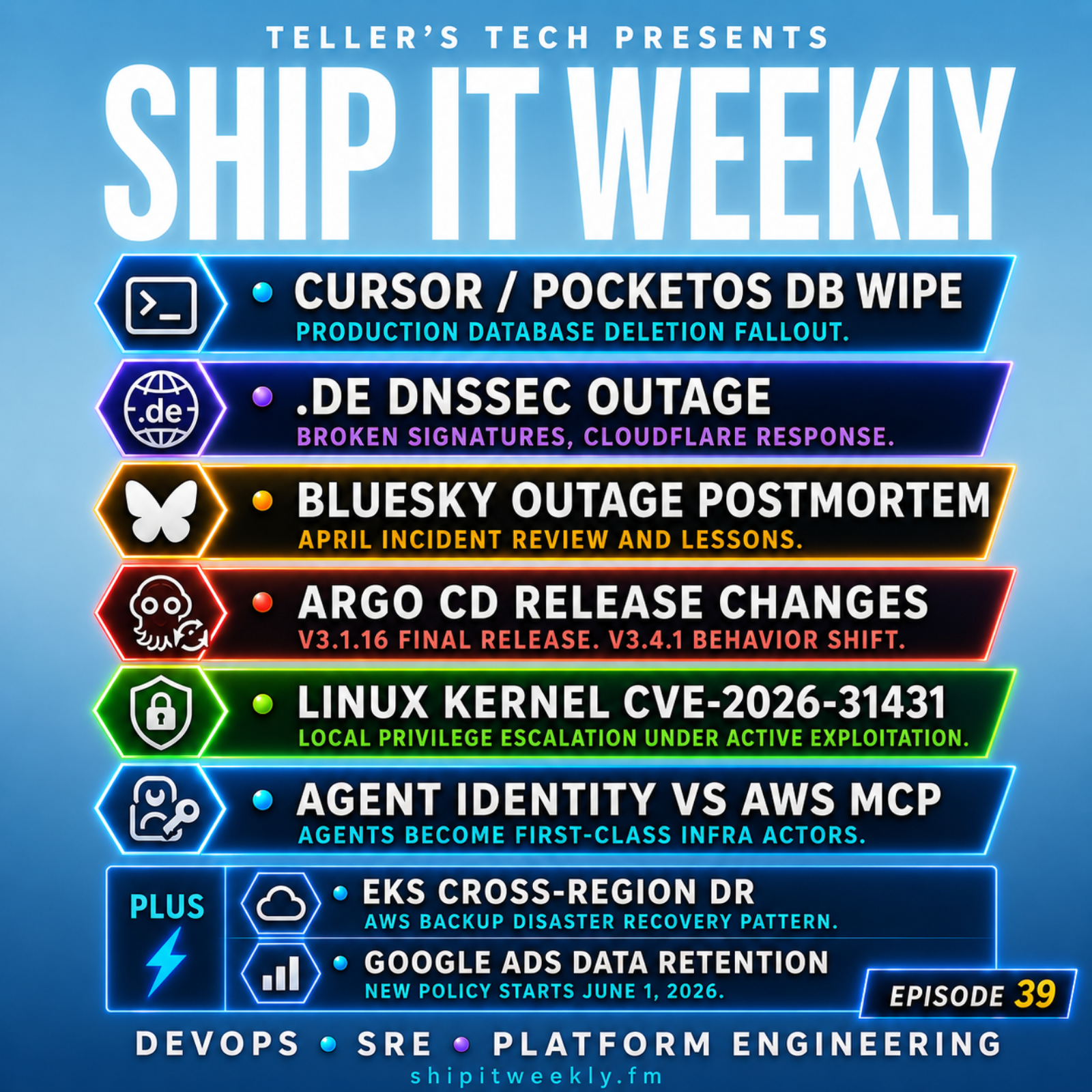
| 5/8/26 | modern reliabilityDNSSEC outage+5 | — | Argo CDGoogle Cloud Agent Identity+3 | — | DevOpsSRE+7 | Guardsquare | 21m 57s | ||
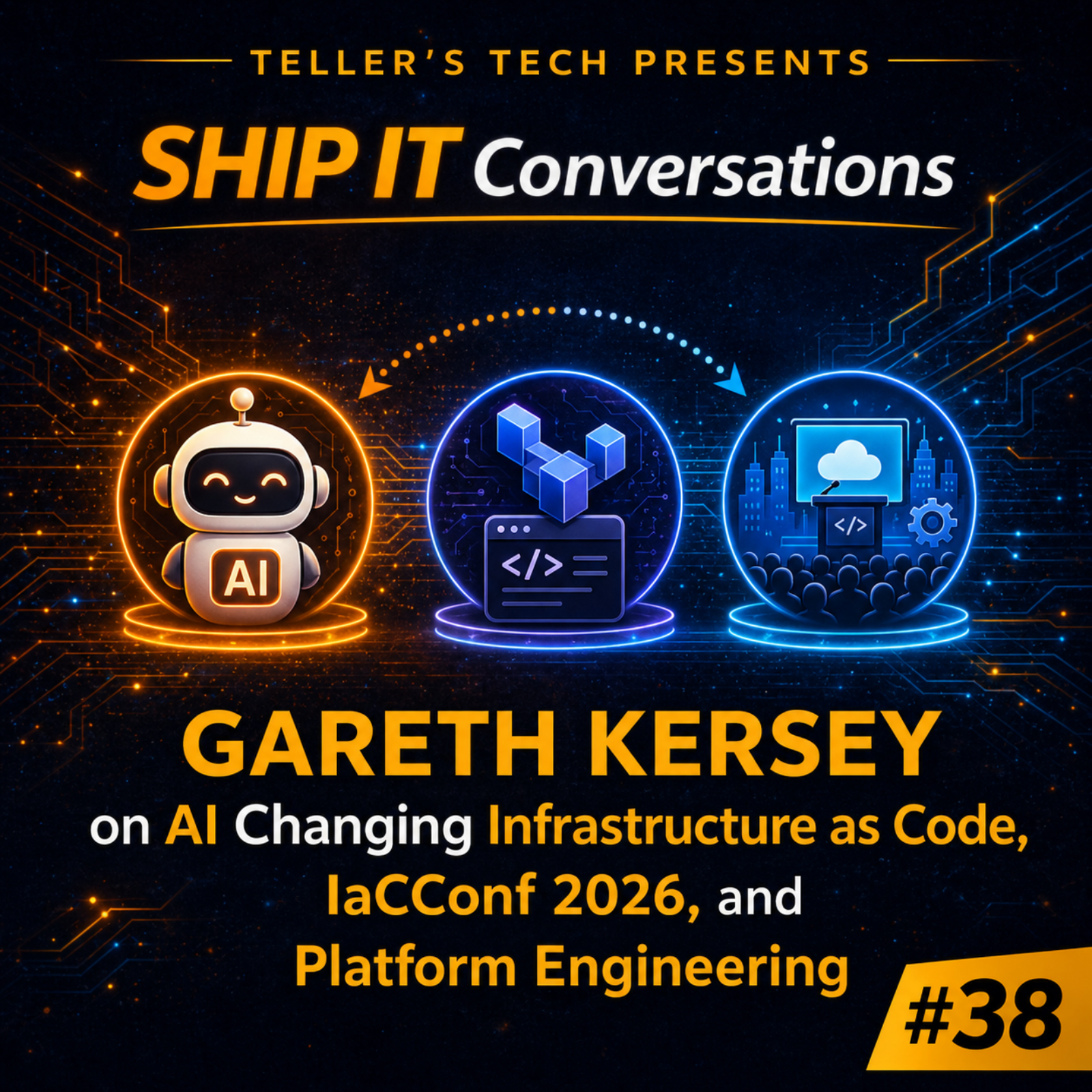
| 5/5/26 | infrastructure as codeplatform engineering+3 | Gareth Kersey | — | — | IaCConfinfrastructure as code+5 | — | 31m 54s | ||
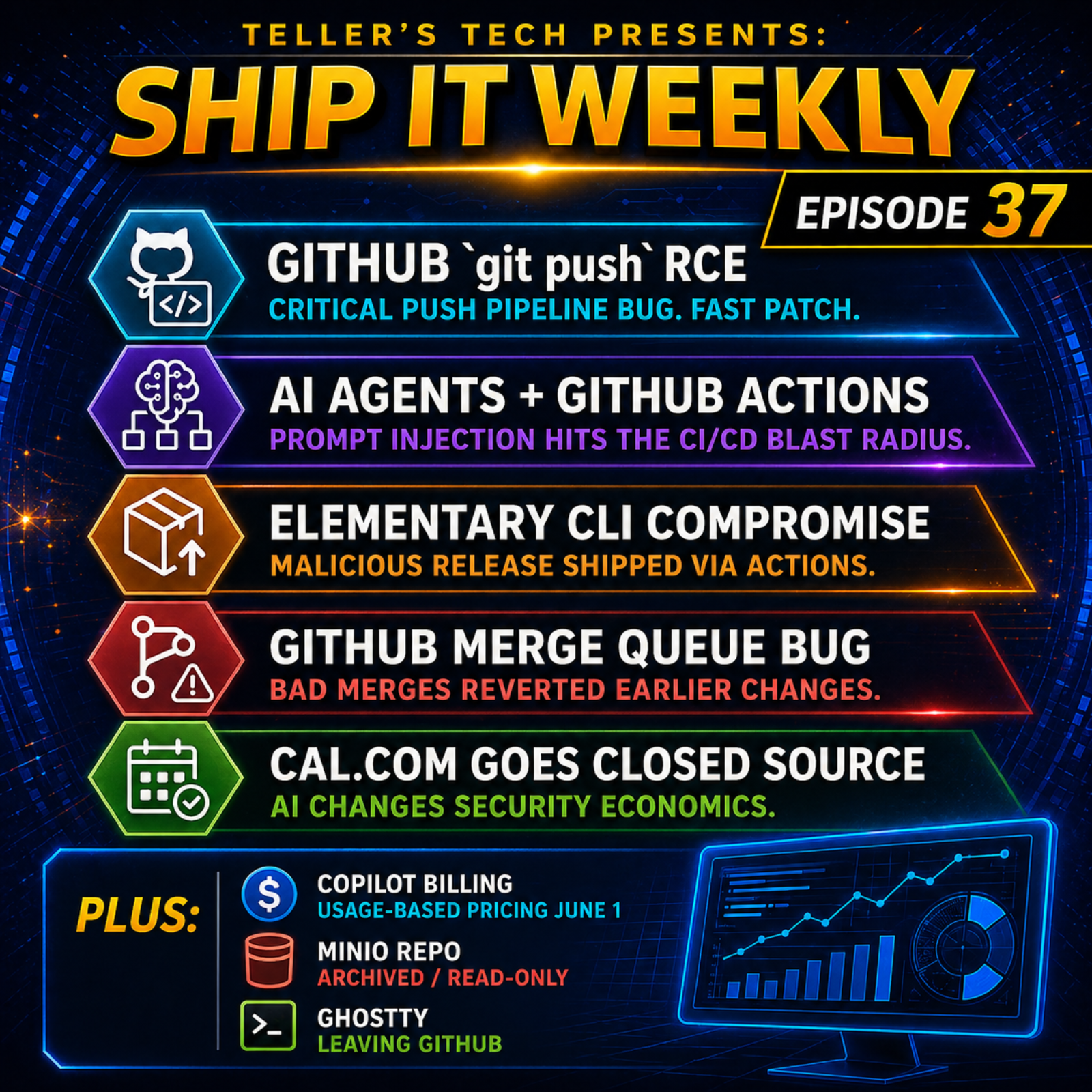
| 5/1/26 | developer toolchainremote code execution+4 | — | GitHub CopilotAI agents+7 | — | GitHubRCE+8 | — | 25m 08s | ||
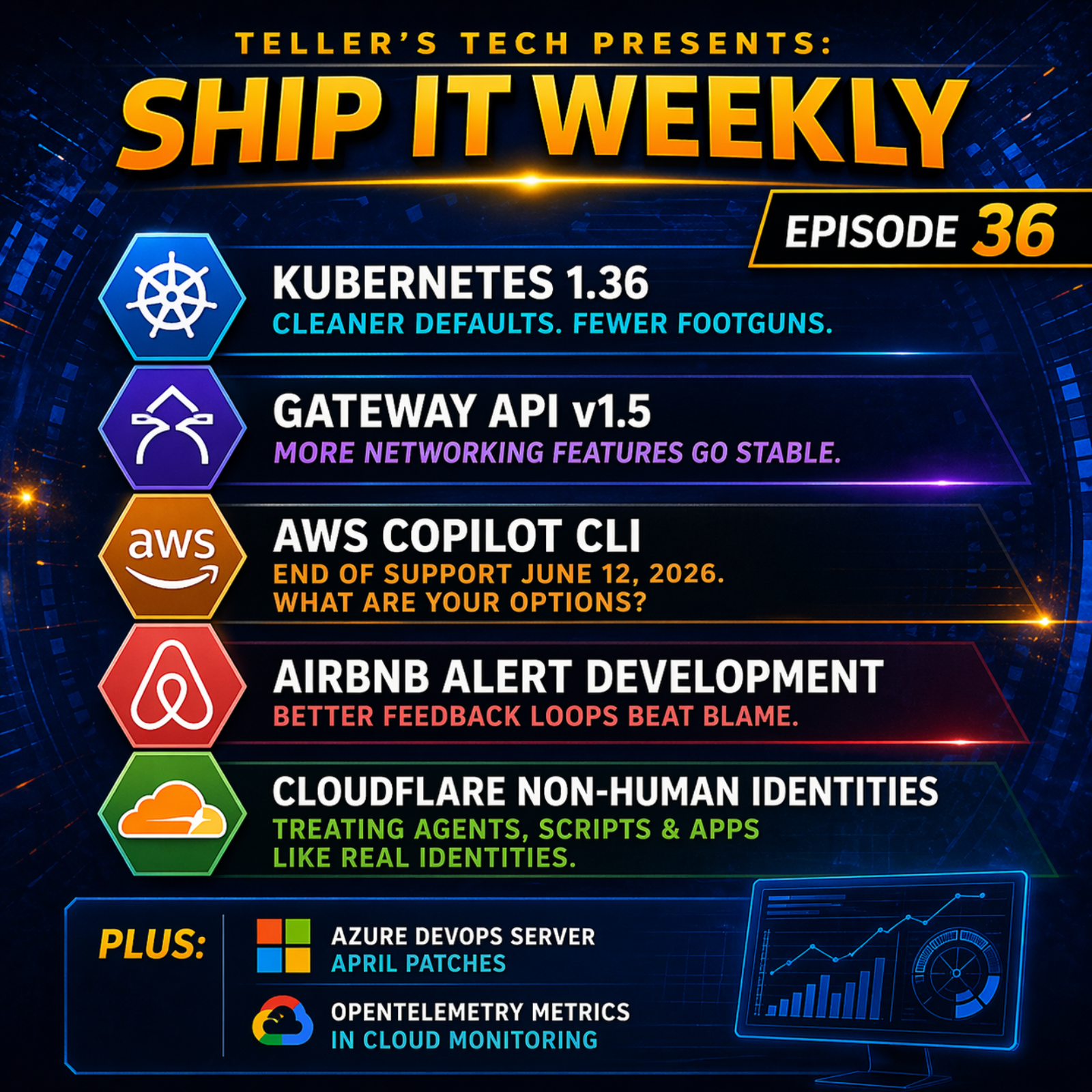
| 4/24/26 | KubernetesGateway API+5 | — | KubernetesAWS+4 | — | Kubernetes 1.36Gateway API v1.5+5 | — | 20m 24s | ||
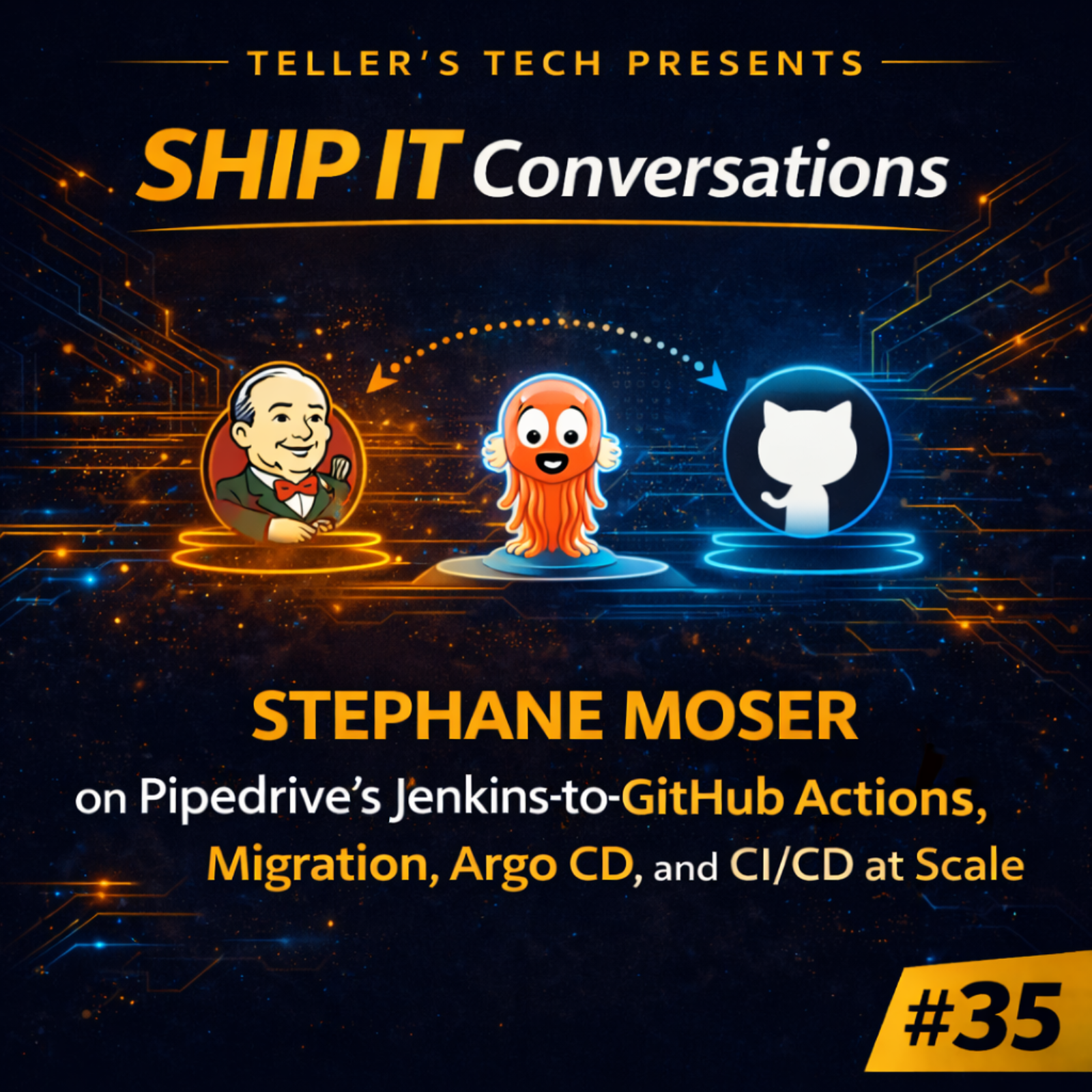
| 4/19/26 | CI/CDDevOps+4 | Stephane Moser | JenkinsGitHub Actions+10 | — | JenkinsGitHub Actions+7 | — | 51m 05s | ||
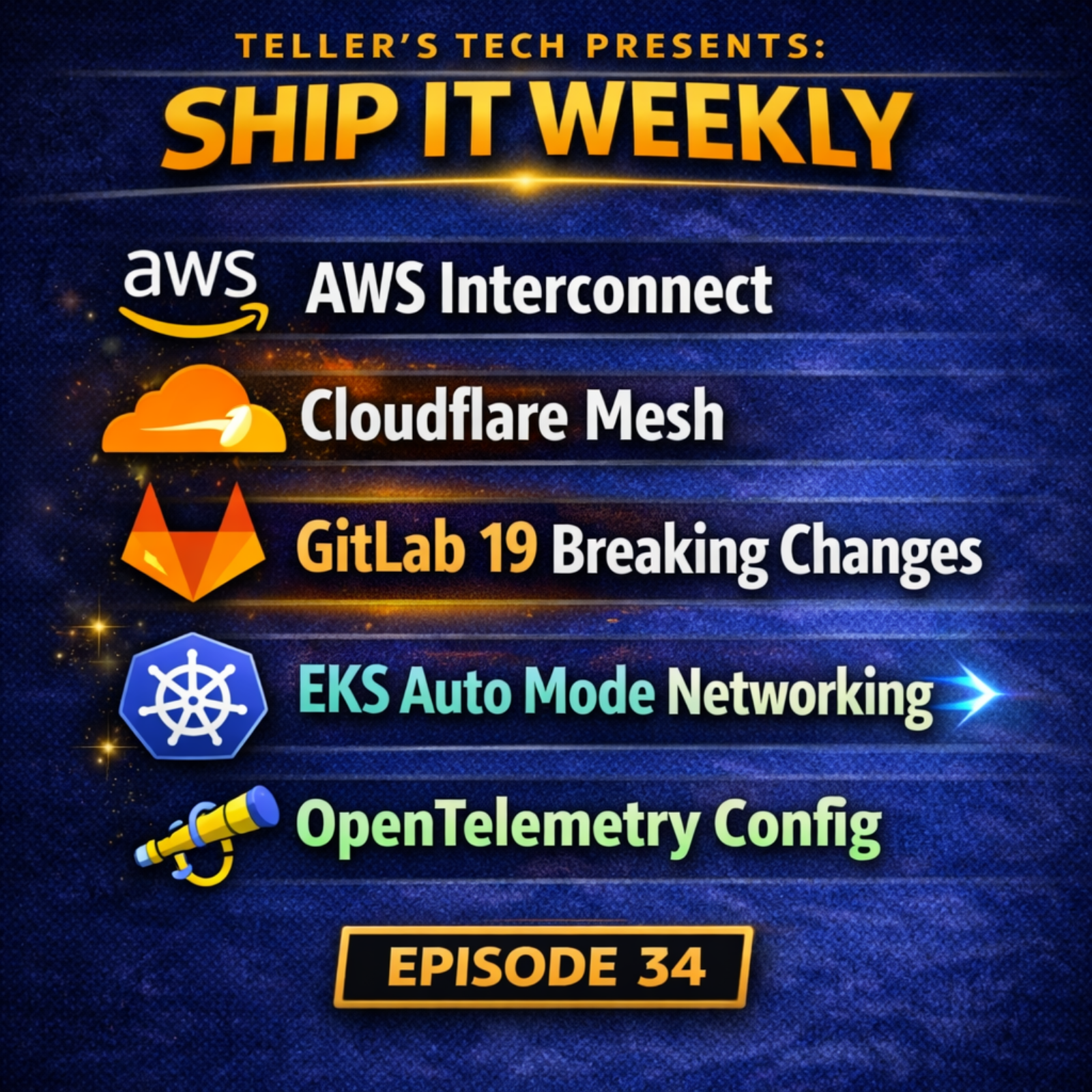
| 4/17/26 | networkingcloud services+4 | — | Gateway APIMCP+8 | — | AWS InterconnectCloudflare Mesh+6 | — | 15m 00s | ||
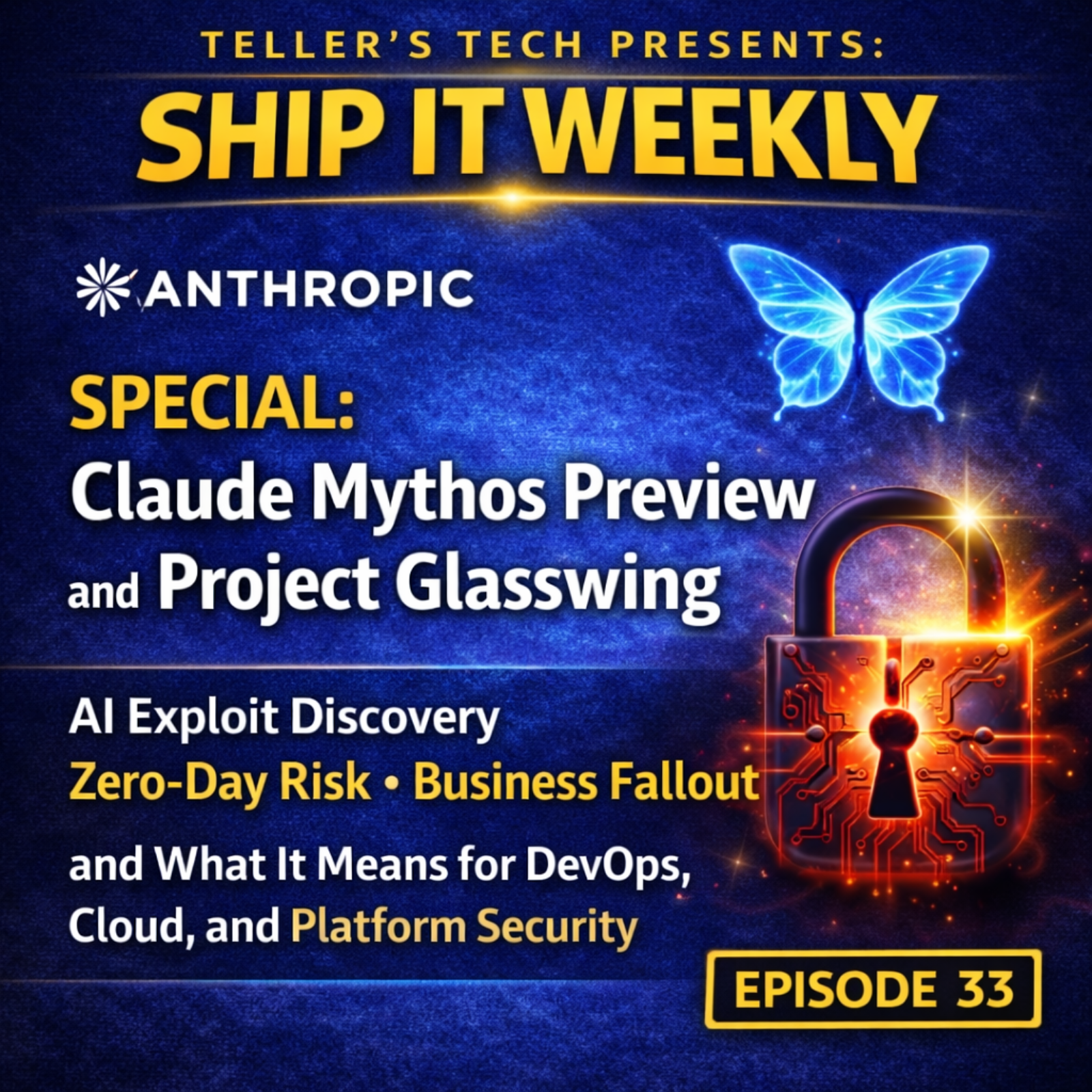
| 4/16/26 | AI securityexploit discovery+5 | — | Claude Mythos PreviewProject Glasswing+5 | — | Claude MythosProject Glasswing+5 | — | 16m 28s | ||
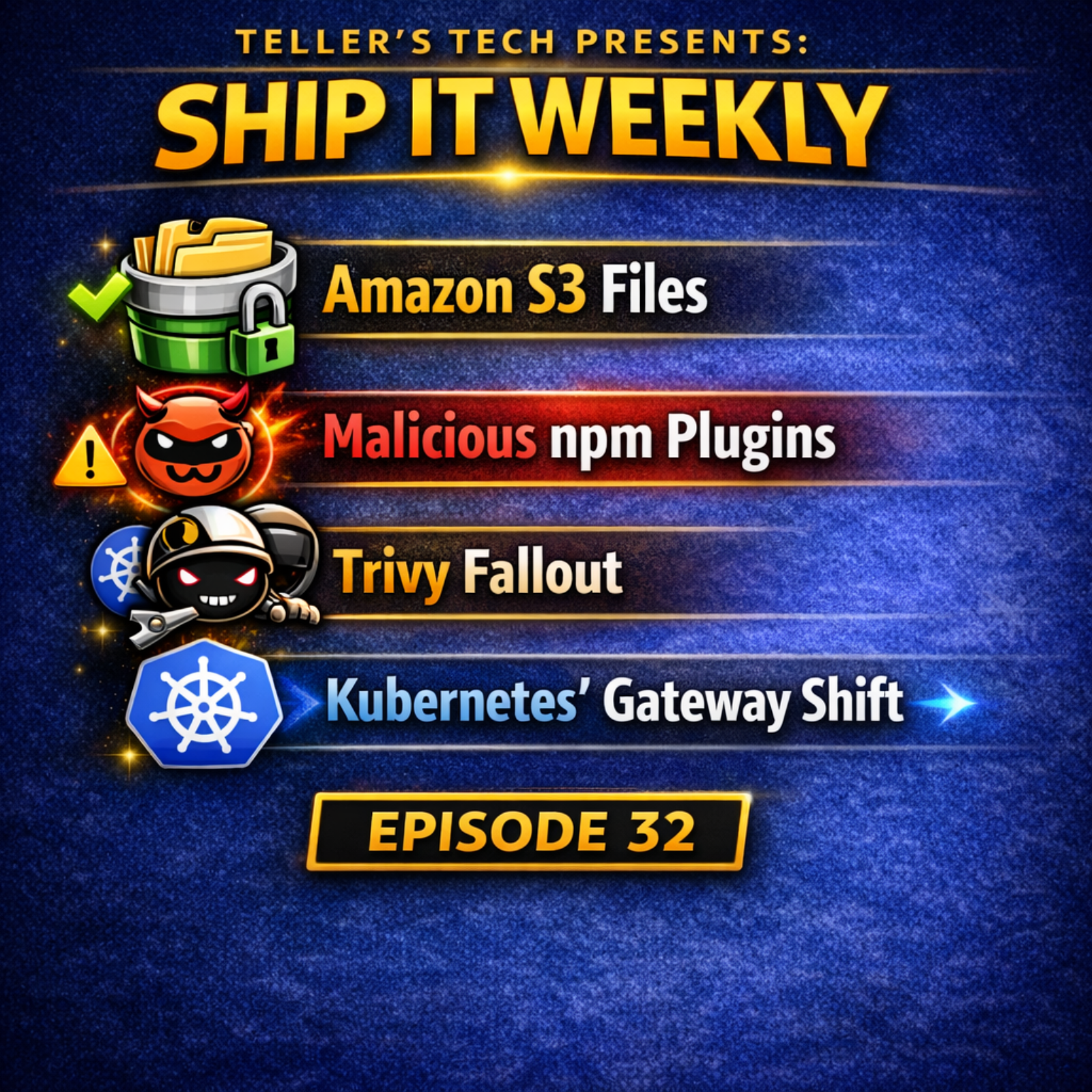
| 4/10/26 | Amazon S3 Filesmalicious npm packages+4 | — | Kubernetes Agent SandboxAmazon S3+5 | — | Amazon S3npm+5 | — | 15m 04s | ||
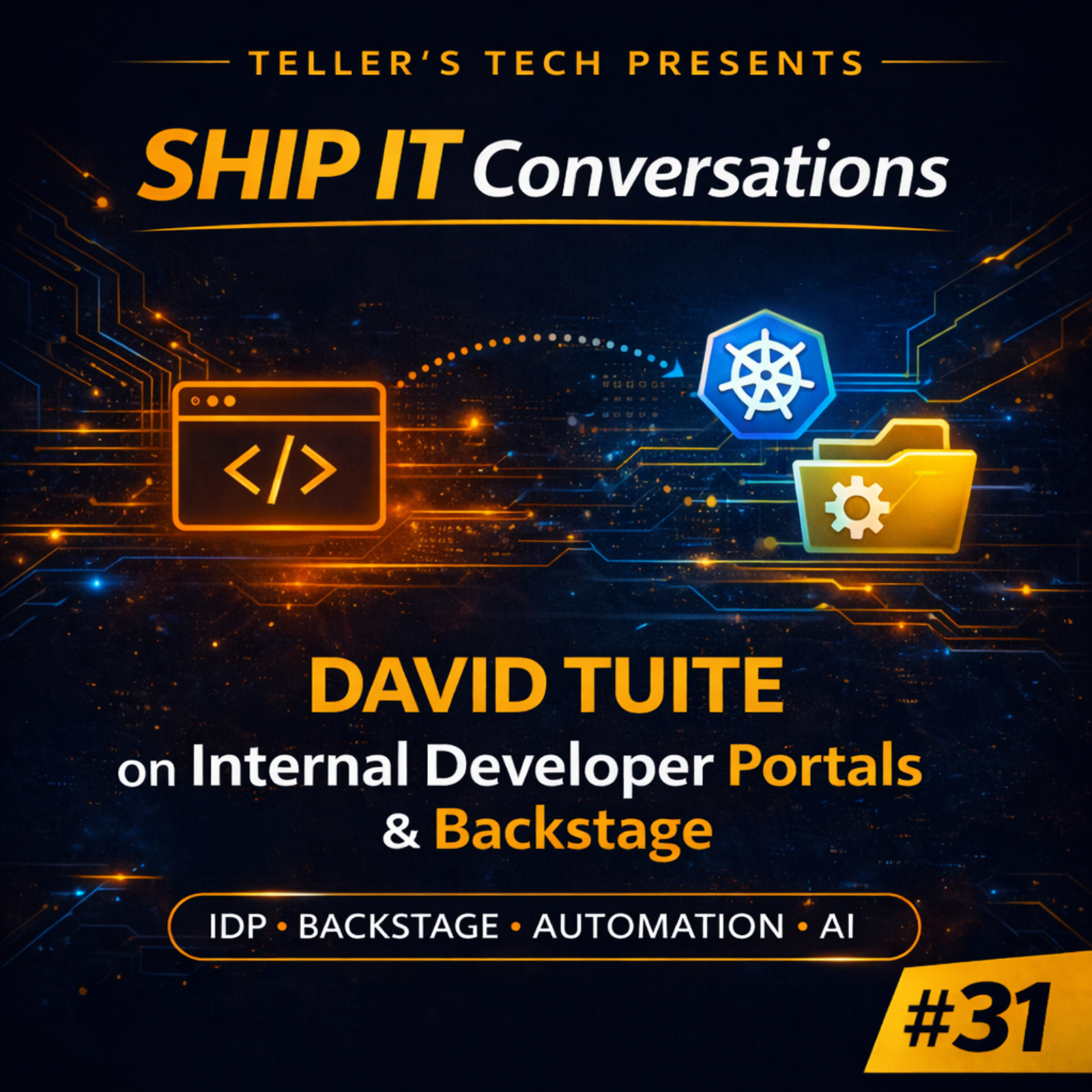
| 4/6/26 | internal developer portalsBackstage+4 | David Chute | BackstageRoadie+1 | — | internal developer portalsBackstage+5 | — | 33m 55s | ||
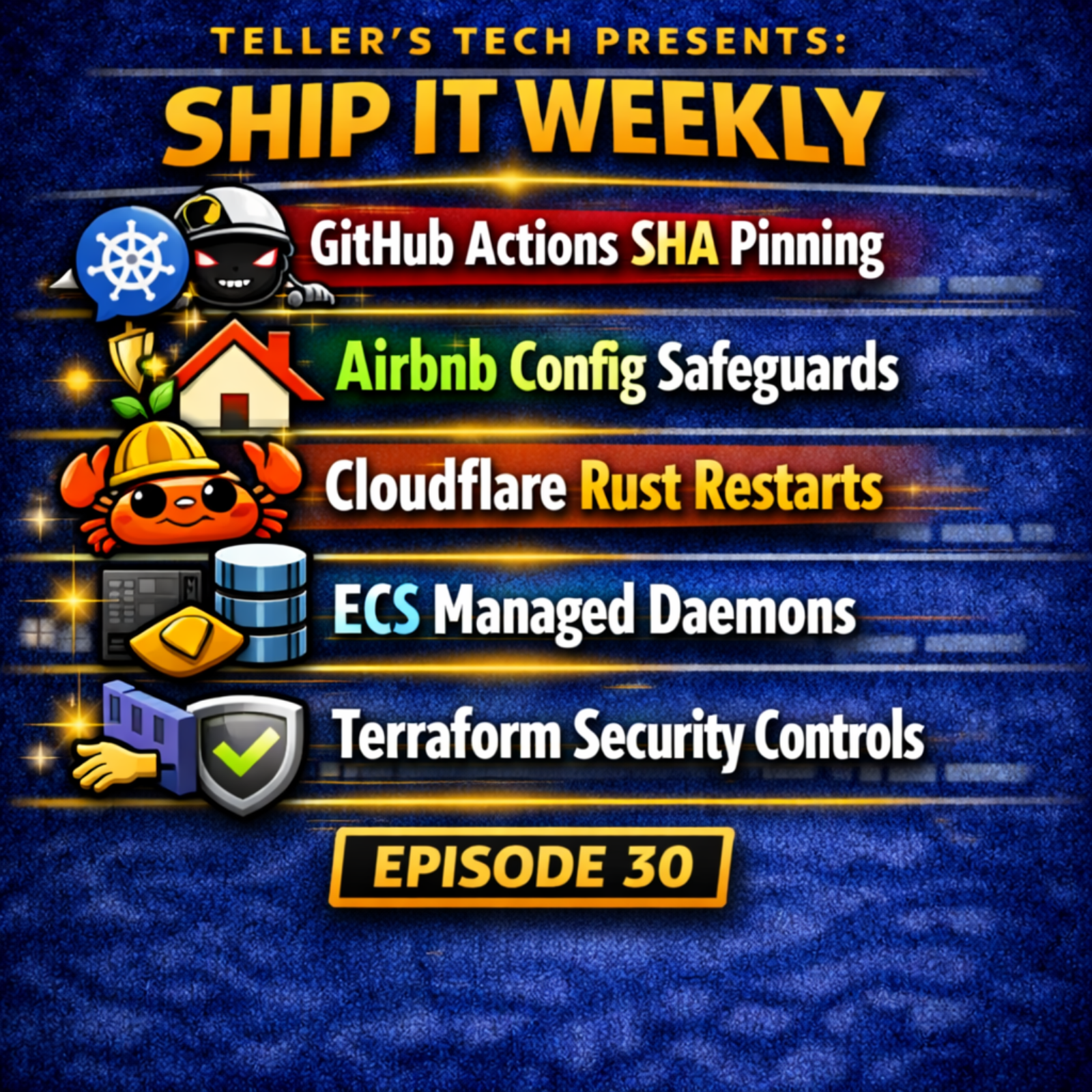
| 4/3/26 | GitHub ActionsAirbnb Config Rollouts+3 | — | GitHub ActionsTerraform+6 | — | GitHub Actions hardeningAirbnb config rollouts+3 | — | 13m 54s | ||
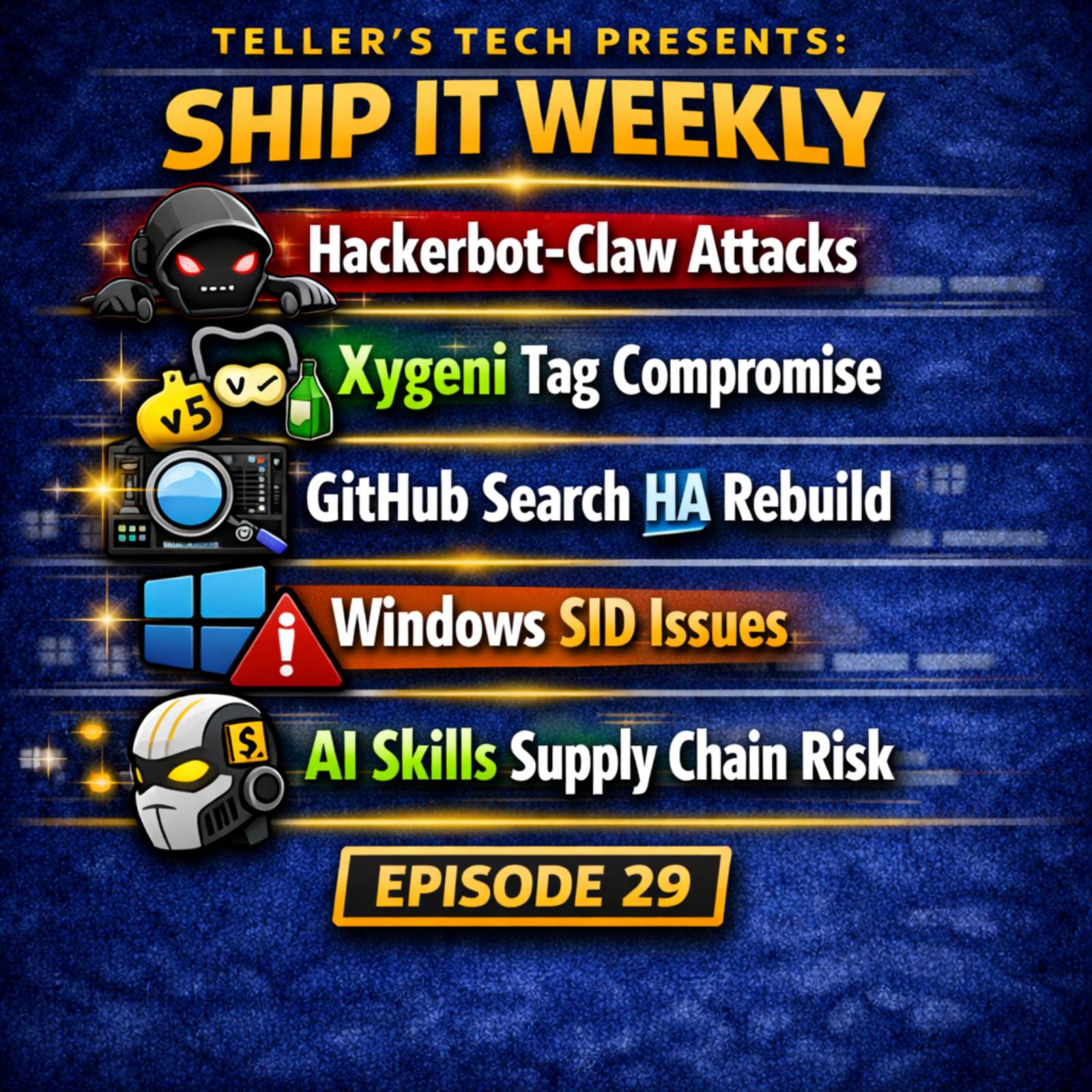
| 3/27/26 | GitHub Actionstag poisoning+4 | — | GitHub ActionsWindows Server 2025+7 | — | GitHubXygeni+6 | — | 15m 25s | ||
Showing 45 of 66
Pitch Fit is a Pro feature
See how bookable this show is for guests, which brands already advertise, the per-episode ad value, and the best-fit guest and sponsor profile. The numbers are blurred on the free plan.
How readily this show books outside guests like you.
How proven this show is for host-read sponsorships.
For Guests
ProFor Advertisers
ProUpgrade to Pro to unlock guest cadence, sponsor categories, fit scores, and per-episode ad value for this show.
Chart history for Ship It Weekly - DevOps, SRE, Platform and Cloud Engineering News
Peaked at #8 in VN, top 10 in 1 of 25 tracked markets, currently #8 in VN.
| Market | Genre | Peak | Current | Trend |
|---|---|---|---|---|
| VN | — | #8 | #8 | — |
| PL | — | #24 | #24 | — |
| SA | — | #46 | #46 | — |
| CO | — | #53 | #53 | — |
| TR | — | #56 | #56 | — |
| CH | — | #62 | #62 | — |
| MY | — | #68 | #68 | — |
| AT | — | #77 | #77 | — |
| HU | — | #77 | #77 | — |
| United Kingdom | — | #79 | #79 | — |
| IL | — | #83 | #83 | — |
| France | — | #86 | #86 | — |
| SG | — | #93 | #93 | — |
| United States | — | #103 | #103 | — |
| South Korea | — | #109 | #109 | — |
| Brazil | — | #110 | #110 | — |
| Japan | — | #120 | #120 | — |
| Australia | — | #122 | #122 | — |
| PT | — | #151 | #151 | — |
| India | — | #151 | #151 | — |
Chart Positions
25 placements across 25 markets.
Chart Positions
25 placements across 25 markets.