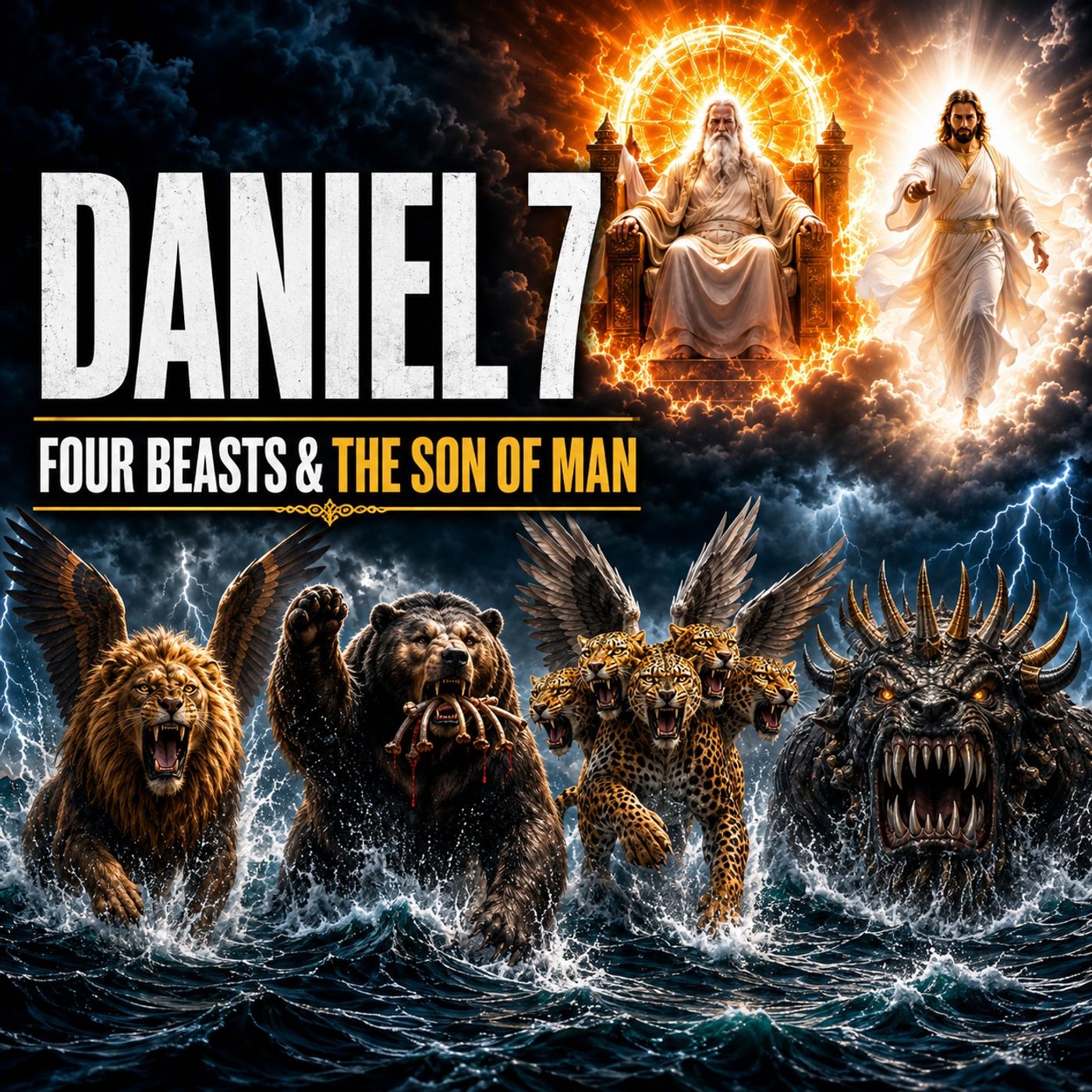
The Four Beasts and the Son of Man
About this episode
This episode explores the significance of Daniel 7 and its implications for understanding the New Testament and the identity of Jesus as the Son of Man.
Daniel 7 gives us the same four kingdoms as Daniel 2, but viewed from heaven's perspective. From earth, they are magnificent metals. From heaven, they are beasts -- a lion, a bear, a leopard, and something so terrible that no animal metaphor can contain it. Then the Ancient of Days takes his seat. The court is opened. The books appear. And one like a son of man comes with the clouds of heaven and receives an everlasting kingdom. Jesus chose Son of Man as his primary self-designation -- 80 times in the Gospels. At his trial before Caiaphas, when asked if he was the Messiah, he responded by citing Daniel 7:13 directly. The high priest tore his robes. Not because Jesus claimed to be the Messiah. Because he claimed to be the divine-human figure in Daniel's vision who receives eternal dominion from the Ancient of Days. Daniel 7 is the foundation for Revelation's beast imagery, the Great White Throne judgment, and the Son of Man language throughout the New Testament. You cannot read the New Testament accurately without it. Scripture: Daniel 7:1-28 | Matthew 26:63-65 | Mark 14:61-64 | Acts 7:56 | Revelation 13:1-7 | Revelation 20:11-15 Become a supporter of this podcast…
Topics covered
- Biblical interpretation
- Daniel's visions
- Son of Man
- Christian theology
- Eschatology
More episodes of The Broadcasting Seeds Podcast
- "And Also Afterward" -- Why the Flood Did Not End the War
- END TIMES WATCH: Israel, Iran, AI & UFO Disclosure | Mondo Gonzales
- Bel and the Dragon: The Chapter Your Bible Doesn't Have
- Daniel as the Key to Revelation
- The Seventy Weeks: The Most Precisely Predictive Prophecy in Scripture
- The Mark of the Beast: End Times Signs Nobody's Talking About w/ Dr. Joye Pugh
Explore listener stats, chart rankings, contacts and more on the The Broadcasting Seeds Podcast podcast page.