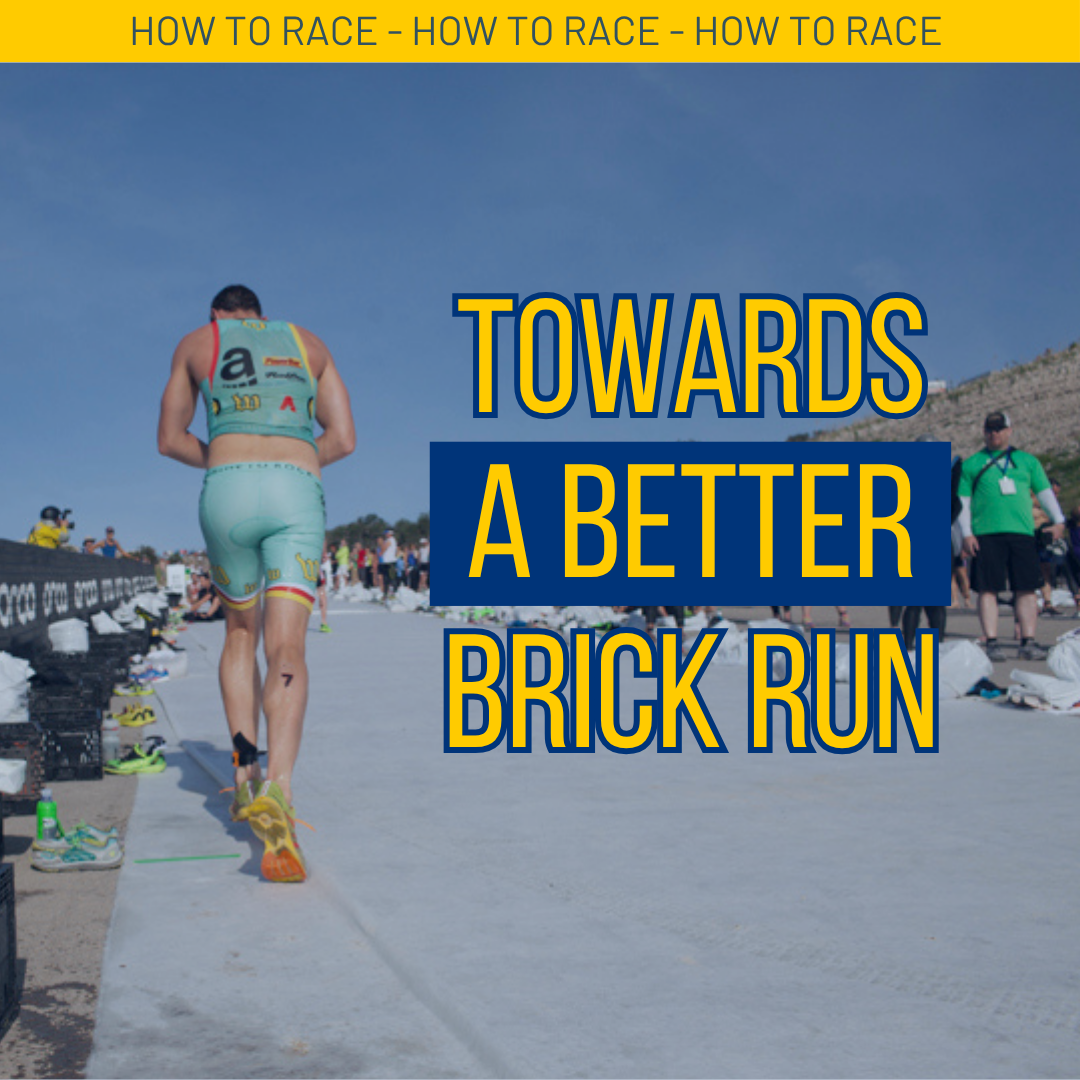
Episode 46: Fixing the Brick—Four Studies on Running Off the Bike
About this episode
This episode explores the impact of bike-to-run transitions on performance and discusses four studies related to brick runs.
The difference between a well-trained bike-to-run transition and a poorly trained one is up to 10% of your run performance — and most athletes have no idea why it happens or what to do about it. In this episode, we look at four peer-reviewed studies on the physiology of brick runs, covering the nervous system disruption that starts before you even dismount, the fueling and breathing problems that peak in the first seven minutes of the run, and the biomechanical breakdown that results in the dreaded “Ironman hunchback.” You know you’ve seen that out there in the wild. You'll learn why long brick runs are a waste of training time, how riding with high variability hurts your transition runs, and exactly what a productive brick workout looks like. Practical, research-backed, and we got it in under 30 minutes! Links mentioned in this episode: Millet & Vleck (2000), British Journal of Sports Medicine — cycling-to-run transition adaptations Bonacci (2011), Sports Biomechanics — neuromuscular control in elite triathletes Walsh (2019), Sports — elite short course triathlon and transition efficiency Zwetsloot et al. (2022), BMC Sports Science, Medicine and Rehabilitation — prolonged…
People in this episode
Host: Campfire Endurance Coaching
Topics covered
- bike-to-run transition
- brick runs
- physiology
- triathlon training
- performance improvement
Keywords
- brick workout
- transition efficiency
- neuromuscular control
- run performance
- cycling adaptations
Mentioned in this episode
Organizations: British Journal of Sports Medicine, Sports Biomechanics, BMC Sports Science, Medicine and Rehabilitation
Books & works: Millet & Vleck (2000), Bonacci (2011), Walsh (2019), Zwetsloot et al. (2022)
More episodes of The Infirmary | Fixing Broken Endurance Athletes
- Episode 47: Justin Daerr on Intrinsic Motivation, Longevity vs. Performance, and Staying in the Game
Explore listener stats, chart rankings, contacts and more on the The Infirmary | Fixing Broken Endurance Athletes podcast page.